
C-Shape vs U-Shape: Which Pregnancy Pillow Actually Stops Hip Pain?
Hello, sweet sister. If you are reading this at 3:00 AM, illuminated only by the blue light of your phone screen while you desperately try to find a comfortable position, please know that I see you. You are exhausted, your hips are throbbing, and that elusive “pregnancy glow” feels completely overshadowed by the sheer physical discomfort of growing a tiny human. As a doula and maternal wellness expert, I hear this exact struggle every single day. You are told to get as much sleep as possible before the baby arrives, but how are you supposed to sleep when every time you lie on your side, it feels like a tiny ice pick is tapping away at your hip joints?
Welcome to the great pregnancy pillow debate. When you are tossing and turning, battling the heavy weight of your beautiful, growing belly, a standard bed pillow simply will not cut it. You need structural, full-body support. You need something that aligns your spine, cradles your bump, and most importantly, physically separates your knees to take the immense pressure off your hips. But when you start shopping for relief, you are immediately faced with a massive, confusing choice: the C-Shape or the U-Shape pregnancy pillow?
Both of these uniquely contoured pillows promise to be the holy grail of pregnancy sleep, but they serve very different types of sleepers, body types, and mattress sizes. Choosing the wrong one can leave you feeling trapped in your own bed or still waking up with that familiar, nagging ache in your pelvis. In this comprehensive, sisterly guide, we are going to break down exactly why your hips are hurting in the first place, deeply analyze the biomechanics of both the C-Shape and U-Shape pillows, and help you discover which one will finally give you the restorative, pain-free rest you and your baby deserve.
The Root of the Ache: Why Your Hips Hate Pregnancy Sleep
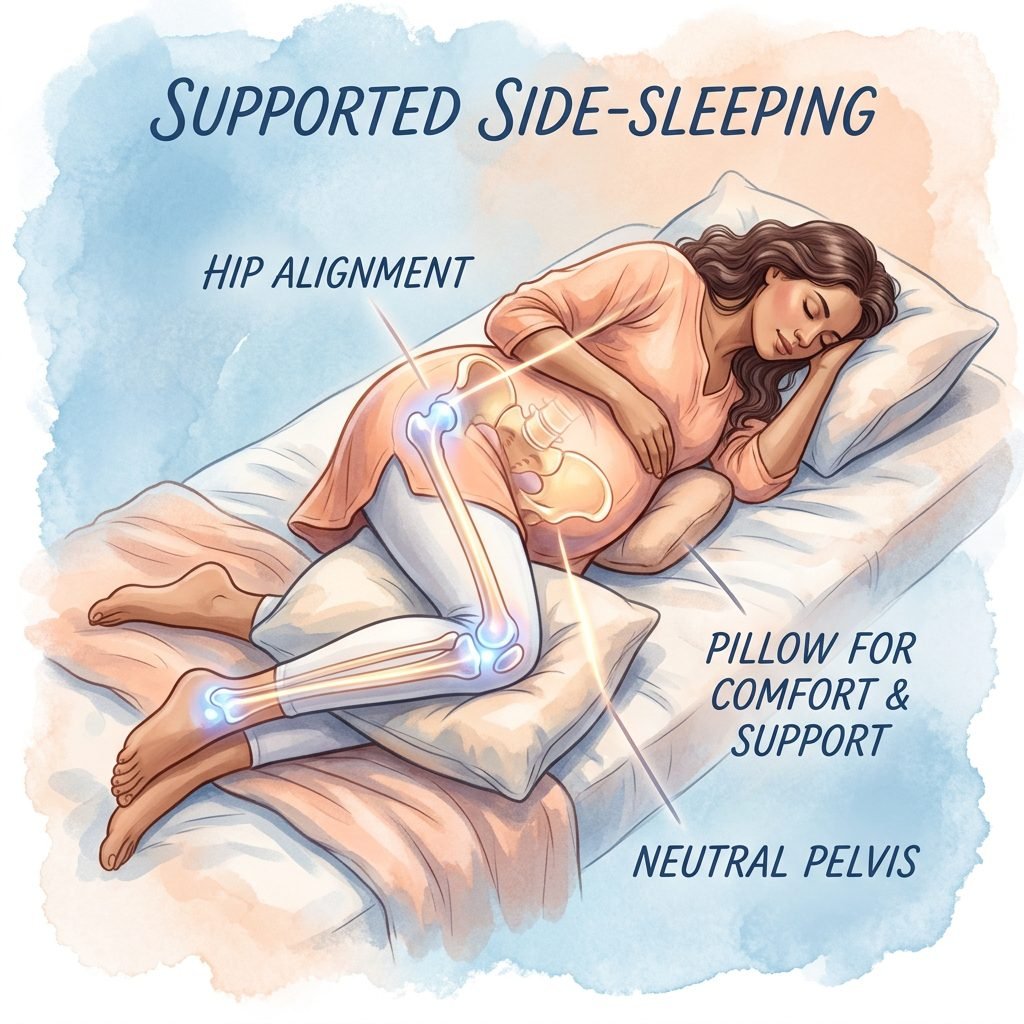
Before we can fix the problem, we need to understand exactly what is happening inside your miraculous, changing body. Hip pain during pregnancy is incredibly common, usually peaking in the second and third trimesters, but it is not something you just have to “tough out.” The pain you are experiencing is the result of a perfect storm of hormones, weight distribution, and strictly recommended sleeping positions.
The Magic and Misery of Relaxin
Starting in your very first trimester, your body begins producing a hormone aptly named relaxin. Just as it sounds, relaxin’s primary job is to relax the ligaments, tendons, and joints in your pelvis so that they can stretch and widen to accommodate your growing baby and eventually allow for childbirth. It is an absolutely brilliant biological mechanism. However, relaxin does not just target your pelvis; it affects your entire body. Because your joints are looser, your body has to work twice as hard to maintain stability. When you lie down, this looseness means your joints can easily fall out of proper alignment, leading to deep, aching pain in your hips, lower back, and the sacroiliac (SI) joint.
The Side-Sleeping Mandate and Pelvic Droop
As you cross the 20-week mark, your OB-GYN or midwife will firmly advise you to stop sleeping on your back. This is because the weight of your uterus can compress the inferior vena cava, a major blood vessel, which can reduce blood flow to your baby and make you feel dizzy or nauseous. The safest position is on your side, specifically your left side, to optimize blood flow and kidney function.
But here is the structural flaw of side-sleeping without proper support: when you lie on your side, your top leg naturally drops down toward the mattress. Because your ligaments are loose from the relaxin, this dropping motion pulls your top hip forward and down, completely twisting your pelvis out of alignment. This constant, hours-long torque on your SI joint and the round ligaments supporting your uterus is exactly what causes you to wake up feeling stiff, sore, and miserable.
Sweet mama, the key to stopping pregnancy hip pain is achieving neutral pelvic alignment. This means your ankle, knee, and hip must be elevated on the exact same horizontal plane while you sleep. A simple bed pillow will flatten under the weight of your leg, but a dense, engineered pregnancy pillow will hold that critical alignment all night long.
The C-Shape Pregnancy Pillow: The Snug, Space-Saving Hug
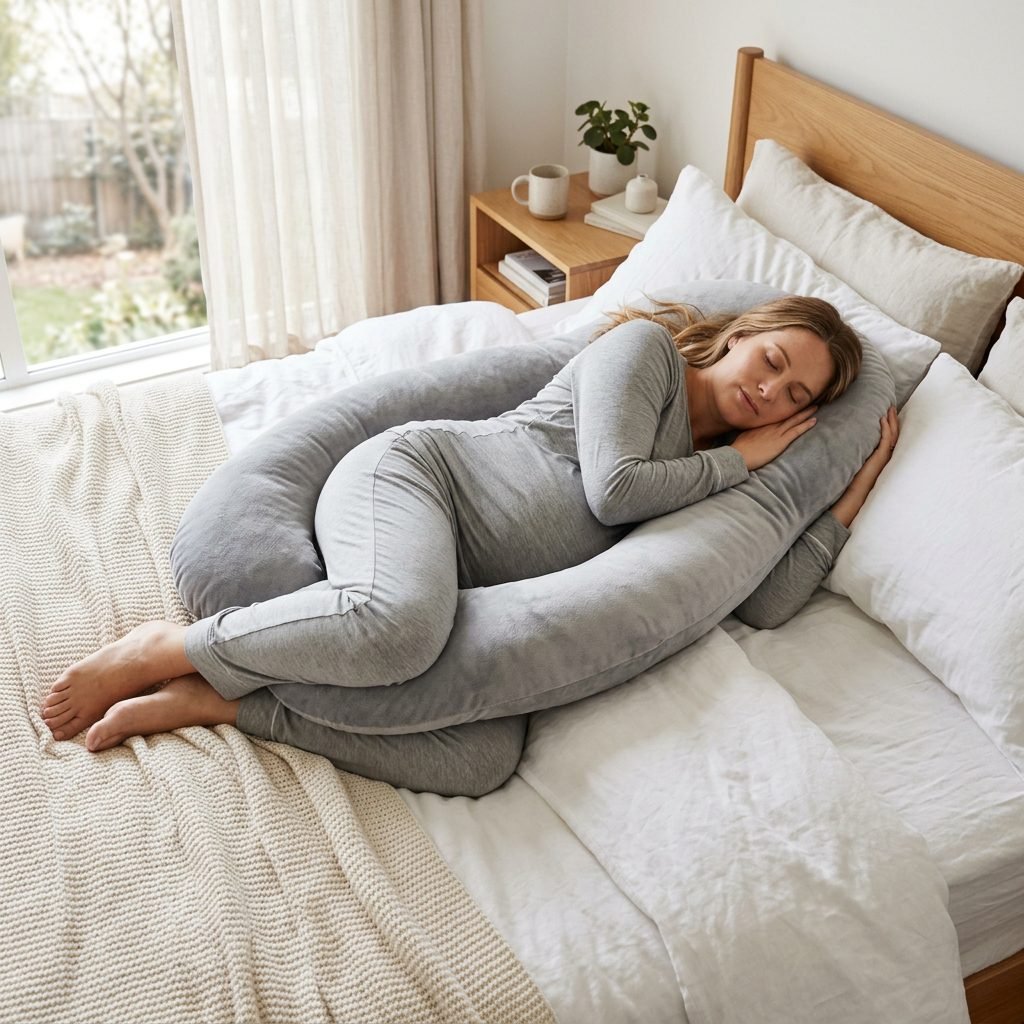
If you are looking for targeted, wrap-around support without completely taking over your mattress and banishing your partner to the couch, the C-Shape pregnancy pillow might just become your new best friend. As the name suggests, this pillow is curved into a large “C” and is designed to contour to the natural curves of your body.
How the C-Shape Alleviates Hip Pain
The magic of the C-Shape lies in its asymmetry and versatility. It provides support to your head, your belly, and your knees simultaneously. Because it does not have a back panel, it takes up significantly less space in bed, making it ideal for Queen-sized mattresses or couples who still want to cuddle.
Step-by-Step: How to Position the C-Shape for Maximum Relief
- Step 1: The Head Placement. Lay the pillow on your bed so the opening of the “C” faces your back. Rest your head on the top curve of the pillow, ensuring your neck is neutrally aligned and not propped up too high.
- Step 2: The Belly Wedge. Gently pull the long middle section of the pillow snugly against your front. Lift your beautiful baby bump slightly and tuck the inner edge of the pillow just underneath it. This prevents the heavy weight of your uterus from pulling forward and straining your round ligaments.
- Step 3: The Hip Aligner. Take the bottom curve of the “C” and pull it firmly between your thighs, knees, and ankles. You want at least 6 to 8 inches of dense pillow separating your knees to ensure your top hip does not collapse downward.
Pros and Cons of the C-Shape
The greatest advantage of the C-Shape is its targeted belly support and relatively smaller footprint. It is also much easier to climb out of bed in the middle of the night for those frequent bathroom trips because you only have to maneuver around one side of the pillow. However, the biggest drawback for hip pain sufferers is the “flip factor.” If you are a restless sleeper who needs to alternate sides frequently to relieve pressure on your bottom hip, you will have to physically drag the entire C-Shape pillow with you as you roll over. In the haze of 2:00 AM exhaustion, wrestling a five-foot pillow can feel like an Olympic sport.
The U-Shape Pregnancy Pillow: The Full-Body Cocoon
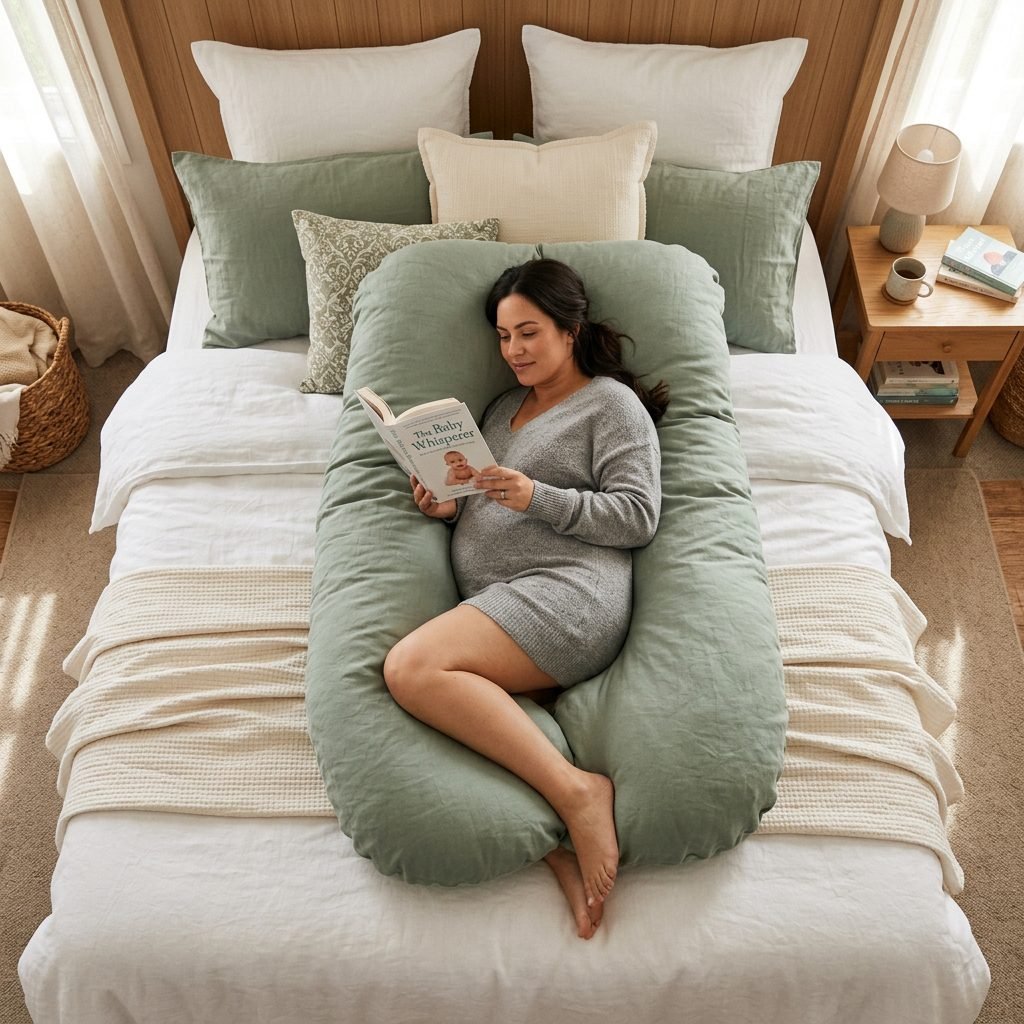
For the mama who wants absolutely zero compromises when it comes to full-body support, the U-Shape pregnancy pillow is the ultimate, luxurious cocoon. Shaped like an enormous “U”, this pillow surrounds you on both sides simultaneously. It is the heavy-duty, maximum-comfort option that many doulas and physical therapists recommend for severe pelvic girdle pain (PGP) or symphysis pubis dysfunction (SPD).
How the U-Shape Alleviates Hip Pain
The U-Shape provides symmetrical support. No matter which way you face, you have a dense column of cushioning ready to separate your knees and align your hips. Furthermore, the back panel of the U-Shape presses firmly against your spine, providing gentle counter-pressure to aching back muscles and physically preventing you from accidentally rolling flat onto your back while you are deep in sleep.
Step-by-Step: How to Position the U-Shape for Maximum Relief
- Step 1: Enter the Cocoon. Position the U-Shape with the curve at the top of the bed. Slide yourself right into the middle, resting your head on the top curve just like a standard pillow.
- Step 2: The Front Alignment. Take the front arm of the pillow, hug it to your chest, tuck it under your bump, and thread the bottom half between your knees and ankles. Ensure your top leg is resting fully on the pillow so your hip remains open and neutral.
- Step 3: The Back Anchor. Reach behind you and pull the back arm of the pillow snugly against your spine and buttocks. This creates a secure, wedged feeling that stabilizes your entire torso, preventing your hips from swaying or twisting backward as your muscles relax in deep sleep.
Pros and Cons of the U-Shape
The U-Shape is the undisputed champion of uninterrupted sleep. When your bottom hip starts to ache and you need to switch sides, you simply roll over. The pillow is already waiting for you on the other side. There is no wrestling, no adjusting, and no waking up completely just to get comfortable again. The back support is also phenomenal for preventing back-sleeping. However, the cons are purely logistical. The U-Shape is massive. It will take up a significant portion of your bed, practically building a soft, impenetrable wall between you and your partner. If you have a Full or Queen mattress, things will get very cozy, very fast. It can also trap body heat, so if you are experiencing pregnancy night sweats, you must ensure you purchase one with a breathable, cooling cover.
The Ultimate Showdown: C-Shape vs. U-Shape Comparison
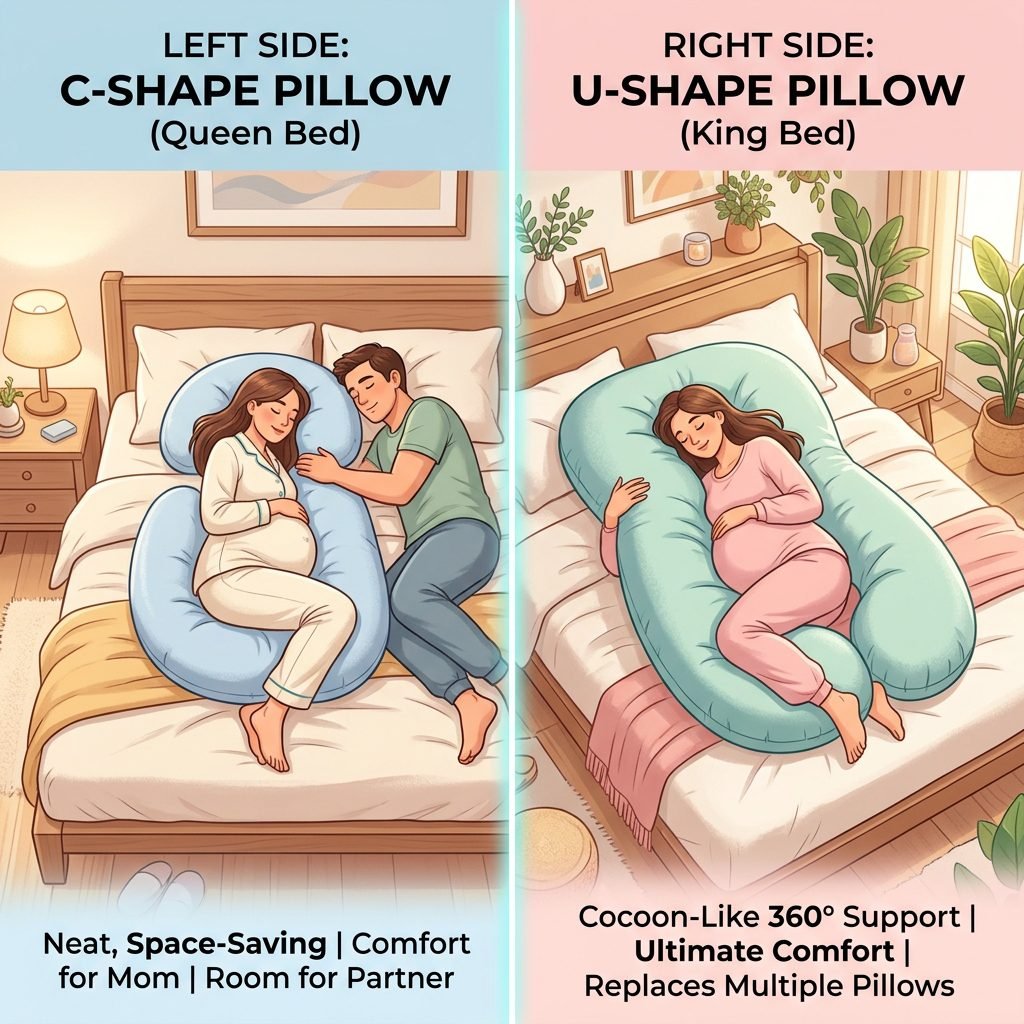
Choosing between the C-Shape and the U-Shape comes down to your specific sleep habits, the size of your bed, and how much you toss and turn at night. To make this decision as easy as possible for your tired brain, I have broken down the critical differences in this comprehensive doula-approved comparison matrix.
| Feature / Consideration | C-Shape Pregnancy Pillow | U-Shape Pregnancy Pillow |
|---|---|---|
| Primary Hip Support | Excellent for one-sided support; keeps hips aligned but requires manual adjustment if you flip over. | Ultimate 360-degree support; keeps hips aligned perfectly no matter which side you roll onto. |
| Belly Support | Incredible. The C-curve naturally tucks right under the bump, relieving round ligament tension. | Great, but you have to pull the straight arm of the “U” inward to get it tightly under the bump. |
| Back-Sleep Prevention | Low. Your back is exposed, meaning you can easily roll backward out of the pillow. | High. The back arm acts as a bumper, physically stopping you from rolling flat onto your back. |
| Bed Space Required | Moderate. Fits comfortably in a Queen bed while still allowing room for a partner. | Massive. Best suited for a King bed; creates a literal physical barrier between you and your partner. |
| Ease of Switching Sides | Poor. You must wake up enough to physically drag the entire pillow over to the other side. | Perfect. You simply roll over, and the other side of the pillow is already there waiting for you. |
| Postpartum & Nursing Use | Excellent. Wraps easily around the waist to support the baby during breastfeeding or bottle-feeding. | Good, but can be bulky. The arms can be folded to create a supportive sitting-up chair in bed. |
The Doula’s Verdict: If your hip pain is severe and you wake up constantly needing to switch sides, the U-Shape is absolutely worth the sacrifice of bed space. The ability to roll over without waking up to readjust is a game-changer for sleep continuity. However, if you have a smaller bed, sleep relatively still once you get comfortable, or want a pillow that easily transitions into a nursing pillow postpartum, the C-Shape is your perfect match.
Pillow Materials & Fillings: What to Look For Before You Buy
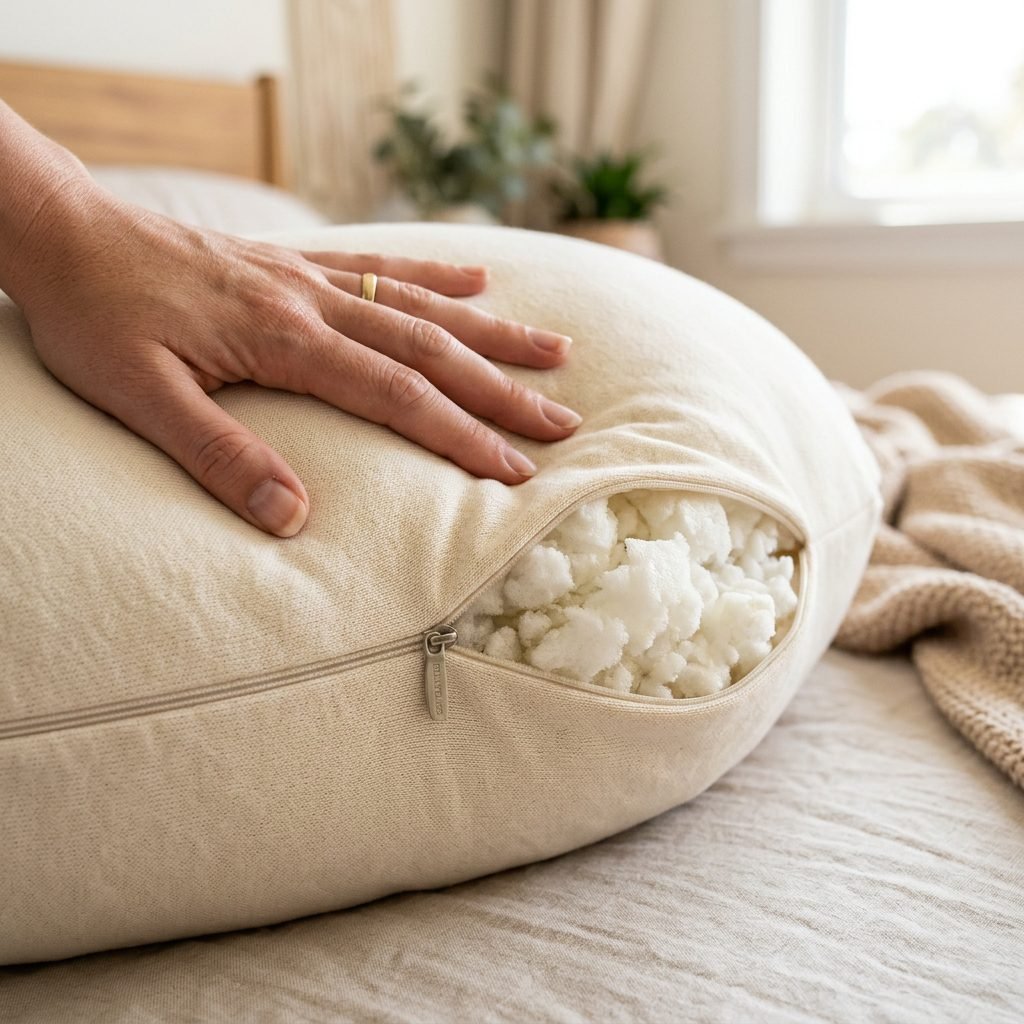
Once you have decided on the shape, your journey is not quite over. The materials inside and outside your pregnancy pillow will dramatically impact how well it relieves your hip pain and regulates your body temperature. Because your blood volume increases by up to 50 percent during pregnancy, you are likely running much hotter than usual. Wrapping yourself in a massive, heat-trapping synthetic pillow can quickly turn a cozy night into a sweaty nightmare.
Choosing the Right Filling
- Polyester Fiberfill: This is the most common and affordable filling. It is soft, squishy, and mimics the feel of a standard bed pillow. However, it can flatten out over time. If you choose fiberfill, look for a pillow with a zipper that allows you to add or remove stuffing so you can maintain that crucial 6 to 8 inches of loft between your knees for hip alignment.
- Memory Foam (Shredded or Solid): Shredded memory foam offers incredible, dense support that will not flatten out under the heavy weight of your top leg. It conforms beautifully to your joints, providing superior pressure relief for aching hips. The downside? Memory foam retains body heat. If you go this route, a cooling cover is mandatory.
- Microbeads: Similar to a high-end bean bag, microbead pillows are incredibly lightweight, highly breathable, and mold instantly to your body shape. They are fantastic for airflow but can sometimes feel a bit too firm or make a slight rustling noise when you move.
Choosing the Right Cover
Never buy a pregnancy pillow that does not have a removable, machine-washable cover. Between night sweats, spilled water, and eventual postpartum milk leaks, you will need to wash it frequently. I highly recommend looking for covers made from 100% organic cotton, bamboo viscose, or jersey knit. Bamboo, in particular, is naturally cool to the touch, moisture-wicking, and incredibly soft against sensitive, stretching pregnancy skin. Avoid minky or velvet covers unless you are pregnant in the dead of winter in a very cold climate, as they will cause you to overheat rapidly.
Pro-Tip: When packing your hospital bag, do not bring your massive U-Shape pillow—it will take up the entire recovery bed! Instead, bring a standard pillow from home for between your knees, and have your partner wash your pregnancy pillow cover while you are in labor so you can come home to a fresh, clean cocoon for your postpartum recovery.
Beyond the Pillow: Doula-Approved Hacks for Holistic Hip Pain Relief
While a high-quality C-Shape or U-Shape pillow is the foundation of pain-free sleep, it is only one piece of the puzzle. If your hips are screaming during the day, that inflammation will absolutely carry over into the night. As a doula, I always encourage a holistic approach to pelvic comfort. Here are my top, tried-and-true physical hacks to combine with your new pillow for ultimate relief.
1. The Power of Topical Magnesium
Magnesium is a natural muscle relaxant, and the vast majority of pregnant women are deficient in it. When your pelvic muscles and round ligaments are tight and spasming, it pulls on your hip joints. Before bed, try spraying a high-quality topical magnesium oil directly onto your hips, lower back, and thighs, gently massaging it in. Alternatively, take a warm (not hot) 20-minute bath with two cups of Epsom salts (which are pure magnesium sulfate) right before you crawl into your pregnancy pillow.
2. Prenatal Stretches for Pelvic Opening
You must stretch the muscles surrounding the hips to relieve the tension caused by relaxin-induced instability. Incorporate these two gentle movements into your nightly routine:
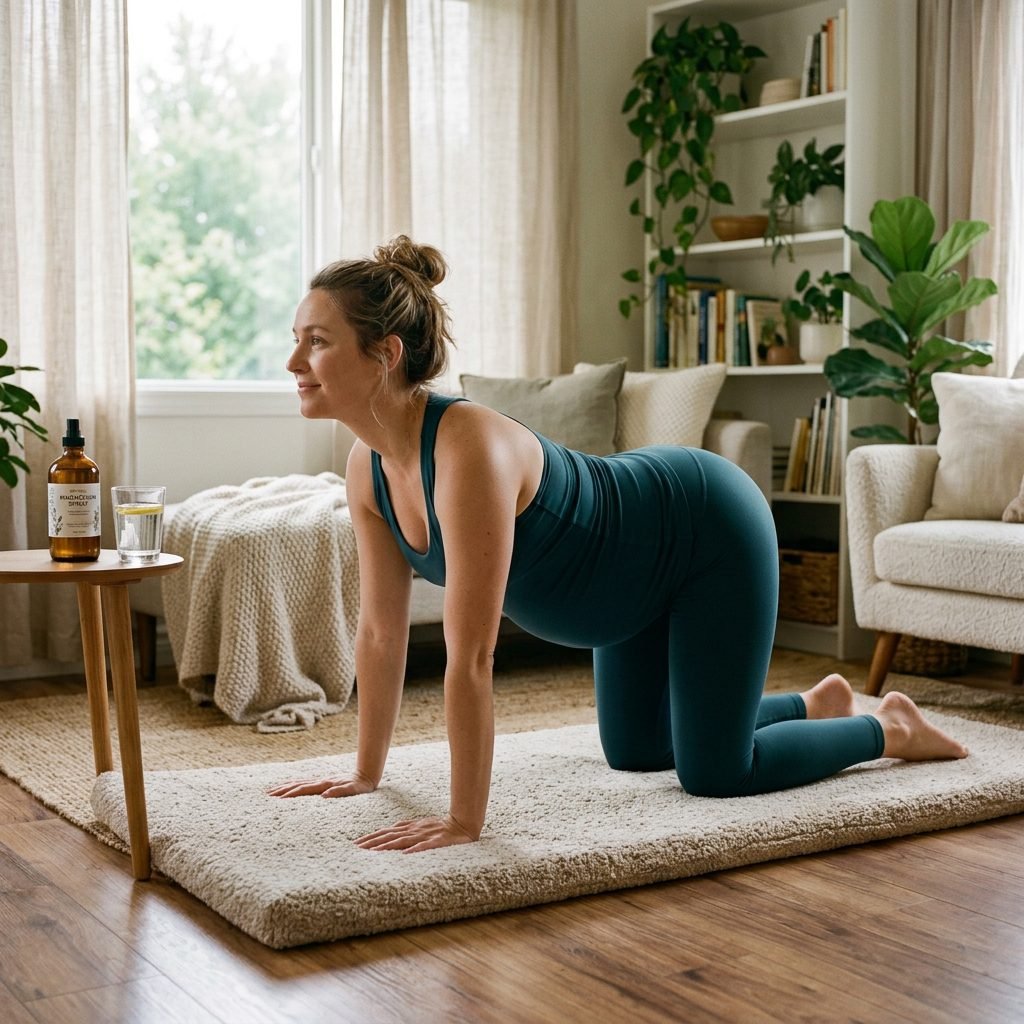
- Cat-Cow with a Twist: Get on your hands and knees. Gently arch your back up toward the ceiling (Cat), then let your belly drop slowly toward the floor (Cow). To target the hips, gently sway your hips from side to side in a slow, “wagging the tail” motion. This lubricates the hip sockets and relieves SI joint pressure.
- Tailored Sitting (Butterfly Pose): Sit on the floor with the soles of your feet touching and your knees dropping outward. Do not bounce. Simply let gravity gently open your hips while you sit up straight. This stretches the inner thighs and pelvic floor, reducing the tightness that pulls on your hips at night.
3. Seek Professional Pelvic Alignment
If your hip pain is sharp, shooting, or making it difficult to walk (which could be a sign of sciatica or SPD), it is time to call in the professionals. Look for a chiropractor who is specifically certified in the Webster Technique. This is a specific chiropractic analysis and adjustment designed to balance the maternal pelvis, reduce tension in the surrounding ligaments, and optimize space for the baby. Many mothers report that a Webster adjustment, combined with a U-Shape pillow at night, completely resolves their debilitating hip pain within days.
4. Daytime Posture and Support
Do not cross your legs when you sit! Crossing your legs instantly twists your pelvis and strains your SI joint. Always sit with both feet flat on the floor, keeping your knees slightly lower than your hips. If your belly is getting very heavy, consider wearing a maternity support belt during the day to physically lift the weight of the uterus off your pelvis, preventing your hip muscles from overworking before you even get into bed.
Conclusion
Sweet mama, growing a life is the most beautiful, miraculous, and physically demanding marathon your body will ever endure. You are doing incredible work every single second of the day, and you deserve a safe, comfortable place to rest your weary bones at night. Whether you choose the space-saving, targeted hug of the C-Shape pillow, or the luxurious, full-body cocoon of the U-Shape pillow, the most important thing is that you are taking proactive steps to support your body. Prioritize that crucial knee separation, keep your hips aligned, and give yourself the grace to rest as much as you need. Your body is shifting, stretching, and preparing for the ultimate finale—treat it with the utmost care, compassion, and the fluffiest pillow you can find. Wishing you deep, restorative, and pain-free sleep!