

Why Is Baby Hiccuping So Much? When to Worry About Fetal Hiccups
You’re resting quietly, perhaps reading a book or settling in for the night, when you feel it: a tiny, rhythmic, repetitive thump-thump-thump from deep within your belly. It’s not a kick or a roll. It’s a steady, gentle pulse that can last for several minutes. Congratulations, you’re likely feeling your baby’s hiccups! For many expecting parents, this sensation is a charming and reassuring sign of the little life growing inside. But if it happens frequently, it’s natural to wonder, “Why is my baby hiccuping so much?” and, more importantly, “Is it ever a cause for concern?” As a doula and maternal health educator, I’m here to walk you through the science behind fetal hiccups, celebrate them as a sign of healthy development, and provide clear, fact-based guidance on when to pay closer attention and consult your healthcare provider. Let’s demystify these adorable little spasms together.
What Exactly Are Fetal Hiccups and What Do They Feel Like?

Fetal hiccups are involuntary contractions of your baby’s diaphragm, the muscle below the lungs that controls breathing. When the diaphragm contracts suddenly, the vocal cords snap shut, creating that characteristic ‘hic’ sound we know. Of course, you can’t hear your baby hiccuping in the womb, but you can certainly feel the movement.
For the pregnant parent, fetal hiccups feel distinctly different from other movements like kicks, punches, or tumbles. Here’s how to tell them apart:
- Rhythm: The most telling sign is the rhythm. Hiccups are typically rhythmic and spaced evenly apart, like a tiny, steady pulse.
- Sensation: They feel like small, gentle spasms or twitches. Many describe it as a rhythmic tapping from the inside.
- Location: Unlike kicks that can be felt all over, hiccups often originate from one specific area of your belly, depending on your baby’s position.
Most parents start noticing fetal hiccups sometime in the second or third trimester. As your baby grows and the uterine walls become thinner, these sensations will likely become more pronounced and easier to identify. They can last for just a minute or continue for 15 minutes or more, and it’s perfectly normal for them to occur several times a day.
Feeling these little rhythmic jumps is a beautiful, tangible connection to your baby. It’s one of the first ways you get to learn their unique patterns and rhythms before you even meet them.
The Science Behind the Spasms: A Sign of Healthy Development
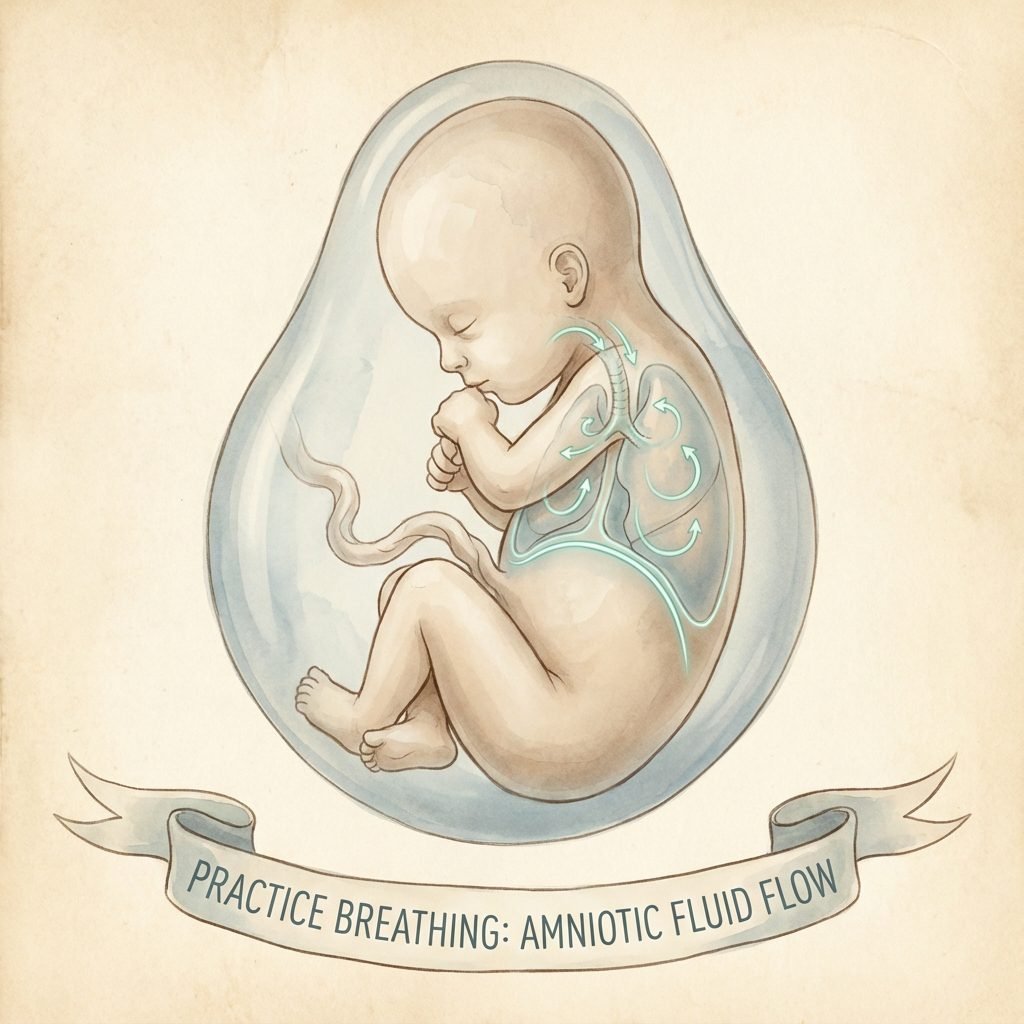
While the exact purpose of fetal hiccups isn’t 100% certain, the leading medical theories all point to them being a crucial part of your baby’s development. Far from being a random annoyance, these hiccups are productive exercises for your baby’s maturing systems.
Practice Breathing
The most widely accepted theory is that hiccups are a byproduct of your baby practicing breathing. In the womb, babies don’t breathe air, but they do ‘inhale’ and ‘exhale’ amniotic fluid. This process strengthens their diaphragm and respiratory muscles, preparing them for their first real breath after birth. As fluid moves in and out, the diaphragm can sometimes be triggered into a spasmodic contraction, resulting in hiccups.
Nervous System Maturation
Fetal hiccups are also a strong indicator that your baby’s central nervous system is developing properly. The ability to hiccup requires a complex coordination between the brain, the spinal cord, and the diaphragm. Specifically, it shows that the phrenic nerve, which controls the diaphragm, is fully functional and communicating effectively with the brain. Seeing (or feeling) hiccups is a sign that these vital pathways are being established and refined.
Testing Reflexes
Hiccups are a type of reflex. Their presence demonstrates that your baby is developing other important reflexes as well, such as the sucking and swallowing reflexes, which they will need for feeding once they are born. Think of it as your baby’s internal systems running a full diagnostic check, ensuring everything is in working order for their grand entrance.
Fetal Hiccups vs. Other Movements: A Comparative Guide

As a new parent, learning to interpret your baby’s movements is like learning a new language. Distinguishing between a hiccup, a kick, and a roll can help you feel more in tune with your baby’s well-being. While every baby is different, there are some general patterns that can help you tell what’s what. Here’s a breakdown to help you become an expert in your baby’s unique dance moves.
| Characteristic | Fetal Hiccups | Kicks, Punches & Rolls |
|---|---|---|
| Rhythm & Cadence | Steady, rhythmic, and repetitive. Feels like a consistent, gentle pulse. | Sporadic, unpredictable, and varied. Can be sharp and sudden or slow and rolling. |
| Sensation | Small, gentle twitches or spasms. Often described as a soft tapping. | Can range from a tiny flutter to a powerful jab or a large, sweeping motion that shifts the shape of your belly. |
| Location | Typically felt in one specific spot, depending on where your baby’s chest is located. | Can be felt all over the abdomen as your baby changes position, stretches, and moves their limbs. |
| Duration | Can last from one to fifteen minutes, or sometimes longer. The session has a clear start and end. | Movements are usually brief and isolated, though you may experience a period of high activity with many movements. |
| Parent’s Response | Often described as amusing or cute. Usually not uncomfortable. | Can sometimes be uncomfortable or even startling, especially when a foot connects with your ribs or bladder. |
Keeping a mental note of these differences can be incredibly reassuring. When you can confidently say, “Oh, those are just hiccups,” it can ease the anxiety that sometimes accompanies new or strange fetal movements. It’s all part of the journey of getting to know your baby.
The ‘When to Worry’ Guide: Understanding Potential Concerns

Let’s address the heart of the matter that brought you here: when should fetal hiccups be a cause for concern? First and foremost, it’s essential to state that in the overwhelming majority of cases, fetal hiccups are a completely normal and healthy sign.
However, medical understanding is always evolving. Some research has explored a potential, though very rare, link between a specific change in hiccup patterns and umbilical cord issues. It is crucial to approach this information without panic, using it to be informed and aware, not anxious.
The Key Factor: A Sudden, Late-Stage Change
The primary red flag is not the presence of hiccups themselves, but a sudden and significant change in their pattern, particularly after 32 weeks of gestation. The specific pattern to be mindful of is:
- Hiccups that suddenly begin occurring every day.
- Each episode of hiccups lasts for 15 minutes or longer.
- This pattern persists for several days in a row.
The concern in this specific, rare scenario is that it could potentially indicate umbilical cord compression or prolapse. The theory is that when the cord is compressed, it can affect the baby’s heart rate and blood flow, which in turn may stimulate the phrenic nerve and trigger persistent hiccups.
Context is Everything: Hiccups and Overall Movement
It’s vital to consider hiccups in the context of your baby’s overall movement patterns. A baby who is hiccuping frequently but is otherwise moving, kicking, and rolling as usual is very likely fine. The time to be more vigilant is if you notice this specific, persistent hiccup pattern in combination with a significant decrease in your baby’s normal movements. A reduction in fetal movement is always a reason to call your doctor or midwife immediately, regardless of hiccup patterns.
Trust your intuition. You are the expert on your baby’s movements. If something feels different or ‘off’ to you, it is always worth getting checked out for peace of mind.
Actionable Steps: What to Do If You’re Concerned

If you’ve noticed a change in your baby’s hiccups or any other movements that are causing you concern, it’s important to act calmly and methodically. Panicking won’t help, but being proactive will. Here are the steps you should take.
1. Perform a Kick Count
If you are in your third trimester, your provider has likely discussed ‘kick counting’ or tracking fetal movements. This is your first line of action. Find a quiet, comfortable place to lie on your left side. Focus on your baby’s movements. You should feel 10 distinct movements (kicks, rolls, flutters) within a two-hour period. Hiccups do not count as movements in this context. If you don’t feel 10 movements in two hours, it’s time to call your provider.
2. Try to Rouse the Baby
Sometimes a baby is just in a deep sleep cycle. Try drinking a glass of cold water or some fruit juice. The cold temperature and natural sugars can often wake the baby up and encourage them to move. You can also try gently nudging your belly or walking around for a few minutes before lying down to count again.
3. Do Not Hesitate to Call Your Doctor or Midwife
This is the most important step. Your healthcare team is there to support you and ensure the well-being of you and your baby. Call them if:
- You notice the specific hiccup pattern described in the previous section (daily, lasting 15+ minutes, after 32 weeks).
- You experience any significant decrease in your baby’s overall movements.
- Your intuition tells you something is wrong.
When you call, be prepared to describe the pattern you’ve noticed: when it started, how often it happens, how long it lasts, and how it compares to your baby’s normal activity. They will likely have you come in for a non-stress test (NST) to monitor the baby’s heart rate and ensure everything is okay. It is always better to go in and be told all is well than to stay home and worry.
Conclusion
Feeling your baby hiccup is one of the many small wonders of pregnancy. For nearly every parent, these rhythmic little jolts are a delightful and reassuring sign that your baby’s nervous system and respiratory muscles are developing exactly as they should. They are a preview of the sweet little sounds you may hear once your baby is in your arms.
While it’s wise to be aware of the very rare instances where a significant change in hiccup patterns could warrant a check-up, let reassurance be your main takeaway. The journey to parenthood is filled with new sensations and questions. By learning to tune into your baby’s unique rhythms, you are strengthening a bond that will last a lifetime. Trust in the process, trust in your body, and most importantly, trust your parental intuition. If you ever feel a sense of concern, your healthcare team is your best partner. Celebrate the hiccups, count the kicks, and enjoy these final precious weeks of connection before you meet your little one.
Medical Disclaimer: The information provided in this article is for educational and informational purposes only and is not intended as medical advice. It is not a substitute for professional medical advice, diagnosis, or treatment. Always seek the advice of your physician or other qualified health provider with any questions you may have regarding a medical condition. Never disregard professional medical advice or delay in seeking it because of something you have read in this article.