
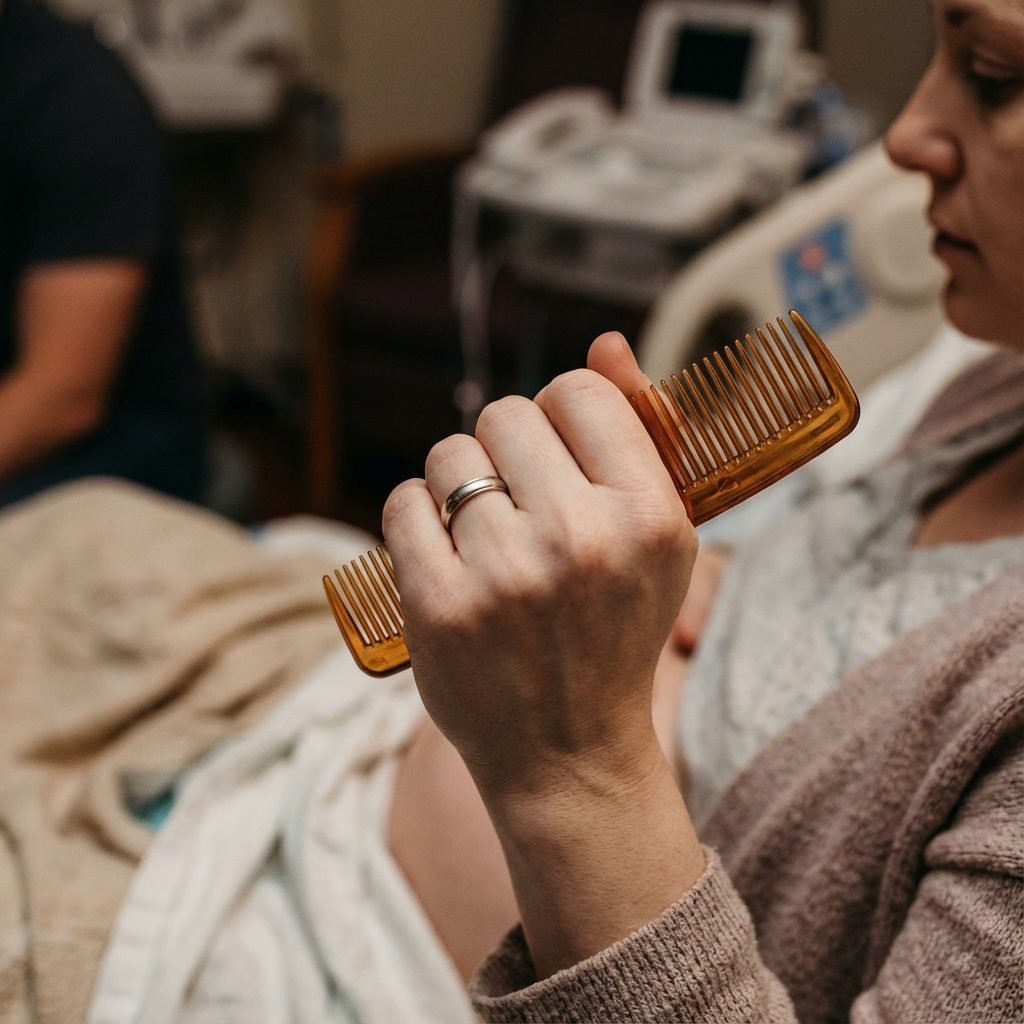
Why Holding A Comb During Labor Is The Pain Hack You Need To Know
As you approach your due date, the anticipation of meeting your baby is likely mixed with a healthy dose of apprehension about labor pain. It’s a universal concern, and one that sends many expectant parents down a rabbit hole of research, classes, and conversations. While medical pain relief options are modern marvels, what if I told you that one of the most effective, empowering, and accessible tools for managing contractions could be sitting in your bathroom drawer right now? It’s true. Holding a simple hair comb during labor is a powerful pain management hack, trusted by doulas and birthing parents worldwide. It may sound too simple to be effective, but this technique is grounded in physiological science. In this guide, we’ll explore exactly why this humble tool works, how to use it correctly, and how to integrate it into your comprehensive birth plan for a more empowered and manageable labor experience.
The Science Behind the Squeeze: How Does a Simple Comb Help?
The Science Behind the Squeeze: How Does a Simple Comb Help?
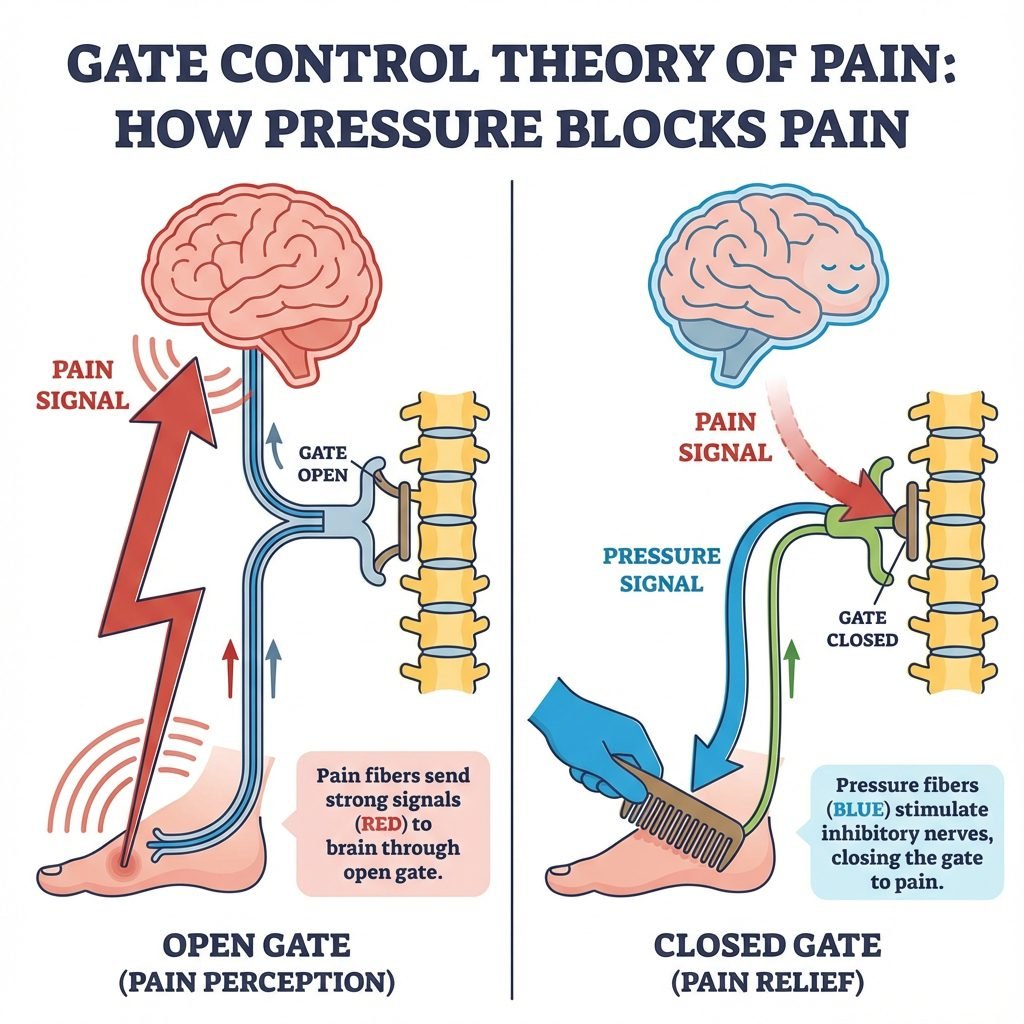
To understand how a comb can possibly stand up to the intensity of a contraction, we need to look at how our brain processes pain. The effectiveness of the comb technique is rooted in two key principles: the Gate Control Theory of Pain and the ancient practice of acupressure.
The Gate Control Theory of Pain
First proposed in 1965 by Ronald Melzack and Patrick Wall, the Gate Control Theory revolutionized our understanding of pain. It suggests that there’s a ‘neurological gate’ in the spinal cord that either allows pain signals to travel to the brain or blocks them. This gate can’t process an unlimited number of signals at once. When you experience a powerful sensation like a contraction, that pain signal travels up the spinal cord, through the gate, and to your brain, where it’s registered as pain.
However, you can essentially create a ‘traffic jam’ at this gate. By introducing a different, non-painful sensation—like the sharp pressure from the teeth of a comb digging into your palm—you send competing signals up the same nerve pathways. The brain must then divide its attention. The intense, focused pressure from the comb acts as a powerful distraction, effectively ‘closing the gate’ to a portion of the pain signals from the uterus. Think about it: when you accidentally bump your elbow, what’s your first instinct? You rub it. The sensation of rubbing overrides some of the sharp, throbbing pain. The comb works on the very same principle, but gives you a focal point you can control.
Acupressure: Hitting the Right Points
The magic of the comb is also amplified by where you hold it. When you grip a comb with the teeth pressing against the base of your fingers, you are stimulating several key acupressure points. In traditional Chinese medicine, these points are believed to be gateways to the body’s energy flow, or Qi.
One of the most significant points located in the palm is Lao Gong (Pericardium 8). You can find it where the tip of your middle finger lands when you make a loose fist. This point is known for its calming properties and is often used to relieve anxiety and heart palpitations. Stimulating it during labor can help reduce stress and induce a state of calm focus.
By squeezing the comb, you’re not just creating a distraction; you’re activating points that can help your body’s hormonal and nervous systems manage stress and pain more effectively. It becomes a holistic tool that engages both your physical and neurological responses to labor.
The Practical Guide: How to Use the Comb Technique Effectively
The Practical Guide: How to Use the Comb Technique Effectively
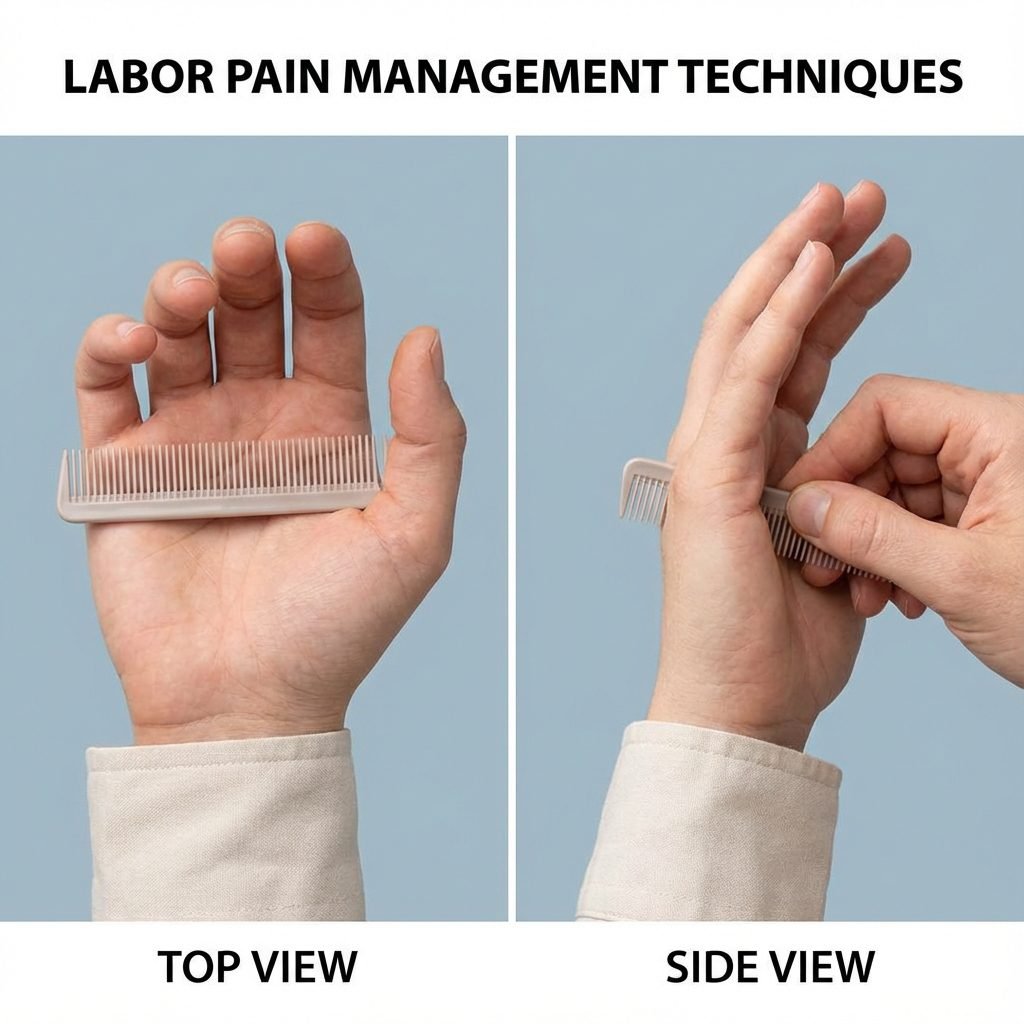
Knowing the science is one thing, but applying it correctly during the intensity of labor is key. Using the comb is intuitive, but a few tips can maximize its benefits. Here is a step-by-step guide to prepare you and your partner.
- Choose the Right Tool: You don’t need anything fancy. A simple, sturdy plastic comb is perfect. Avoid combs with sharp, scratchy teeth or decorative elements that could be uncomfortable. The goal is firm pressure, not breaking the skin. Many birthing people find that having two identical combs—one for each hand—is most effective.
- Find Your Grip: Place the comb horizontally across your palm so that the teeth are pressing into the fleshy part at the base of your fingers. When you close your hand to make a fist, the teeth should apply direct pressure to those acupressure points we discussed.
- Timing is Everything: The comb is your tool to ride the wave of each contraction, not something to clench continuously. As you feel a contraction beginning to build, start to tighten your grip. Increase the pressure as the contraction intensifies, squeezing as hard as you need to. As the contraction peaks and then begins to fade, consciously relax your hand. This rhythm serves three purposes: it conserves your energy, prevents your hands from cramping, and creates a physical ritual that helps you mentally process the start and end of each wave.
- Pair with Your Breath: The comb is most powerful when synchronized with intentional breathing. As you start to squeeze, take a long, slow breath in. As you squeeze harder through the peak of the contraction, focus on a long, audible exhale. This pairing of breath and pressure creates a powerful mind-body connection that can keep you grounded and prevent panic from setting in.
- Involve Your Partner: For partners and dads, this is a fantastic, tangible way to provide support. You can hold the combs and place them in the birthing person’s hands at the start of a contraction, offering a verbal cue like, ‘Okay, a new wave is starting, let’s meet it together. Squeeze now.’ This shared action can make the process feel more like a team effort.
Beyond the Comb: Integrating This Hack into Your Birth Plan

Beyond the Comb: Integrating This Hack into Your Birth Plan
It’s crucial to remember that the comb technique is not a magic wand that erases all sensation. Rather, it is one valuable tool in a much larger toolbox of comfort measures. The goal is not to eliminate pain, but to make it manageable and to feel in control. Integrating the comb technique into a multi-faceted approach to labor will give you the best chance of having a positive and empowered experience.
Discuss this technique with your partner, doula, and medical providers ahead of time. Add it to your written birth plan under ‘Comfort Measures’ or ‘Pain Management Preferences.’ This ensures your entire support team is aware of your intentions and can help facilitate them.
Consider how the comb can work in tandem with other strategies. For example, you can squeeze the comb while swaying your hips, sitting on a birth ball, or leaning on your partner. It’s a portable tool that can be used in almost any laboring position, including in the shower or birth tub (just be sure it’s a simple plastic comb!).
To put it in perspective, let’s compare it with other non-pharmacological methods:
| Comfort Measure | Primary Mechanism | Best Used For | Pros |
|---|---|---|---|
| Comb Technique | Gate Control Theory, Acupressure, Distraction | Active Labor Contractions, Transition | Portable, Inexpensive, Empowering, Can be used in any position. |
| Breathing Techniques | Oxygenation, Parasympathetic Nervous System Activation | Entire labor process, from early labor to pushing | Reduces panic, Calming, Conserves energy, No equipment needed. |
| Hydrotherapy (Shower/Tub) | Buoyancy, Warmth, Relaxation | Active Labor, Back Labor | Significant pain relief, Eases movement, Promotes relaxation. |
| Movement & Positioning | Gravity, Opening the Pelvis, Relieving Pressure | Entire labor process | Can speed up labor, Reduces back pain, Helps baby descend. |
| Partner Support (Massage, Counter-pressure) | Physical Comfort, Emotional Security, Gate Control Theory | Entire labor process, especially for back labor | Strengthens connection, Provides emotional and physical relief. |
Real Stories, Real Relief: Testimonials from Parents

Real Stories, Real Relief: Testimonials from Parents
The theory and instructions are helpful, but hearing from parents who have actually used this technique during their own labors provides a powerful layer of understanding and encouragement. Here are a few experiences shared by new parents:
“I was so skeptical when my doula handed me two cheap-looking combs. I thought, ‘Really? This is what’s going to get me through?’ But by the time I was in active labor, I was squeezing them for dear life. It gave my pain a place to go. Instead of the pain being this overwhelming force inside me, I could channel it into my hands. It was my anchor through every single contraction for hours. I’ll be packing them in my hospital bag for baby number two, no question.”
“As a dad-to-be, I attended all the classes, but I still felt a sense of helplessness looming. What could I really do when she was in that much pain? The comb was our secret weapon. During a really tough contraction, I’d remind her, ‘Use your combs, breathe with me.’ I’d squeeze her shoulder while she squeezed the combs. It gave me a tangible role and gave us a rhythm to work through together. It turned ‘her pain’ into ‘our challenge.’”
“I had a lot of back labor and the counter-pressure my husband was applying was essential. But I used the combs in my hands at the same time. The combination of the two sensations was incredible. The pressure in my hands distracted me from the ache in my back, and it gave me a focal point other than the clock. I truly believe it helped me achieve the unmedicated birth I was hoping for.”
Conclusion
The journey of childbirth is one of immense strength, surrender, and discovery. Preparing for it means gathering not just the tiny baby clothes and nursery furniture, but also the tools that will support your mind and body through the challenge. The labor comb is a perfect example of such a tool: simple, accessible, and profoundly effective. It empowers you by placing a tangible source of control and focus directly into your hands. It works with your body’s own brilliant wiring to make pain more manageable, allowing you to stay present and powerful. Pack a comb in your hospital bag. Tell your partner about it. Practice the grip. It may be the most underestimated, yet most valuable, item you bring with you on the day you meet your baby.
Disclaimer: This article is for informational purposes only and is not a substitute for professional medical advice, diagnosis, or treatment. Always seek the advice of your physician or other qualified health provider with any questions you may have regarding a medical condition.