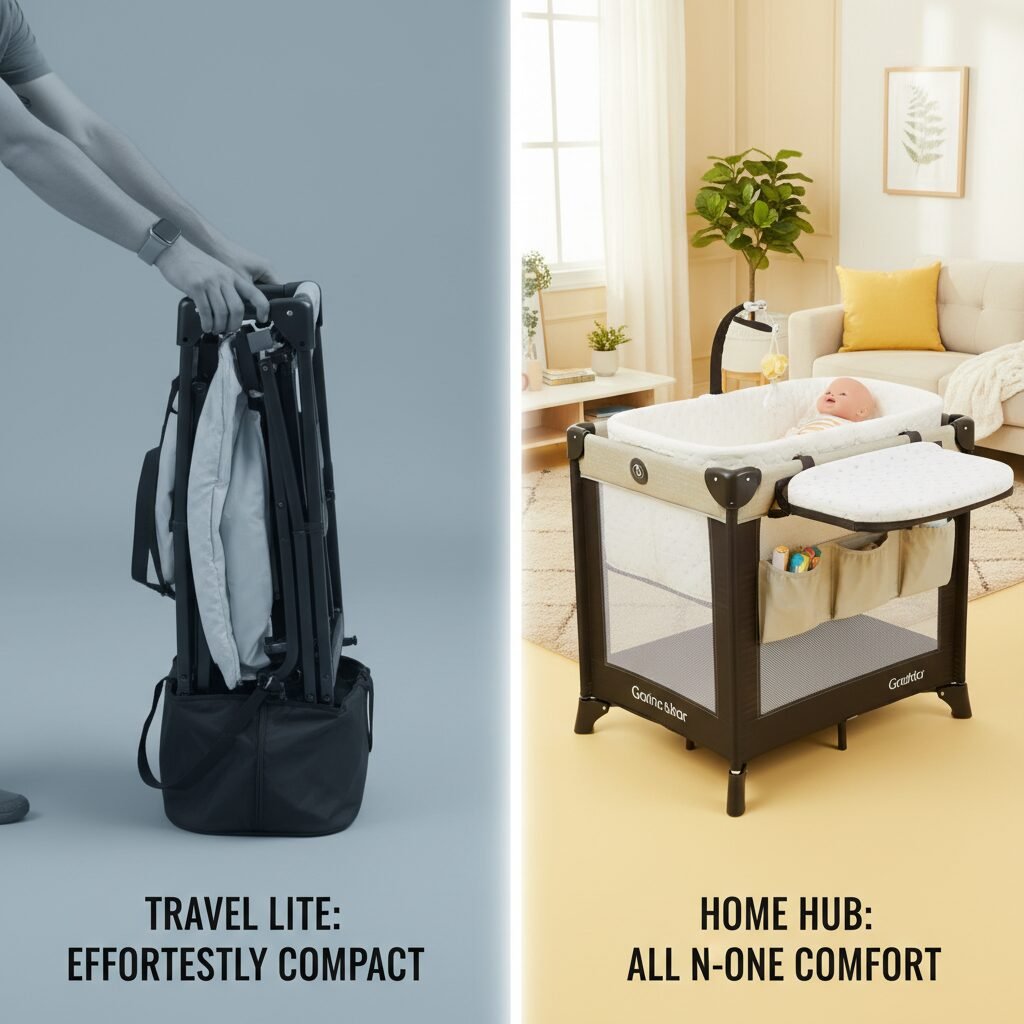
Travel Crib vs. Pack ‘n Play: Which Portable Bed is Best for Your Baby?
As you prepare for your baby’s arrival or navigate the early years of parenthood, the list of necessary gear can seem endless. One of the most critical items is a safe and comfortable place for your baby to sleep when you’re away from home, or even just in another room of the house. This decision often comes down to two popular choices: the travel crib and the pack ‘n play. While the terms are sometimes used interchangeably, they represent two distinct categories of baby gear, each with its own set of strengths and weaknesses.
Understanding the nuances between them is key to investing in a product that truly fits your lifestyle. Are you a family of frequent flyers who values every ounce and inch of luggage space? Or are you looking for a versatile workhorse that can serve as a changing station, bassinet, and playpen in your living room? As a doula and maternal health educator, I’ve guided countless families through this very decision. This guide will provide a fact-based, empathetic breakdown to demystify the options, ensuring you can choose with confidence and peace of mind.
Deep Dive: What is a Travel Crib?
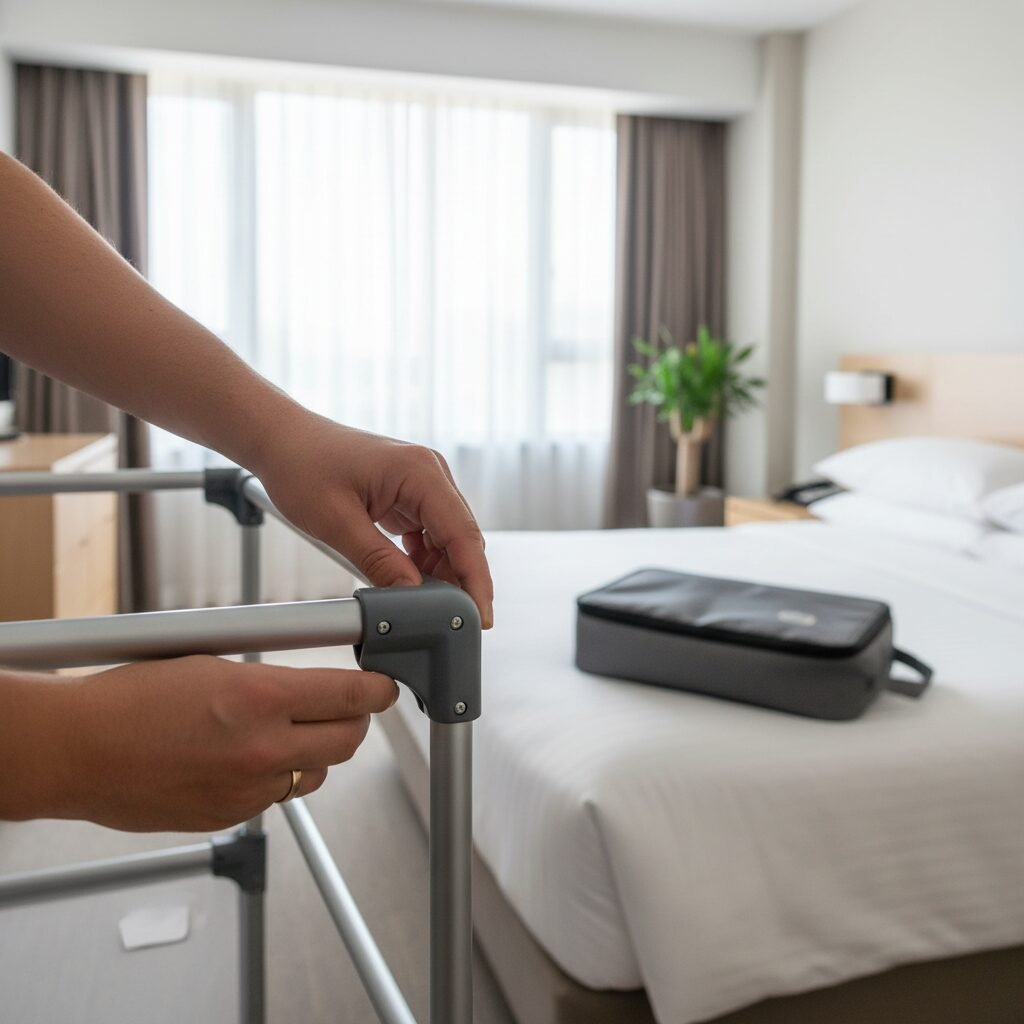
The Minimalist’s Dream for On-the-Go Sleep
A travel crib is engineered with one primary goal in mind: portability. It is designed to be as lightweight and compact as possible, making it the ideal companion for families who are frequently on the move, especially those who travel by air. Think of it as a specialized piece of equipment, honed for a specific task.
Key Characteristics of a Travel Crib:
- Lightweight Construction: Manufacturers typically use aluminum frames and durable, lightweight fabrics to keep the weight to a minimum, often between 10-15 pounds. This makes a significant difference when you’re lugging it through an airport or up a flight of stairs.
- Compact Fold: A true travel crib folds down into a surprisingly small, streamlined package, usually fitting into a dedicated shoulder bag or backpack-style carrier. It’s designed to be checked as luggage or even, in some cases, fit into an overhead bin.
- Simplified Setup: Speed and simplicity are paramount. Most travel cribs feature an intuitive design that allows for setup and takedown in just a few minutes, sometimes with a single motion. There are no complex parts or confusing instructions—a blessing for tired parents arriving at their destination late at night.
- Comfort-Focused Mattress: While still adhering to strict safety standards for firmness, many premium travel cribs come with a thicker, more comfortable mattress than a standard pack ‘n play. The focus is purely on creating a quality sleep environment.
- Single-Purpose Design: You won’t find extra bells and whistles here. A travel crib is a bed. It doesn’t include a changing table, napper, or storage compartments. Its beauty lies in its simplicity and excellence at its one job.
Unpacking the Pack ‘n Play (Playard)
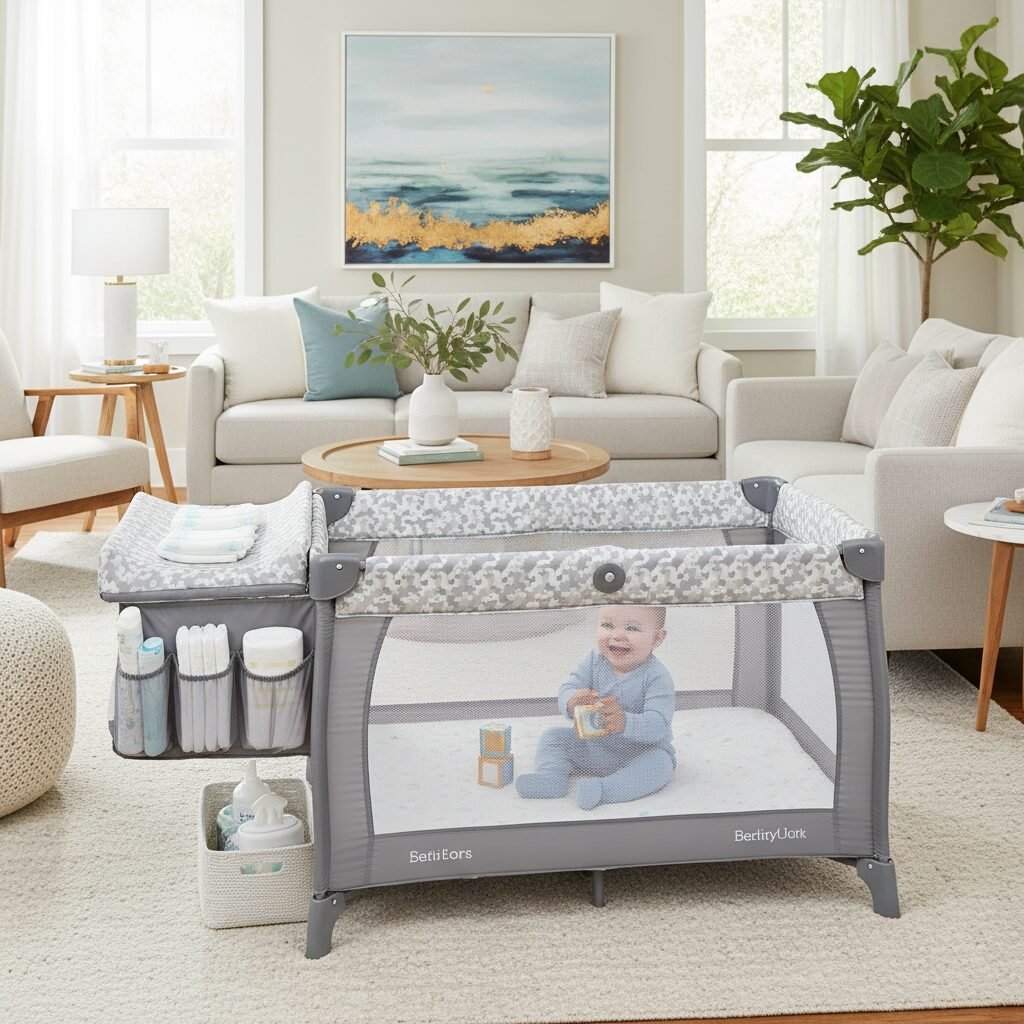
The All-in-One Nursery Station
The Pack ‘n Play, a term trademarked by Graco but now used colloquially to describe playards, is the undisputed champion of versatility. It’s designed to be a multi-functional hub for your baby’s needs, serving as a safe space for sleep, play, and care from the newborn stage through toddlerhood. It’s less about ultimate portability and more about providing a comprehensive, semi-permanent solution for use at home or at a caregiver’s house.
Key Characteristics of a Pack ‘n Play:
- Multi-Functionality: This is its main selling point. A typical pack ‘n play can come equipped with a removable full-size bassinet for infants, a flip-away changing station, and built-in storage pockets for diapers and wipes. Some models even include a portable seat or napper.
- Heavier and Bulkier: All those features come at a cost. Pack ‘n plays are significantly heavier (often 20-30 pounds) and bulkier when folded. They are best suited for car travel or for being set up long-term at a grandparent’s home.
- Durable Construction: They are built to withstand more rigorous use, including the daily life of an active toddler using it as a playpen. The frames are sturdy, and the materials are tough and easy to clean.
- Grows with Your Child: The value of a pack ‘n play extends over time. Once your baby outgrows the bassinet and changing table attachments, the main body serves as a safe, contained play area for months or even years to come.
- Standard Mattress: The included mattress is typically a thin, firm board that folds around the playard for storage. While perfectly safe, it’s generally not as plush or comfortable as the mattresses found in dedicated travel cribs.
Head-to-Head Comparison: Key Decision Factors
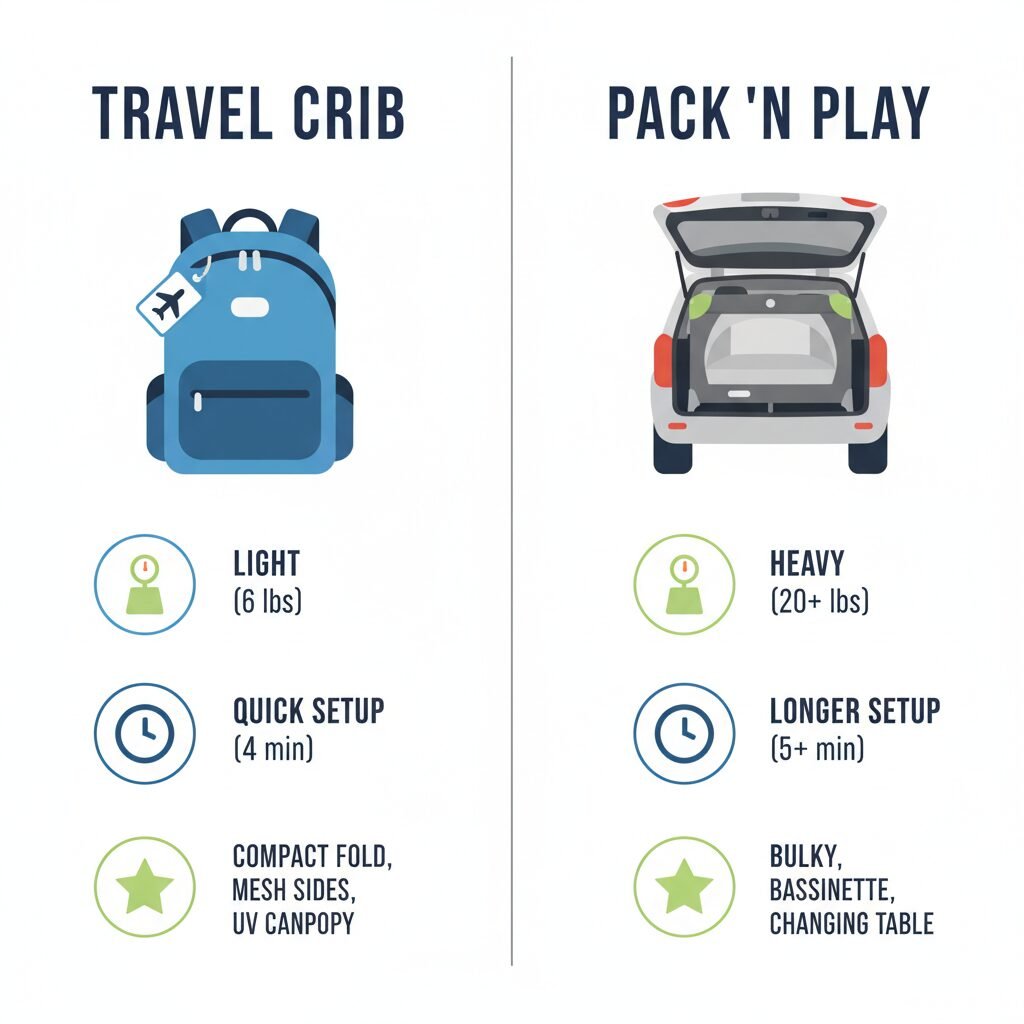
Now that we understand the core philosophy behind each product, let’s put them side-by-side. Your family’s unique needs will determine which of these factors are most important to you. This detailed comparison will help you clarify your priorities.
| Feature | Travel Crib | Pack ‘n Play / Playard |
|---|---|---|
| Primary Purpose | Portable Sleep (especially for travel) | Multi-functional Station (sleep, play, change) |
| Average Weight | 10-15 lbs (4.5-7 kg) | 20-30 lbs (9-13.5 kg) |
| Folded Size | Very compact, often fits in a shoulder bag | Bulky and rectangular |
| Best for Air Travel | Yes, highly recommended | Possible, but can be cumbersome and heavy |
| Setup/Takedown | Very fast and intuitive (often under 2 minutes) | More steps, can be tricky (5-10 minutes) |
| Included Features | Typically just the crib, mattress, and bag | Bassinet, changing table, storage, napper |
| Mattress Quality | Often thicker and more comfortable | Standard thin, firm folding mattress |
| Age Range | Newborn to ~3 years (for sleep) | Newborn to ~3 years (bassinet, then playpen) |
| Average Cost | Moderate to High ($150 – $300+) | Low to Moderate ($80 – $250) |
Safety Standards: A Non-Negotiable Tie
It is critical to state that both reputable travel cribs and pack ‘n plays sold in the US must meet the same stringent safety standards set by the Consumer Product Safety Commission (CPSC). When making your choice, safety is a given, provided you follow these rules:
- Always use the mattress provided by the manufacturer. Do not add extra mattresses or soft padding, as this poses a suffocation risk.
- Ensure the mesh siding is breathable and has no tears or holes.
- Follow the age and weight limits for all components, especially for bassinet inserts and changing tables.
- Keep the space free of soft bedding, bumpers, and toys during sleep to adhere to the American Academy of Pediatrics’ safe sleep guidelines.
The Verdict on Versatility vs. Portability
The choice truly boils down to this fundamental trade-off. A pack ‘n play offers incredible value by combining multiple pieces of baby gear into one. For many families, having a single product that serves as a bassinet, changer, and playpen is a game-changer for their home or for frequent visits to the grandparents. However, that versatility comes at the expense of portability. A travel crib, conversely, sacrifices all a la carte features to excel at being light, compact, and easy to transport. It does one thing, but it does it exceptionally well.
The Doula’s Verdict: Which One Should You Choose?
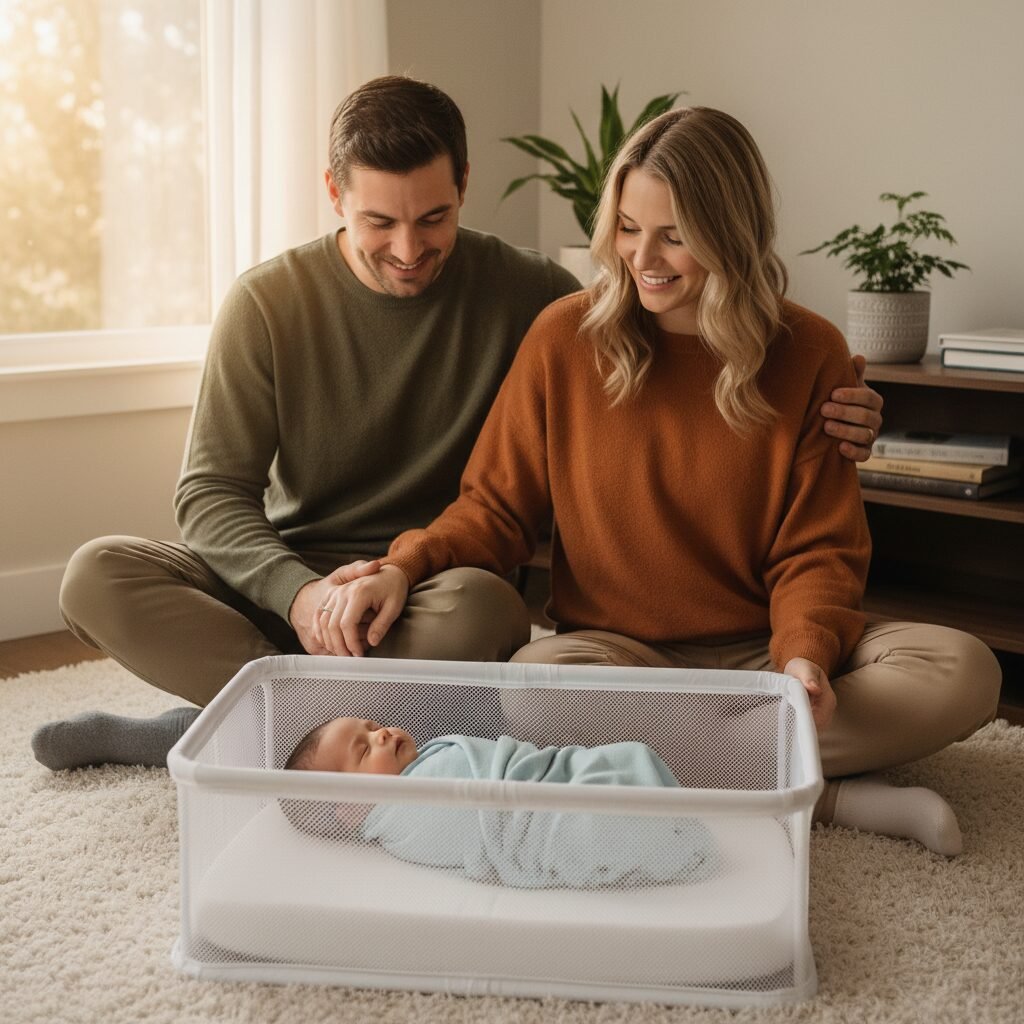
As a doula, my advice always centers on tuning out the noise and focusing on what will genuinely make your life easier and your baby safer. There is no single ‘best’ product, only the product that is best for your family. Let’s break it down into clear scenarios.
Choose a Travel Crib if:
- You are a frequent flyer. The weight and size difference is a non-negotiable advantage in an airport.
- You have limited storage space at home. A travel crib can be tucked away in a closet much more easily.
- You prioritize quick, stress-free setup. If the thought of fumbling with a complicated piece of gear after a long travel day fills you with dread, the simplicity of a travel crib is for you.
- You already have a dedicated changing station and bassinet at home and only need a solution for sleep while traveling.
Choose a Pack ‘n Play if:
- You primarily travel by car. The extra weight and bulk are far less of an issue when you can toss it in the trunk.
- You want an all-in-one station for your main living area. It’s the perfect solution for a safe downstairs nap and changing spot.
- You plan to use it at a relative’s or caregiver’s home frequently. You can set it up once and leave it there as a permanent second nursery.
- You are on a tighter budget. A pack ‘n play often provides more functionality for a lower initial investment.
- You value the long-term use as a toddler playpen.
Remember, the goal is to support your family’s well-being. The right piece of gear is the one that reduces stress, not adds to it. Trust your intuition about your lifestyle. The best choice is the one that seamlessly integrates into your life, providing safety for your baby and convenience for you.
Conclusion
Navigating the world of baby products can be a journey, but it doesn’t have to be a stressful one. Both the travel crib and the pack ‘n play are excellent, safe options designed to support modern families. The key is self-awareness. By honestly assessing your travel habits, your space constraints, and your desire for multi-functionality, you can move from a state of confusion to one of clarity. A travel crib is a specialist—a master of portability. A pack ‘n play is a generalist—a jack-of-all-trades that offers immense value. Neither is inherently superior; they simply serve different primary purposes. By choosing the one that aligns with your family’s unique rhythm, you are not just buying a piece of gear; you are investing in smoother travels, easier days, and the peace of mind that comes from knowing your little one has a safe space to rest, wherever your adventures may take you.