

The Script You Need: Telling Smoking Grandparents They Can’t Hold The Baby
The moment a grandparent meets their grandchild for the first time is meant to be pure magic. It’s a beautiful, full-circle experience you’ve likely dreamed about. But when a beloved grandparent is a smoker, that dream can be clouded by a haze of anxiety. You’re caught between honoring your parents and an overwhelming, primal need to protect your fragile newborn. How do you tell the people who raised you that their habit, even the lingering scent on their clothes, poses a risk to their grandchild?
If you’re reading this, your feelings are completely valid. This is not an easy conversation. You may be worried about hurting their feelings, causing a family rift, or being seen as overly dramatic. Let’s be clear: Your responsibility is to your child’s health and safety. This article is your guide and your permission slip. We will arm you with the scientific facts about thirdhand smoke, validate the complex emotions you’re experiencing, and provide the exact scripts you need to communicate this crucial boundary with love, clarity, and unwavering firmness.
The Invisible Danger: Understanding the Science of Thirdhand Smoke
The Invisible Danger: Understanding the Science of Thirdhand Smoke
To have this conversation with confidence, you must first be grounded in the facts. This isn’t about judging a lifestyle; it’s about mitigating a scientifically-proven risk. The danger isn’t just from secondhand smoke, which is the smoke inhaled by non-smokers. The more insidious threat to your baby is thirdhand smoke (THS).
What is Thirdhand Smoke?
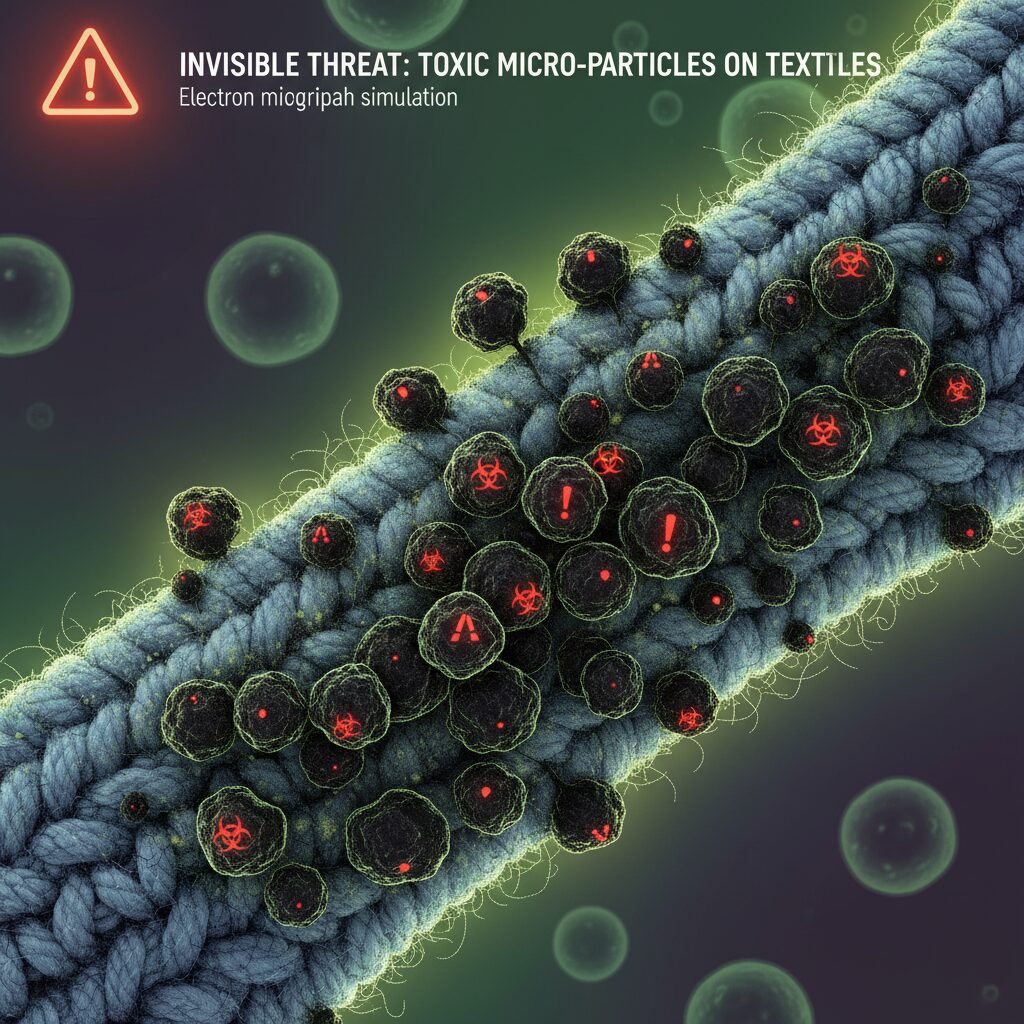
Thirdhand smoke is the toxic residue and chemical particles that linger long after a cigarette has been extinguished. These particles cling tenaciously to virtually every surface:
- Clothing and Hair: The most common carriers in this situation. The residue settles deep into fabric fibers and coats hair.
- Skin: The oils on our skin can absorb these toxic particles.
- Surfaces: Furniture, carpets, walls, and even the interior of a car become reservoirs of THS.
When someone holds your baby, the baby’s skin comes into direct contact with these contaminated surfaces. Babies also explore the world with their mouths, meaning they can ingest these particles directly from a grandparent’s shirt or hands. Their breathing zone is right against the person holding them, so they can also inhale the gases that are ‘off-gassed’ from the contaminated clothing.
Why is THS So Dangerous for Newborns?
A newborn’s body is not a miniature version of an adult’s. Their systems are incredibly vulnerable. Here’s why THS is a significant threat:
- Immature Respiratory System: A baby’s lungs are still developing. Their breathing rate is much faster than an adult’s, meaning they take in more air—and more contaminants—relative to their body weight. Exposure to THS is linked to a higher risk of asthma, bronchitis, pneumonia, and other respiratory illnesses.
- Sudden Infant Death Syndrome (SIDS): This is the most frightening risk. Multiple studies from the American Academy of Pediatrics have established a strong link between infant exposure to tobacco smoke (including THS) and an increased risk of SIDS. The toxins can affect an infant’s brain development, specifically the part that controls breathing.
- Developing Brain and Organs: The toxic compounds in THS, which include carcinogens like nitrosamines, can interfere with normal cellular development. A baby’s skin is also thinner and more permeable, allowing for greater absorption of these chemicals.
“Thinking that smoking outside is enough to protect a child is a myth. The toxins travel indoors on smokers’ bodies and clothes, contaminating the home environment and putting children at risk.” – A statement from the American Academy of Pediatrics.
Understanding these facts is your foundation. You are not being difficult; you are being a well-informed and protective parent. This is not an opinion—it is a matter of medical science.
Preparing for ‘The Talk’: Aligning with Your Partner and Managing Your Anxiety

Preparing for ‘The Talk’: Aligning with Your Partner and Managing Your Anxiety
Before you utter a single word to the grandparents, the most important conversation needs to happen with your partner. Presenting a calm, united front is non-negotiable. This isn’t about one parent being the ‘bad guy’; it’s about both of you establishing a fundamental safety rule for your family.
Step 1: Get on the Same Page
Sit down with your partner when you are both calm and not sleep-deprived (as much as possible). Discuss your concerns and agree on the specific boundary. Your ‘House Rule’ should be crystal clear. For example:
- The Rule: “Anyone who has been smoking cannot hold the baby. To hold the baby, they must shower and change into fresh clothes that have not been exposed to smoke.”
- Consistency is Key: This rule must apply to everyone—grandparents, aunts, uncles, friends. It is not a personal attack on one individual.
- Anticipate Scenarios: What will you do if they show up at the hospital smelling of smoke? What’s the plan for the first visit at home? Role-playing the conversation can help you both feel more prepared.
Step 2: Validate Your Own Feelings
It’s crucial to acknowledge the emotional weight of this situation. You might be feeling:
- Guilt: Feeling like you are depriving your parents of a precious moment.
- Fear: Worried about their reaction, potential anger, or lasting damage to your relationship.
- Anxiety: A general sense of dread about the impending confrontation.
These feelings are normal. Reframe your perspective. This boundary is not an act of rejection; it is an act of profound love and protection for your child. You are your child’s only advocate. Holding firm on this is one of your first and most important acts as a parent.
Affirmation: “My primary responsibility is to my child’s well-being. Setting this boundary comes from a place of love and protection. I can be both a respectful child and a responsible parent.”
The Scripts: Word-for-Word Guides for a Compassionate but Firm Conversation

The Scripts: Word-for-Word Guides for a Compassionate but Firm Conversation
The delivery of your message is everything. The goal is to be understood and respected, not to win an argument. Have this conversation before the baby arrives or before their first visit to avoid a tense, in-the-moment confrontation. A phone call or a calm, face-to-face chat is best—avoid text messages, which can be easily misinterpreted.
Approach 1: The Gentle & Collaborative Approach
This approach frames the grandparents as trusted partners in the baby’s care.
You: “Hi Mom/Dad, we are getting so excited for you to meet the baby! As we’re getting everything ready, our pediatrician has been giving us a lot of information on keeping the baby safe and healthy in these first few months. One of the biggest things they emphasized was the risk of thirdhand smoke on clothes and skin. It was new information for us, but it’s linked to things like SIDS and asthma, so we have to be incredibly careful. So, we’ve had to make a strict house rule for everyone who visits: before holding the baby, we’ll need you to have a fresh set of clothes to change into and to wash your hands and face really well. We could even keep a special ‘grandparent robe’ or some clean t-shirts for you here to make it easier. We know how much you want to protect the baby too, so we wanted to talk to you about it beforehand so we can all be on the same page.”
Approach 2: The Direct & Factual Approach
This approach is less emotional and leans heavily on medical advice. It’s effective if you anticipate a debate.
You: “Hi Mom/Dad, I need to talk to you about something important regarding the baby’s health before your visit. We’ve been advised by our doctor that there can be no exposure to tobacco smoke, and that includes the residue on clothes and skin, which is called thirdhand smoke. The risk to a newborn’s respiratory system is significant. Therefore, our policy for all visitors is that if you’ve been smoking, you will need to shower and change into clean clothes before you can hold the baby. This is a non-negotiable safety rule for us, and we need to know that you can respect it. We want you to have a wonderful, close relationship with your grandchild, and this is a necessary step to ensure that can happen safely.”
Approach 3: The ‘United We Stand’ Approach (Delivered by the Smoker’s Child)
It’s often best for the biological child to lead the conversation with their own parents.
You: “Hey Dad, [Partner’s Name] and I need to talk to you about a safety rule we’re putting in place for the baby. We love you and we are so excited for you to be a grandpa. Because we love you, we have to have a tough conversation. Due to the medical risks of thirdhand smoke, we can’t let anyone who has been smoking hold the baby. This means we’ll need you to change into a clean shirt and wash up thoroughly right when you get here. It’s not a comment on you as a person, it’s a rule about the smoke itself. It’s our job as parents to eliminate this risk, and we are a total team on this. We know you’ll understand because you love this baby as much as we do.”
Handling Pushback: How to Respond to Common Objections

Handling Pushback: How to Respond to Common Objections
Even with the best script, you may face resistance. The objections often come from a place of hurt feelings, misinformation, or a different generational perspective on parenting. Do not get drawn into an argument. Stay calm, repeat your boundary, and hold your ground. This is your first major test of parental advocacy.
Here is a guide to common reactions and how to respond:
| The Objection / Pushback | Your Empathetic & Firm Response |
|---|---|
| “This is ridiculous! I smoked around you kids and you turned out fine!” | “I hear you, and I know your intention was never to harm us. The medical research has just come so far since then. We know so much more now about the specific risks to newborns, like SIDS. We have to follow the current safety guidelines from our doctor. This is the new standard of care.” |
| “So you’re saying I’m dirty? You’re trying to hurt my feelings.” | “This is absolutely not about you being dirty or us trying to hurt you. We love you. This is about the invisible chemical residue that we now know clings to everything. It’s the smoke we’re saying no to, not you. We’re trying to find a way for you to safely have all the cuddles you want.” |
| “Fine, I just won’t come over then! You’re keeping my grandchild from me!” | “That would make us so sad, and it’s the last thing we want. We are not trying to keep you away; we are trying to make it safe for you to be close. The invitation to see the baby is always open, as long as we can follow this one safety rule. We can even video chat anytime you want.” |
| “I’ll just smoke outside and wash my hands. That should be good enough.” | “We really appreciate you being willing to do that, but unfortunately, the research on thirdhand smoke shows that the particles cling to clothes and hair so strongly that it’s not enough. To be completely safe, it has to be a full change of clothes. We’re happy to provide a comfortable place for you to change here.” |
| (The Silent Treatment / Pouting) | “I can see that this has upset you, and I’m sorry for that. Our intention isn’t to cause a fight. Let’s take a break from this conversation for now. The baby’s safety rule stands, but we love you, and we hope you’ll choose to be a part of their life within that boundary.” |
Remember the Broken Record Technique. If they continue to argue, you don’t need to find new ways to explain yourself. Simply repeat the core message calmly: “I understand, but our pediatrician’s advice is clear, and this is a safety rule we will not be bending. We need you to change your clothes before holding the baby.”
Conclusion
You Are the Parent. You Make the Rules.
This conversation is a rite of passage for many new parents. It’s a profound declaration that a new family unit has been formed, with its own rules and priorities. Navigating this challenge with grace and strength will empower you for the countless parenting decisions that lie ahead. Remember your ‘why’: the tiny, vulnerable human who is depending on you entirely for their safety and well-being. Holding that boundary isn’t just about protecting them from thirdhand smoke; it’s about honoring your role as their fierce protector.
You can do this. You can have the conversation, handle the outcome, and ensure your baby can build a beautiful, healthy, and safe relationship with their grandparents. Your child’s health is the only priority, and you are doing an amazing job by taking it this seriously.
Medical Disclaimer: The information in this article is intended for educational and informational purposes only and is not a substitute for professional medical advice, diagnosis, or treatment. Always seek the advice of your physician or other qualified health provider with any questions you may have regarding a medical condition. Never disregard professional medical advice or delay in seeking it because of something you have read in this article.