

The Printable Labor Cheat Sheet Every Dad Needs In The Hospital Bag
As the due date approaches, the hospital bag becomes a focal point of preparation. While most lists focus on mom and baby, there’s one item that’s arguably the most critical tool for a birth partner: the labor cheat sheet. For many dads and partners, the prospect of labor can be a mix of excitement and anxiety. You want to be the best support system possible, but the environment is unfamiliar, the terminology is confusing, and the stakes feel incredibly high. What do you do? What do you say? How can you actually help?
Let’s reframe the idea of a ‘cheat sheet.’ It isn’t about a lack of knowledge; it’s about strategic preparation. In the intensity of labor, memory can fail, and stress can take over. This simple piece of paper becomes your external hard drive, your coach, and your confidence booster, all in one. It frees you from the mental load of trying to remember everything, allowing you to be fully present, attuned, and responsive to your partner’s needs.
As a doula, I’ve seen firsthand how a prepared partner can transform a birthing experience. This guide will walk you through creating the ultimate labor cheat sheet, section by section. We’ll cover everything from vital logistics to comfort measures and empowering phrases, ensuring you have everything you need at your fingertips to be the rockstar support person your partner deserves.
Beyond the Basics: Why a Labor Cheat Sheet is Your Secret Weapon

Before we dive into what to write down, let’s understand the profound impact this simple tool can have. The hospital environment, while necessary, can be intimidating. Beeping machines, new faces, and rapid-fire questions can easily overwhelm even the most prepared couple. Your cheat sheet acts as an anchor in this storm.
It Offloads Your Mental Burden
Labor isn’t a spectator sport, but it does involve a lot of ‘hurry up and wait.’ During downtime, your mind might race with worries or questions. During active labor, things can happen quickly. Instead of trying to recall a specific massage technique you learned in a birthing class weeks ago, you can simply glance at your list. This frees up your mental energy to focus on the most important thing: connecting with and supporting your partner.
It Facilitates Clear Communication
Your cheat sheet is a tangible representation of your partner’s wishes. When a nurse asks about pain management preferences or positions to try, you won’t be fumbling for an answer. You can confidently refer to your notes, ensuring you’re both on the same page. It helps you translate the detailed birth plan into quick, actionable points for the medical team.
“Preparation for birth is about building a toolbox, not a timeline. Your cheat sheet is the guide to that toolbox, reminding you which tool to use and when.”
It Empowers You as an Advocate
Perhaps the most crucial role you’ll play is that of an advocate. You are the guardian of the birthing space and your partner’s primary voice when they are focused inward. The cheat sheet equips you with the information and confidence to ask informed questions, request time to discuss options, and ensure the birthing environment remains as calm and aligned with your partner’s desires as possible. It’s not about being confrontational; it’s about being a collaborative and informed member of the birth team.
Section by Section: Crafting the Ultimate Labor Support Tool
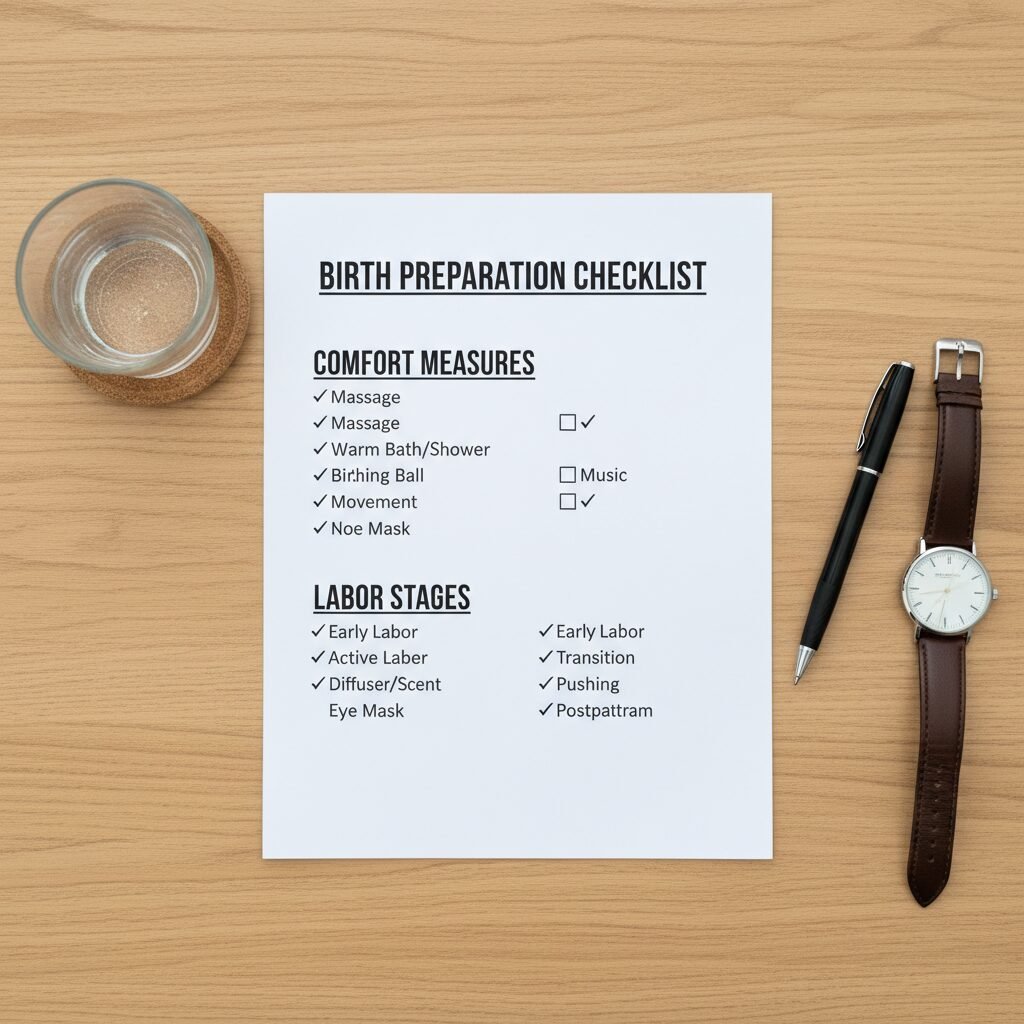
A great cheat sheet is organized, concise, and easy to read in a dimly lit room at 3 a.m. Use clear headings, bullet points, and simple language. Here’s a breakdown of the essential sections to include.
1. Critical Logistics & Contacts
This should be right at the top for quick access. When you’re stressed, you don’t want to be scrolling through your phone for a phone number.
- Hospital/Birth Center Address: Include the full address and any specific entrance instructions (e.g., ‘Use Emergency Entrance after 9 PM’).
- Important Phone Numbers: OB/GYN or Midwife’s office, hospital labor & delivery unit, doula, pediatrician, and key family members to notify.
- Insurance Information: A photo of the front and back of the insurance card, policy number, and group number.
- Hospital Pre-registration Confirmation: If you’ve pre-registered, have the confirmation number handy.
2. The Birth Plan at a Glance
You’ve likely spent time creating a detailed birth plan. This section is the highlight reel. It’s for quick reminders and to easily communicate your top priorities to the nursing staff.
- Pain Management: State preferences clearly (e.g., ‘Would like to avoid epidural as long as possible,’ or ‘Interested in epidural upon arrival’). List non-medical options you want to try first (e.g., shower, birth ball, movement).
- Laboring Preferences: Mention desires for intermittent monitoring (if possible), freedom of movement, and specific tools you’d like to use (e.g., peanut ball, squat bar).
- Pushing & Delivery: Note preferences like ‘Spontaneous pushing,’ ‘Dim lighting,’ ‘Delayed cord clamping,’ or ‘Immediate skin-to-skin.’
- Postpartum Care: Include preferences for the ‘golden hour,’ newborn procedures (like Vitamin K, eye ointment), and feeding intentions (breastfeeding, formula).
3. Labor Stages Quick Reference
Understanding the stages of labor helps you anticipate your partner’s needs and normalize the experience. A simple table is the most effective format for this.
| Labor Stage | What Your Partner Might Experience | How You Can Help |
|---|---|---|
| Early Labor (0-6 cm) | Mild, irregular contractions. Can talk/laugh between them. Excitement and anxiety. | Rest, hydrate, eat light snacks. Time contractions. Distraction (movies, walks). Stay calm and reassuring. |
| Active Labor (6-8 cm) | Stronger, longer, more frequent contractions. Needs to focus. Cannot talk through them. | Encourage position changes. Offer water. Apply counter-pressure. Breathe with her. Be her voice. |
| Transition (8-10 cm) | Most intense stage. Shaking, nausea, self-doubt (‘I can’t do this’). Pressure. | Stay close. Provide constant reassurance. Use firm, simple phrases (‘You are so strong’). Do not leave her side. |
| Pushing (10 cm to birth) | Urge to push. Renewed energy and focus. Can be long and physically demanding. | Hold her hand/leg. Be her mirror (show her how to breathe/push). Offer encouragement. Cold washcloth on her forehead. |
4. Comfort Measures & Coping Techniques Checklist
This is your practical, hands-on guide. When your partner is in pain and you feel helpless, go to this list and just try something.
- Physical Support: Counter-pressure on lower back/hips, hip squeezes, massage (shoulders, feet), applying hot/cold packs.
- Positional Changes: Remind her to move every 30-45 minutes. Suggest hands and knees, leaning over the bed, slow dancing, sitting on the toilet, using the birth ball.
- Environment Control: Dim the lights, play the labor playlist, turn on an essential oil diffuser (if allowed), minimize chatter.
- Hydration & Sustenance: Offer sips of water, coconut water, or electrolyte drinks between every contraction. Offer small snacks like honey sticks or applesauce if she’s up for it.
- Words of Affirmation: ‘You are doing an amazing job.’ ‘I am so proud of you.’ ‘Our baby is almost here.’ ‘Breathe with me.’ ‘I love you.’
Your Downloadable Template: Print, Pack, and Be Prepared
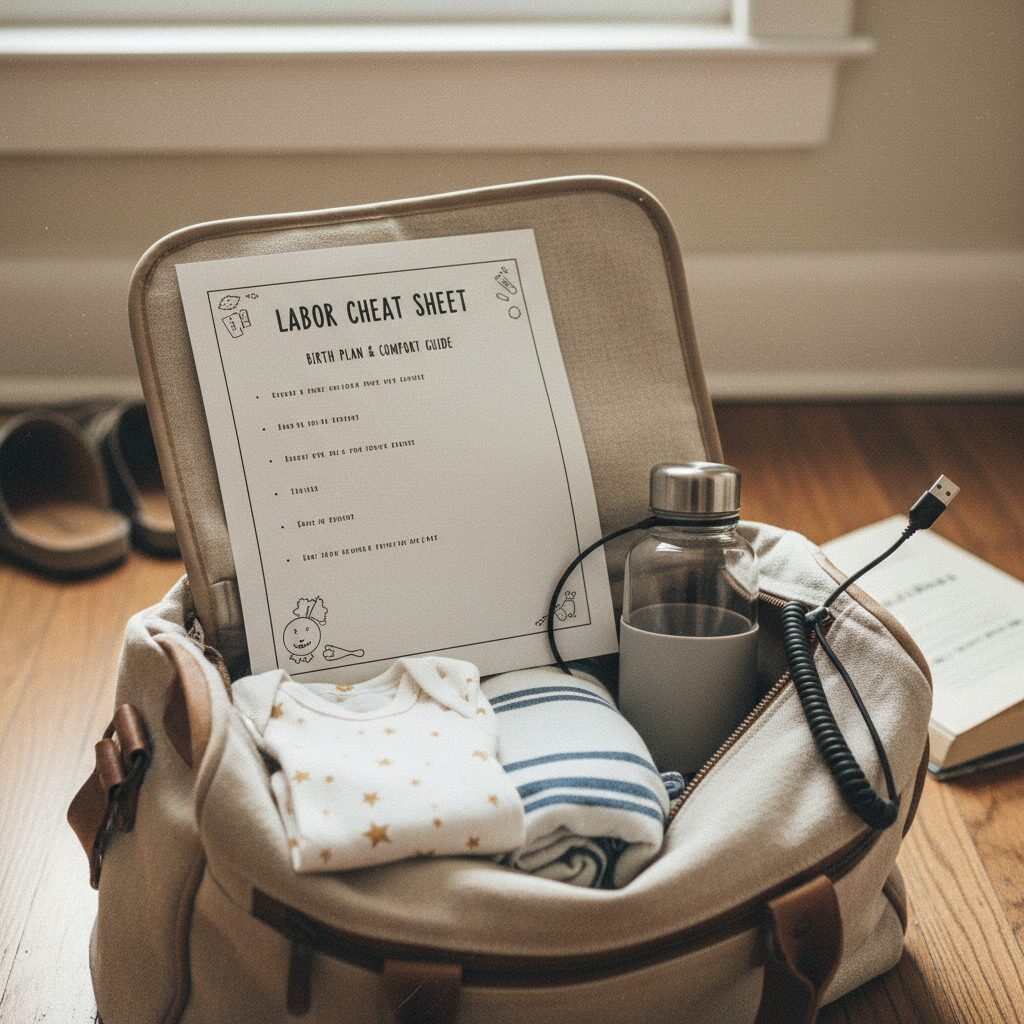
To make this process even easier, we’ve designed a clean, one-page printable template that incorporates all the sections mentioned above. It’s designed for clarity under pressure. Here’s how to make the most of it:
- Download and Customize Together: This isn’t just your project; it’s a team effort. Sit down with your partner well before the due date to fill it out. This conversation is just as important as the document itself, as it ensures you are both perfectly aligned on her wishes and your role.
- Fill in Every Detail: Take the time to complete each section. The more specific you are, the more helpful it will be. For example, under ‘Comfort Measures,’ your partner might specify, ‘Loves back rubs, hates feet being touched.’
- Print Multiple Copies: Paper can get lost, wet, or torn. Print at least two or three copies. Keep one in the hospital bag, one in your wallet or car, and maybe give one to your doula if you have one.
- Pack It Prominently: Don’t bury the cheat sheet at the bottom of the bag. Place it in a clear plastic sleeve to protect it and keep it in a front pocket or right on top so you can grab it the moment you arrive at the hospital.
- Review It: In the days leading up to labor, read it over a few times. Familiarize yourself with the contents so that when the time comes, you know exactly where to find the information you need. It’s like studying for the most important test of your life—a little review goes a long way.
This document is your permission slip to be a confident, engaged, and invaluable member of the birth team. It transforms you from a worried bystander into an active, knowledgeable participant in one of life’s most incredible moments.
More Than a List: Your Role as an Advocate and Protector

The cheat sheet is a powerful tool, but it’s the person holding it who makes the real difference. Your role during labor extends far beyond physical support; you are the emotional anchor and the primary advocate for your partner and baby. This piece of paper is what empowers you to fill that role effectively.
Guardian of the Space
Laboring women are incredibly vulnerable and sensitive to their environment. Your job is to protect the birthing space. This means acting as the gatekeeper for visitors, politely asking for quiet in the hallways, dimming the lights, and ensuring that the atmosphere remains as calm and peaceful as possible. Your cheat sheet, with its summary of your partner’s preferences, reminds you of the ‘vibe’ you are trying to create.
The Question-Asker
Medical professionals are experts, but they are also busy. Sometimes procedures are suggested or started without a full explanation. Your cheat sheet gives you the confidence to ask clarifying questions. Use the B.R.A.I.N. acronym, which you can even add to your sheet:
- Benefits: What are the benefits of this procedure?
- Risks: What are the risks?
- Alternatives: Are there any alternatives?
- Intuition: What is our intuition telling us? (This is a check-in with your partner).
- Nothing: What happens if we do nothing or wait a while?
Asking these questions doesn’t mean you are being difficult; it means you are an engaged participant in your family’s care.
The Emotional Rock
Above all, your steady, loving presence is the most important thing you bring. When your partner looks at you, she should see confidence, love, and unwavering belief in her ability. Your cheat sheet helps you maintain this composure because you’re not panicking about what to do next. You have a plan. You have resources. You can hold her hand, look her in the eye, and be the calm in her storm, because you came prepared.
Conclusion
The journey to parenthood is filled with moments of preparation, and packing the hospital bag is a significant milestone. By adding a thoughtfully completed labor cheat sheet, you are packing more than just a piece of paper. You are packing confidence, readiness, and a tangible expression of your commitment to your partner. You are showing up not just as a witness, but as an essential, active participant in your child’s birth story.
Remember, this tool is not about executing a perfect, rigid plan. Birth is unpredictable. The true purpose of the cheat sheet is to equip you with options, knowledge, and reminders so you can adapt to any turn the journey takes. Your prepared presence, your reassuring touch, and your unwavering support are the greatest gifts you can give your partner. You are ready for this. You’ve got the cheat sheet to prove it.
Disclaimer: The information provided in this article is for educational purposes only and is not a substitute for professional medical advice, diagnosis, or treatment. Always seek the advice of your physician or other qualified health provider with any questions you may have regarding a medical condition or childbirth.