The “Big Sibling Box” Hack To Stop Toddler Regression Before It Starts
The moment you see that second pink line or positive digital display, a wave of emotions hits. There’s joy, excitement, and for parents of a toddler, a specific and potent anxiety: How will my firstborn handle this? This question can quickly spiral into fears of toddler regression—a phenomenon where a previously mastered skill suddenly vanishes. Will the potty-trained toddler start having accidents? Will the great sleeper start waking all night? Will your sweet, independent child become a clingy, tantrum-throwing stranger overnight?
These fears are valid and incredibly common. The arrival of a new sibling is a monumental shift in a toddler’s universe. They are, in a sense, being ‘dethroned’ as the center of their parents’ world. But what if you could proactively address this challenge? What if there was a simple, effective, and positive strategy to not only mitigate regression but also to help your toddler embrace their new role as a big sibling? Enter the “Big Sibling Box.” This isn’t just about distraction; it’s a carefully designed psychological tool that creates positive associations with the new baby from day one. This guide will walk you through the science behind why it works, how to build the perfect box, and the best way to implement this game-changing hack to ensure a smoother, more joyful transition for your growing family.
The Psychology Behind the Shift: Why Toddler Regression is Normal

The Psychology Behind the Shift: Why Toddler Regression is Normal
Before we dive into the solution, it’s crucial to understand the problem from your toddler’s perspective. To them, the world has been predictable and centered around their needs. Suddenly, a new, noisy, and very demanding little person arrives, and the two most important people in their life—their parents—are understandably preoccupied. This isn’t a malicious act on their part; it’s a biological and emotional reality. For a toddler who lacks the vocabulary and emotional regulation to say, “I feel insecure and worried about my place in this family now,” their behavior becomes their language.
Understanding the Core Triggers
- Dethronement Syndrome: This term perfectly captures the feeling. Your firstborn is no longer the one and only. Sharing parental attention, time, and affection is a new and difficult skill they are forced to learn overnight.
- Disruption of Routine: Toddlers thrive on predictability. A new baby obliterates routine. Naps, meals, and playtime are now dictated by the newborn’s schedule. This lack of consistency can feel chaotic and frightening to a small child.
- Communication Barriers: A two- or three-year-old cannot articulate complex feelings of jealousy, fear, or sadness. Instead, these feelings manifest as behavior. Acting ‘like a baby’—wanting a bottle, using baby talk, or having potty accidents—is often a subconscious attempt to reclaim the attention and care they see the newborn receiving.
Remember, regression is not a step backward in your child’s development. It is a temporary coping mechanism in response to a major life stressor. Your child is not trying to be difficult; they are trying to communicate a need for reassurance.
By understanding these underlying causes, we can shift our mindset from frustration to empathy. The goal isn’t to punish the regressive behavior but to address the root cause: the toddler’s need to feel secure, loved, and important during this massive transition. The Big Sibling Box is designed to do exactly that.
What is the ‘Big Sibling Box’ and How Does It Work?
What is the ‘Big Sibling Box’ and How Does It Work?
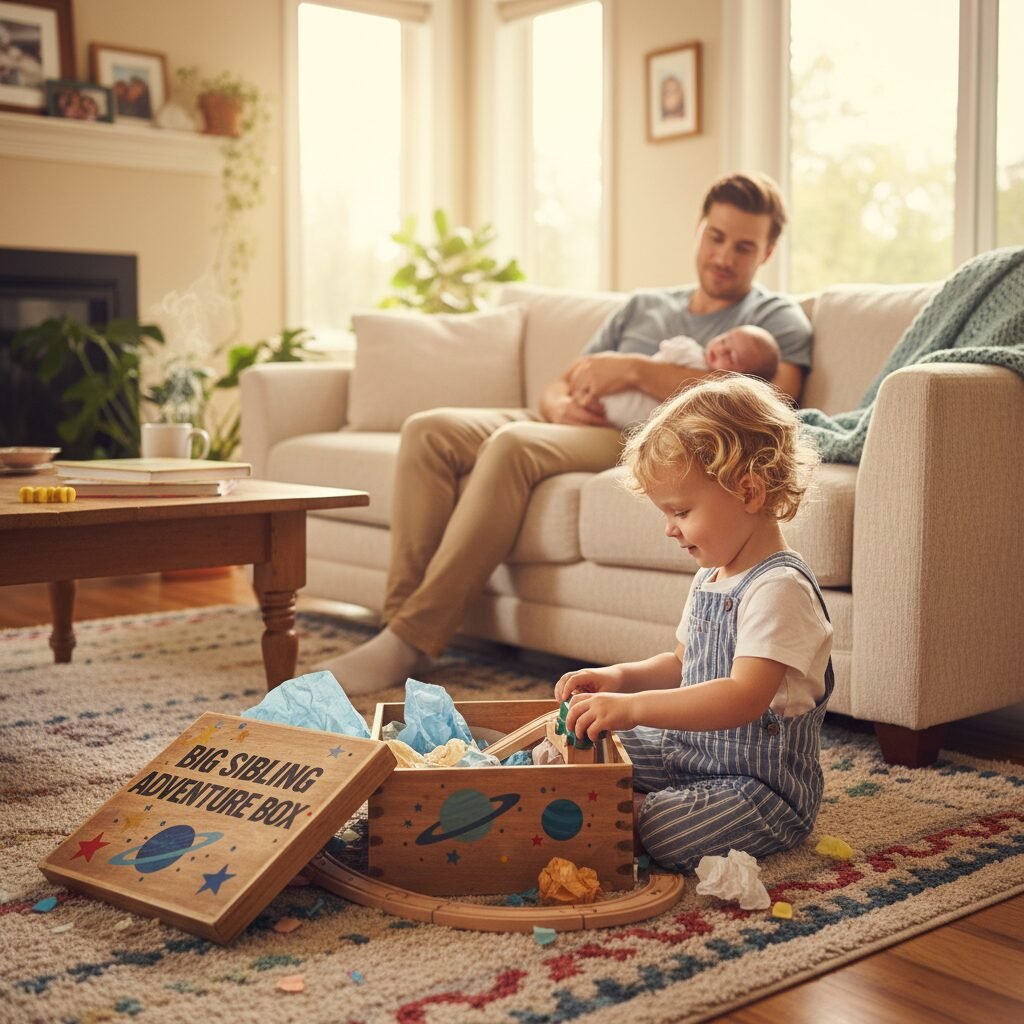
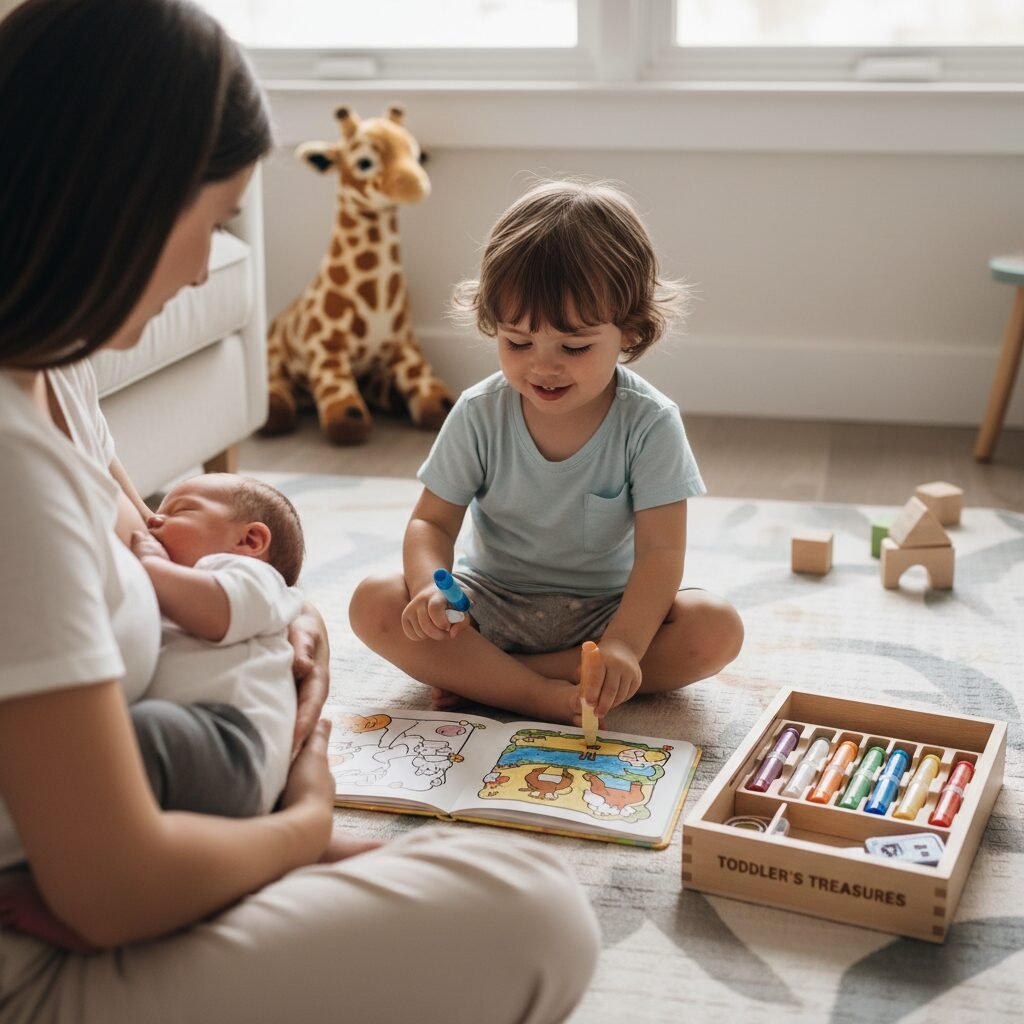
The concept is brilliantly simple. The Big Sibling Box is a curated container filled with special, new, and highly engaging toys, books, and activities that are reserved exclusively for the times when a parent needs to be occupied with the new baby. The most common use is during breastfeeding or bottle-feeding sessions, which can feel like an eternity to a waiting toddler.
The magic of the box lies in classical conditioning. Instead of your toddler associating the baby’s feeding time with being ignored or told to “wait a minute,” they begin to associate it with an exciting and positive event: getting to open their special box. It reframes the situation entirely:
- From Negative Association: “Mommy is feeding the baby, so she can’t play with me. This is boring and I feel left out.”
- To Positive Association: “Hooray! The baby is eating, which means I get to play with my super-special sticker book and new magnetic tiles!”
This simple psychological shift is the key. You are not just distracting your child; you are actively building a bridge of positive feeling between your toddler and the presence of their new sibling. It gives them something to look forward to, empowers them with a sense of autonomy over their special activity, and provides you, the parent, with a precious window of peace to bond with your newborn without the soundtrack of a whining, demanding toddler.
Think of it as a tool in your emotional toolkit. It’s a tangible way to show your older child that they are still seen, valued, and catered to, even when your arms are literally full.
Building Your Perfect Big Sibling Box: A Step-by-Step Guide
Building Your Perfect Big Sibling Box: A Step-by-Step Guide
Creating the box is a fun and strategic activity you can do in the final weeks of pregnancy. The key is to tailor it to your child’s specific age, interests, and developmental stage. Here’s how to build a box that guarantees excitement.
- Choose a Special Container: Don’t just use an old cardboard box. The container itself should feel special. Consider a small plastic treasure chest, a personalized fabric bin with their name on it, or a fun photo box. The act of opening this unique container is part of the ritual.
- Curate the Contents with Care: The goal is high-engagement, low-supervision. You need items your toddler can use safely and independently while you are sitting on the couch feeding the baby. Novelty is critical—these should be new items they haven’t seen before.
- Wrap Some of the Items: For an extra layer of excitement, wrap a few of the items individually. This extends the engagement time as they have to unwrap their new treasure, buying you even more time.
- Plan for Rotation: Don’t put everything in at once. Hold some items back so you can rotate new things into the box every week or two to maintain interest.
What to Include: Ideas by Category
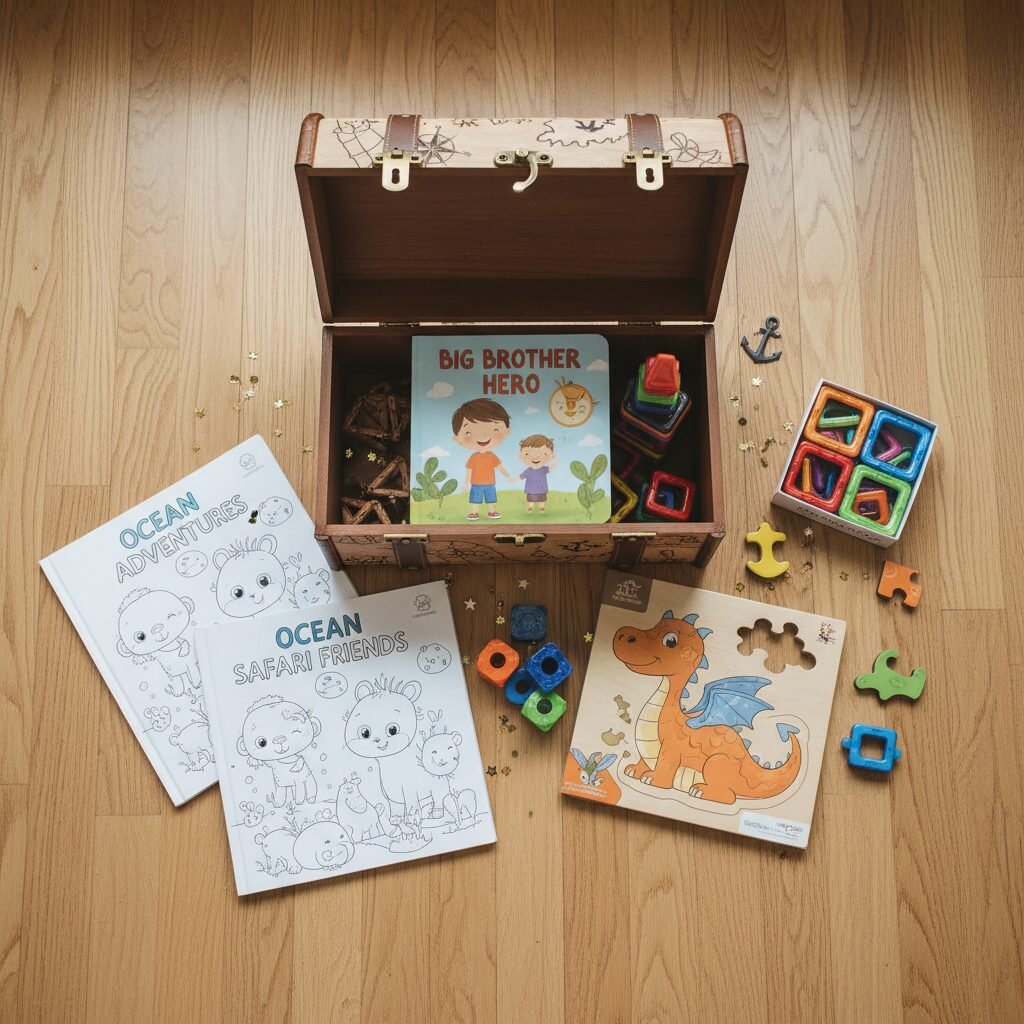
- Quiet Activities: These are your bread and butter. Think mess-free coloring pads (like Crayola Color Wonder), water-reveal painting books, sticker books, lacing cards, or a brand-new puzzle with a manageable number of pieces.
- Fine Motor Toys: Small sets of new building blocks, magnetic tiles, a threading bead set, or play-doh with a couple of new cookie cutters can provide long stretches of focused play.
- Imaginative Play: A special doll or action figure designated as their “baby” to care for, a doctor’s kit to give their toys a check-up, or a few new animal figurines can spark creative, independent play.
- Special Snacks: Include a few non-perishable, individually wrapped snacks that they love but don’t get every day, like a specific brand of fruit snacks or crackers. This adds another sensory element of excitement to the box.
| Age Group | Recommended Items | Safety Consideration |
|---|---|---|
| 18-24 Months | Chunky wooden puzzles, large Duplo blocks, Water Wow! pads, board books with flaps. | Ensure all items are large enough to not be a choking hazard. Avoid small parts. |
| 2-3 Years | Sticker scenes, mess-free markers, magnetic dress-up dolls, simple lacing cards, a new toy car or train. | Still be mindful of small parts, but can handle more complex fine motor toys. |
| 3-4 Years | Play-Doh kits, beginner scissor skills workbooks, more complex magnetic tile sets, simple memory games, audiobooks with headphones. | Can handle smaller pieces but still require items that don’t need direct parental help to operate. |
Strategic Implementation: When and How to Introduce the Box
Strategic Implementation: When and How to Introduce the Box
Having a perfectly curated box is only half the battle; rolling it out effectively is what makes the strategy work. Timing and communication are everything.
When to Introduce the Box
Don’t introduce it too early. If you give it to them weeks before the baby arrives, the novelty will wear off. The ideal time is either the day you bring the baby home from the hospital or during the first full day at home. Present it as a celebratory gift. You can say it’s a present from the new baby to their amazing big sibling. This immediately frames the baby’s arrival as a source of positive things.
Setting the Ground Rules (Positively)
How you frame the rules is critical. Avoid negative language.
- Don’t say: “You can only play with this when I’m feeding the baby.”
- Do say: “This is your super special Big Sibling Box! We get to open it for a fun activity every time the baby needs to eat.”
This positive framing makes it feel like a privileged ritual, not a restriction. Be consistent. The box’s power lies in its scarcity. If they have access to it all day, it loses its special allure. It must remain the ‘feeding time’ box.
Be Present, Even When You’re Stationary
While your toddler plays independently with their box, you’re not just a passive observer. This is a chance to connect verbally. Narrate what they’re doing: “Wow, you are building such a tall tower! What color is that block?” or “I love the beautiful picture you’re coloring.” This verbal engagement helps them feel seen and connected to you, even when you can’t physically play. It reinforces that you are still their parent, still interested, and still present for them.
Beyond the Box: A Holistic Approach
The Big Sibling Box is a powerful tool, but it’s one part of a larger strategy. Combine it with other toddler-focused initiatives:
- One-on-One Time: When the baby is sleeping, make a point to put your phone away and dedicate 10-15 minutes of truly focused, uninterrupted playtime with your toddler.
- Involve Them as a ‘Helper’: Ask them to fetch a diaper, sing a song to the baby, or pick out the baby’s pajamas. Giving them a purposeful role helps them feel important and involved.
- Acknowledge Their Feelings: It’s okay to say, “It’s hard to wait sometimes, isn’t it? Thank you for being so patient while the baby finishes eating.” Validating their emotions is just as important as redirecting their behavior.
Conclusion
The transition from one child to two is one of the most significant a family can make. It’s a period filled with immense love, but also challenges that test our patience and emotional reserves. The fear of toddler regression is a heavy weight on the shoulders of expectant parents, but it doesn’t have to be an inevitability. By understanding the world through your toddler’s eyes and implementing proactive, empathetic strategies like the Big Sibling Box, you can do more than just manage a difficult phase—you can actively shape a positive and loving relationship between your children from the very beginning.
This simple box is more than just toys and snacks; it’s a message to your firstborn. It says, “You are still so important. You are still seen. You are still cherished.” It’s a tool that fosters independence, creates positive associations, and buys you moments of much-needed peace. As you prepare to welcome your new baby, remember to prepare your older child with just as much intention and love. You are giving them the lifelong gift of a sibling, and with this thoughtful approach, you are setting the stage for a beautiful journey ahead.