
Stop Doing Kegels: Why You Need Pelvic Relaxation For Easier Birth
As a doula and maternal health educator, I’ve sat with hundreds of expectant parents, and one topic comes up more than any other: Kegels. It’s the one piece of prenatal advice that seems to be everywhere, passed down from grandmothers, mentioned in magazines, and prescribed by doctors. The message is clear: a strong pelvic floor is essential. And while that is absolutely true, it’s only half of a much more nuanced and vital conversation. The relentless focus on strengthening has overshadowed an equally important function of these muscles: the ability to release and relax.
Imagine you’re trying to open a door. You can pull on the handle with all your might, but if the door is latched, it won’t budge. In this scenario, your pelvic floor during birth is the door. Your uterine contractions are the force trying to open it. If your pelvic floor muscles are chronically tight—what we call hypertonic—they are like a persistent latch, working against the powerful efforts of your body. Your baby needs an open door to descend, and a pelvic floor that can only clench is a barrier, not a passageway.
This article is an invitation to shift your perspective. We’re going to move beyond the simple ‘squeeze and hold’ mantra and explore the profound importance of pelvic relaxation for a more functional pregnancy and a smoother birth. It’s not about abandoning strengthening exercises entirely; it’s about creating balance. It’s about cultivating a pelvic floor that is not just strong, but also supple, responsive, and ready to open when it matters most.
The Kegel Myth: Unpacking a Half-Truth

Why Did Kegels Become So Popular?
Let’s start by giving credit where it’s due. Kegel exercises, named after Dr. Arnold Kegel, were developed to help women with stress urinary incontinence after childbirth. They are incredibly effective at strengthening the muscles that support your bladder, uterus, and bowels. During pregnancy, the weight of your growing baby puts immense pressure on these muscles, and having a strong ‘hammock’ is crucial for support and preventing issues like prolapse and incontinence postpartum. So, the advice to do Kegels isn’t wrong; it’s just incomplete.
Strength vs. Tightness: A Critical Distinction
The problem arises when we equate strength with tightness. Think of a healthy bicep. It can contract powerfully to lift a heavy bag of groceries, but it can also fully lengthen and relax to reach for something on a high shelf. A functional muscle has a full range of motion. A muscle that is chronically tight, however, is like a clenched fist—it’s stuck in a state of contraction. It’s weak, fatigued, and has very little range of motion left. A hypertonic pelvic floor is just that: a group of muscles that are so overworked and tense they have forgotten how to let go. This can lead to a host of problems:
- Pelvic Pain: Discomfort during intercourse, tailbone pain, or general pelvic achiness.
- Constipation: Tight muscles can make it difficult to have a bowel movement.
- Urinary Urgency: A tight pelvic floor can irritate the bladder, making you feel like you need to urinate frequently.
- Difficult Labor: During birth, a tight pelvic floor can resist the baby’s descent, potentially leading to a longer, more painful labor, a higher likelihood of interventions, and more significant tearing. The baby is trying to move through a narrowed opening.
A truly functional pelvic floor is one that can contract effectively when needed, but more importantly for birth, can relax and lengthen completely to allow your baby to pass through.
Anatomy of a Smart Pelvic Floor: More Than Just a Hammock
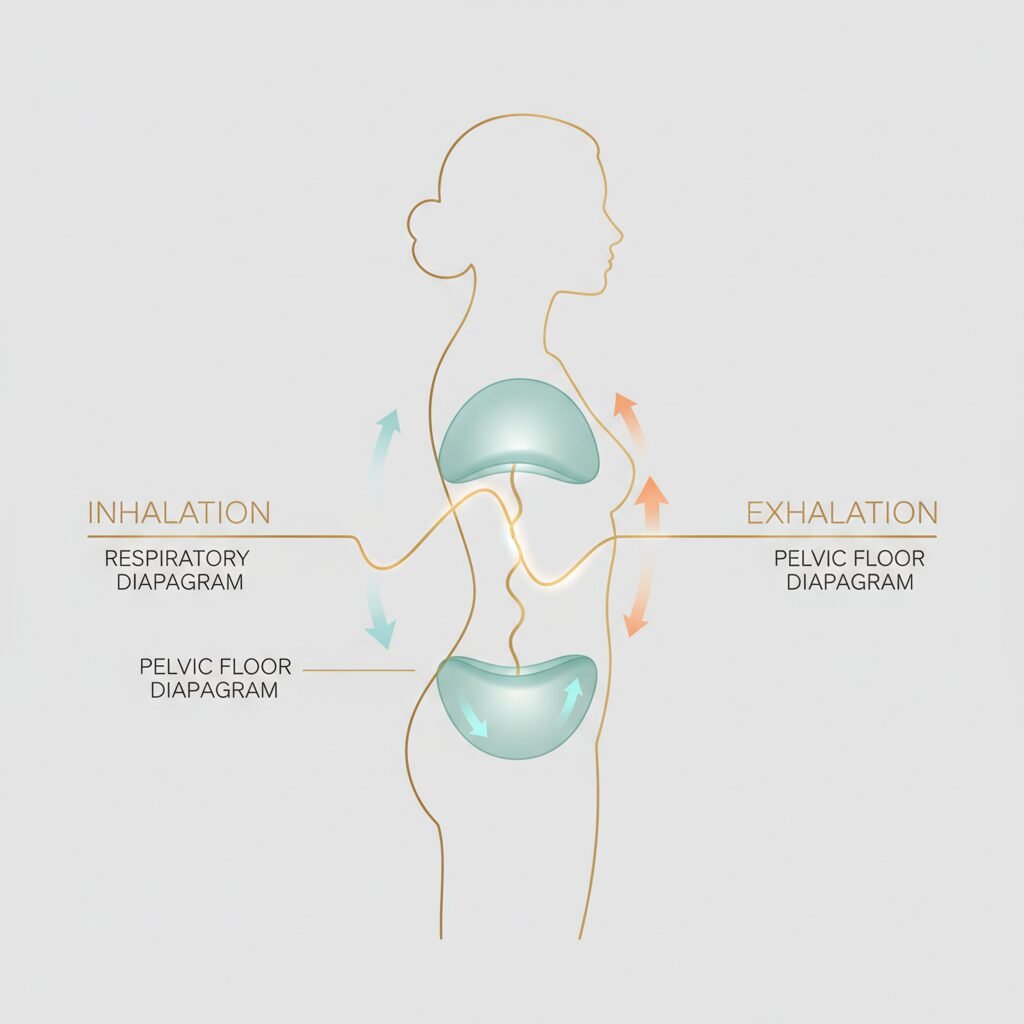
To truly understand why relaxation is key, we need to look at the beautiful complexity of your pelvic floor. It isn’t a single muscle, but a dynamic, multi-layered system of muscles, ligaments, and connective tissues that stretch from your pubic bone in the front to your tailbone in the back. It acts as a supportive sling for your pelvic organs.
During birth, this ‘hammock’ has a remarkable job: it must stretch and open to create the final part of the birth canal. The muscles need to lengthen to a degree they never have before. The different layers of the pelvic floor work in concert to guide the baby’s head as it rotates and descends. If these muscles are tight and rigid, they can’t perform this intricate dance. Instead of guiding, they obstruct.
The Diaphragm-Pelvic Floor Connection
One of the most important relationships in your body for birth is the connection between your respiratory diaphragm (your primary breathing muscle under your ribs) and your pelvic floor diaphragm. They are designed to work together like a piston.
- On your inhale: Your diaphragm moves down, and your pelvic floor should relax and descend with it.
- On your exhale: Your diaphragm moves up, and your pelvic floor gently recoils and lifts.
This rhythmic, coordinated movement is essential. When you practice deep, diaphragmatic breathing, you are also gently mobilizing and relaxing your pelvic floor with every single breath. Many people, especially when stressed or anxious, become chest breathers, taking shallow breaths that don’t engage the diaphragm. This can contribute to a disconnected and tighter pelvic floor. Learning to breathe deeply into your belly is one of the most powerful tools you have for preparing your pelvic floor for birth.
Is Your Pelvic Floor Too Tight? Signs of Hypertonicity
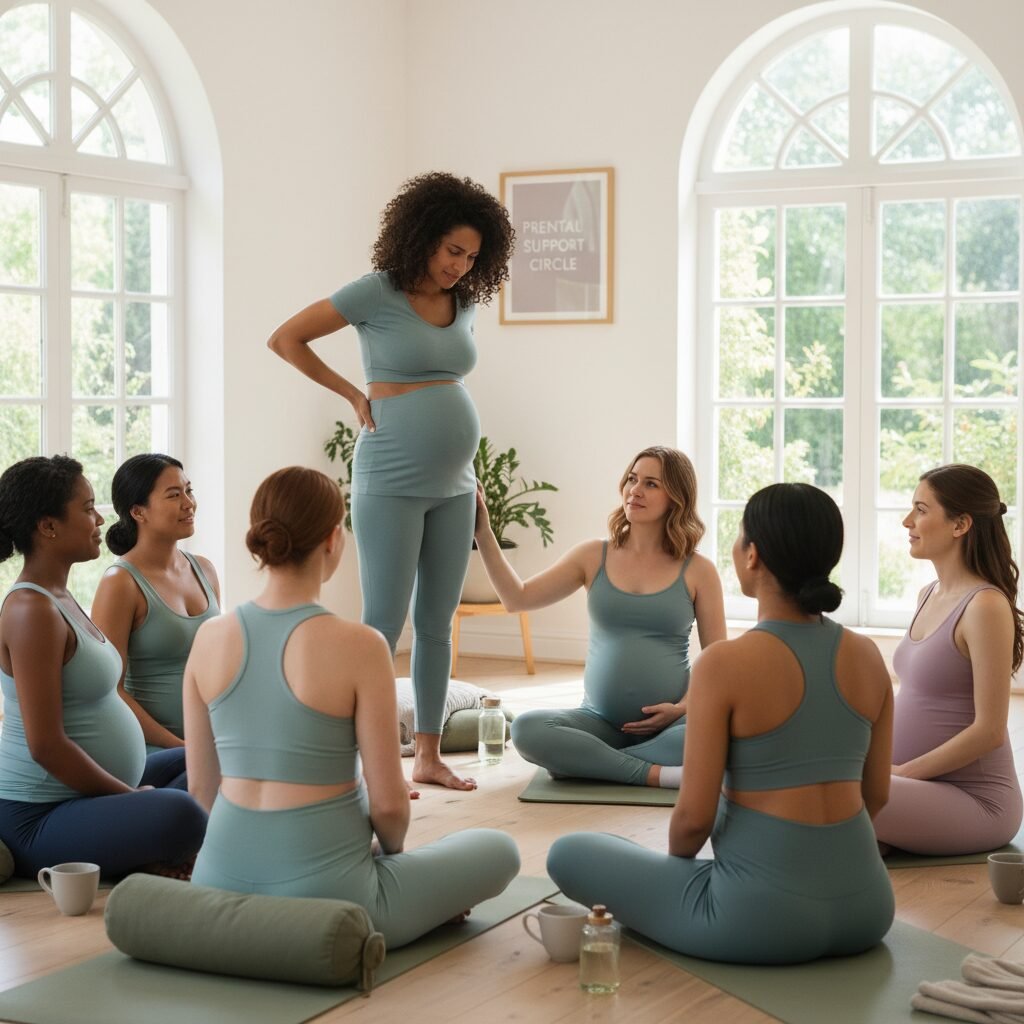
You might be wondering, ‘How do I know if my pelvic floor is too tight?’ It’s not always obvious, and many of the symptoms can be mistaken for normal pregnancy discomforts. It’s always best to be assessed by a pelvic health physical therapist, but here are some common signs that might suggest you have a tendency towards hypertonicity:
- Pain during intercourse: This is a classic sign that the muscles at the vaginal opening are too tense.
- Difficulty initiating urination or a weak stream: You might feel like you have to go, but it takes a moment to get the stream started, or it stops and starts.
- Chronic constipation or straining: The pelvic floor muscles are involved in defecation, and if they can’t relax, it can be difficult to empty your bowels.
- Lower back, hip, or tailbone pain: The pelvic floor muscles have attachments all through the pelvis, and their tension can refer pain to these areas.
- A feeling of ‘holding on’: You may notice that you clench your glutes or pelvic floor when you are stressed, concentrating, or even just standing.
- Pain with inserting a tampon or during a gynecological exam.
If any of these resonate with you, it doesn’t mean you should panic. It simply means your body is asking for a different approach. It’s a sign that your focus should shift from strengthening to releasing and relaxing. A consultation with a pelvic health physical therapist can provide a definitive diagnosis and a personalized plan of care.
The Art of Letting Go: Practical Techniques for Pelvic Relaxation
Learning to relax your pelvic floor is a practice, just like any other exercise. It requires mindfulness, patience, and consistency. The goal is to build new neural pathways so that ‘release’ becomes your body’s default response to the sensations of labor, rather than ‘clench’. Here are some of the most effective techniques you can start practicing today.
1. Diaphragmatic or ‘Belly’ Breathing
This is the foundation of all pelvic floor relaxation. It directly calms your nervous system and mobilizes your pelvic floor.
- Find a comfortable position, either lying on your back with your knees bent or sitting supported in a chair.
- Place one hand on your chest and the other on your belly.
- Inhale slowly and deeply through your nose. Feel your belly expand and rise into your hand, like you’re inflating a balloon. The hand on your chest should remain relatively still. Imagine your breath traveling all the way down to your pelvis, encouraging it to soften and widen.
- Exhale slowly through your mouth, making a soft ‘shhh’ or ‘haaa’ sound. Feel your belly gently fall. Imagine your pelvic floor muscles softly recoiling upwards.
- Practice this for 5-10 minutes every day.
2. The ‘Reverse Kegel’ or Pelvic Drop
This is the direct antidote to a Kegel. Instead of squeezing, you are consciously lengthening and releasing.
- Get into your comfortable breathing position.
- As you take a deep belly inhale, gently visualize your pelvic floor muscles opening and blooming, like a flower. Think of the space between your sitz bones widening.
- You can use gentle imagery, like the feeling of releasing your bladder or passing gas, as this involves the same relaxation of the muscles. It’s a very subtle movement—you are not pushing or straining.
- On the exhale, simply let everything return to its neutral resting state. Don’t squeeze.
3. Stretches and Postures
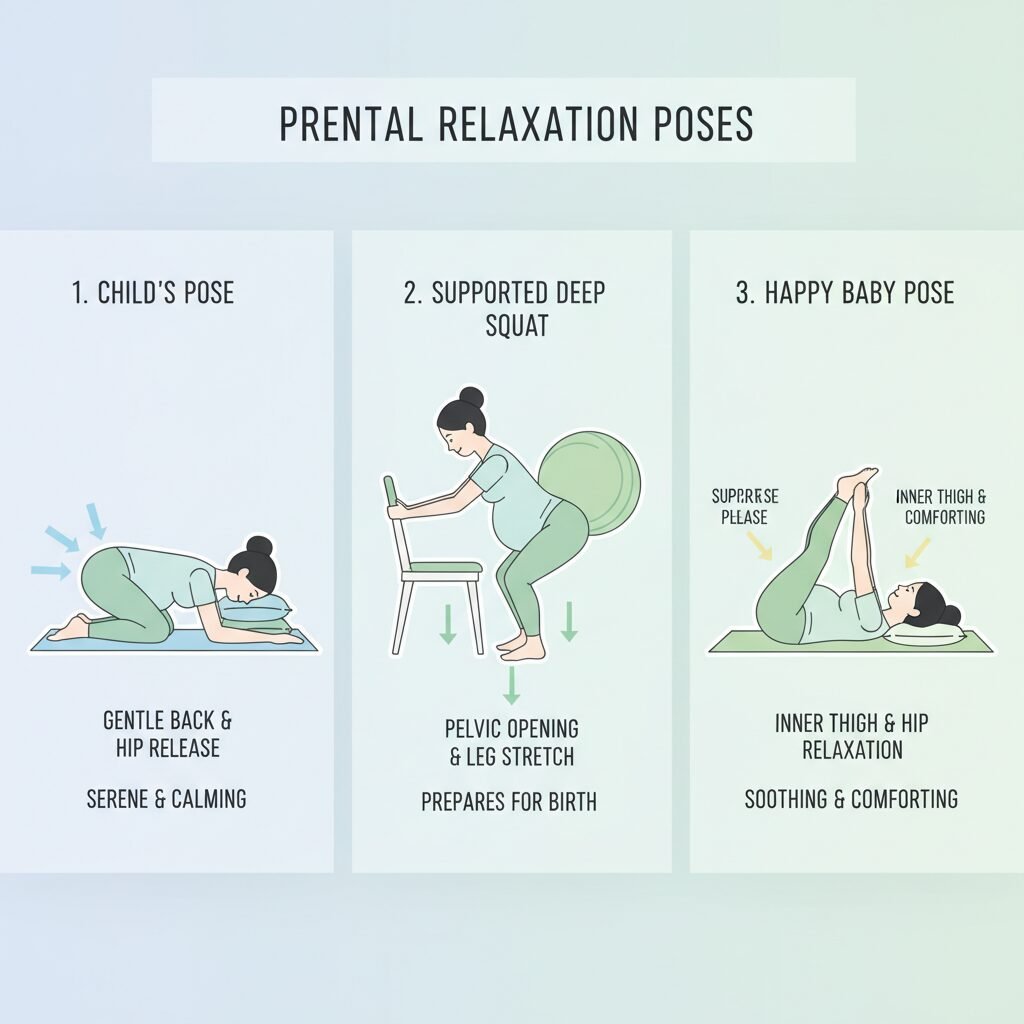
Certain yoga poses are fantastic for releasing tension in the hips, glutes, and pelvic floor.
- Child’s Pose: Kneel on the floor, bring your knees wide apart, and rest your torso between your thighs. This allows the pelvic floor to be in a lengthened position. Breathe deeply into your back and pelvis.
- Happy Baby: Lie on your back and draw your knees towards your armpits, grabbing the outside of your feet. Keep your lower back on the floor. This provides a wonderful stretch for the inner thighs and pelvic floor.
- Deep Squat (supported): Holding onto a counter or with your back against a wall, lower into a deep squat. This position naturally opens the pelvic outlet and lengthens the pelvic floor muscles.
| Technique | Goal | When to Practice |
|---|---|---|
| Diaphragmatic Breathing | Calm the nervous system and gently mobilize the pelvic floor. | Daily (5-10 mins), during times of stress, and during labor. |
| Pelvic Drops | Consciously practice the act of muscular release. | A few times a day, incorporated with your breathing practice. |
| Stretches (e.g., Child’s Pose) | Release tension in surrounding muscles like hips and glutes. | Daily as part of a gentle movement routine. |
Finding Your Balance: Integrating Strength and Relaxation
So, should you stop doing Kegels altogether? Not necessarily. The ultimate goal is a responsive pelvic floor. For some people, especially those who start with a weak (hypotonic) pelvic floor, a combination of strengthening and relaxation is ideal. For those with a tight (hypertonic) pelvic floor, the focus should be almost exclusively on relaxation and release until balance is restored.
How to Know What’s Right for You?
This is where professional guidance is invaluable. A pelvic health physical therapist is a trained expert who can perform an internal and external assessment to determine the specific tone of your pelvic floor muscles. They can tell you if your muscles are weak, tight, or both, and can provide a tailored program of exercises and relaxation techniques just for you. This is the gold standard of care and is recommended for every pregnant person.
A New Mindset for Birth Preparation
Moving forward, reframe your goal. Instead of just ‘strengthening’ your pelvic floor, think about ‘preparing’ it. This preparation includes:
- Awareness: Can you feel your pelvic floor muscles? Can you consciously contract them, and more importantly, can you consciously relax them fully?
- Coordination: Can you coordinate your pelvic floor with your breath? This is your superpower for labor.
- Endurance: This is where traditional Kegels can be helpful. Can you hold a contraction for a few seconds? This is useful for pushing effectively and for postpartum recovery.
- Flexibility: Can your muscles lengthen and stretch to open the birth canal? This comes from your relaxation practice.
By embracing this balanced approach, you are not just preparing your body for an easier birth; you are building a foundation for lifelong pelvic health. You are learning to listen to your body’s subtle cues and to work with it, not against it. This is one of the most empowering skills you can cultivate on your journey to parenthood.
Conclusion
The journey through pregnancy and into birth is a profound education in the wisdom of your own body. The persistent myth that you must only ‘squeeze, squeeze, squeeze’ has done a disservice to countless parents, creating unnecessary tension and fear. The truth is that your body is designed for this. Your pelvic floor knows how to open; our modern lifestyles and stress responses have simply made us forget how to let it happen. By shifting your focus to include relaxation, deep breathing, and mindful release, you are reclaiming an essential part of your innate birthing wisdom. You are giving yourself and your baby a beautiful gift: the gift of letting go. Trust your body, listen to its needs, and remember that true strength lies in the balance between power and surrender.
Medical Disclaimer: The information in this article is for educational and informational purposes only and is not intended as medical advice. It is not a substitute for professional medical advice, diagnosis, or treatment. Always seek the advice of your physician, midwife, or a qualified pelvic health physical therapist with any questions you may have regarding a medical condition or before undertaking any new exercise program.