Skip the Expensive Toys: 10 DIY Sensory Activities Your Baby Will Obsess Over
In the world of modern parenting, it’s easy to feel overwhelmed by the sheer volume of products marketed as ‘essential’ for your baby’s development. The pressure to buy the latest educational toy or gadget can be immense. But as a doula and maternal health educator, I want to let you in on a powerful secret: some of the most profound developmental tools for your baby are already in your home, waiting to be discovered. Meaningful sensory play isn’t about expensive electronics; it’s about engaging your baby’s developing brain through sight, sound, touch, smell, and taste in a safe and loving environment.
Sensory experiences are the primary way infants learn about the world. Every new texture they feel and sound they hear builds crucial neural connections, laying the foundation for everything from language skills to problem-solving. This guide is designed to empower you to skip the expensive store-bought toys and instead, create simple, cost-effective, and incredibly engaging sensory activities. These 10 DIY projects are not just toys; they are invitations for exploration, bonding, and building a brilliant little mind.
The ‘Why’ Behind Sensory Play: Fueling Your Baby’s Brain Development
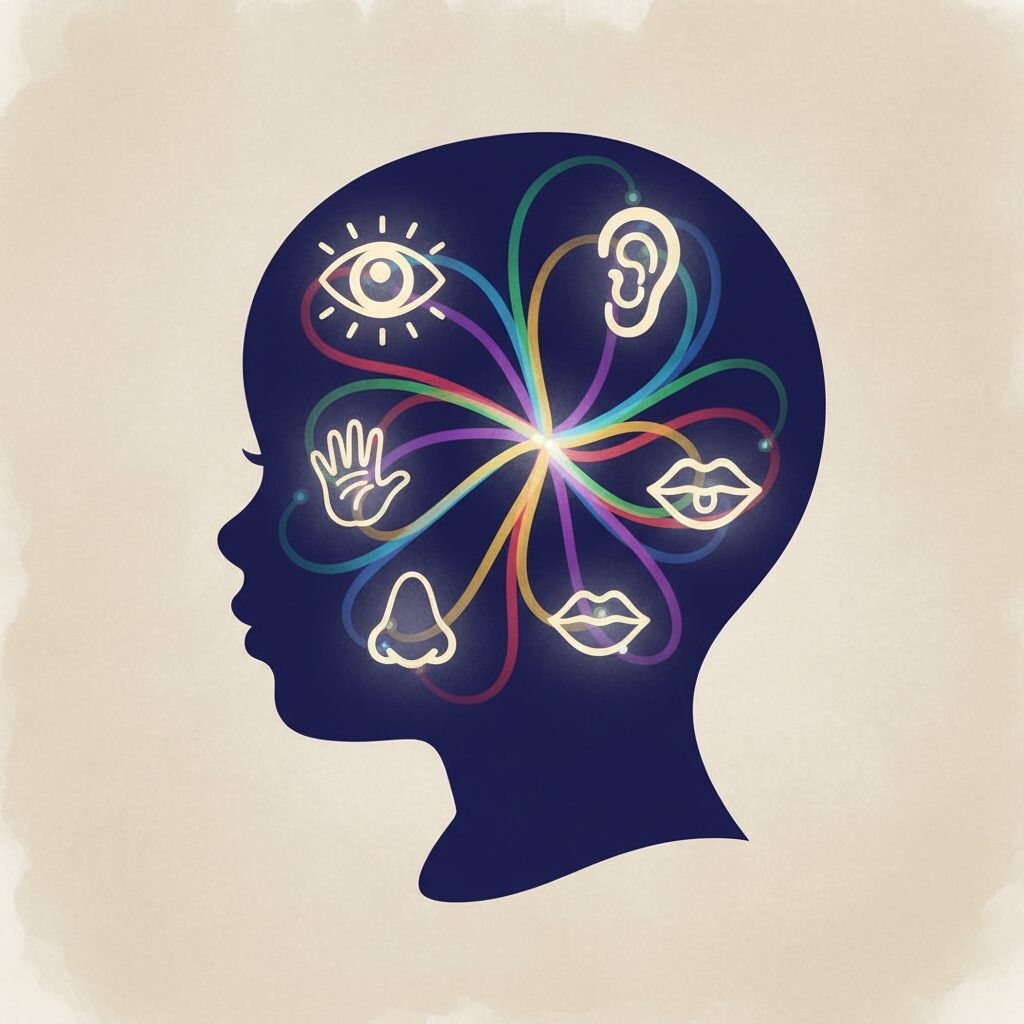
Before we dive into the crafts, it’s important to understand the incredible science behind what we’re doing. A baby’s brain develops at an astonishing rate, forming more than a million new neural connections every second. Sensory play is the fuel for this rapid growth. When a baby interacts with their environment through their senses, they are conducting tiny experiments that help them understand complex concepts.
How Each Sense Plays a Role:
- Touch: The sense of touch is one of the first to develop. Experiences like feeling a soft blanket, a rough piece of cardboard, or the coolness of water help a baby learn about different properties and textures. This tactile input is also critical for developing body awareness and fine motor skills.
- Sight: In the early months, babies see best in high contrast. Simple black-and-white patterns help strengthen their eye muscles and visual tracking abilities. As their vision matures, introducing a variety of colors and shapes helps them learn to categorize and differentiate objects.
- Sound: Listening to different sounds—the crinkle of a fabric, the soft rattle of rice, the sound of your voice—helps babies develop auditory processing skills. They learn to locate where sounds are coming from, distinguish between different pitches and volumes, and lay the groundwork for language development.
- Smell: The sense of smell is powerfully linked to memory and emotion. Introducing safe, gentle scents like vanilla or chamomile can be a calming experience and helps your baby build a rich map of their world through smell.
- Taste: For babies who are old enough and have started solids, safe exploration through taste (like edible finger paints) can be a fun way to engage their senses and make mealtimes a more positive, exploratory experience. (Safety Note: Always ensure any activity involving taste is made with age-appropriate, edible ingredients.)
Engaging in sensory play is like providing your baby with the essential building blocks for a lifetime of learning. You are not just keeping them entertained; you are actively constructing their brain architecture.
Safety First: A Quick Guide to DIY Toy Creation
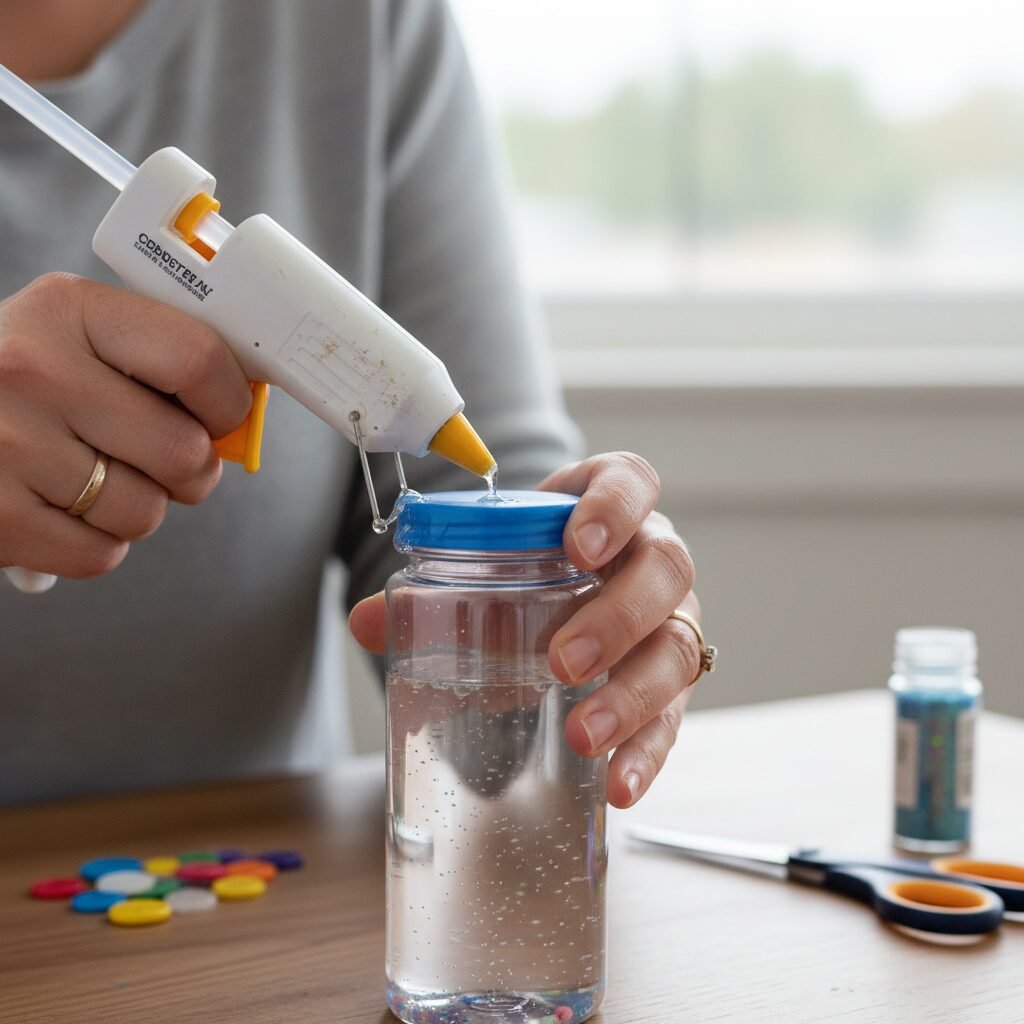
Your baby’s safety is the number one priority. While DIY toys are wonderful, they require careful consideration during creation and play. Before you begin any project, please internalize these fundamental safety guidelines. This isn’t meant to cause anxiety, but to empower you with the knowledge to create with confidence.
The Non-Negotiable Safety Checklist:
- Size Matters: Any object you create, or parts you use, must be larger than a toilet paper roll in diameter to prevent it from being a choking hazard. If an item can fit through the tube, it’s too small for a baby.
- Secure Everything: All parts must be securely attached. Seams on fabric toys should be double-stitched. Lids on bottles or shakers must be glued shut with non-toxic, industrial-strength glue and then sealed with tape for good measure.
- Choose Non-Toxic Materials: Use non-toxic paints (water-based), glues, and plastics (look for BPA-free). When using wood, ensure it is sanded completely smooth to avoid splinters. Opt for natural fabrics like cotton whenever possible.
- Supervision is Key: Never leave your baby unattended with any toy, homemade or store-bought. Active supervision allows you to watch for signs of wear and tear and ensure your baby is playing safely.
- Regular Inspections: Check your DIY toys before every play session. Look for loose parts, cracked plastic, frayed fabric, or any other signs of damage. If a toy is broken, discard it immediately.
By following these rules, you can create a safe and enriching play environment for your little one.
10 Simple & Engaging DIY Sensory Activities (0-12 Months)
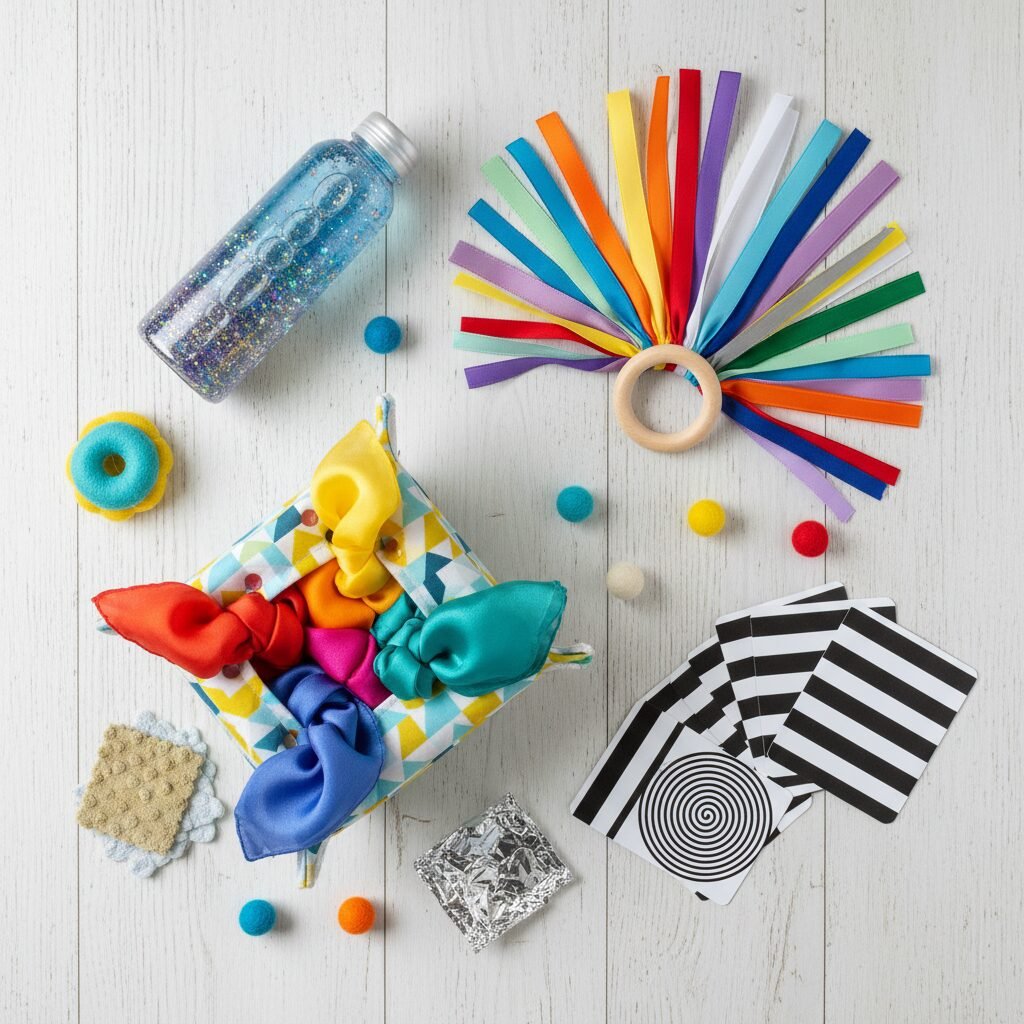
Here are ten proven, baby-approved sensory activities you can make today with items you likely already have. Each one is designed to target specific developmental areas while providing hours of fun.
1. High-Contrast Art Cards
Perfect for newborns, whose vision is still developing. High-contrast images stimulate optic nerve development and teach the eye muscles and brain to coordinate.
- What You’ll Need: White cardstock, black non-toxic marker or paint, scissors. Optional: a laminator.
- How to Make and Play:
- Cut the cardstock into 5×7 inch cards.
- Draw simple, bold patterns on each card: stripes, polka dots, checkerboards, simple animal silhouettes, or abstract shapes.
- If you have a laminator, laminate the cards for durability and to make them wipeable.
- Show the cards to your baby during tummy time, about 8-12 inches from their face. Move the cards slowly from side to side to encourage visual tracking.
- What You’ll Need: A clean, empty baby wipe pouch (the kind with a plastic flip-top), various textured fabric scraps, crinkly plastic (from a cereal bag or cellophane).
- How to Make and Play:
- Cut fabric scraps (velvet, corduroy, silk, cotton) into sizes that can be easily pulled from the pouch opening.
- Cut a piece of crinkly plastic and sew it inside one or two of the fabric scraps.
- Stuff all the fabric pieces into the wipe pouch.
- Show your baby how to open the top and pull out the fabrics. They will love the sound and the different textures.
- What You’ll Need: A clean, clear plastic bottle (Voss or a similar smooth-sided bottle works well), water, clear glue or baby oil, and fillers like glitter, small plastic beads, sequins, or googly eyes. Non-toxic superglue.
- How to Make and Play:
- Fill the bottle about halfway with water.
- Add a few squirts of clear glue (this makes the items inside fall more slowly).
- Add your chosen fillers. Don’t overfill.
- Fill the rest of the bottle with water, leaving a small air gap at the top.
- Securely glue the lid shut. Let it dry completely.
- Show your baby how to shake or roll the bottle and watch the items float and swirl.
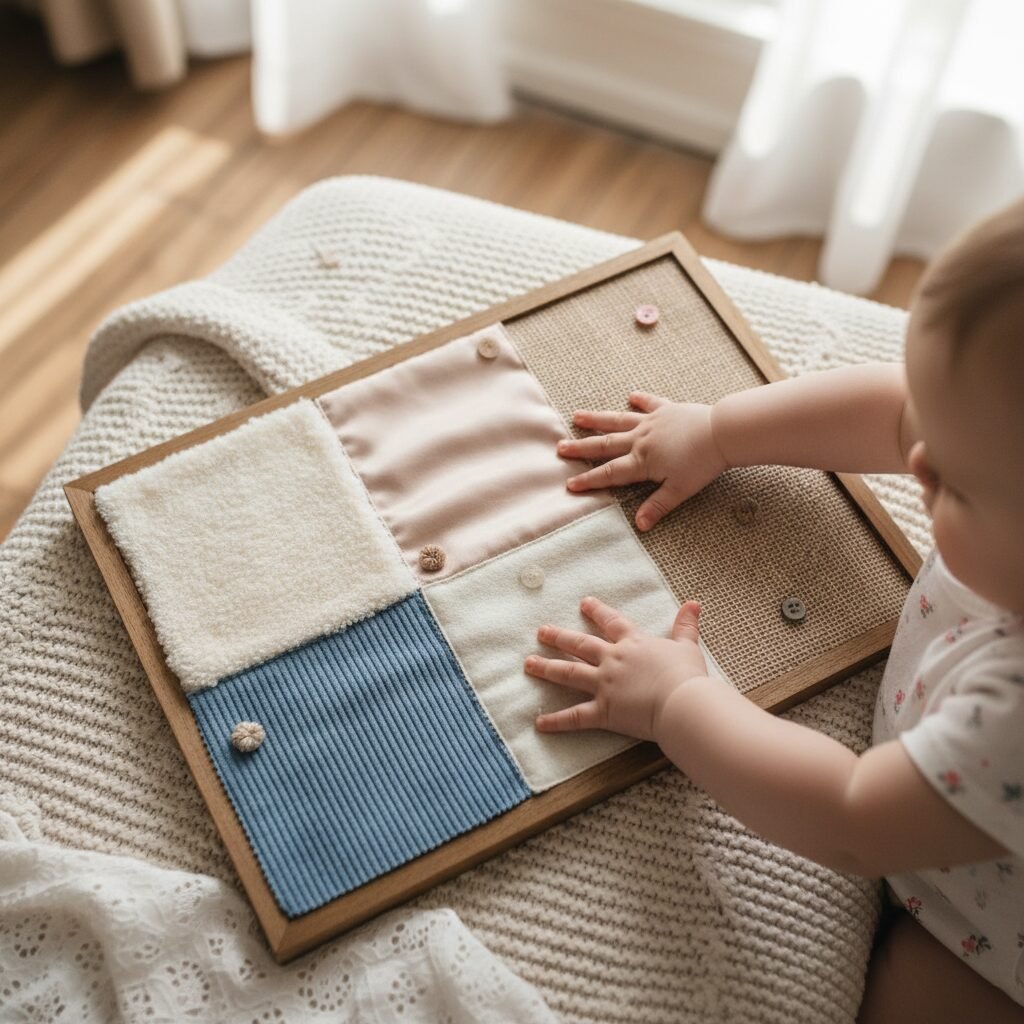
- What You’ll Need: A sturdy piece of cardboard, non-toxic hot glue gun, and a variety of textured items: large pom-poms, sandpaper, bubble wrap, feathers, corrugated cardboard, sponges, faux fur.
- How to Make and Play:
- Cut out squares of each textured material.
- Arrange and glue them securely onto the cardboard, ensuring no small pieces can come loose.
- Lay the board in front of your baby and guide their hands over the different surfaces, using descriptive words like ‘soft,’ ‘bumpy,’ and ‘scratchy.’
- What You’ll Need: Small, sturdy, sealed containers (like spice jars or small plastic bottles), various fillers (uncooked rice, dried beans, pasta, jingle bells), and strong, non-toxic glue.
- How to Make and Play:
- Fill each container with a different material.
- Securely glue the lids shut. For extra safety, wrap electrical tape around the sealed lid.
- Let your baby shake them to discover the different sounds each one makes.
- What You’ll Need: An empty square tissue box, various long scarves or strips of fabric (at least 18 inches long).
- How to Make and Play:
- Tie the ends of the scarves or fabric strips together in simple knots.
- Feed one end into the box and stuff the rest in behind it.
- Leave a small piece sticking out of the top.
- Encourage your baby to pull on the fabric. They will be delighted as an endless ‘chain’ of colorful scarves emerges.
- What You’ll Need: Small, clean jars with lids (like baby food jars), cotton balls, and baby-safe scents (a drop of vanilla extract, a calming lavender essential oil, or a cinnamon stick). A drill or sharp tool.
- How to Make and Play:
- Poke several small holes in the lid of each jar.
- Place a cotton ball with a drop of scent inside, or the item itself (like the cinnamon stick).
- Secure the lid tightly.
- Hold the jar near your baby’s nose (not too close) and let them gently inhale the scent.
- What You’ll Need: A large, heavy-duty Ziploc bag (freezer bags work best), water, optional: a few drops of blue food coloring, and small, flat, waterproof objects (foam shapes, plastic buttons). Duct tape.
- How to Make and Play:
- Fill the bag about a third of the way with water.
- Add the food coloring and objects.
- Carefully squeeze out as much air as possible and seal the bag.
- Use duct tape to tape all four sides of the bag securely to the floor.
- Place your baby on their tummy next to it and let them pat and squish the bag.
- What You’ll Need: Plain Greek yogurt or a fruit/vegetable puree, natural food coloring (or beet juice for red, spinach for green).
- How to Make and Play:
- Portion the yogurt or puree into small bowls.
- Mix in a tiny amount of natural coloring to create different colors.
- Place a small dollop on a highchair tray or a clean mat.
- Let your little artist explore the texture and colors with their hands (and mouth!).
- What You’ll Need: A natural, unfinished wooden ring (3-4 inches in diameter), various lengths and textures of ribbon.
- How to Make and Play:
- Cut ribbons into 20-inch lengths.
- Fold a ribbon in half, place the loop under the wooden ring, and then pull the two ends through the loop to create a secure knot.
- Repeat with all the ribbons, alternating colors and textures.
- Dangle the ring in front of your baby for them to watch, reach for, and eventually grasp.
2. The Crinkle Pouch
Babies are fascinated by crinkly sounds, which provide satisfying auditory feedback and encourage grasping.
3. Sensory Discovery Bottles
These mesmerizing bottles are fantastic for visual tracking and teaching cause and effect without any risk of a mess.
4. The Texture Board
A simple way to introduce a wide variety of tactile experiences in one place, perfect for tummy time or seated play.
5. Homemade Sound Shakers
These teach babies about cause and effect and help them explore different sounds.
6. The Fabric Pull Box
This activity is fantastic for developing fine motor skills and understanding object permanence (the concept that things still exist even when you can’t see them).
7. Soothing Scent Jars
A gentle way to engage the sense of smell, which is strongly linked to memory and can have a calming effect.
8. Tummy Time Water Mat
A mess-free way to have water play! This strengthens neck and shoulder muscles during tummy time and provides a unique tactile and visual experience.
9. Edible Finger Paint
For babies who are sitting up and have started solids, this is a safe and fun way to explore creativity, color, and taste.
10. Ribbon Ring
A beautiful and simple toy that encourages grasping and visual tracking with its flowing colors.
Conclusion
As you can see, fostering your baby’s development doesn’t have to come with a hefty price tag. The love, time, and intention you pour into creating these simple activities are far more valuable than any toy you can buy. Each time you play together with a homemade shaker or a texture board, you are doing more than just entertaining them—you are building their brain, strengthening your bond, and creating beautiful memories.
Embrace the creativity and resourcefulness that is inherent in parenting. Trust your instincts, prioritize safety, and most importantly, have fun. The joy in your baby’s eyes as they discover a new sound or texture will be the greatest reward, reminding you that the best things in life truly are homemade.