
Shake the Pain Away: Why Every Mom Needs a Rebozo Scarf in Her Birth Bag
The journey to meeting your baby is one of profound anticipation, strength, and, let’s be honest, a fair bit of anxiety about the physical intensity of labor. As a doula, I’ve sat with countless families as they prepare, and a common question echoes in every birth class: “What can we do about the pain?” While modern medicine offers many options, there is a treasure trove of ancient wisdom that provides gentle, effective, and empowering comfort. At the top of that list is a tool so simple yet so profound it can transform the labor experience: the Rebozo scarf.
This is not just a piece of fabric. It’s a connection, a rhythm, a way to “shake the pain away” and work with your body, not against it. It’s a tool that invites your partner to be more than a bystander, transforming them into an active, essential part of the process. If you’re packing your birth bag and wondering what you truly need, let me guide you through why a simple Rebozo scarf might be the most important item you include.
What Exactly is a Rebozo? More Than Just a Scarf

Before we dive into the techniques, it’s essential to understand the spirit of the Rebozo. Originating from Mesoamerican cultures, particularly in Mexico, the Rebozo is a long, flat garment of woven cloth. For centuries, it has been a part of a woman’s life, used for everything from carrying groceries and babies to providing comfort and support during childbirth. It’s a symbol of warmth, strength, and community.
When we talk about a Rebozo for birth, we’re referring to a specific type of long, sturdy, woven cotton scarf, typically at least two meters (about 6.5 feet) long. Its strength and length are key to its function. Unlike a stretchy wrap, the non-stretch weave provides firm, reliable support, allowing it to be used for a variety of comfort measures.
Key Characteristics of a Birth Rebozo:
- Material: Traditionally made from 100% cotton, which is breathable, strong, and soft.
- Weave: A tight, intricate weave ensures it won’t over-stretch or tear under pressure.
- Length: It needs to be long enough to wrap comfortably around a pregnant belly or hips with plenty of fabric for a partner to hold.
- Spirit: Beyond its physical traits, using a Rebozo is about embracing a philosophy of gentle, rhythmic movement and connection. It’s a physical extension of your support person’s hands.
Think of the Rebozo not as a medical device, but as a comforting hug you can direct exactly where you need it most.
The Gentle Power of Sifting: How the Rebozo Eases Pain and Encourages Progress

The most well-known Rebozo technique is often called “sifting” or “manteada,” which translates to “shaking.” It sounds intense, but it’s actually an incredibly gentle, rhythmic jiggling of the hips or belly. This motion is the secret to the Rebozo’s magic.
How Does Sifting Work?
During labor, muscles and ligaments, particularly the broad and round ligaments that support the uterus, become incredibly tight. This tension can cause pain and may even hinder a baby’s ability to navigate the pelvis and get into an optimal birthing position. Sifting helps to:
- Relax Tense Muscles: The rhythmic jiggling encourages muscles in the hips, pelvis, and lower back to release. Many birthing people describe the sensation as deeply relaxing and trance-like, helping them get out of their “thinking brain” and into their “labor brain.”
- Relieve Ligament Pain: It provides a gentle counter-pressure and movement that can alleviate the sharp pains associated with tight ligaments.
- Create Space in the Pelvis: By relaxing the surrounding structures, the pelvic outlet can open more freely, giving the baby more room to descend and rotate.
- Encourage Optimal Fetal Positioning: Sifting can help a baby who is in a posterior (“sunny-side up”) position to rotate into a more ideal anterior position. The gentle hammock-like motion and relaxation of the uterus can give the baby the space and encouragement to turn.
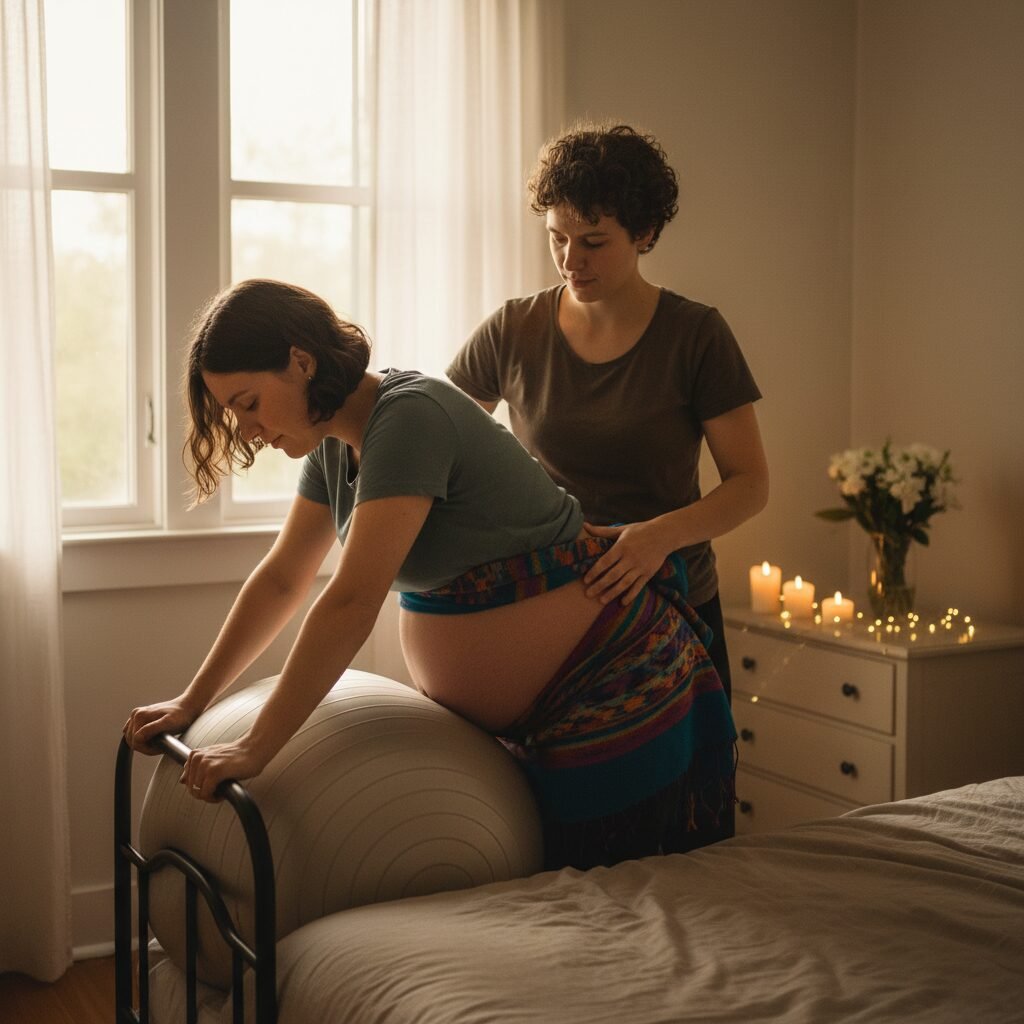
A Simple Sifting Technique for the Hips:
- The birthing person gets into a comfortable hands-and-knees position, or leans forward over a birth ball, bed, or chair. This allows the belly to hang freely.
- The support person stands behind them and wraps the center of the Rebozo around the hips, under the belly but above the pubic bone.
- Holding both ends of the Rebozo firmly, the support person begins a gentle, rhythmic side-to-side or back-and-forth motion. The movement should come from their whole body, not just their arms, to maintain a steady, smooth rhythm.
- Communicate! The birthing person should guide the speed and intensity. It should always feel good and relieving, never jarring.
A Tool for Two: How Partners Can Use the Rebozo to Provide Meaningful Support

For many partners, especially new dads, one of the hardest parts of labor is feeling helpless. You see your loved one in intense pain, and you want to fix it. The Rebozo is a perfect bridge for this gap. It provides a concrete, physical task that offers real, tangible comfort.
Using a Rebozo transforms a partner from a spectator into an active participant. It’s a dance you do together. This shared activity deepens your connection during one of life’s most profound moments.
Tips for the Support Person:
- Find Your Rhythm: Don’t worry about getting it “perfect.” The key is a steady, gentle rhythm. You can even put on some calming music to help you find a beat. Your calm energy will transfer through the fabric.
- Check In Constantly: Ask, “Is this too fast? Too slow? More pressure? Less?” Her needs will change as labor progresses. The Rebozo becomes a tool for non-verbal communication as well.
- Use Your Body, Not Your Arms: To avoid tiring out, sway your whole body from your hips and knees. This creates a smoother motion and protects your back.
- Try Different Positions: Sifting can be done with the birthing person on her hands and knees, standing and leaning forward, sitting on a birth ball, or even lying on her side. Experiment to find what feels best.
Beyond sifting, the Rebozo can be used for pulling, creating a squat bar, or providing counter-pressure. For instance, during a contraction, you can wrap the Rebozo around her back and pull gently towards you, providing firm pressure that can feel incredibly grounding.
Dear partner: You are not helpless. With this simple cloth, your hands become an extension of your love, providing the steady, unwavering support she needs to feel safe and powerful.
Beyond Labor: The Rebozo in Pregnancy and Postpartum

One of the best things about investing in a Rebozo is its incredible versatility. Its usefulness doesn’t start or end in the delivery room. It can be a cherished companion throughout your entire perinatal journey.
During Pregnancy:
As your belly grows, so does the strain on your back and pelvis. The Rebozo can be used for belly binding to provide lift and support, much like a pregnancy support belt, but infinitely more adjustable and comfortable.
- Belly Lifting: Stand behind your pregnant partner, wrap the Rebozo under her belly, cross the ends behind her back, and bring them up over her shoulders. She can then hold the ends to control the amount of lift, taking pressure off her pelvis and round ligaments.
- Gentle Stretching: The Rebozo can be used to facilitate gentle stretches that relieve back pain and open the hips, preparing the body for birth.
During Postpartum:
After birth, the Rebozo continues its supportive role. Many cultures have a tradition of “closing the bones,” a ceremony where the new mother’s body is tightly wrapped to help her organs, muscles, and bones return to their pre-pregnancy state. It’s a ritual that provides physical support and honors the immense work her body has done.
- Postpartum Wrapping: The Rebozo can be wrapped firmly around the hips and abdomen to provide stability and comfort in the early postpartum days.
- Babywearing: Once you and your baby are ready, your birth Rebozo can be used as a beautiful and secure baby sling or wrap, keeping your little one close while freeing up your hands.
Choosing and Using Your Rebozo Safely

While Rebozo techniques are gentle, it’s crucial to use them with awareness and respect for the birthing process. Safety and communication are paramount.
What to Look For in a Rebozo:
- Natural Fibers: Choose 100% cotton or a similar strong, natural, breathable fiber. Avoid synthetic materials that can be slippery or don’t breathe well.
- No Stretch: For the techniques described, a non-stretchy, woven fabric is essential for providing stable support.
- Ethical Sourcing: If possible, purchase an authentic Rebozo from artisan communities in Mexico or Guatemala. This honors the cultural origins of the practice and supports the artisans who keep the tradition alive.
Important Safety Guidelines:
| Do | Don’t |
|---|---|
| Do communicate constantly. The birthing person is the guide. | Don’t ever perform jarring, fast, or forceful movements. It should always be gentle and rhythmic. |
| Do practice beforehand to get comfortable with the feel and rhythm. | Don’t place direct pressure on the center of the pregnant abdomen. The Rebozo should support the belly from underneath or wrap around the hips. |
| Do ensure the birthing person is in a stable, comfortable position. | Don’t continue if it causes any pain or discomfort. Stop immediately and try something else. |
| Do watch videos from certified doulas or birth educators to see the techniques in action. | Don’t use sifting techniques if there are medical concerns like a suspected placental abruption, an unstable lie of the baby, or other specific contraindications from a care provider. Always check with your doctor or midwife if you have concerns. |
The goal is relaxation and release. If either of you feels stressed or uncertain, take a break. The Rebozo is a tool to enhance connection, not create pressure to perform a technique perfectly.
Conclusion
In the vast landscape of birth preparation, we often focus on the big, clinical aspects. But birth is also an experience of the heart and body, a dance of surrender and strength. The Rebozo is a bridge between these worlds. It is a practical tool that provides evidence-based physical relief, easing pain and helping labor progress. But more than that, it is a thread of connection—to ancient traditions, to your own body’s wisdom, and most importantly, to your partner.
Packing a Rebozo in your birth bag is an act of empowerment. It’s a statement that you are preparing to be an active participant in your birth, that you are building a team, and that you are embracing comfort in all its forms. It’s a simple cloth that carries the potential for a more peaceful, connected, and comfortable journey to meeting your baby. Don’t leave home without it.


