Protect Your Hands: Top Rated Latex-Free Gloves for Nesting Moms
There’s a powerful, primal urge that often kicks in during the later stages of pregnancy—the nesting instinct. Suddenly, organizing closets, deep cleaning baseboards, and assembling furniture feels like the most important job in the world. It’s a beautiful, productive phase driven by the desire to create a perfectly safe and welcoming environment for your new arrival. As a doula, I’ve seen this beautiful energy firsthand, and I always offer one piece of practical advice: protect your hands.
During pregnancy, your skin can become more sensitive, and you’re more conscious than ever about the products and chemicals you come into contact with. This is where a good pair of gloves becomes an essential tool in your nesting kit. But not just any gloves will do. Choosing latex-free options is a simple but crucial step in safeguarding your health and preventing potential sensitivities for your baby. In this guide, we’ll walk you through why going latex-free is so important, what to look for in a quality glove, and review the top-rated options on the market to help you nest with confidence and peace of mind.
The Unseen Risk: Why Latex-Free is Non-Negotiable for Your Growing Family

When you’re focused on big-picture items like car seats and cribs, the material of your cleaning gloves might seem like a minor detail. However, making the switch to latex-free is a proactive choice for your family’s long-term health. Understanding why can empower you to make the safest choice.
What is a Latex Allergy?
A latex allergy is a reaction to certain proteins found in natural rubber latex, which is derived from the sap of the rubber tree. Reactions can range from mild skin irritation, like contact dermatitis (redness and itching), to more severe, systemic reactions. While you may have never had a reaction before, repeated exposure can trigger the development of an allergy over time. Pregnancy can also sometimes heighten sensitivities, making it a particularly important time to be cautious.
Protecting Your Baby from Future Sensitivities
One of the most compelling reasons to avoid latex during pregnancy and in your baby’s early years is to minimize their exposure. Some studies suggest that early and repeated contact with latex allergens can increase a child’s risk of developing a latex sensitivity or allergy later on. By creating a latex-free home environment from the start—from your gloves to pacifiers and bottle nipples—you are reducing that initial exposure and taking a preventative step for their future well-being.
Choosing latex-free products is a simple act of love. It’s about creating a bubble of safety for your little one, starting even before they arrive.
Shielding Your Skin from Harsh Cleaners
Let’s be honest: nesting often involves some serious scrubbing. Many common household cleaners contain chemicals that can be harsh on any skin, let alone the more sensitive skin many experience during pregnancy due to hormonal changes. A durable, chemical-resistant glove provides a vital barrier, protecting you from dryness, irritation, and absorption of unwanted chemicals. Latex-free materials like nitrile and vinyl offer excellent protection without the added risk of an allergic reaction.
Beyond ‘Latex-Free’: Key Features for the Ultimate Nesting Glove
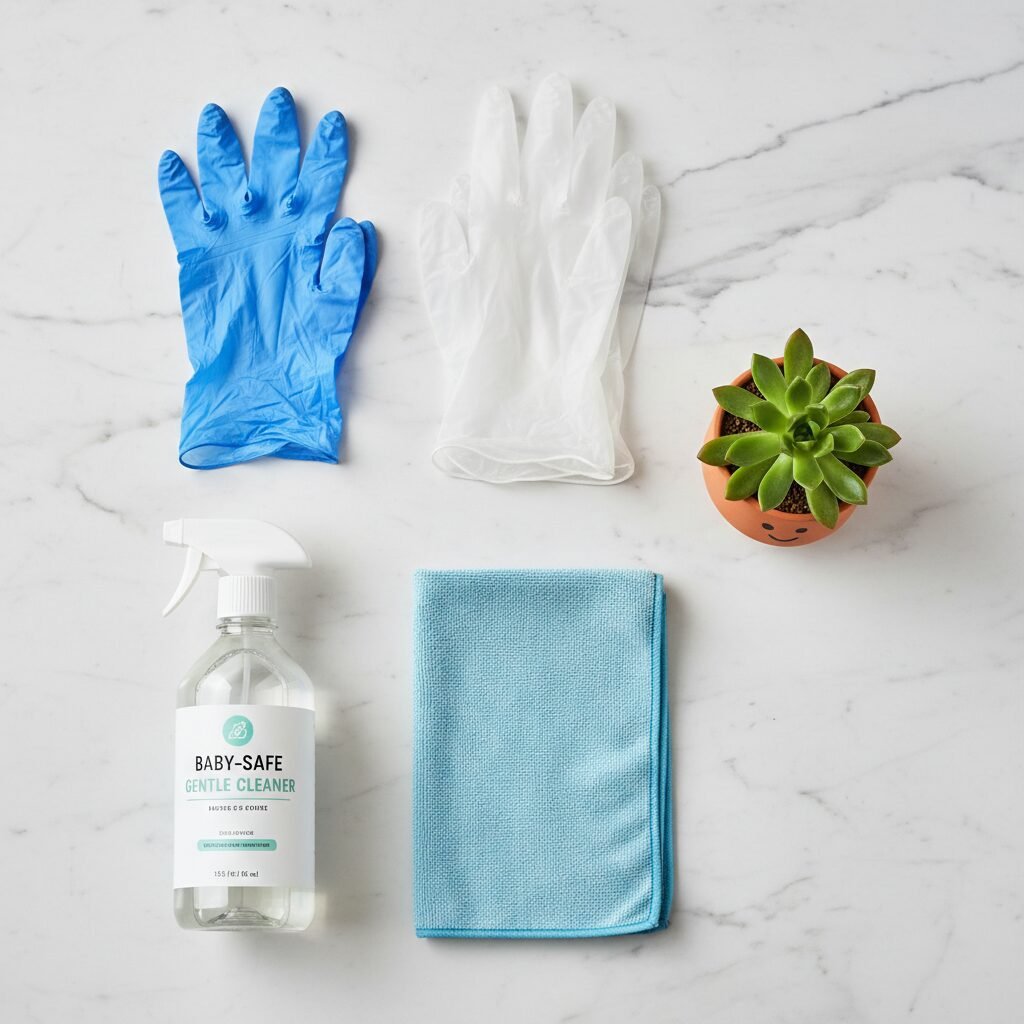
Once you’ve committed to going latex-free, the next step is to find a glove that can stand up to your nesting to-do list. From scrubbing floors to painting the nursery, different tasks require different features. Here’s what to look for to find your perfect match.
- Material Matters: Nitrile vs. Vinyl: The two most common latex-free alternatives are nitrile and vinyl.
Nitrile Gloves
are a fantastic all-around choice. They are highly resistant to punctures and chemicals, making them ideal for heavy-duty cleaning with substances like bleach or strong disinfectants. They also offer a snug fit and good tactile sensitivity.
Vinyl Gloves
are typically less expensive and are great for lighter, shorter-duration tasks like painting, dusting, or potting plants. They are less durable than nitrile and offer a looser fit, which some people prefer for quick jobs.
- Durability and Puncture Resistance: You don’t want your glove tearing mid-scrub. Look for gloves with a thickness measured in ‘mils’. A higher mil number (e.g., 4-8 mil) indicates a thicker, more durable glove suitable for tough jobs, while a lower number (2-3 mil) is fine for tasks that don’t involve sharp objects or abrasive surfaces.
- Comfort and Fit: An ill-fitting glove is frustrating and unsafe. Look for brands that offer a full range of sizes (S, M, L, XL). For longer cleaning sessions, consider gloves with a soft cotton flock lining, which absorbs sweat and makes them much more comfortable to wear. An extended cuff can also be a lifesaver, preventing water from dripping down your arms.
- Grip and Dexterity: When you’re handling soapy dishes or delicate decor, a secure grip is essential. Many high-quality gloves feature a textured finish on the fingertips and palms to improve grip in both wet and dry conditions.
- Powder-Free Design: Always opt for powder-free gloves. The powder (usually cornstarch) in powdered gloves can be an irritant and leave a messy residue on your hands and surfaces.
Our Top Picks: The Best Latex-Free Gloves for Every Nesting Task
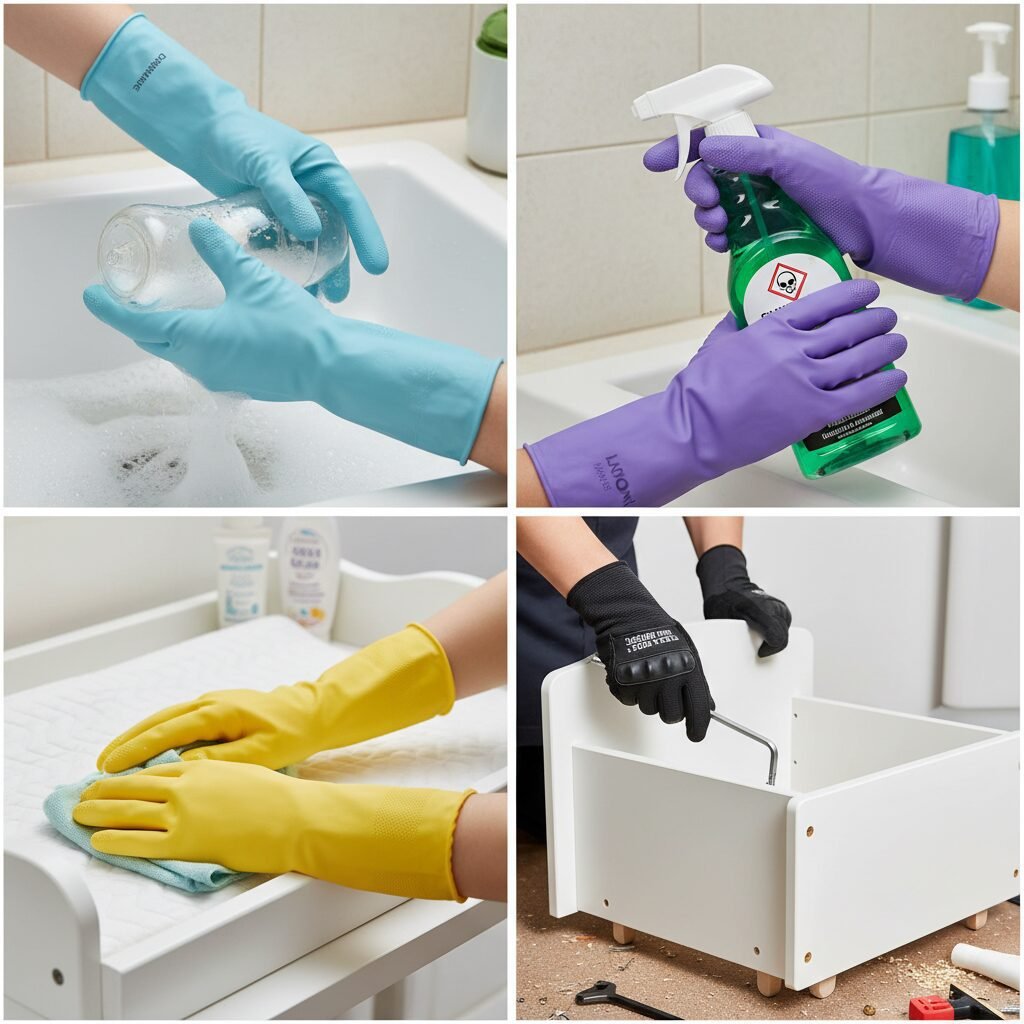
We’ve researched and reviewed countless options to bring you the best latex-free gloves that deliver on protection, durability, and comfort. Whether you’re doing a full deep clean or adding the final touches to the nursery, there’s a perfect glove for you.
| Glove Model | Material | Best For | Key Feature |
|---|---|---|---|
| DREAMCARE Reusable Dishwashing Gloves | PVC (Vinyl) & Cotton Lining | Daily Cleaning & Dishwashing | Long cuffs and a comfortable flock lining |
| LANON Nitrile Chemical Resistant Gloves | Nitrile | Heavy-Duty & Chemical Cleaning | Superior chemical and puncture resistance |
| MAMISON Reusable Cleaning Gloves | Nitrile | All-Purpose Nesting | Excellent grip and dexterity |
| VENOM STEEL Rip Resistant Gloves | Nitrile (Heavy Duty) | Toughest Jobs (Assembly, Demo) | Industrial-grade 6-mil thickness |
For Everyday Comfort: DREAMCARE Reusable Dishwashing Gloves
These gloves are a dream for daily tasks. Made from a durable PVC material with a soft cotton flock lining, they slide on and off easily and keep your hands comfortable even during long sessions at the sink. The extended cuffs are brilliant for preventing water from getting inside, making them perfect for washing baby bottles, pump parts, and all the dishes that pile up.
- Pros: Extremely comfortable lining, great cuff length, durable enough for daily use, excellent value.
- Cons: Not designed for use with harsh chemicals like acetone or strong solvents.
For Heavy-Duty Protection: LANON Nitrile Chemical Resistant Gloves
When you’re tackling the bathroom with strong disinfectants or need serious protection, these are the gloves to reach for. Made from high-performance nitrile, they stand up to a wide range of chemicals and are highly resistant to tearing and punctures. They provide peace of mind when you need to be sure nothing is getting through to your skin.
- Pros: Unbeatable chemical resistance, very durable, textured palm for superior grip.
- Cons: Thicker material means slightly less tactile sensitivity compared to thinner gloves.
For All-Purpose Nesting: MAMISON Reusable Cleaning Gloves
If you’re looking for one glove that can do it all, this is a top contender. These nitrile gloves strike the perfect balance between durability and dexterity. They are tough enough for scrubbing but thin enough that you can still feel what you’re doing, making them great for tasks like wiping down furniture, cleaning windows, or even detailed painting work in the nursery.
- Pros: Great balance of protection and dexterity, non-slip textured grip, comfortable for long wear.
- Cons: Sizing can run a bit small, so consider ordering a size up.
For the Toughest Jobs: VENOM STEEL Rip Resistant Gloves
For the nesting parent or partner who is also assembling furniture, doing minor repairs, or handling rough materials, these industrial-grade gloves are a must. At 6 mils thick, they are significantly more durable than standard disposable gloves and are designed to resist rips and punctures. While they are disposable, one pair can often last through an entire project.
- Pros: Exceptionally tough and rip-resistant, provides a secure grip, great for non-cleaning tasks.
- Cons: They are disposable and not ideal for washing dishes or tasks requiring submersion in water.
Nesting Safely: A Supportive Checklist for Expecting Parents

The nesting phase is about creating a safe space, and that starts with keeping yourself safe during the process. It’s easy to get carried away, so here are some gentle reminders for you and your partner to keep in mind.
A Checklist for Mindful Nesting:
- Ventilate, Ventilate, Ventilate: Whether you’re painting or cleaning, always open windows and use fans to ensure good air circulation. This helps disperse fumes from even the most ‘natural’ of products.
- Read Every Label: Opt for cleaning products that are labeled non-toxic, plant-based, and free of VOCs, phthalates, and harsh chemicals. When in doubt, a simple solution of vinegar and water can work wonders.
- Listen to Your Body: Pregnancy is not the time to push your physical limits. Avoid climbing on ladders or step-stools, and refrain from lifting heavy boxes or furniture. Your body is already doing the incredible work of growing a human—be kind to it.
- Hydrate and Take Breaks: Keep a large water bottle nearby and sip frequently. Set a timer to remind yourself to sit down, put your feet up, and rest every hour.
- Make it a Team Effort: This is a beautiful opportunity for connection. To the partners and dads-to-be: your role is invaluable. Offer to take on the tasks that require harsh chemicals or heavy lifting. Turning on some music and tackling the to-do list together can transform nesting from a chore into a cherished memory.
Remember, the goal isn’t a perfect home; it’s a prepared and loving one. You are doing an amazing job. Give yourself grace, ask for help, and focus on the love that’s driving every action.
Conclusion
Embracing the nesting instinct is one of the most tangible ways to prepare your heart and home for your baby. By choosing to protect your hands with high-quality, latex-free gloves, you’re making a conscious choice for your own well-being and for the pristine environment you’re so lovingly creating. It’s a small detail that makes a big difference, allowing you to scrub, paint, and organize with the confidence that you are putting safety first.
As you check off the items on your list, remember to be present in these moments. This flurry of activity is a beautiful expression of love. So, glove up, turn on your favorite playlist, and enjoy this special time of preparation. You are building a safe, comfortable, and love-filled nest, and you’re doing an incredible job.