No Nursery? No Problem. Create the Perfect Nursing Corner in 5 Feet of Space
The moment you see that positive pregnancy test, the nesting instinct can hit with the force of a tidal wave. Pinterest boards fill up with images of sprawling, themed nurseries complete with bespoke murals and designer cribs. But for many of us, the reality of our living space doesn’t match those glossy magazine photos. Whether you’re in a cozy apartment, saving the spare room for a home office, or simply believe in the bonding benefits of room-sharing, the idea of not having a dedicated nursery can feel like you’re already falling short. Let’s put a stop to that thought right now.
A baby’s primary needs are simple: to be fed, to be clean, to be warm, and above all, to be loved. None of these things require a separate room. What you and your baby truly need is a space of comfort, connection, and calm. Welcome to the concept of the ‘nursing corner’ or ‘baby nook’—a compact, highly functional, and deeply intimate space dedicated to you and your little one. In this guide, we’ll walk you through, step-by-step, how to transform just five feet of space into a sanctuary that meets every essential need, proving that the size of your home has no bearing on the size of your heart.
Choosing Your 5-Foot Sanctuary: Location, Location, Location

Before you buy a single item, the most crucial first step is identifying the perfect plot of real estate within your home. Five feet might not sound like much, but its location will significantly impact your daily (and nightly) flow. The goal is to choose a spot that prioritizes ease, comfort, and quiet for both you and your baby.
Master Bedroom vs. Living Area
The two most common choices are a corner in the parents’ bedroom or a section of the main living area. Each has distinct advantages.
- The Master Bedroom Corner: This is often the top choice, especially for the first few months. The American Academy of Pediatrics (AAP) recommends room-sharing (but not bed-sharing) for at least the first six months to reduce the risk of SIDS. Having your nursing corner just steps from your bed makes those 2 a.m. feedings far more manageable. You can feed, change, and soothe your baby without having to fully wake up and trek across your home. The bedroom is also a naturally quieter, more private space.
- The Living Area Nook: If your bedroom is particularly small or you plan to have the baby nap under your supervision during the day, a living room corner can be a great option. It allows you to tend to the baby’s needs while still being part of the household’s gentle daytime rhythm. It’s also convenient when you have guests, as you don’t have to retreat to the bedroom every time the baby needs something.
Key Considerations for Your Chosen Spot:
- Proximity to Power: You’ll likely want to plug in a lamp, a sound machine, or a phone charger. Ensure your chosen corner has an accessible electrical outlet. If not, plan for a safe, heavy-duty extension cord that can be secured against the wall to prevent a tripping hazard.
- Temperature and Airflow: Is the corner near a drafty window or a clanky radiator? Pay attention to the ambient temperature and airflow to ensure your baby will be comfortable and safe. Avoid placing the corner in direct sunlight or directly under an air vent.
- Traffic Flow: Choose a low-traffic area. You don’t want your partner to be squeezing past the glider every time they need to get to their side of the bed, or for the corner to be in the main thoroughfare between the kitchen and the couch.
- Quiet Factor: While babies can sleep through a surprising amount of noise, a spot away from the television or the noisy dishwasher will create a more serene environment for feeding and winding down.
Remember, this space is for you as much as it is for the baby. Choose the location that you feel will make your life as a new parent easier and more peaceful. This is your command center for connection and care.
The Foundation: Anchoring Your Corner with Comfort and Safety

With your location chosen, it’s time to select the single most important piece of furniture for your nursing corner: your chair. You will spend countless hours in this chair—feeding, cuddling, reading, and rocking your baby to sleep. Prioritizing comfort and ergonomics is not an indulgence; it’s a necessity for your physical well-being during the demanding postpartum period.
Choosing the Right Chair
The ideal chair should support you in all the right places. Look for these key features:
- Excellent Back Support: A high back that supports your head and neck is a lifesaver during long feeding sessions when you might doze off for a moment.
- Comfortable Armrests: The armrests should be at a height that allows you to comfortably support the baby without straining your shoulders. Padded armrests are a huge plus.
- A Smooth Motion: A gentle rocking or gliding motion can be incredibly soothing for a fussy baby (and a tired parent). Test out gliders and rockers in person if you can. Ensure the mechanism is silent and smooth.
- Durable, Easy-to-Clean Fabric: Spit-up, milk dribbles, and diaper leaks are inevitable. A performance fabric, microfiber, or even leatherette that can be wiped clean easily will save you a lot of stress.
- A Matching Ottoman or Stool: Putting your feet up is crucial for your comfort and can also help with postpartum swelling. Many gliders come with a matching ottoman that glides in sync with the chair. If not, a simple footstool or pouf will do the trick.
| Chair Type | Pros | Cons |
|---|---|---|
| Glider | Smooth, front-to-back motion. Often comes with a matching gliding ottoman. Very soothing for babies. | Can have a larger footprint. Pinch points in the mechanism can be a hazard for pets or toddlers. |
| Rocker | Classic look. Typically has a smaller footprint than a glider. The arching motion is rhythmic and comforting. | Can be less stable and may ‘walk’ across the floor. Can be harsh on wood floors without a rug. |
| Stationary Armchair | Can be repurposed elsewhere in the home later. Wide variety of styles to match your decor. | Lacks the soothing motion that many parents and babies love. May need extra pillows for support. |
Safety First
Whatever you choose, safety is paramount. If you opt for a glider, ensure the mechanism is enclosed to protect tiny fingers and paws. For any chair, make sure it is stable and won’t tip easily. Place it on a non-slip rug to keep it in place.
Essential Stations: Organizing for Feeding, Changing, and Soothing

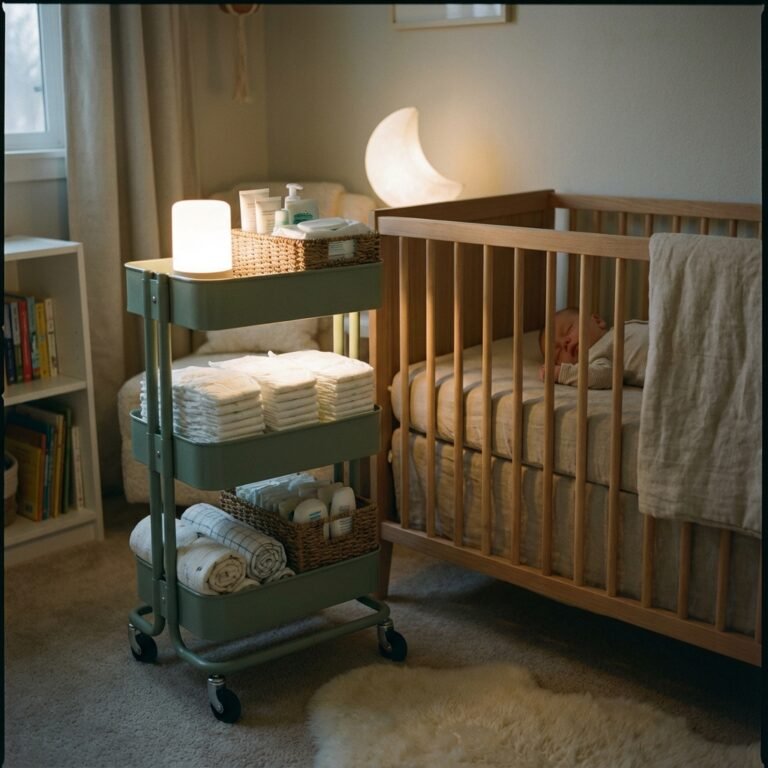
The magic of a small-space nursing corner lies in its organization. By thinking in terms of ‘stations,’ you can ensure everything you need is always within arm’s reach, minimizing disruption and stress. The key is a smart, multi-functional storage solution, like a three-tiered rolling cart or a narrow side table with shelves.
The Feeding Station
This is for immediate needs during feeding. Keep these items on the top tier of your cart or on the surface of your side table.
- Water Bottle & Snacks: Breastfeeding or bottle-feeding is thirsty work. A large, reusable water bottle with a straw is essential. Keep some one-handed snacks like granola bars or nuts nearby.
- Burp Cloths: Have a stack of at least three or four clean burp cloths ready to go.
- Nursing Pillow: A good nursing pillow (like a Boppy or My Brest Friend) can save your back and arms. You can tuck it beside the chair when not in use.
- For Breastfeeding Parents: Nipple cream, nursing pads, and a Haakaa or manual pump can be stored in a small basket or pouch.
- For Bottle-Feeding Parents: Keep a pre-measured container of formula and a clean bottle ready for middle-of-the-night mixing.
- Phone Charger: A long charging cord is a great idea so you can scroll, listen to a podcast, or track feedings during long sessions.
The Diapering Caddy
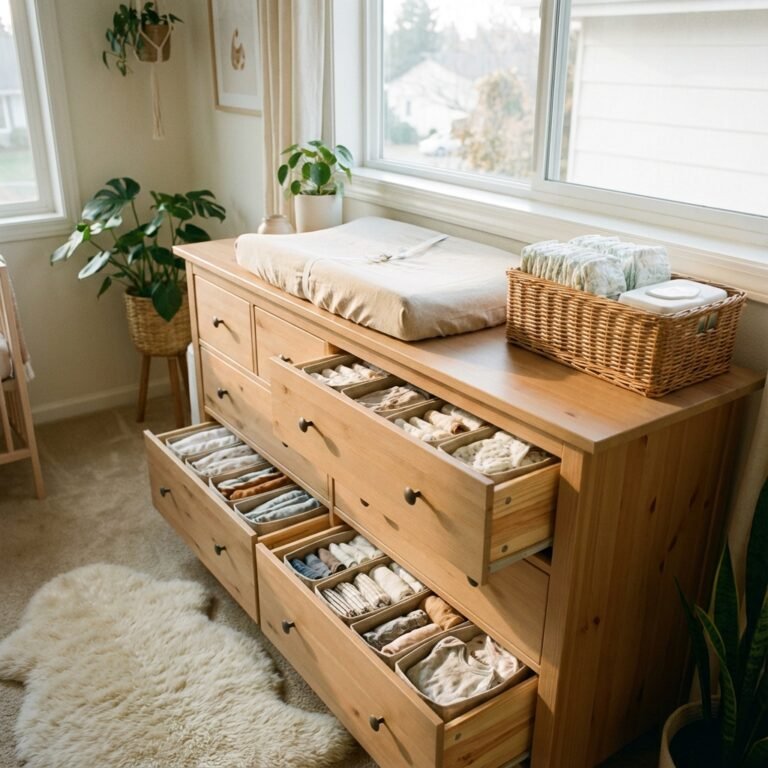
You don’t need a full changing table. A portable system is perfect. Use the middle tier of your cart or a dedicated diaper caddy for these items.
- Diapers: Stock enough for one day and night (about 10-12 newborn diapers).
- Wipes: A standard pack of wipes fits perfectly.
- Diaper Cream: Keep your preferred barrier cream at the ready.
- Portable Changing Pad: A foldable, wipeable changing pad allows you to change the baby on a nearby bed, couch, or even the floor.
- A Wet Bag or Small Bin: A designated spot for dirty clothes or reusable wipes makes cleanup easier.
The Soothing Zone
This station holds the tools to help calm a fussy baby and create a peaceful atmosphere. The bottom tier of a cart is a great place for these items.
- Swaddles: Keep two or three clean swaddles or sleep sacks folded and ready.
- Pacifiers: If you use them, have a few clean ones in a small container.
- White Noise Machine: A portable sound machine is a game-changer for helping babies link sleep cycles.
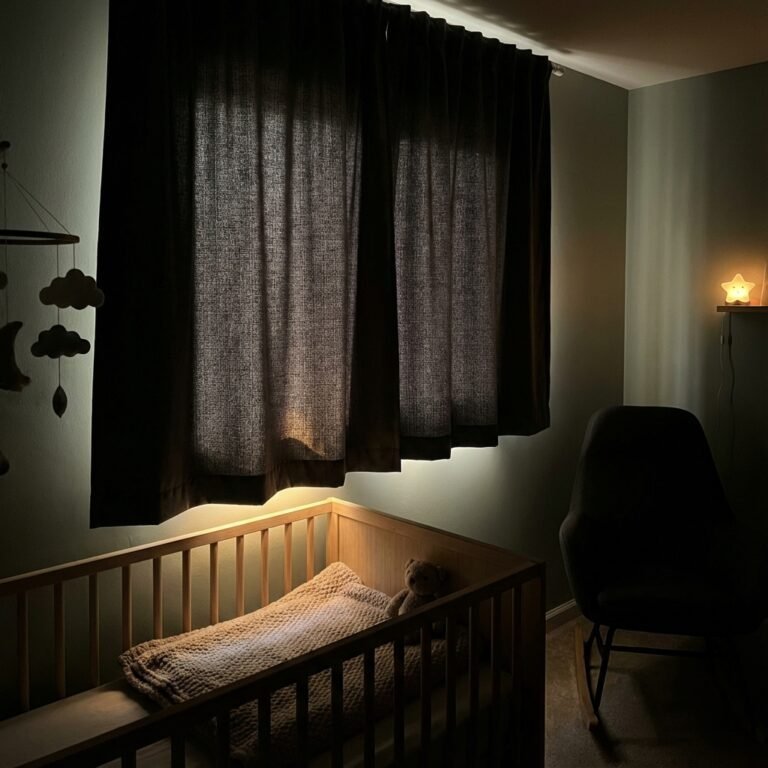
- A Soft Light Source: A small, dimmable lamp or a salt lamp with a warm glow is perfect for nighttime changes and feedings. It provides enough light to see without fully waking you or the baby. A touch-activated lamp is even better.
Maximizing Vertical Space: Smart Storage for Small Footprints

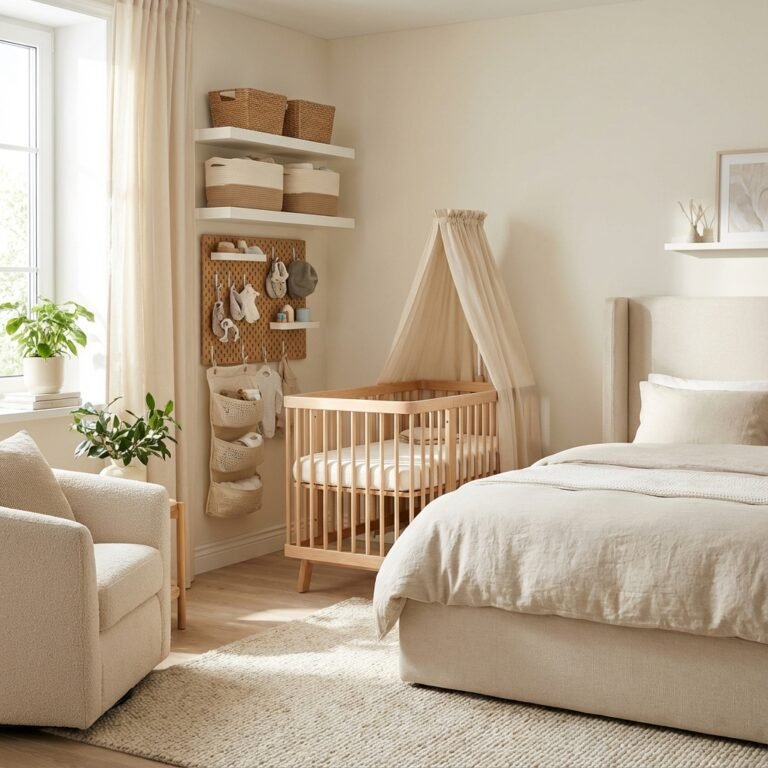
When you only have a few square feet of floor space, the only way to go is up. Utilizing your wall space is the secret to keeping your nursing corner organized and clutter-free without expanding its footprint. This is where you’ll store items that aren’t needed at a moment’s notice but should still be easily accessible.
Floating Shelves
Installing two or three floating shelves above your nursing corner (well out of baby’s reach) is an elegant and practical solution.
- Safety Note: Ensure shelves are installed correctly into studs and are not placed directly over where the baby’s head will be. Do not place heavy objects on them.
- What to Store: Use shelves for decorative items that make the space feel personal, like a few favorite board books, a small framed photo, or a special stuffed animal. You can also use stylish baskets on the shelves to hold extra pacifiers, socks, or small toys.
Wall-Mounted Baskets and Organizers
Wire or fabric wall baskets are fantastic for lightweight storage. They can hold extra stacks of diapers, sleep sacks, or a collection of swaddle blankets. A wall-mounted pegboard with small hooks and baskets is another versatile option that you can customize to your needs.
Over-the-Door Solutions
Don’t forget the back of the door! If your corner is near the bedroom or a closet door, an over-the-door shoe organizer with clear pockets is a brilliant hack. It’s not just for shoes—the pockets are the perfect size for:
- Rolled-up baby outfits
- Pairs of socks and mittens
- First-aid supplies like a nasal aspirator, thermometer, and nail clippers
- Extra packs of wipes
- Small toys and teethers
By thinking vertically, you can effectively double or triple your storage capacity without taking up a single extra inch of precious floor space. This keeps the area around your chair clear, which is safer and creates a more calming visual environment.
Making It Your Own: Personal Touches and Ambiance

A nursing corner is more than just a functional station; it’s a sanctuary. This is where you’ll forge an unbreakable bond with your baby, weather late-night feeding marathons, and whisper your first secrets. Infusing it with your personality and creating a calming ambiance will transform it from a simple corner into a cherished space filled with love.
Set the Mood with Lighting
Harsh overhead lighting is the enemy of a peaceful night feed. Soft, warm light is key.
- Dimmable Lamp: A floor or table lamp with a dimmer switch gives you complete control over the brightness.
- Salt Lamp: Many parents love the warm, pinkish glow of a Himalayan salt lamp, which is gentle on sleepy eyes.
- Fairy Lights: A string of warm-white fairy lights tucked into a jar or draped safely on the wall can add a touch of magic and whimsy.
Engage the Senses
Think about creating a multi-sensory experience of calm.
- Texture: Add a super-soft blanket to your chair, place a plush rug underfoot, and have soft muslin swaddles ready. These textures are comforting for both you and your baby.
- Visuals: You’ll be looking at this corner a lot, so make it beautiful to you. Hang a single, meaningful piece of art on the wall. It could be a simple, abstract print, a custom illustration of your family, or a framed photo from your maternity shoot. A small, slow-moving mobile can also provide a gentle point of focus for your baby.
- Scent: While strong scents are not recommended for newborns, you can introduce a calming element for yourself. A drop of lavender essential oil on a tissue placed nearby (but out of baby’s reach) can promote relaxation.
This corner is a reflection of your new family. It doesn’t need to be perfect by anyone else’s standards. Fill it with things that bring you a sense of peace and joy. This is your space to heal, to bond, and to fall deeply in love.
Conclusion
In the end, the most essential ingredient in preparing for a baby isn’t a room—it’s readiness of the heart. By creating a dedicated nursing corner, you are carving out a physical space that honors the immense journey you are on. You are proving that with a little creativity, thoughtful organization, and a lot of love, you can create a perfect sanctuary in even the smallest of spaces. This corner will become the backdrop for some of your most precious memories: sleepy smiles, milk-drunk cuddles, and the profound, quiet moments of connection that define early parenthood. So release the pressure for perfection. Embrace the space you have. You are not just building a nursing corner; you are building a nest, and it will be the most wonderful home base for you and your new baby.