
No More Flat Spots: 5 Simple Habits to Shape Your Newborn’s Head Perfectly
Welcome, New Parents!
Bringing a newborn home is an exhilarating journey filled with immense joy, countless firsts, and a fair share of new concerns. Among the many questions that naturally arise, one that often surfaces for new parents is about the shape of their baby’s head. You might have noticed a slight flattening on one side or the back of your baby’s head, a condition medically known as positional plagiocephaly. It’s a common concern, and if you’re experiencing it, please know you are not alone. In fact, due to the American Academy of Pediatrics’ ‘Back to Sleep’ campaign – a vital initiative that significantly reduced the risk of SIDS – more babies are spending time on their backs, which can inadvertently lead to flat spots.
As a certified Doula and Maternal Health Educator, I understand the blend of love and worry that defines early parenthood. My goal is to equip you with professional, authoritative, and empathetic guidance. This article is designed to be your supportive companion, offering practical, evidence-based strategies to help your baby develop a beautifully rounded head. We’ll explore five simple, everyday habits that, when consistently applied, can make a significant difference. These aren’t complicated routines, but rather gentle adjustments to your daily interactions with your little one. Let’s embark on this journey together, ensuring your baby thrives in every way.
Understanding Plagiocephaly: What New Parents Need to Know
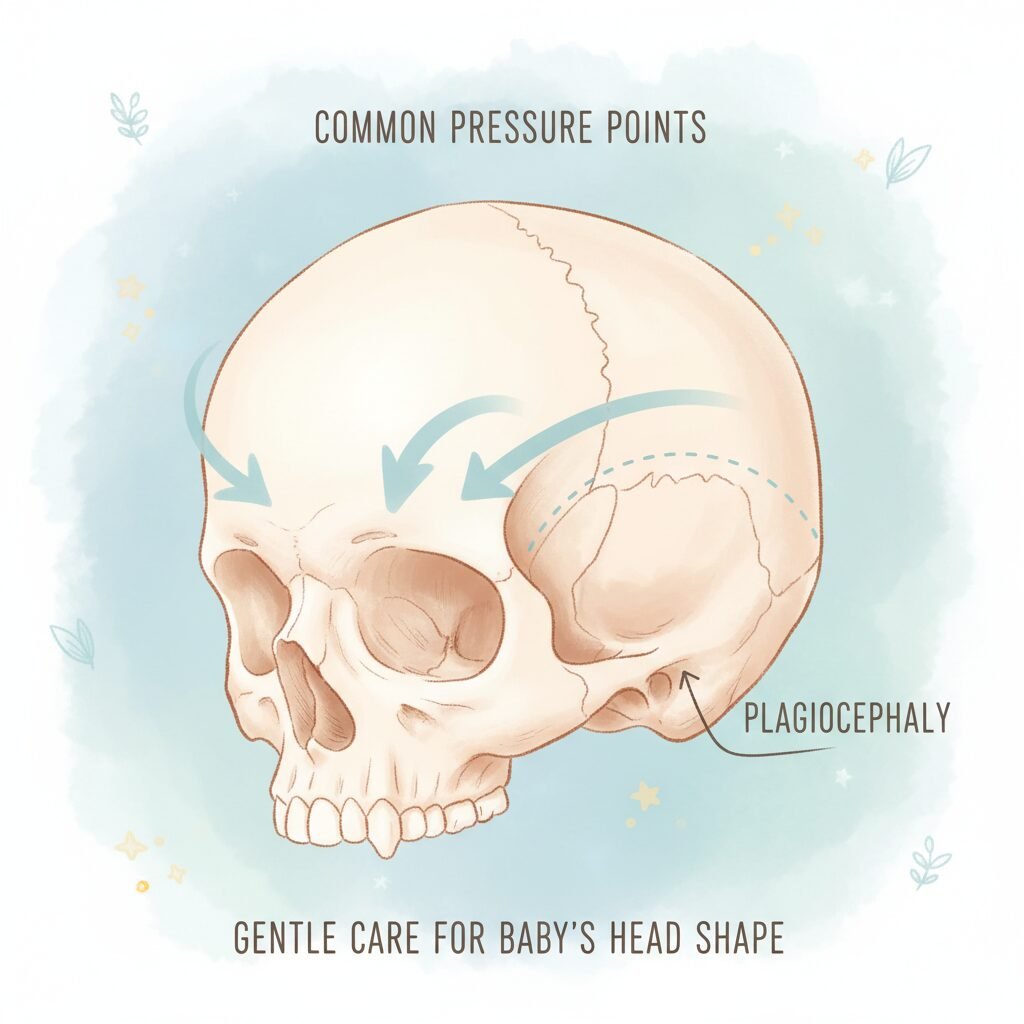
Before we dive into preventative habits, it’s essential to understand what positional plagiocephaly is and why it occurs. Positional plagiocephaly, often referred to as ‘flat head syndrome,’ is characterized by a flat spot on the back or side of a baby’s head. Unlike craniosynostosis, a more serious condition involving the premature fusion of skull bones, positional plagiocephaly is a cosmetic issue resulting from sustained pressure on one area of a baby’s soft, pliable skull. Newborns’ skulls are incredibly soft and flexible to allow for passage through the birth canal and rapid brain growth during the first year of life. This flexibility, while vital, also makes them susceptible to external pressures.
“A baby’s skull is designed to be soft and malleable, which is crucial for birth and rapid brain development. This natural flexibility also means it’s easily shaped by external forces, making consistent repositioning key to preventing flat spots.” – Dr. Sarah Jenkins, Pediatrician.
The primary reason for the increased incidence of positional plagiocephaly is the recommendation for babies to sleep on their backs to prevent Sudden Infant Death Syndrome (SIDS). This life-saving recommendation means infants spend a significant portion of their early months in a supine (on their back) position. While absolutely critical for safety, it means that if a baby consistently rests their head in the same spot, that area can flatten. Other contributing factors can include:
- Torticollis: A condition where a baby has a tight neck muscle, causing them to favor turning their head to one side. This can lead to consistent pressure on that favored side.
- Prematurity: Premature babies often have softer skulls and may spend more time lying down due to medical needs.
- Uterine positioning: Sometimes, a baby’s position in the womb can put pressure on their head, leading to a flat spot even before birth.
- Limited movement: Babies who spend extended periods in car seats, swings, or bouncers may also experience increased pressure on the back of their heads.
It’s crucial to remember that positional plagiocephaly is generally a cosmetic issue and does not typically affect brain development. However, early intervention with simple, consistent habits can effectively prevent and often correct these flat spots, promoting healthy head shape development. Recognizing the signs early and implementing the strategies we’re about to discuss can make all the difference.
Habit 1: Embracing the Magic of Tummy Time

Tummy time is not just a fun activity; it’s a cornerstone of infant development and one of the most effective habits for preventing and correcting flat spots. When your baby is on their tummy, the pressure is taken off the back of their head, allowing it to round out naturally. Beyond head shaping, tummy time offers a wealth of developmental benefits:
- Strengthens neck, shoulder, and core muscles, crucial for motor milestones like rolling, sitting, and crawling.
- Improves head control.
- Develops visual and sensory skills as they explore their environment from a new perspective.
- Helps prevent torticollis by encouraging movement of neck muscles in all directions.
How to Make Tummy Time a Joyful Routine:
- Start Early and Often: Begin tummy time as soon as you bring your newborn home, even for short bursts.
- Keep it Short and Sweet: Initially, aim for 3-5 minute sessions, 2-3 times a day. Gradually increase the duration and frequency as your baby tolerates it, working up to 15-20 minutes, several times a day by 3-4 months of age.
- Make it Engaging: Lie down with your baby, talk to them, sing songs, or use brightly colored toys to capture their attention. A mirror placed in front of them can also be a great motivator.
- Vary the Location: Tummy time doesn’t just have to be on the floor. Try placing your baby on your chest while you’re reclined, across your lap, or even over a nursing pillow. This changes the angle and keeps things interesting.
- Supervise Constantly: Always stay with your baby during tummy time. Never leave them unattended.
- Watch for Cues: If your baby becomes fussy or tired, it’s okay to end the session and try again later. The goal is positive association, not distress.
“Tummy time is more than just an exercise; it’s a critical developmental window. It not only strengthens vital muscles but also provides a crucial break from back-lying, directly addressing the risk of plagiocephaly.” – American Academy of Pediatrics.
Remember, consistency is key. Integrating tummy time into your daily routine, even in small increments, will yield significant benefits for your baby’s head shape and overall development.
Habit 2: Thoughtful Head Positioning During Sleep

While the ‘Back to Sleep’ recommendation is non-negotiable for SIDS prevention, there are safe and simple ways to vary your baby’s head position while they are sleeping on their back. The goal is to ensure that different areas of their skull bear the pressure during sleep, rather than consistently resting on the same spot. This habit requires mindful attention each time you place your baby down for a nap or for the night.
Safe Strategies for Varying Head Position:
- Alternate Direction in the Crib: Each time you put your baby down in their crib, try placing them with their head at a different end. Babies are naturally drawn to look at light sources, windows, or the entrance to the room. By changing their orientation, you encourage them to turn their head in a different direction to observe these stimuli.
- Gentle Repositioning (Supervised Only): When your baby is sound asleep, you can gently turn their head to face a different direction. For example, if they usually sleep with their head turned to the right, gently encourage them to face left. Important: Only do this if your baby is comfortable and doesn’t resist. Never force their head into an uncomfortable position. Always ensure their airway is clear and they can easily turn their head back if needed. This is a subtle shift, not a forceful change.
- Place Toys or Mobiles Strategically: Position engaging objects on different sides of the crib to encourage your baby to turn their head in various directions during awake times while still in their crib. Remember, any toys in the crib should be appropriate for safe sleep guidelines (no loose blankets, bumpers, or soft toys for infants).
- Monitor for Preferences: Pay attention to whether your baby consistently favors turning their head to one side. This could be an early sign of torticollis, which might require professional evaluation. If you notice a strong preference, mention it to your pediatrician.
“Safe sleep is paramount. Within those guidelines, small, consistent changes in how you position your baby’s head can have a big impact on preventing flat spots. It’s about gentle awareness, not active intervention once they are deeply asleep and settled.” – Dr. Emily Carter, Pediatric Physical Therapist.
It is vital to reiterate that babies must always be placed on their backs to sleep. Never use wedges, positioners, or rolled blankets to prop your baby’s head in a specific position, as these can pose a suffocation risk. The methods described above are about subtle, safe encouragement of varied head movement and positioning when you place your baby down, or during supervised awake times.
Habit 3: The Art of Varied Carrying and Feeding
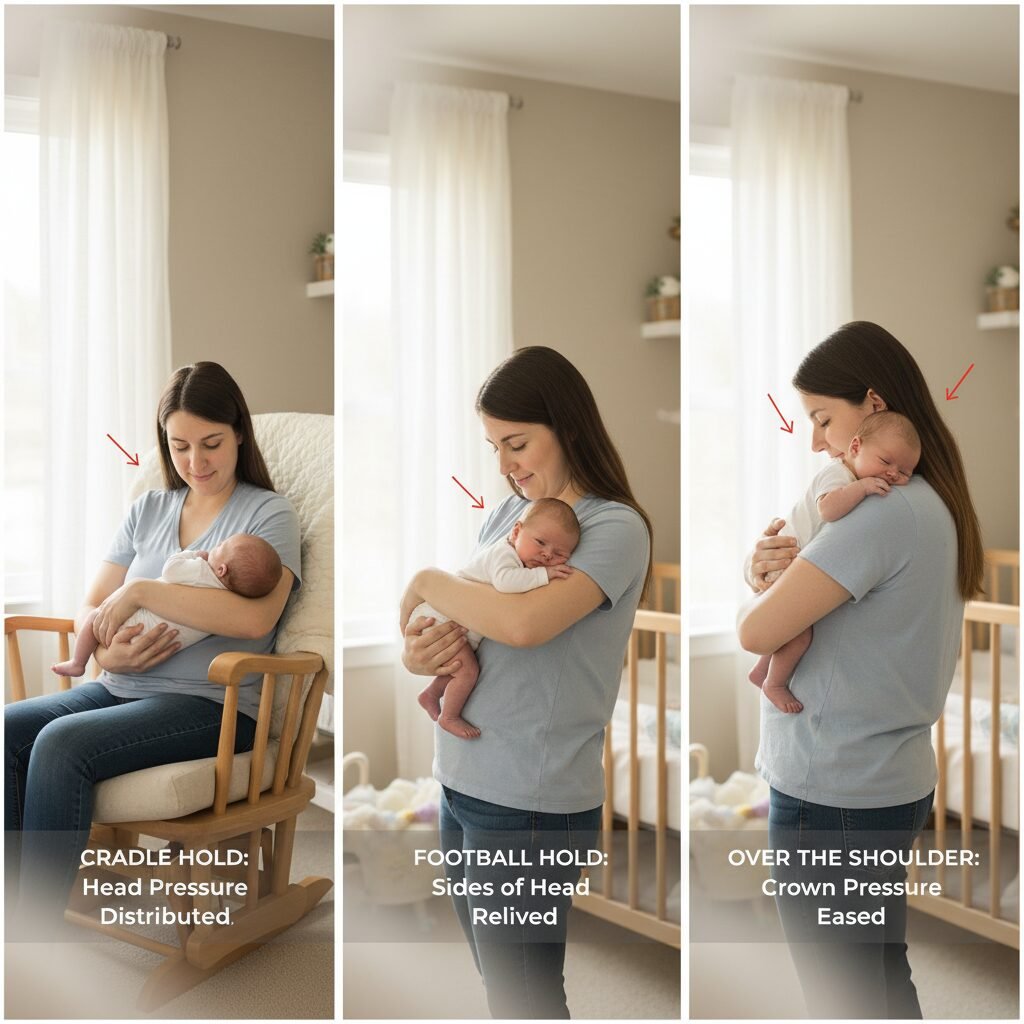
The way you hold and interact with your baby throughout the day offers numerous opportunities to relieve pressure from their head and encourage a balanced shape. Every cuddle, feeding session, and carrying moment can contribute to this goal. Think of these interactions as mini-repositioning sessions that are both nurturing and beneficial for head development.
Embracing Different Positions:
- Alternate Arms During Carrying: It’s natural to have a dominant arm or a preferred way of holding your baby. However, consciously switching sides can ensure that both sides of your baby’s head are exposed to different pressures and angles. This also helps develop strength and awareness on both sides of their body.
- Vary Feeding Positions: Whether you are breastfeeding or bottle-feeding, try to alternate the side you hold your baby. If breastfeeding, switch breasts and positions regularly (e.g., cradle hold, football hold, side-lying). If bottle-feeding, hold your baby in one arm for one feeding, and the other arm for the next. This simple change distributes pressure and encourages your baby to turn their head in different directions to engage with you.
- Upright Carrying: Incorporate more upright carrying positions throughout the day. Holding your baby over your shoulder, facing outwards while supported, or in an upright baby carrier (ensuring it’s ergonomic and supports their hips) takes all pressure off the back of their head. These positions also allow them to engage with the world from a new vantage point, stimulating their senses.
- Skin-to-Skin Contact: Beyond its immense bonding benefits, skin-to-skin (or ‘kangaroo care’) often involves holding your baby upright on your chest. This naturally promotes varied head positions and encourages them to lift and turn their head to look at you.
“Every interaction with your baby is an opportunity for development. By simply varying how you hold and feed them, you’re not only fostering attachment but also actively contributing to their physical well-being, including the healthy shaping of their head.” – Lisa Miller, Certified Lactation Consultant and Doula.
These varied carrying and feeding positions are not only beneficial for preventing flat spots but also strengthen your bond with your baby and support their overall physical development. They encourage natural muscle use and provide diverse sensory experiences that are crucial for growth.
Habit 4: Mindful Use of Baby Gear and Devices

Modern baby gear, such as car seats, swings, bouncers, and infant loungers, offers convenience and can be incredibly helpful for parents. However, prolonged use of these devices can contribute to positional plagiocephaly because they often keep a baby’s head in a fixed position, typically resting on the back of their skull. The key is mindful and moderated use.
Strategies for Balancing Convenience with Development:
- Limit Time in ‘Containers’: While car seats are essential for travel safety, they are not designed for extended periods of sleep or play outside of the car. Limit your baby’s time in car seats, swings, bouncers, and similar devices to short, supervised intervals. Aim for no more than 30-60 minutes at a time, depending on your baby’s age and tolerance, and ensure they are removed for regular breaks.
- Prioritize Floor Time: Make the floor your baby’s primary play area. A clean blanket or play mat on the floor provides a safe, open space for your baby to move freely, practice tummy time, roll, and explore without pressure on their head. This encourages natural movement and muscle development.
- Use Devices for Specific Purposes: Reserve the car seat for car travel. Use a swing or bouncer for short periods when you need to safely contain your baby while you complete a quick task, always under supervision. They are tools, not substitutes for active interaction and free play.
- Observe and Adjust: Pay attention to your baby’s head position when they are in these devices. If you notice their head consistently falling to one side or staying in the same position, gently reposition them or take them out for a break.
- Consider Alternatives: Instead of relying heavily on stationary devices, consider babywearing. An ergonomic baby carrier keeps your baby upright, off their head, and close to you, fostering bonding while allowing them to engage with their surroundings from a different perspective.
“Baby gear can be a parent’s best friend for short periods, but it’s crucial to remember that a baby’s developing body thrives on freedom of movement. Prioritizing floor time and varied positions outside of these devices is fundamental for healthy head shape and overall motor development.” – Dr. Benjamin Lee, Pediatric Orthopedist.
The goal isn’t to eliminate these helpful devices but to use them judiciously and balance their use with ample opportunities for free movement, tummy time, and varied holding positions. This mindful approach ensures your baby benefits from the convenience without compromising their head shape development.
Habit 5: Encouraging Play and Free Movement

Beyond structured tummy time, fostering an environment that naturally encourages your baby to move their head and body freely is a powerful habit in preventing flat spots. Babies learn and develop through exploration and interaction, and every turn of the head, reach of an arm, or kick of a leg contributes to their physical and cognitive growth.
Simple Ways to Encourage Movement and Engagement:
- Interactive Play: Engage with your baby by moving toys from side to side, encouraging them to track the object with their eyes and turn their head to follow. This is particularly effective during floor time or when they are on their back in their play gym.
- Talk and Sing from Different Sides: When talking or singing to your baby, position yourself on different sides of their head. This simple act encourages them to turn their head towards your voice, stimulating neck muscle movement and varying pressure points.
- Place Toys Strategically: During supervised play on their back, place toys slightly out of reach on alternating sides. This motivates them to reach and turn their head, engaging different muscles and shifting their head position.
- Mirror Play: Babies are often fascinated by their own reflections. Place a baby-safe mirror near them during floor time or tummy time to encourage them to lift and turn their head to look at themselves.
- Encourage Rolling: As your baby grows, encourage them to roll from back to tummy and tummy to back. Rolling is a significant milestone that naturally shifts pressure points on their head and strengthens their core and neck muscles. You can gently assist them by guiding their hips or using a toy to entice them to roll.
“A baby’s world is their classroom, and movement is their curriculum. Providing opportunities for free, uninhibited play and interaction is not only crucial for cognitive development but also a natural way to prevent head flattening and promote strong, flexible muscles.” – Dr. Olivia Reed, Developmental Pediatrician.
These playful interactions are not only vital for healthy head shaping but also strengthen the parent-child bond and stimulate your baby’s overall development. Creating an environment rich in sensory experiences and opportunities for movement is one of the greatest gifts you can give your growing baby.
When to Consult Your Pediatrician: Signs and Support

While implementing these five simple habits is highly effective for preventing and often correcting mild cases of positional plagiocephaly, it’s important to know when to seek professional medical advice. As new parents, trusting your instincts and communicating openly with your pediatrician is always the best approach.
When to Consider a Pediatrician Consultation:
- Noticeable Flat Spot: If you observe a significant or rapidly worsening flat spot on your baby’s head, despite consistent efforts with repositioning, it’s time to consult your pediatrician.
- Head Preference/Torticollis: If your baby consistently holds their head tilted to one side, has difficulty turning their head fully to one direction, or always favors looking over one shoulder, this could indicate torticollis. Early diagnosis and treatment (often with physical therapy) are crucial.
- Facial Asymmetry: In some cases of plagiocephaly, you might notice slight facial asymmetry, such as one ear appearing more forward than the other, or one eye appearing smaller. These are signs that warrant a medical evaluation.
- Parental Concern: Above all, if you have any concerns about your baby’s head shape, development, or overall well-being, do not hesitate to reach out to your pediatrician. They are your primary resource and can provide reassurance or recommend further steps.
Your pediatrician will be able to differentiate between positional plagiocephaly and rarer conditions like craniosynostosis. If plagiocephaly is diagnosed, they might recommend more intensive physical therapy for torticollis, or in some moderate to severe cases, a cranial orthosis (helmet therapy) may be suggested. Helmet therapy is typically most effective when started between 4-6 months of age, when the skull is still very pliable and rapid growth is occurring.
“Early detection and intervention are key when it comes to any developmental concern. Trust your parental instincts; if something doesn’t feel right, a conversation with your pediatrician is always the correct next step. We are here to support you and your baby’s healthy development.” – Dr. Michael Chen, Pediatrician.
Remember, you are your baby’s best advocate. By being observant and proactive, and by working closely with your healthcare team, you can ensure your baby receives the best possible care for a healthy, beautifully shaped head.
Conclusion
Navigating the early months of parenthood is a journey of learning, love, and countless small victories. The concern over your newborn’s head shape is a testament to your dedication as a parent, and I hope this guide has provided you with both reassurance and actionable steps. By consistently incorporating these five simple habits – embracing tummy time, thoughtfully varying head positions during sleep, utilizing diverse carrying and feeding techniques, mindfully using baby gear, and encouraging free movement and play – you are actively contributing to your baby’s healthy development and helping to prevent flat spots.
Remember, every baby is unique, and progress may look different for each child. Be patient, be consistent, and most importantly, enjoy these precious moments with your little one. You are doing an incredible job!
“The greatest wisdom for a new parent is often found in the simplest, most consistent acts of love and care. These small habits build a foundation for a lifetime of health and well-being for your child.” – Anonymous Doula.
Medical Disclaimer: This article provides general information and is not a substitute for professional medical advice, diagnosis, or treatment. Always seek the advice of your physician or other qualified health provider with any questions you may have regarding a medical condition or the health and welfare of your baby. Never disregard professional medical advice or delay in seeking it because of something you have read in this article.