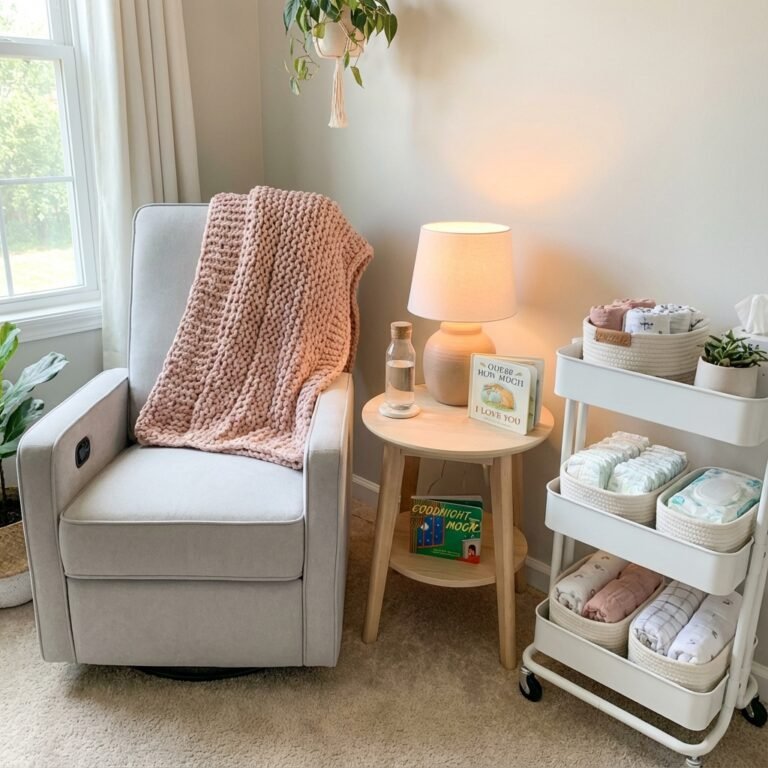
No Closet? No Problem! Genius Baby Clothes Storage Hacks for Small Apartments
The nesting instinct is a powerful force. As you prepare to welcome your little one, the desire to create a perfect, organized, and serene space can feel all-consuming. But what happens when your nest is a cozy small apartment with limited storage and, most critically, no closet in the baby’s designated space? It’s a common challenge that can cause a lot of stress for new and expecting parents. You’re staring at piles of adorable, tiny onesies, sleepers, and socks, and the big question looms: Where will it all go?
Take a deep breath. We are here to tell you that not only is it possible to create a functional and beautiful nursery in a small space, but it can also be an opportunity to embrace minimalism and clever design. You don’t need a walk-in closet to be a fantastic, prepared parent. You just need a new perspective and a few genius hacks up your sleeve. As a doula and maternal health educator, I’ve supported countless families navigating this exact situation. We’ve turned awkward corners into efficient changing stations and blank walls into vertical storage powerhouses.
This guide is your comprehensive playbook for conquering baby clothes storage without a closet. We’ll move beyond the basic advice and dive into practical, stylish, and sustainable solutions that maximize every square inch of your home. Forget the frustration and embrace the challenge. Let’s build a space that feels abundant in love and organization, proving that the size of your home has no bearing on the size of your heart.
Maximize Your Walls: The Vertical Storage Advantage

Go Up, Not Out
When floor space is a precious commodity, the most underutilized real estate in any room is the vertical space. Your walls are blank canvases ready to become storage superstars. Shifting your mindset from ‘out’ to ‘up’ is the single most effective strategy for small-space living. It keeps the floor clear, creating a safer and more open environment for your baby to eventually crawl and play, while keeping essentials within easy reach for you.
Over-the-Door Organizers: Not Just for Shoes
An over-the-door organizer is perhaps the most versatile and affordable tool in your arsenal. While designed for shoes, the clear pockets are perfectly sized for baby items. This simple addition instantly creates dozens of storage compartments without taking up any floor or wall space.
- How to Use It: Dedicate pockets to specific categories: one for socks and booties, another for hats and mittens, a few for rolled-up onesies, and others for bibs, burp cloths, and pacifiers. The clear pockets mean you can see everything at a glance during a frantic 3 a.m. diaper change.
- Pro-Tip: Choose a sturdy organizer with deep, reinforced pockets. You can even place one on the inside of your own closet door if the baby’s room doesn’t have a door to spare, keeping their items separate but close.
Floating Shelves and Ledges
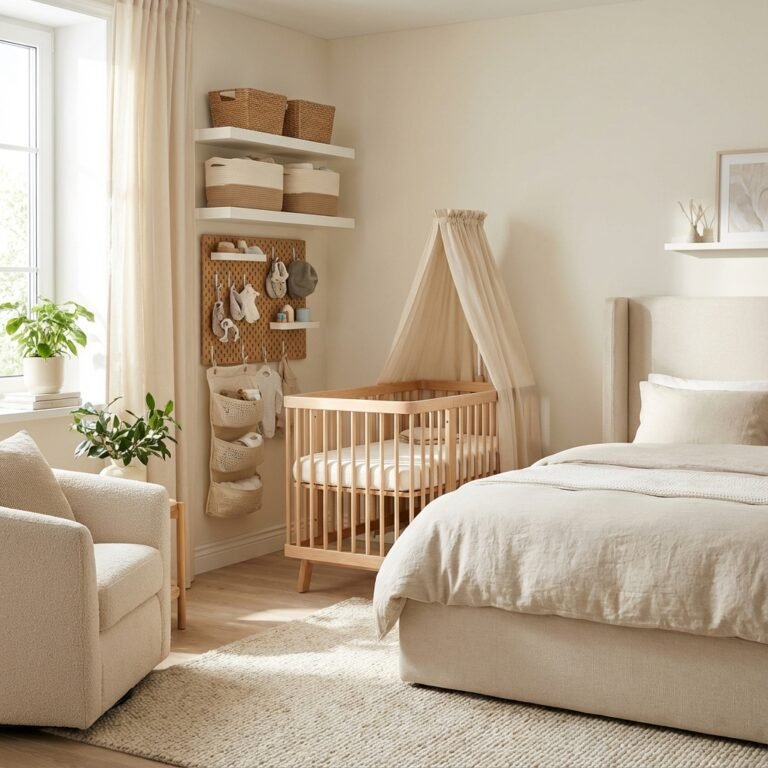
Wall-mounted shelves are a game-changer. They offer storage while adding a decorative element to the room. You can display cute shoes, folded blankets, or use them to hold storage baskets.
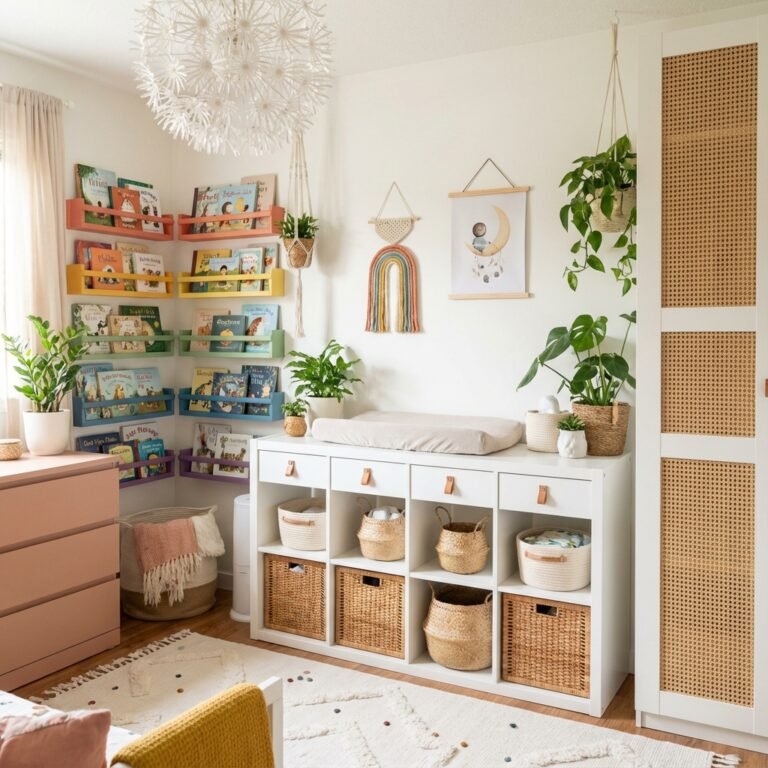
- Picture Ledges: These are shallower than traditional shelves and are perfect for storing baby books with their covers facing out, adding a pop of color and encouraging early literacy. They can also hold smaller items like lotions and diaper creams.
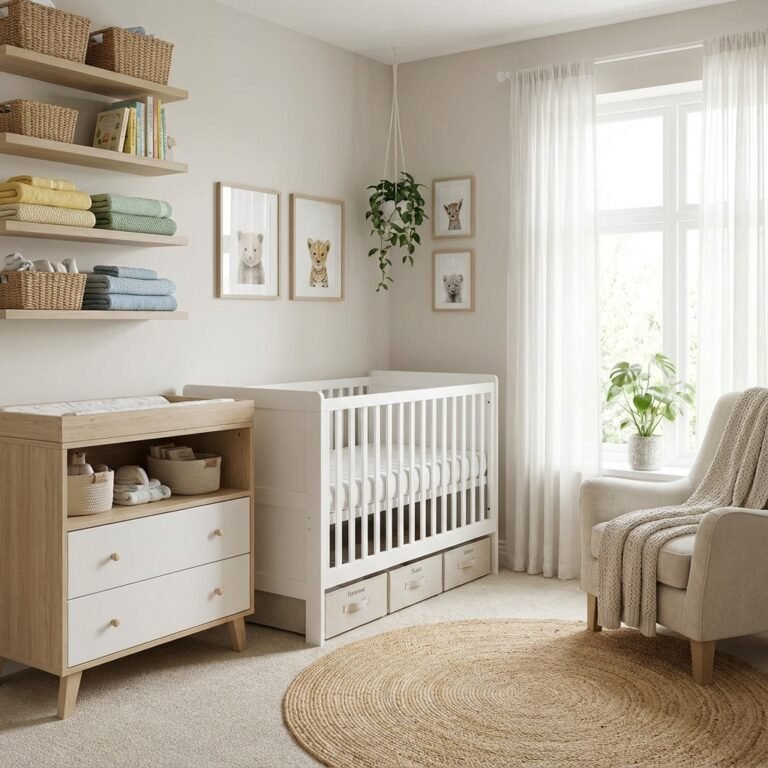
- Deep Floating Shelves: Install a series of two or three deep shelves above the dresser or changing table. Use stylish woven or fabric bins on these shelves to conceal clutter and categorize clothing items like sweaters, pants, or pajamas. Label the bins for ultimate organization.
Pegboard Wall Systems
A pegboard is the ultimate customizable storage solution. It’s a modern and functional way to organize a multitude of items. You can find pegboards at most hardware stores, and they can be painted to match your nursery decor. With a variety of hooks, baskets, and small shelves, the possibilities are endless.
- What to Store: Hang small wire baskets for diapers and wipes, use hooks for swaddles and sleep sacks, and small shelves for baby care products. You can even hang tomorrow’s outfit on a hook to streamline your morning routine. It becomes a functional piece of wall art.
Furniture That Does Double Duty: Your Smartest Investments

The Changing Table Dresser Combo
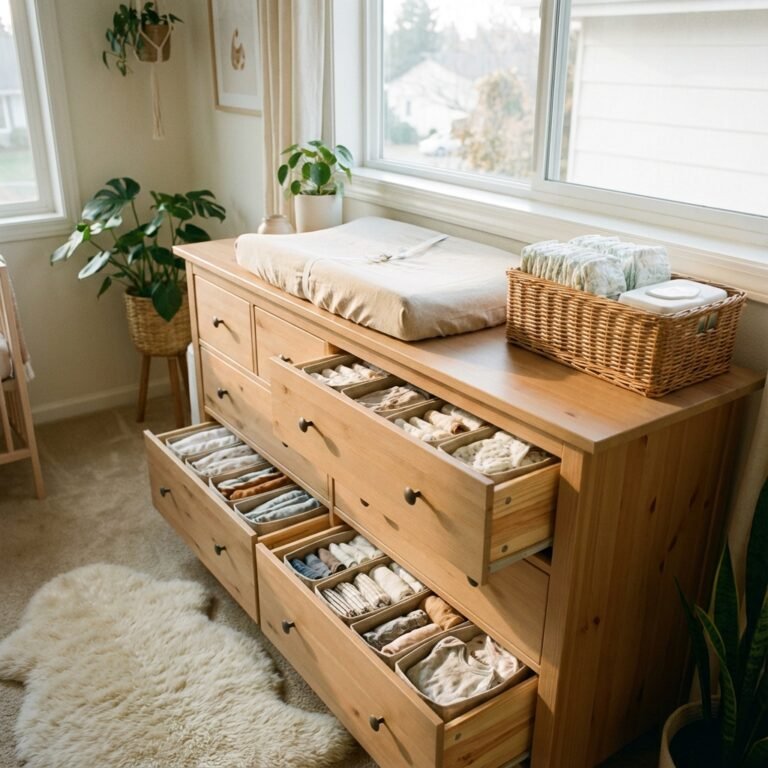
In a small apartment, every piece of furniture must earn its keep. Single-use items are a luxury you can’t afford. The most critical piece of multi-functional furniture for a nursery is the changing table. Instead of buying a standalone changing table, opt for a sturdy, low dresser and secure a changing pad to the top. This gives you a safe space for diaper changes and ample drawer space for the bulk of your baby’s wardrobe right underneath.
- What to Look For: Choose a dresser that is a comfortable height for you to avoid back strain. Ensure it’s wide and deep enough to safely accommodate a standard changing pad with raised sides. Always use the safety straps to anchor the pad to the dresser.
- Long-Term Value: Once your child is out of diapers, simply remove the changing pad, and you’re left with a functional dresser that will last them for years to come.
The Under-Crib Opportunity
The space under the crib is often a forgotten zone, but it’s prime real estate for storage. Many cribs now come with built-in drawers, which is an ideal all-in-one solution. If your crib has open space underneath, you can easily add your own storage.
- Under-Crib Drawers/Bins: Look for low-profile rolling bins or fabric containers specifically designed to fit under a crib. This is the perfect place to store items you don’t need daily, such as bulk packages of diapers, extra bedding, or clothes in the next size up.
- Safety First: Ensure any storage containers are easily accessible without requiring you to lift the crib. They should slide out smoothly and not pose a tripping hazard.
Storage Ottomans and Benches
A storage ottoman is a triple-threat: it provides seating, a place to rest your feet during late-night feedings, and hidden storage. Use it to store bulky items like blankets, baby carriers, or toys. A small storage bench can serve a similar purpose and can be placed under a window to create a cozy reading nook later on.
The Art of the Drawer: Taming Tiny Clothes Chaos

Mastering the File Fold
Simply stuffing clothes into a drawer is a recipe for chaos. You’ll never be able to find that specific striped onesie when you need it. The solution is the ‘file folding’ method, popularized by Marie Kondo. By folding items into small, compact rectangles and ‘filing’ them vertically in the drawer, you can see every single piece of clothing at a glance. No more digging through piles!
“The best way to choose what to keep and what to throw away is to take each item in one’s hand and ask: ‘Does this spark joy?’ If it does, keep it. If not, dispose of it. This is not only the simplest but also the most accurate yardstick by which to judge.” – Marie Kondo
While you’ll likely be keeping most of your baby’s clothes, the principle of visibility and respect for each item applies. Organizing them neatly makes dressing your baby a calmer, more mindful experience.
Drawer Dividers: Your Best Friend
Drawer dividers are essential for maintaining order. They create designated zones within each drawer, preventing everything from becoming a jumbled mess. You can buy adjustable dividers or create your own using small boxes or cut-to-fit cardboard.
- Drawer 1 (Top): The high-frequency items. Use dividers to create sections for diapers, wipes, creams, socks, and hats.
- Drawer 2 (Middle): Everyday clothes. Create rows of file-folded onesies, t-shirts, and leggings.
- Drawer 3 (Bottom): Heavier items. Use this for pajamas, sleep sacks, sweaters, and pants.
Label Everything
When you’re sleep-deprived, you don’t want to waste mental energy trying to remember where you put the 0-3 month pajamas. Use clear, easy-to-read labels on bins, baskets, and even inside drawers. This is especially helpful for your partner, grandparents, or anyone else helping with the baby. It reduces frustration and makes it easy for everyone to put things back in the right place, maintaining the organizational system you worked so hard to create.
The Rotational System: A Strategy for Constant Growth

Babies grow at an astonishing rate. The adorable newborn outfit you brought them home in might only fit for a few weeks. Managing the constant influx of new sizes and the outflow of outgrown items is crucial to preventing your small space from being overrun. A rotational storage system is the key to staying sane and organized.
The system works by keeping only the current size and the next size up easily accessible. Everything else is stored away, donated, or sold. This prevents your primary storage areas (like the dresser) from being cluttered with clothes that don’t fit.
Here is a simple, effective way to structure your rotational system:
| Storage Location | Clothing Category | Action Plan |
|---|---|---|
| Dresser / Main Area | Current Size: All clothes your baby is wearing right now. | Daily access. Review weekly for items that are getting snug. |
| Under-Crib Bins / Top Shelf | Next Size Up: The complete wardrobe for the upcoming size. | Keep pre-washed and ready. When baby moves into this size, this bin’s contents move to the dresser. |
| Vacuum-Sealed Bags | Too Small / Keepsakes: Cherished outfits you want to save. | Label with size and date. Store away in a less accessible spot (e.g., under a bed, top of a closet). |
| Donation/Sell Bin | Too Small / Good Condition: Items you don’t plan to keep. | Keep a designated bin or bag. Once it’s full, donate, consign, or sell it. This prevents clutter buildup. |
| Seasonal Storage | Off-Season Items: Winter coats in summer, sun hats in winter. | Store in vacuum-sealed bags to save space. Keep with the ‘Too Small’ items until they are seasonally appropriate and the right size. |
Executing the Rotation
Set a reminder on your phone for the first of every month to do a quick ‘wardrobe check.’ Have your baby try on a few items from their current size. If things are getting tight, it’s time to rotate. Move the ‘Too Small’ items to their designated bins, bring the ‘Next Size Up’ into the main dresser, and take stock of what you might need for the new size. This proactive approach takes less than 30 minutes a month and will save you from the overwhelming task of a massive seasonal overhaul.
Conclusion
Living in a small apartment doesn’t mean you have to sacrifice the dream of a well-organized, peaceful nursery. It simply calls for a bit more creativity and intention. By embracing vertical space, choosing multi-functional furniture, mastering the art of the drawer, and implementing a smart rotational system, you can create a storage solution that is not only practical but also beautiful.
Remember, the goal is not to have a Pinterest-perfect nursery, but to build a functional, loving environment that reduces your stress and allows you to focus on the incredible journey of parenthood. The hacks and strategies in this guide are tools to empower you, to give you a sense of control and calm amidst the beautiful chaos of a new baby. You are resourceful, you are capable, and you’ve got this. Your cozy apartment is the perfect place to start your family’s story, and with these solutions, it will be an organized and serene chapter from the very beginning.