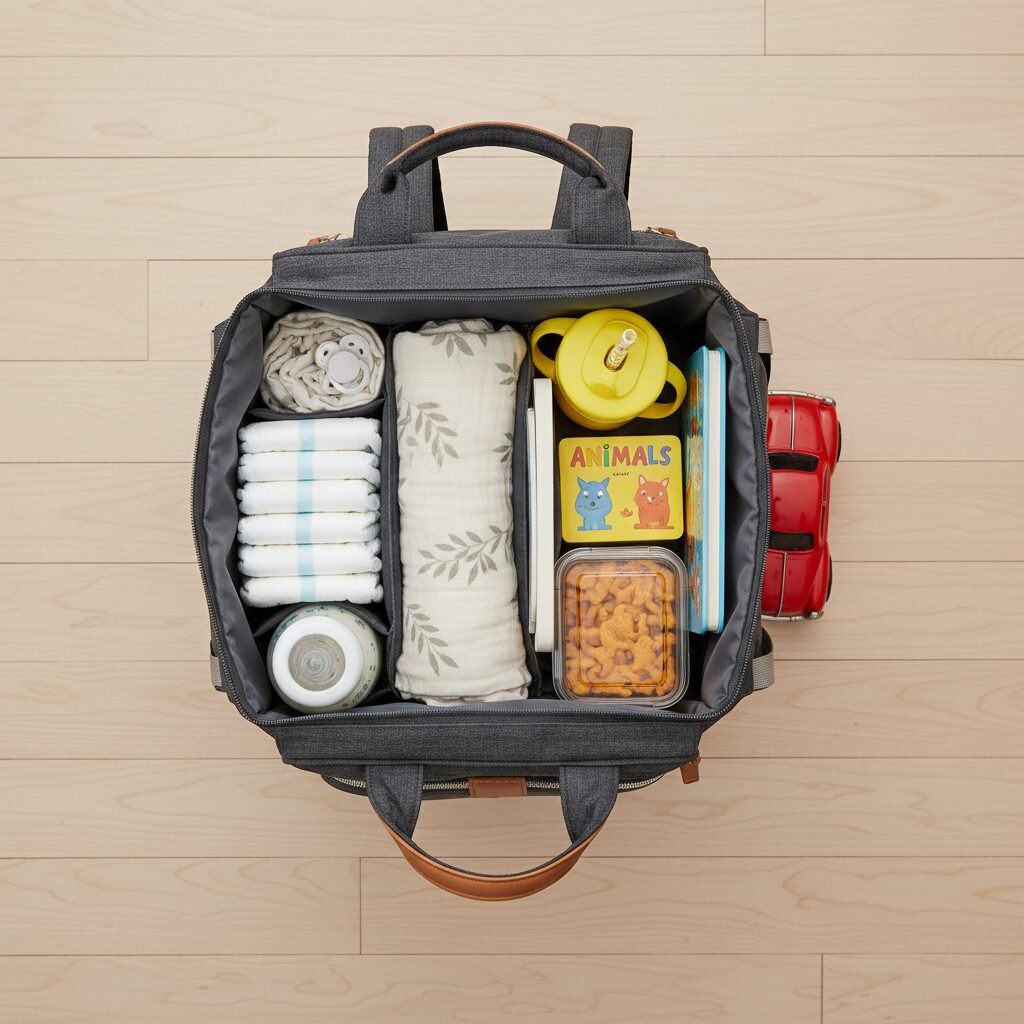
Mom of Two Survival Kit: What’s Really Inside My Toddler & Newborn Diaper Bag
Leaving the house with a newborn feels like a monumental task, requiring strategic planning worthy of a military operation. Add a spirited toddler to the mix, and the simple act of running an errand can feel like climbing Everest. The sheer volume of ‘what ifs’ can be paralyzing. What if the baby has a blowout? What if the toddler has a meltdown over a dropped snack? What if you forget the one thing you desperately need?
As a doula and maternal health educator, I’ve supported countless families through this beautiful, chaotic transition. I want to reassure you: you are not alone in this feeling of overwhelm. The key to reclaiming your confidence and freedom is not about having more hands; it’s about having a better system. Your diaper bag is no longer just a bag—it’s your mobile command center, your survival kit.
This guide will walk you through, step-by-step, how to pack a truly functional diaper bag for two. We’ll move beyond a simple list and delve into the strategy of organization, creating zones for each child, and ensuring you have what you need, right when you need it. Let’s transform that bag from a source of stress into your greatest tool for peace of mind.
Choosing Your Command Center: The Ultimate Diaper Bag for Two
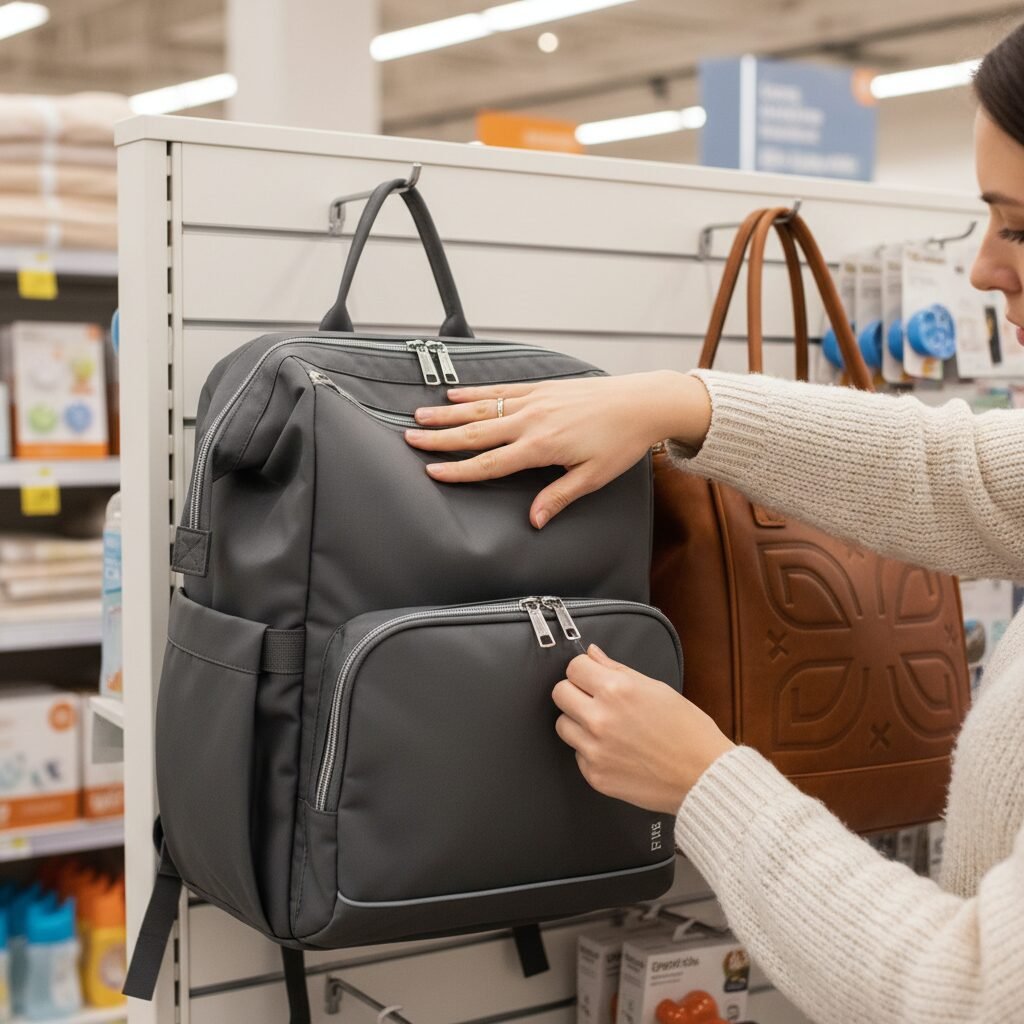
Before we even discuss what goes inside, we must address the bag itself. The cute, single-child tote that served you well before may not be equipped for the demands of two. When you’re juggling a car seat in one hand and a toddler’s hand in the other, functionality is paramount. Look for a bag that acts as an extension of you—organized, durable, and easy to access.
Key Features to Look For:
- Style: A backpack-style diaper bag is often the top choice for parents of two. It distributes weight evenly across your shoulders and, most importantly, keeps both of your hands free.
- Capacity & Compartments: More is more. Look for a bag with a large central compartment and a multitude of pockets, both internal and external. Segregated pockets are your best friend for preventing cross-contamination (think pacifiers and dirty diapers) and for finding things quickly.
- Insulated Pockets: These are non-negotiable for carrying bottles of breast milk, formula, or a toddler’s milk cup. Look for at least two.
- Wipe-Clean Material: Spills are inevitable. A bag with a durable, water-resistant, and easily wipeable interior and exterior will save you countless headaches.
- A Built-in Changing Pad: While not essential (you can buy one separately), a built-in or included pad is a convenient feature that ensures you always have a clean surface for diaper changes.
Choosing the right bag is the foundation of your success. It’s an investment in your sanity.
| Bag Style | Pros | Cons |
|---|---|---|
| Backpack | Hands-free operation, even weight distribution, typically has many compartments. | Can be bulky, may need to be taken off to access contents. |
| Tote/Messenger | Easy, quick access to contents, often very stylish. | Puts all weight on one shoulder, can slip off easily when bending over. |
| Convertible | Offers versatility (can be worn as backpack or tote). | Straps and hardware can sometimes be less comfortable or durable than single-purpose styles. |
The Newborn Essentials Zone: Meeting the Needs of Your Littlest One
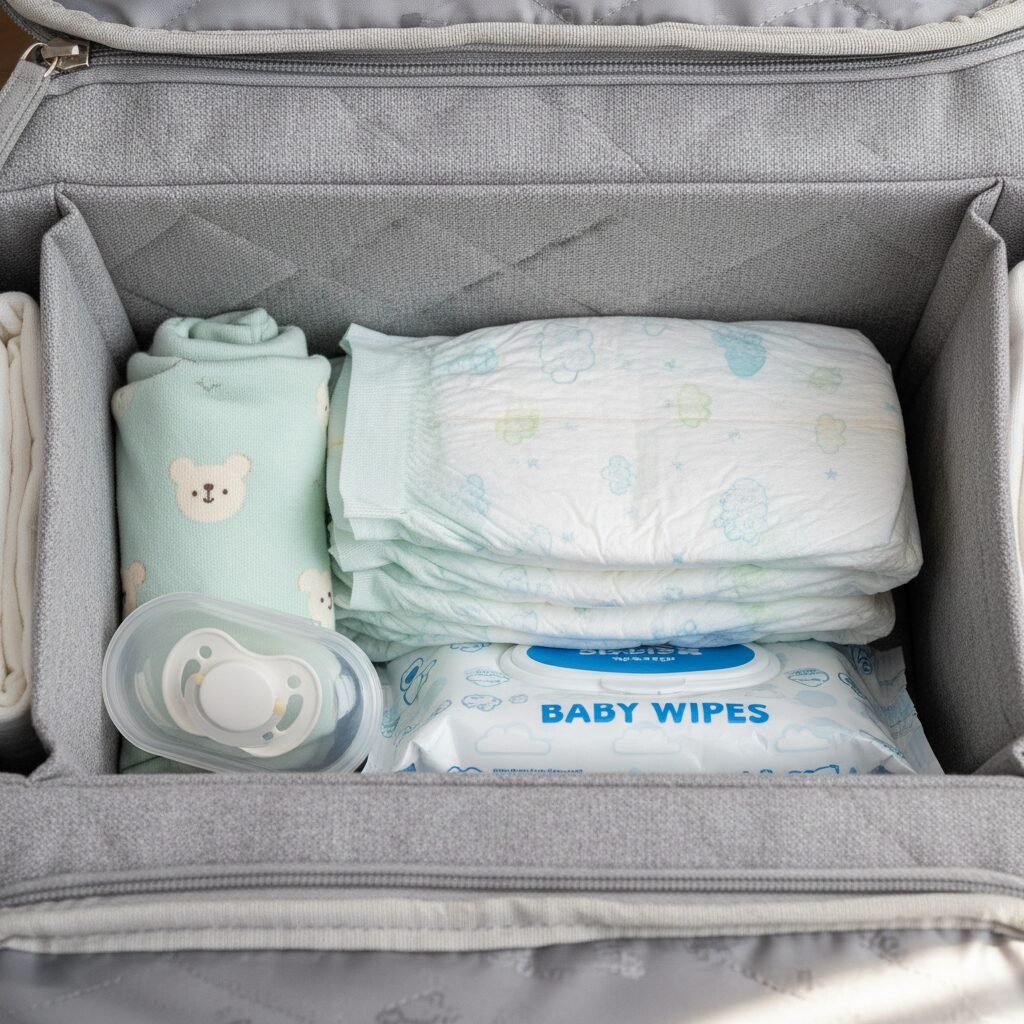
Your newborn’s needs are simple but urgent and frequent. Their section of the bag should be easily accessible and contain everything for feeding, changing, and comfort. I recommend using a specific large pocket or a color-coded packing cube just for the baby to eliminate frantic searching while they are crying.
The Newborn Checklist:
- Diapers: The golden rule is one diaper for every two hours you plan to be out, plus at least two extras. For a 4-hour trip, pack 4 diapers. You can never have too many.
- Wipes: A full-size pack or a well-stocked travel case. Wipes are multi-purpose heroes for diaper changes, sticky hands, and small spills.
- Diaper Rash Cream: A travel-sized tube is perfect for on-the-go applications to prevent and treat irritation.
- Portable Changing Pad: For clean, comfortable changes anywhere.
- Burp Cloths: Pack at least two. One for your shoulder during burping, and a clean one for spit-up or spills. Muslin cloths are lightweight and absorbent.
- Complete Outfits: Two full changes of clothes are non-negotiable. This means a onesie, pants, and socks. Blowouts are a rite of passage, and being prepared prevents a trip from being cut short.
- Swaddle or Receiving Blanket: This is a multi-tool. It can be used for warmth, as a makeshift nursing cover, a play surface on the floor, or to shield the baby from sun in their car seat (ensure proper airflow).
- Feeding Supplies: If breastfeeding, you may want a nursing cover. If bottle-feeding, bring at least one extra bottle than you think you’ll need. Use pre-portioned formula dispensers to save time and mess. For pumped milk, an insulated pocket with an ice pack is essential.
- Pacifiers: If your baby takes one, bring two. One will inevitably fall on a questionable floor. A pacifier clip can be a lifesaver.
Being meticulously prepared for your newborn doesn’t mean you’re anxious; it means you’re creating a bubble of calm for both you and your baby, no matter where you are.
The Toddler Tamers & Necessities: Keeping Your Older Child Happy
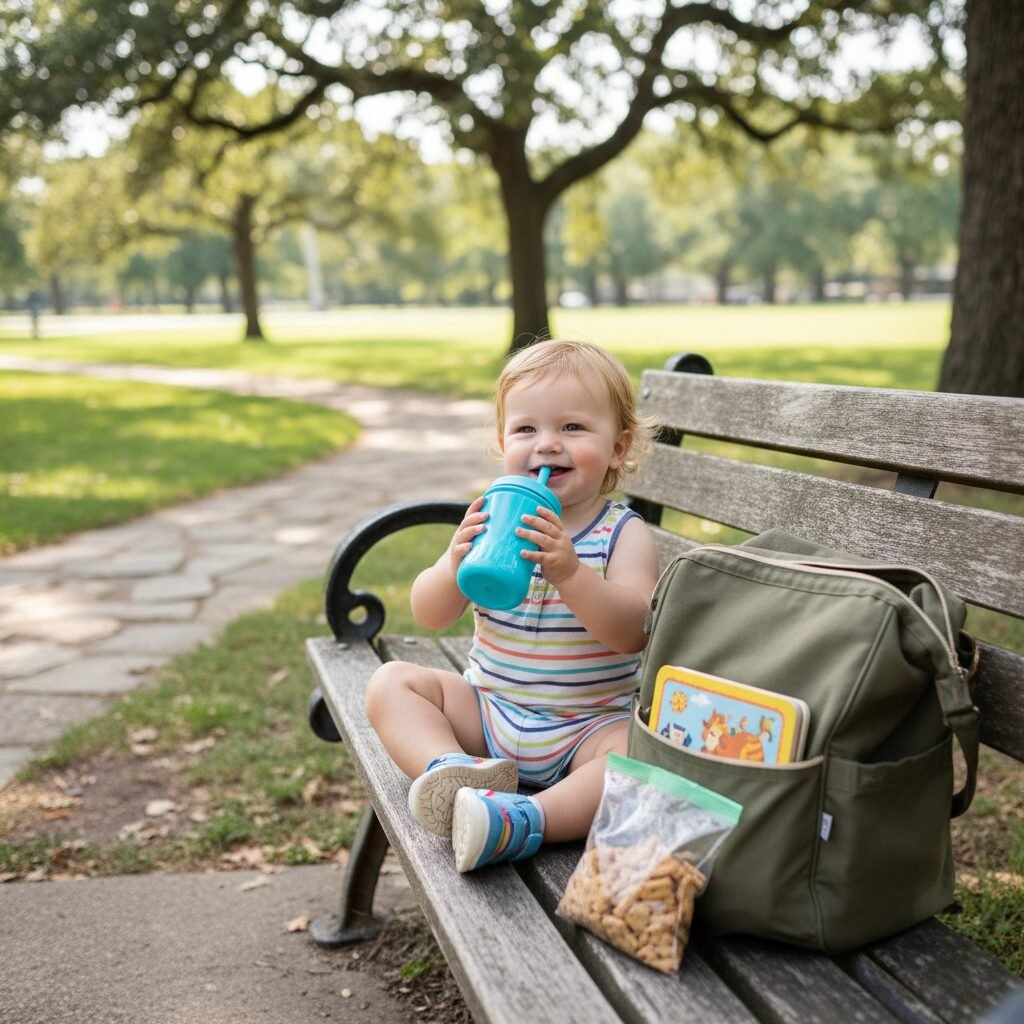
While your newborn requires care, your toddler requires engagement. Their needs are a mix of practical items and, crucially, distractions. A bored, hungry, or uncomfortable toddler can derail an outing faster than a newborn blowout. Their ‘zone’ in the bag should focus on snacks and activities.
The Toddler Checklist:
- Diapers or Pull-Ups: If not potty-trained, follow the same rule as for the newborn (1 per 2 hours + extras). If they are potty training, pack an extra pair of underwear and pants. Accidents happen, especially when they are distracted.
- Snacks, Snacks, and More Snacks: This is your number one tool. Pack a variety of healthy, low-mess options in a designated ‘snack pod’ or container. Think pouches, cheese sticks, crackers, sliced fruit, and granola bars. Having a ‘surprise’ snack they don’t get often can be a powerful tool to avert a meltdown.
- Sippy Cup or Water Bottle: Staying hydrated is key to a good mood. Ensure it’s leak-proof!
- A Change of Clothes: Toddlers are magnets for dirt, spills, and playground mishaps. A spare shirt, pants, and socks are essential.
- The Entertainment Kit: This is critical. Do not pack the entire toy box. Curate a small, rotating selection of ‘out-and-about’ toys that are quiet and engaging. Consider: a small board book, a mess-free coloring pad (like a water-reveal book), a few small animal figures or cars, or a fidget toy. The novelty of these special toys makes them more effective.
- Wipes & Hand Sanitizer: Toddlers touch everything. A quick wipe of their hands before a snack is always a good idea.
The Universal Arsenal: Items for Everyone (Including You!)
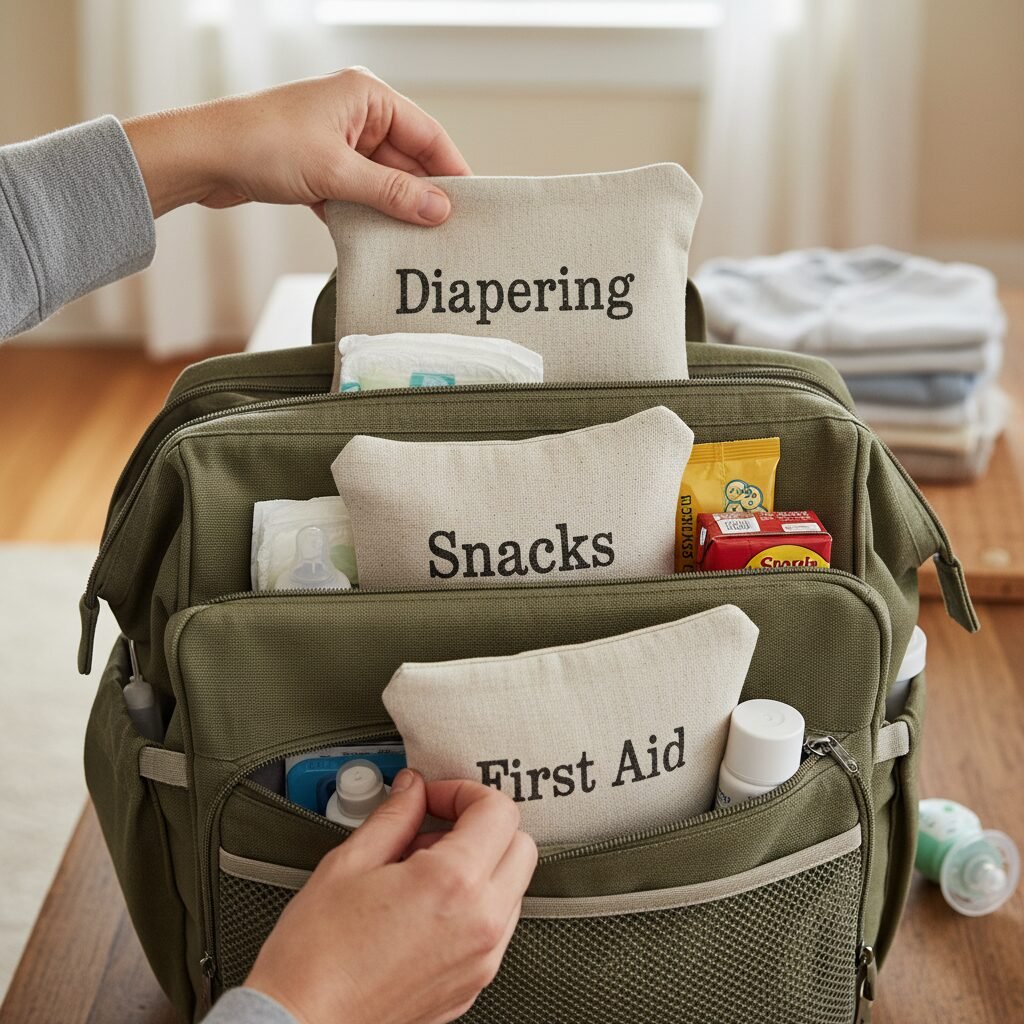
This is the central hub of your bag—items that serve the whole family. Having these essentials centrally located means you’re not digging through a specific child’s ‘zone’ for a band-aid or sunscreen. This is also where your personal items live, because your needs matter, too.
The Family & Parent Checklist:
- First-Aid Kit: A small pouch with character band-aids, antiseptic wipes, children’s pain reliever, and any necessary allergy medications. This small kit can be a huge comfort.
- Wet/Dry Bag: An absolute must-have. This waterproof, zippered pouch is for containing soiled clothes from blowouts or spills, keeping them separate from everything clean in your bag.
- Sun Protection: A family-friendly sunscreen stick (easy to apply to faces) and sun hats for both children.
- Tissues: For runny noses, tears, and everything in between.
- Your Essentials: Create a small pouch for yourself containing your wallet, keys, phone, and a portable charger. Add a lip balm, a protein bar, and a water bottle. Nurturing yourself with a quick snack and hydration allows you to be a more patient and present parent.
The Art of the Pack: A System for Sanity
How you pack is as important as what you pack. A disorganized bag is just a vessel of chaos. The goal is to be able to grab what you need with one hand in under 10 seconds.
- Use Pouches and Cubes: Assign a pouch for each category: one for diapering (diapers, wipes, cream), one for feeding, one for toddler snacks, one for first-aid, and one for your personal items. Label them or use different colors.
- Establish Zones: Dedicate specific, easily accessible exterior pockets for high-use items. For example, your phone and keys go in the front zipper pocket, and sippy cups/bottles go in the side insulated pockets.
- Practice a Daily Restock: The most crucial step. Every evening when you get home, take 5 minutes to empty the trash and wet bag, and restock diapers, wipes, snacks, and outfits. Starting each day with a fully prepared bag eliminates morning stress and the risk of forgetting something vital.
Conclusion
Mastering the diaper bag for two children is more than just an organizational hack; it’s a profound act of self-care. It’s about giving yourself the gift of preparedness, which in turn fosters confidence and reduces anxiety. When you know you have the tools to handle the inevitable challenges of an outing—the spills, the hunger pangs, the meltdowns—you are free to focus on the moments of joy. You can relax and enjoy the sunshine at the park, the smiles over a shared snack, and the wonder in your children’s eyes.
Remember to give yourself grace. You will forget things. Some days will be chaotic no matter how well you’ve packed. But by implementing this system, you are creating a reliable foundation that will support you through this demanding, beautiful season of life. You are capable, you are organized, and you’ve got this.