

Know Your Rights: A Working Mom’s Guide to Pumping Laws by State
The transition back to the workplace after welcoming a new baby is a journey filled with a complex mix of emotions and logistics. For breastfeeding mothers, one of the most significant concerns is how to continue providing breast milk while navigating the demands of a job. It can feel overwhelming, but you are not alone, and more importantly, you have protected rights. The law is on your side.
This guide is designed to be your definitive resource, demystifying the legal landscape of pumping at work. We will break down the crucial federal protections offered by the PUMP Act and explore how state laws can provide even greater support. Our goal is to replace uncertainty with confidence, providing you with the facts, language, and strategies to advocate for your needs effectively. You can successfully blend your career goals with your breastfeeding journey, and understanding your rights is the foundational first step.
Understanding Your Federal Protections: The PUMP Act Explained
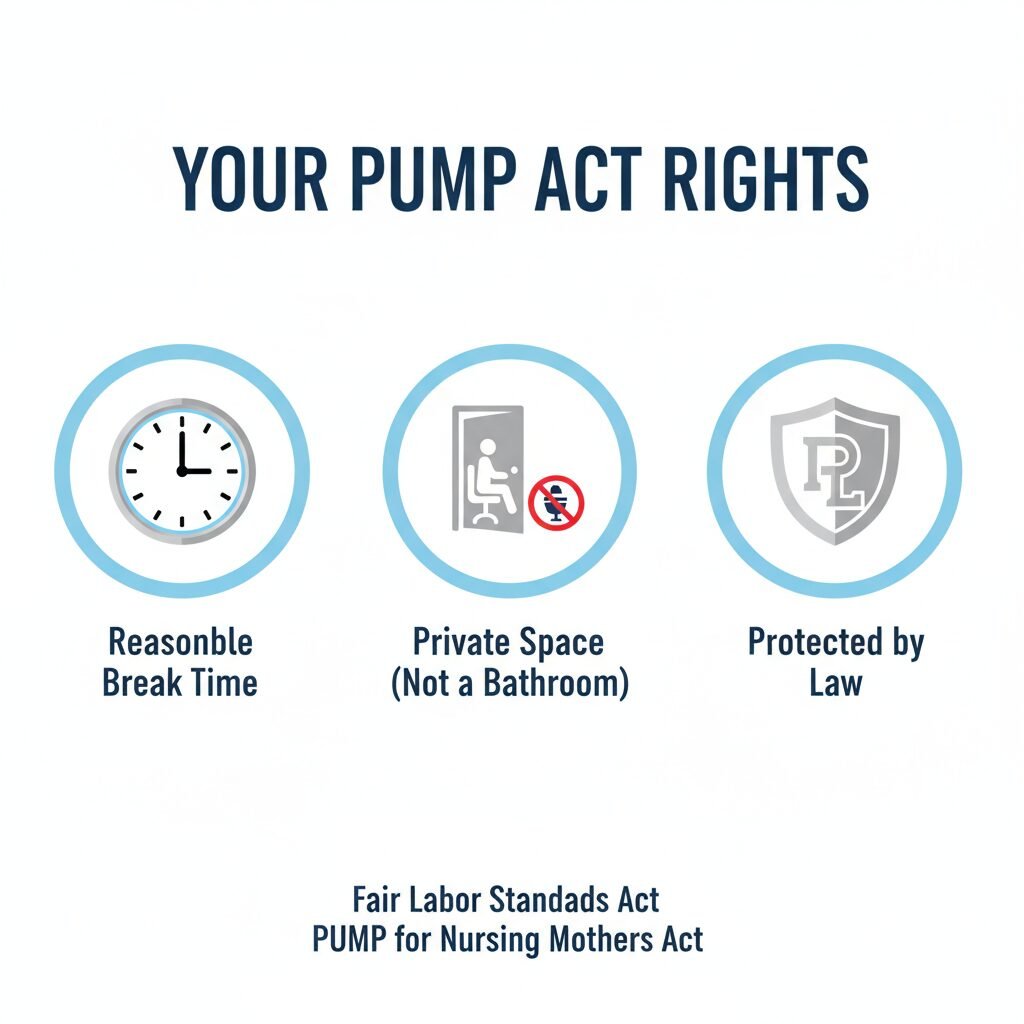
The cornerstone of your rights as a pumping employee in the United States is the federal Providing Urgent Maternal Protections (PUMP) for Nursing Mothers Act. Signed into law in December 2022, this legislation significantly expanded upon previous protections, covering millions of previously excluded workers. Understanding its core components is essential for every working mother.
Who is Covered by the PUMP Act?
The PUMP Act extends protections to nearly all employees covered by the Fair Labor Standards Act (FLSA). This includes a wide range of salaried and hourly workers who were previously not covered, such as:
- Nurses
- Teachers
- Farmworkers
- Engineers
- And many more office and non-office workers.
This expansion means that an estimated 9 million more employees gained the legal right to pumping accommodations at work.
What Must Employers Provide?
Under the PUMP Act, employers are required to provide two key things for up to one year after the child’s birth:
- Reasonable Break Time: You are entitled to ‘reasonable’ break time each time you need to express breast milk. The law does not specify the frequency or duration of these breaks, as it varies from person to person. This time is generally unpaid unless you are able to pump during a paid break you already receive. If your employer provides paid breaks, and you use that time to pump, they must compensate you for it.
- A Private, Functional Space: Your employer must provide a place, other than a bathroom, that is shielded from view and free from intrusion from coworkers and the public. This space must be functional for pumping. While it doesn’t have to be a permanent, dedicated lactation room, it must be available when you need it. Examples include a temporarily vacant office, a conference room, or a dedicated wellness room.
Are There Any Exemptions?
The law includes a narrow exemption for small businesses with fewer than 50 employees. Such a business can be excused from the requirements if they can demonstrate that doing so would impose an ‘undue hardship,’ meaning significant difficulty or expense. However, this is a very high standard to meet, and most small businesses are able to find a workable solution. Before an employer can claim this exemption, they must prove that the accommodation is truly unmanageable for their specific business operations.
State vs. Federal Law: Which Rules Apply to You?

While the PUMP Act creates a strong federal baseline, it’s crucial to understand that it does not override state or local laws that provide greater protections. This is a key principle of employment law: the rule that is most favorable to the employee is the one that applies. Many states have recognized the importance of supporting working mothers and have enacted their own legislation that builds upon the federal foundation.
How to Determine Which Law to Follow
Think of the federal law as the floor, not the ceiling. If your state’s law offers more comprehensive benefits, then your employer must follow the state law. For example:
- Duration of Protection: The PUMP Act provides protection for one year postpartum. Some states, like New York and Oregon, extend this protection for a longer period (up to three years in New York’s case).
- Paid Breaks: While federal law does not mandate paid pumping breaks (unless taken during a standard paid break), states like California and Illinois have specific requirements for paid lactation breaks.
- Scope of Employers: Some state laws apply to smaller businesses than the federal law does, eliminating the ‘undue hardship’ exemption for employers with fewer than 50 employees.
- Definition of Space: Certain states have more specific requirements for the lactation space, such as mandating access to an electrical outlet, a refrigerator for storing milk, or a nearby sink.
Because these laws are constantly evolving, it’s vital to check the specific regulations in your state and even your city. A quick search for your ‘[Your State] lactation accommodation law’ on a government website is an excellent starting point.
A State-by-State Breakdown: Key Protections to Look For

Navigating the patchwork of state laws can be daunting. Instead of an exhaustive list, this table will empower you to research your specific state’s laws effectively. It outlines the key areas where state laws often differ from and improve upon the federal PUMP Act. Use this as a checklist when you investigate your local protections.
| Aspect of Law | Federal Standard (PUMP Act) | What to Look for in Your State Law (Examples of Stronger Protections) |
|---|---|---|
| Duration of Rights | Up to one year after the child’s birth. | Does your state extend this period? (e.g., Colorado extends to two years, New York to three years). |
| Employee Coverage | Covers most FLSA employees. Exemption for businesses with <50 employees if it's an 'undue hardship'. | Does your state law cover all employees, regardless of employer size? Does it explicitly include independent contractors or domestic workers? |
| Break Time Compensation | Breaks are unpaid unless the employee takes them during a paid break period. | Does your state mandate that pumping breaks be paid? (e.g., Illinois and California have provisions for paid breaks). |
| Lactation Space Requirements | A private space that is not a bathroom and is free from intrusion. | Does your state have stricter requirements? Look for mandates on: access to an electrical outlet, a comfortable chair, a surface for the pump, and access to a refrigerator and a sink with running water. |
| Notice Requirements | The federal law doesn’t specify a notice period for employees. | Does your state require employees to give advance notice of their intent to pump at work? This is important for planning. |
| Enforcement & Penalties | Employees can file a complaint with the Department of Labor or file a private lawsuit. | Does your state have its own agency for enforcement (like a state Department of Labor or Human Rights Commission)? Are there specific penalties for non-compliance? |
To find the most current information for your location, we recommend visiting the websites for the National Conference of State Legislatures (NCSL) or your state’s Department of Labor.
How to Talk to Your Employer: A Practical Communication Guide

Knowing your rights is the first step; communicating them effectively is the second. A proactive, professional, and collaborative approach can make all the difference in establishing a positive pumping experience at work. Many managers may be unaware of the specific legal requirements, so framing your conversation as a collaborative planning effort is often most effective.
When to Start the Conversation
The best time to discuss your needs is before you return from maternity leave. Aim to connect with your direct supervisor or HR representative about 3-4 weeks before your return date. This provides ample time for them to make any necessary arrangements for space and schedule coverage.
What to Prepare
Go into the conversation prepared. Think through your ideal schedule and have a written plan. Consider how many times a day you’ll likely need to pump and how long each session will take. Having a clear proposal shows that you’ve thought through the logistics and are committed to making it work smoothly for both you and your team.
Sample Conversation Starter & Email Template
You can initiate the conversation in person, over the phone, or via email. An email is often a great way to start as it provides a written record and gives your employer time to review the information. Here is a template you can adapt:
Subject: Planning for my return on [Your Return Date]
Hi [Manager’s/HR Name],
I hope you’re doing well. I’m writing to you today as I prepare for my return to work on [Your Return Date]. I am so excited to rejoin the team.
As I will be continuing to breastfeed, I will need to pump during the workday to maintain my milk supply. Based on my baby’s needs, I anticipate I will need [Number] breaks of about [Duration] minutes each day. I am flexible and committed to coordinating these breaks to ensure minimal disruption to my work and team responsibilities.
Could we please discuss the arrangements for a private space for me to pump? According to federal and state law, this space needs to be private and cannot be a bathroom.
I’ve attached a tentative schedule proposal and am happy to discuss it further at your convenience. Thank you for your support in helping me make a smooth transition back.
Best regards,
[Your Name]
What to Do If You Face Pushback
If your initial request is met with resistance, stay calm and professional. Reiterate that these accommodations are legally protected. Document every conversation in writing—follow up a verbal discussion with an email summarizing what was said. If your employer continues to deny your rights, you may need to contact your state’s Department of Labor or the U.S. Department of Labor’s Wage and Hour Division for guidance.
Beyond the Law: Creating a Supportive Pumping Environment

Legal compliance is the minimum standard. A truly supportive environment goes beyond that, fostering a culture where working mothers feel valued, not burdened. Whether you’re an employee or a manager, there are many ways to contribute to a positive pumping experience.
For Pumping Moms: Tips for Success
- Invest in the Right Gear: A double electric pump, a hands-free pumping bra, and a dedicated work bag with a cooler can make sessions faster and more efficient.
- Block Your Calendar: Treat your pumping sessions like important meetings. Block the time off on your shared calendar to prevent interruptions and signal to colleagues that you are unavailable.
- Set Boundaries: You do not need to explain your absence in detail to every coworker. A simple, ‘I have a recurring appointment’ is sufficient.
- Find Your Village: Connect with other working moms in your company or professional network. Sharing tips, frustrations, and successes can be incredibly validating and helpful.
For Employers and Managers: How to Be an Ally
- Designate a Space: If possible, create a permanent, comfortable lactation room. Equip it with a comfortable chair, a table, an electrical outlet, and ideally a mini-fridge and sink. This small investment shows immense support.
- Educate the Team: Foster a culture of respect and understanding. Ensure that other team members understand that lactation breaks are a medical necessity and are legally protected.
- Offer Flexibility: Understand that pumping schedules may need to shift. Offering flexibility allows your employee to manage her responsibilities without unnecessary stress.
Creating this supportive ecosystem not only helps retain valuable employees but also contributes to a healthier, more inclusive, and more productive workplace for everyone.
Conclusion
Returning to work as a breastfeeding mother is a significant milestone, a testament to your dedication to both your family and your career. Navigating the logistics of pumping at work can seem like a formidable task, but you are equipped with powerful legal protections. From the federal PUMP Act to your own state’s specific laws, a framework exists to ensure you have the time and space you need.
Remember, knowledge is power. By understanding your rights, preparing for conversations with your employer, and advocating for your needs with confidence, you can create a sustainable routine that works for you. You are paving the way not only for yourself but for the working mothers who will come after you. Embrace this journey with the assurance that you have the right to thrive in both of your important roles.