

I Lost My Mucus Plug! Does This Mean Labor Is Starting Today?
Seeing your mucus plug can be a startling, exciting, and slightly confusing moment all at once. For weeks, you’ve been watching for any sign that your baby is getting ready to make their grand entrance, and this is one of the most talked-about clues. It’s completely normal to feel a rush of adrenaline and ask, “Is this it? Is labor starting right now?”
Take a deep, calming breath. You’ve come to the right place. As a doula and maternal health educator, I’ve supported countless parents through this exact moment of discovery and anticipation. Losing your mucus plug is a positive sign that your body is progressing and preparing for the incredible work of childbirth. However, it’s not usually a signal to grab the hospital bag and rush out the door.
In this guide, we’ll gently and clearly break down exactly what the mucus plug is, what its departure means for your labor timeline, how to distinguish it from other signs, and the practical next steps you can take to feel calm, prepared, and empowered. Your body is doing something amazing, and understanding the process is the first step to embracing it with confidence.
What Exactly Is the Mucus Plug (and the ‘Bloody Show’)?
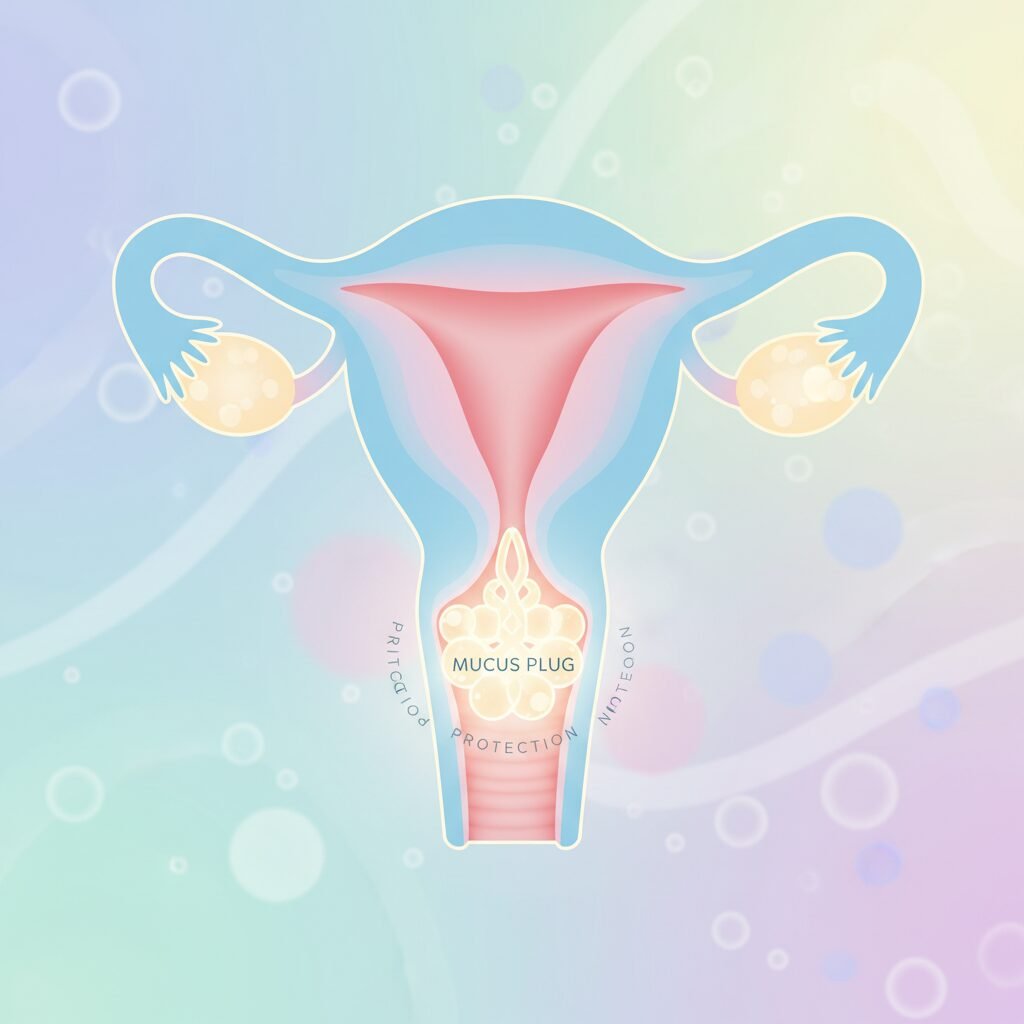
Understanding Your Body’s Brilliant Gatekeeper
Throughout your pregnancy, your body has been working tirelessly to create a safe, protected environment for your growing baby. The mucus plug is a perfect example of this incredible biological design. Think of it as a natural cork or a protective barrier.
It’s a collection of mucus that seals your cervix—the opening to your uterus—shut. Its primary job is to act as a gatekeeper, shielding your uterus and your baby from unwanted bacteria and potential infections from the outside world. This simple yet effective barrier is one of the many ways your body ensures a healthy uterine environment.
What Does It Look Like?
The appearance of the mucus plug can vary significantly from person to person, which is often a source of confusion. Don’t worry if yours doesn’t look exactly like something you read about online. Here are the common variations:
- Consistency: It’s often described as thick, gelatinous, and jelly-like. It can be stringy or globby, similar to the consistency of egg whites or the gel from an aloe vera plant.
- Amount: You might lose it all at once in a single, noticeable glob (about one to two tablespoons in volume), or it may come out in smaller pieces over several hours or even days. If it comes out in small bits, you might not even notice it.
- Color: The color can range from clear or cloudy white to yellowish or even greenish.
Differentiating the Mucus Plug from the ‘Bloody Show’
You’ll often hear the term “bloody show” used interchangeably with “mucus plug,” but there’s a subtle difference. As your due date approaches, your cervix begins to prepare for labor by softening, thinning out (effacing), and opening up (dilating). These changes can cause tiny blood vessels in the cervix to rupture.
When this small amount of blood mixes with the mucus, it’s called the bloody show. So, if you see that your mucus plug is tinged with pink, streaked with red, or has a brownish, old-blood appearance, it’s a strong indicator that cervical changes are happening. Seeing the bloody show is often considered a more reliable sign that labor is drawing nearer than losing a clear mucus plug alone.
Remember, your body is unique. The way you experience this sign will be unique to you. The key is to observe without alarm and see it as a message that your body is moving in the right direction.
The Big Question: Is Labor Imminent?

A Sign of Preparation, Not an Immediate Start
This is the million-dollar question on your mind. The short, reassuring answer is: losing your mucus plug means labor is getting closer, but it doesn’t usually mean labor is starting today.
It’s a sign that your cervix is beginning to change in preparation for birth. As it effaces (thins) and dilates (opens), the plug is dislodged. This is a fantastic sign of progress! However, the timeline from losing the plug to the start of active labor can vary dramatically.
- For First-Time Parents: If this is your first baby, it’s common to lose the mucus plug days or even a week or two before labor truly begins. Your body is taking its time and doing its preparatory work gradually.
- For Multiparous Parents (those who have given birth before): If you’ve had a baby before, losing the plug may be a more immediate sign. Labor might start within hours or a few days, as your body has been through the process and often progresses more quickly.
Think of it less like a starting gun and more like a “coming soon” sign. It’s your body’s way of giving you a heads-up, allowing you time to get mentally and physically prepared for the marathon of labor. It’s a wonderful opportunity to focus on rest, nourishment, and calm before the main event begins.
Can You Lose It and Have It Regenerate?
Yes, it’s possible! If you lose your mucus plug several weeks before your due date, your body may actually regenerate some or all of it. This is another reason why it isn’t a definitive timer for labor’s start. Your body is adaptable and will continue to protect your baby as long as necessary.
Comparing Early Labor Signs: What to Watch For Next

Reading the Roadmap Your Body Is Providing
Losing the mucus plug is just one piece of the puzzle. To get a clearer picture of where you are on the journey to meeting your baby, you need to look for other converging signs. True labor involves a pattern of symptoms that intensify over time. Here’s a look at what else to watch for and how to tell the difference between early preparations and active, established labor.
Other Early Signs of Labor
- Lightening: You might feel the baby “drop” lower into your pelvis. This can relieve pressure on your diaphragm, making it easier to breathe, but may increase pressure on your bladder, leading to more frequent urination.
- Nesting Instinct: A sudden, powerful urge to clean, organize, and prepare your home for the baby. While not a physical sign, this burst of energy is very common in the days leading up to labor.
- Persistent Lower Backache: A dull, constant ache in your lower back that isn’t relieved by changing positions.
- Cramping: You may experience period-like cramps or a feeling of indigestion.
- Contractions: This is the most significant sign. In early labor, they might feel like mild cramping or tightening. The key is to observe whether they start to form a pattern.
To help you differentiate, here is a comparison of what you might be feeling in early labor versus what indicates it’s time to call your provider and head to your birth place.
| Symptom / Sign | Early Labor (The ‘Warm-Up’) | Active Labor (The ‘Main Event’) |
|---|---|---|
| Contractions | Irregular, unpredictable. They don’t get consistently longer, stronger, or closer together. Often described as Braxton Hicks or mild cramping. They may stop when you walk, rest, or change positions. | Come at regular intervals and get progressively longer, stronger, and closer together (e.g., the 5-1-1 Rule: lasting 1 minute, 5 minutes apart, for at least 1 hour). They continue regardless of your activity. |
| Pain Location | Felt mostly in the front of the abdomen as a general tightening. | Often starts in the lower back and radiates around to the front. The pain becomes more intense and consuming. |
| Cervical Changes | Cervix is beginning to soften, efface (thin), and dilate slowly from 0-6 cm. This is what causes the mucus plug to be lost. | Cervix dilates more rapidly from 6 cm to 10 cm. This is when the real work is happening. |
| Your Mood | You may feel excited, anxious, and talkative. You can usually walk and talk through contractions. | You become more serious, focused, and introverted. You can no longer talk or laugh during contractions and need to concentrate on breathing through them. |
| Water Breaking | May or may not happen. Only about 10-15% of labors start with the water breaking. | If it hasn’t broken yet, it is more likely to break during active labor as pressure from contractions increases. |
A Practical Checklist: What Should I Do Now?

Embracing the ‘Heads-Up’ with Calm and Confidence
Okay, so you’ve lost your mucus plug. You understand it’s a sign of progress but not a race to the finish line. So, what are your next steps? The focus now should be on conserving energy, promoting calm, and helping your body continue its work. Here is a practical checklist:
- Breathe and Stay Calm: Your emotional state matters. Anxiety and stress can produce hormones that may slow or stall early labor. Put on some calming music, practice your breathing exercises, or watch a comforting movie. This is a marathon, not a sprint.
- Notify Your Support Team: Let your partner, doula, or primary support person know what’s happened. Frame it as a positive update, not an alarm. For example: “Great news! I lost my mucus plug, which means my body is getting ready. Let’s make sure we’re all set, but no need to rush.”
- Hydrate and Nourish: Labor is hard work! Sip on water, coconut water, or electrolyte drinks. Eat small, easily digestible snacks like toast, fruit, or yogurt. Fueling your body now will pay off later.
- Rest and Conserve Energy: If it’s nighttime, try to go back to sleep. If it’s daytime, take a nap or lie down and rest. You will need your strength for active labor and delivery. Avoid the temptation to start a huge nesting project.
- Encourage Labor with Gentle Movement (If You Feel Up to It): If you’re feeling restless, gentle activity can help the baby get into an optimal position and can encourage contractions. Try a slow walk around the neighborhood, gently bouncing or doing hip circles on a birth ball, or simple stretching.
- Time Contractions (If They Start): If you begin to feel contractions, start timing them. Use a notebook or an app to track how long they last and how far apart they are. This data will be crucial when you speak to your healthcare provider.
- Enjoy These Final Moments: This is a special, transitional time. Take a warm shower or bath (as long as your water hasn’t broken), cuddle with your partner, and connect with your baby. This is the quiet before the beautiful, life-changing storm.
When to Call Your Doctor or Midwife Immediately

Knowing the Difference Between Normal and Urgent
While losing your mucus plug is a normal part of the pre-labor process, there are specific signs and symptoms that warrant an immediate call to your doctor or midwife, regardless of whether you’ve lost the plug or not. Your care team is there to guide you, and it is always better to call and be told everything is fine than to wait and worry. Trust your instincts.
Call your provider without delay if you experience any of the following:
- Your Water Breaks: If you experience a large gush of fluid or a continuous, uncontrollable trickle, your membranes have likely ruptured. Take note of the time, the color of the fluid (it should be clear or pale yellow), and the odor. Call your provider for instructions. It is especially important to call if the fluid is greenish or brownish, as this can indicate meconium (baby’s first stool) is present.
- Bright Red Bleeding: The bloody show is typically pinkish or brownish and mixed with mucus. If you experience bright red bleeding that is similar to a period or heavier, this is not normal and needs immediate medical attention.
- Intense, Regular Contractions: If your contractions are becoming undeniably strong, lasting for about 60 seconds, and coming every 5 minutes or less for at least an hour (the 5-1-1 rule), it’s time to call. Your provider may have a different guideline for you (like 4-1-1 or 3-1-1), so follow their specific instructions.
- A Significant Decrease in Baby’s Movement: You know your baby’s patterns best. If you notice a significant change or decrease in their movements and doing a kick count doesn’t help, don’t wait. Call your provider right away.
- If You Are Preterm: If you lose your mucus plug and are less than 37 weeks pregnant, call your provider. They will want to assess you for preterm labor.
- Other Severe Symptoms: Call immediately if you experience signs of preeclampsia, such as a severe headache that won’t go away, vision changes (like seeing spots), sudden swelling in your hands or face, or severe pain in your upper abdomen.
Your intuition is your most powerful tool. If something feels off, trust that feeling and make the call. Your care team wants to hear from you.
Conclusion
You Are on the Cusp of Something Wonderful
Seeing your mucus plug is a tangible, real sign that your pregnancy journey is nearing its beautiful conclusion and you are about to begin your parenting journey. It’s a message from your body that it is preparing, progressing, and getting ready to do the incredible work it was designed for. Rather than a cause for panic, let it be a signal for you to turn inward, to rest, and to gather your strength and support system.
Remember, this is one milestone on a path—not the destination itself. Pay attention to the other signs your body is sending, trust the process, and lean on your support network. You are strong, capable, and so close to meeting your baby.
Medical Disclaimer: The information in this article is for educational and informational purposes only and is not intended as medical advice. It is not a substitute for professional medical advice, diagnosis, or treatment. Always seek the advice of your physician, midwife, or other qualified health provider with any questions you may have regarding a medical condition. Never disregard professional medical advice or delay in seeking it because of something you have read in this article.