

How to Survive Work Meetings When You’re About to Puke
The conference room door clicks shut. The PowerPoint presentation glows on the screen. Your boss starts talking about Q3 projections, and all you can think is, ‘Don’t puke. Please, don’t puke.’ If this scenario feels intensely familiar, you are not alone. Navigating the first trimester of pregnancy, with its often-relentless nausea, is a challenge in itself. Doing so while maintaining a professional facade in a high-stakes work meeting can feel like an Olympic sport.
This guide is for you. As a maternal health educator, I’ve supported countless individuals through this exact struggle. The feeling of being trapped, the wave of heat, the sudden need to escape—it’s physically and emotionally draining. But you are resilient, and with the right strategies, you can not only survive these moments but continue to thrive in your career. This isn’t about ‘toughing it out’; it’s about equipping yourself with a toolkit of discreet, effective, and evidence-based techniques to manage morning sickness at work with grace and confidence.
Pre-Meeting Prep: Your First Line of Defense

Stabilize Your Blood Sugar
The most powerful tool against nausea is prevention. An empty stomach is nausea’s best friend because it leads to low blood sugar and an increase in stomach acids. Conversely, a large, heavy meal can be just as triggering. The key is to graze. Think small, frequent, balanced snacks throughout the day.
About 30-60 minutes before your meeting, have a snack that combines complex carbohydrates and protein. This combination provides a slow, steady release of energy, keeping your blood sugar stable. Avoid sugary, greasy, or spicy foods, which can exacerbate nausea.
- Good pre-meeting snacks: A handful of almonds and a few whole-grain crackers, a small pot of Greek yogurt, a slice of whole-wheat toast with avocado, or a small apple with peanut butter.
- Stay Hydrated: Dehydration can worsen nausea. Sip fluids consistently throughout the day rather than chugging a large amount at once. Clear, cold liquids are often best. Try water with lemon or mint, clear broth, or diluted fruit juice.
Assemble a Discreet Survival Kit
Being prepared can significantly reduce anxiety, which in turn can help manage nausea. Pack a small, discreet pouch that you can easily take with you to the meeting room. Your colleagues will likely assume it’s a pencil case or personal items pouch.
What to include in your kit:
- Bland Snacks: Keep a small stash of plain crackers, pretzels, or dry cereal. A single cracker can be enough to absorb stomach acid and quell a rising wave of nausea.
- Sour Candies: The sour taste can be a powerful and immediate distraction that helps cut through the feeling of sickness. Lemon drops or sour hard candies are excellent choices.
- Ginger Chews or Tea: Ginger is a well-researched, natural anti-emetic. Sucking on a ginger chew or discreetly sipping pre-made ginger tea (if you can bring a thermos) can provide significant relief.
- Acupressure Bands: These wristbands, often marketed for motion sickness, apply pressure to the P6 (Nei Guan) acupressure point on the inner wrist. Many women find them incredibly effective for pregnancy-related nausea. You can put them on before the meeting and they are easily hidden by a long sleeve.
- Peppermint or Lemon Essential Oil: A small rollerball or even a few drops on a tissue can be a lifesaver. When you feel a wave of nausea, a quick, discreet sniff can disrupt the sensation. Peppermint and lemon are both known for their stomach-settling properties.
In-Meeting Strategies: Navigating the Moment
Choose Your Seat Wisely
Where you sit can make all the difference. If possible, choose a seat that offers a quick and unobtrusive path to the exit. Sitting at the end of the table or near the door allows you to slip out without drawing significant attention if you absolutely need to. This simple act of planning can alleviate the ‘trapped’ feeling that often heightens anxiety and nausea.
Master Discreet Distractions & Relief Techniques
When you feel nausea building, you need immediate, subtle interventions. These techniques can be done without anyone noticing:
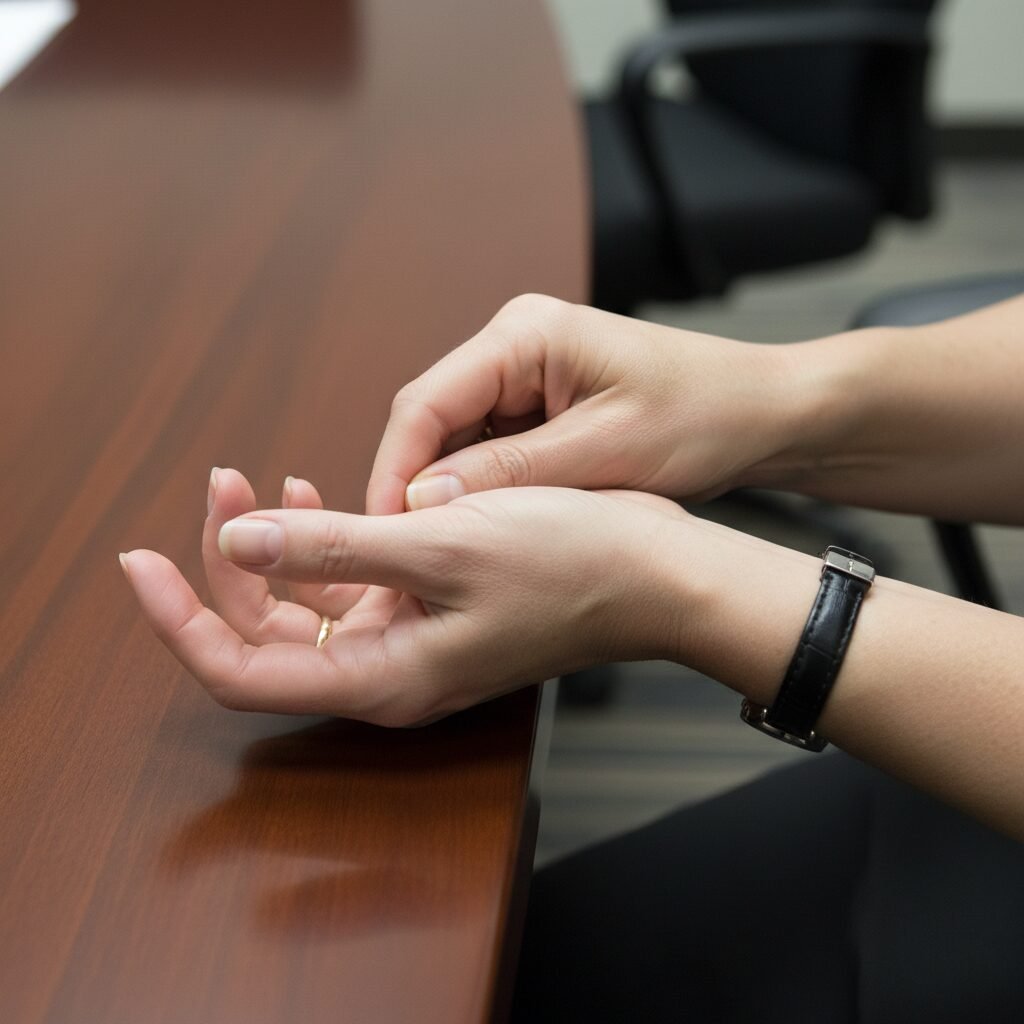
- Acupressure: If you’re not wearing a band, you can apply pressure yourself. Locate the P6 point by placing three fingers from your other hand across your inner wrist, at the base of your palm. The point is just below your index finger, between the two central tendons. Apply firm, steady pressure. You can do this under the table.
- Controlled Breathing: Inhale slowly and deeply through your nose for a count of four, hold for a count of four, and exhale slowly through your mouth for a count of six. This calms the nervous system and can help the feeling of panic subside.
- Grounding: Focus on your physical senses to pull your mind away from the nausea. Press your feet firmly into the floor. Feel the texture of the table under your fingertips. Focus intently on the speaker’s words, or count the number of blue items in the room.
- Discreet Sipping & Snacking: Keep your water bottle handy. A small, cold sip of water can be very grounding. If you need to, you can discreetly pop a hard candy or a single cracker into your mouth. The key is to have it ready so you’re not rustling through bags.
Managing Your Environment and Sensory Triggers
During pregnancy, your sense of smell can become incredibly heightened, turning everyday office scents into major nausea triggers. Identifying and managing these sensory inputs is crucial.
Identify Common Office Triggers
- Smells: The most common culprits are coffee brewing, colleagues’ lunches being microwaved, strong perfumes or colognes, and cleaning products.
- Visuals: Staring at a bright screen, especially with scrolling content or flashing presentations, can cause motion sickness and eye strain that leads to nausea.
- Temperature: A stuffy, overly warm room can quickly make you feel faint and sick.
Tactics for Environmental Control
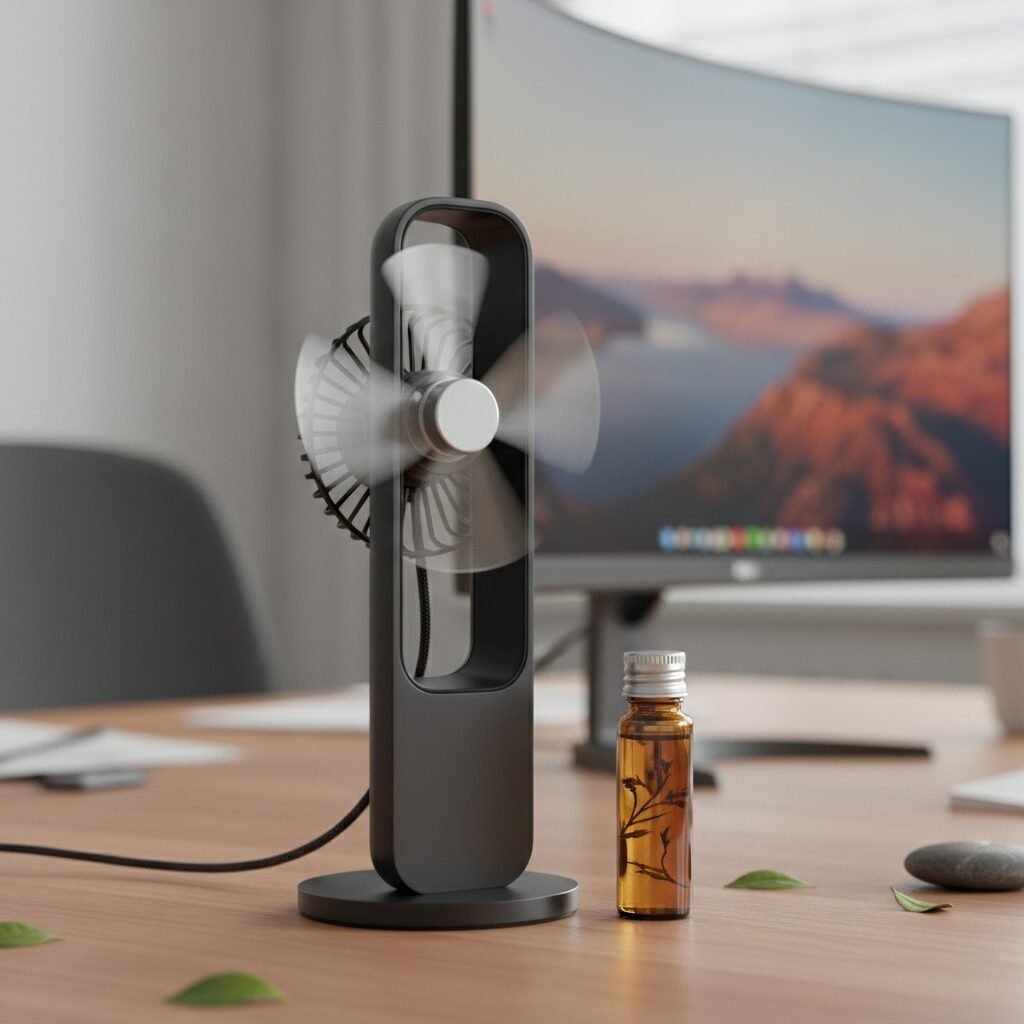
- Airflow is Key: If you can, sit where there is good airflow. If you have your own office or a tolerant desk neighbor, a small personal fan can be a game-changer, creating a bubble of fresh air around you.
- Scent Control: Use your essential oil rollerball or scented tissue from your survival kit. A quick sniff of peppermint or lemon can override an offensive smell from a colleague’s lunch.
- Screen Breaks: During long meetings, look away from the screen every few minutes. Focus on a point in the distance to give your eyes a rest. If you’re presenting, use a simple, high-contrast slide design to minimize visual strain.
- Cool Down: If you feel a hot flash coming on with a wave of nausea, discreetly press a cool water bottle to your pulse points (wrists, neck). This can provide an immediate cooling sensation.
Communication: When & How to Talk to Your Boss or Colleagues

The decision of when to disclose your pregnancy at work is deeply personal. You are under no obligation to share the news before you are ready. However, if your symptoms are severe and impacting your work, a strategic conversation can provide relief and secure necessary accommodations.
Option 1: The Vague but Effective Approach (Pre-Disclosure)
If you’re not ready to announce your pregnancy, you can still ask for support. You can mention to your manager or a trusted colleague that you’re dealing with a temporary medical condition.
‘Hi [Manager’s Name], I wanted to let you know that I’m currently managing a temporary medical condition that is causing some intermittent symptoms. It’s under control, but it might mean I occasionally need to step out of a meeting for a moment. I’m fully committed to my work and don’t anticipate any impact on my deliverables, but I wanted to be transparent with you.’
This approach is professional, sets boundaries, and requires no further explanation. It provides a context for your behavior without revealing personal information.
Option 2: The Direct Approach (Post-Disclosure)
Once you have shared the news with your manager, you can be more direct. Frame your needs as proactive solutions, not complaints.
‘As I’m navigating some first-trimester morning sickness, I’ve found that long meetings in stuffy rooms can be a trigger. Would it be possible for me to sit near the door in our upcoming planning session? That way, if I need a moment of fresh air, I can do so without disrupting the group. I’m also planning to eat small snacks to manage it, so I’ll be sure to do so discreetly.’
This shows that you are self-aware and already working on solutions, which most managers will appreciate. It’s about collaborating for a comfortable and productive environment.
The ‘I’m Really Going to Be Sick’ Emergency Plan

Despite your best efforts, there will be moments when you think, ‘This is it.’ Having a pre-planned escape route is your ultimate safety net. Panic will make the nausea worse, but a plan will keep you calm.
Step 1: The Graceful Exit
You do not need to give a detailed explanation. A simple, quiet exit is the most professional option. You can:
- Simply stand up and walk out. In many corporate cultures, people come and go for various reasons, and it often goes unnoticed.
- Make brief eye contact with the meeting leader or a trusted colleague and give a slight nod or hand gesture that you’ll be right back.
- If you feel you must say something, a quiet, ‘Please excuse me for a moment,’ is all that’s needed.
Step 2: The Recovery Station
Know where the nearest, most private restroom is. Once there, do what you need to do. Splash cold water on your face and wrists. Take some deep breaths. Have a small ‘recovery kit’ in your purse or at your desk with items like a travel toothbrush, toothpaste, mouthwash, and a mint. This will help you feel more comfortable and confident before returning.
Step 3: The Return or Follow-Up
If you feel well enough, you can return to the meeting. Simply take your seat quietly. No one will likely ask for an explanation. If you don’t feel you can return, that’s okay too. Send a brief email or chat message after the meeting to the organizer:
‘Apologies I had to step out of the meeting unexpectedly. Please send over the meeting notes when they are available, and I will follow up on my action items.’
This is professional, concise, and closes the loop without over-sharing.
Conclusion
Surviving work meetings while in the throes of morning sickness is a testament to your strength. Remember to be kind to yourself. Your body is doing the incredible work of growing a human being, and it’s okay to need extra support and strategies during this time. By preparing ahead, using discreet in-the-moment tactics, managing your environment, and having a clear communication and emergency plan, you can navigate this temporary phase with confidence and professionalism.
You are capable, you are strong, and this, too, shall pass. Before you know it, you’ll be in a meeting worrying about daycare drop-offs instead of nausea, and you’ll look back in awe of everything you accomplished.
Medical Disclaimer: The information provided in this article is for educational and informational purposes only and is not intended as medical advice. It is not a substitute for professional medical advice, diagnosis, or treatment. Always seek the advice of your physician or other qualified health provider with any questions you may have regarding a medical condition or before undertaking any new health regimen.