How I Survived an Unmedicated Birth (And Why I’d Do It Again)
The phrase “unmedicated birth” can conjure a whirlwind of images and emotions. For some, it sounds empowering, primal, and deeply natural. For others, it sounds terrifying, painful, and perhaps even unnecessary in an age of modern medicine. Before I went through it myself, I hovered somewhere in the middle. I was curious but deeply intimidated. I read stories that ranged from serene water births to traumatic tales of unbearable pain. So, I want to offer you my story—not as a prescription or a judgment, but as a hand to hold in the dark. This is the honest truth of how I survived an unmedicated birth, the tools that got me through, and the unexpected gifts that make me say, with my whole heart, that I would do it all over again.
This journey is intensely personal, and the “right” way to give birth is the way that feels safe, supported, and right for you and your baby. My goal isn’t to convince you, but to share what I learned: that you are stronger than you can possibly imagine, and that preparation is less about avoiding pain and more about embracing your own power to navigate it.
The ‘Why’: Setting an Intention, Not an Expectation

My decision to pursue an unmedicated birth wasn’t born from a desire to be a hero. It was a quiet, personal choice that grew from months of research and introspection. I wanted to feel everything, to be fully present in the process, and to trust the physiological design of my body. I was also mindful of the potential cascade of interventions—how one medical intervention can sometimes lead to another—and I hoped to avoid that if possible.
It’s crucial to distinguish between an intention and an expectation. My intention was to work with my body and use non-pharmacological coping methods for as long as I could. My expectation, however, was simply to have a healthy baby and a healthy me. This mindset was my safety net. It gave me the freedom to prepare diligently without attaching my self-worth to a specific outcome.
Key Motivations to Explore:
- Desire for a physiological experience: Wanting to experience the natural hormonal shifts and sensations of labor without medication.
- Avoiding potential side effects: Concerns about how an epidural might affect labor progression, pushing, or the baby.
- Faster postpartum recovery: Some women find that recovery can be quicker without an epidural, as mobility is not restricted.
- A sense of empowerment: The challenge of unmedicated birth can foster a profound sense of strength and accomplishment.
My partner and I spent hours discussing our ‘why.’ It was important that he understood my motivations so he could be my best advocate. This wasn’t just my journey; it was our first major act of teamwork as parents.
Building My Birth Toolkit: Preparing Mind, Body, and Village

You wouldn’t run a marathon without training, and I viewed birth the same way. My preparation was my training, and it was holistic, focusing on my mind, my body, and the support system I would rely on. This wasn’t about creating a rigid plan, but about filling a toolbox with as many options as possible, knowing I might need every single one.
Preparing the Mind:
This was the most critical piece of my preparation. Labor is as much a mental and emotional challenge as it is a physical one. My focus was on replacing fear with knowledge and confidence.
- Childbirth Education: We took a comprehensive childbirth class that focused on the physiology of labor and various coping techniques. Understanding what was happening in my body at each stage demystified the process and made it feel less scary.
- Affirmations and Visualization: I wrote down affirmations on index cards and hung them around our home. Phrases like “My body was made to do this,” “Each surge brings me closer to my baby,” and “I can do anything for one minute” became my mantras. I visualized a peaceful birth space and successfully breathing through contractions.
- Breathing Techniques: I practiced different types of breathing every single day. Slow, deep breathing for early labor, and patterned “hee-hee-hoo” breathing for the more intense moments. This practice made the techniques second nature when I actually needed them.
Preparing the Body:
Physical preparation helped me build stamina and trust in my body’s capabilities.
- Prenatal Yoga: This was invaluable for learning to connect breath with movement, for practicing endurance in uncomfortable positions, and for stretching my hips and pelvis.
- Walking and Squatting: Daily walks kept my circulation going and my energy up. Deep squats helped prepare my pelvic floor and encourage the baby into an optimal position.
- Nutrition and Hydration: I focused on nutrient-dense foods and drank enormous amounts of water. I viewed food as the fuel my body would need for the marathon ahead.
Preparing My Village:
You cannot do this alone. Your support team is your lifeline.
- Choosing a Supportive Provider: I interviewed several midwives before finding one whose philosophy aligned with mine. I felt heard, respected, and confident in her ability to support my choices while keeping me and the baby safe.
- Hiring a Doula: This was the best decision we made. Our doula was our guide, our coach, and our emotional anchor. She provided continuous support, suggested new positions, gave my partner breaks, and reminded me of my own strength when I was faltering.
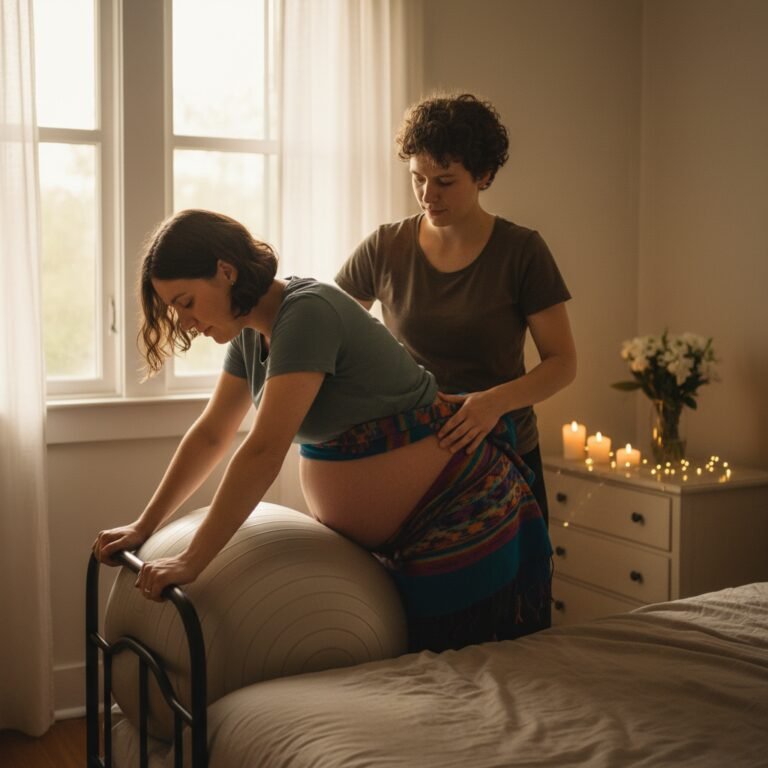
- Communicating with My Partner: We practiced comfort measures at home. He learned how to apply counter-pressure to my hips, what kind of touch I found comforting, and what words of encouragement I needed to hear. He wasn’t a bystander; he was an active, essential part of the process.
The Marathon of Labor: Navigating the Intensity Wave by Wave
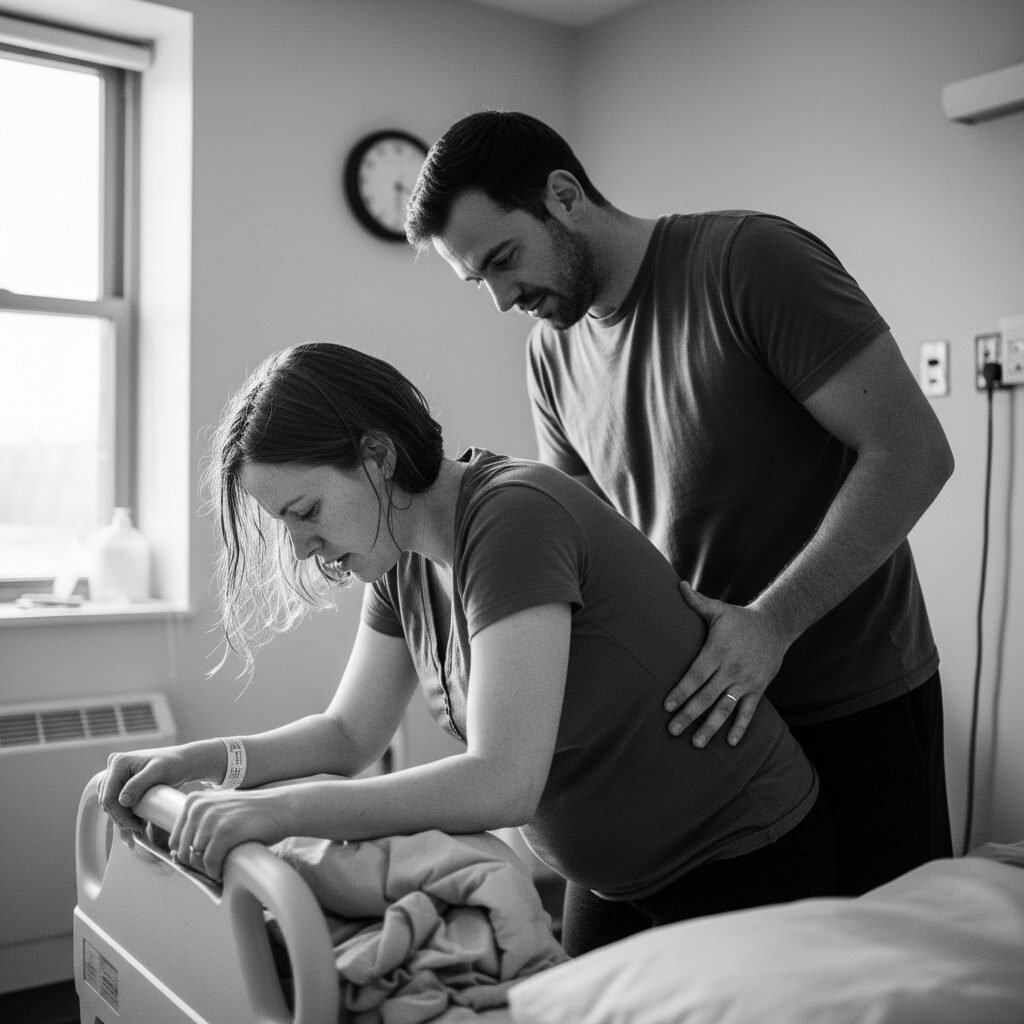
Labor began gently, like period cramps that came and went. For hours, I labored at home, breathing, walking, and leaning on my partner. We watched movies, I took a warm bath, and we tried to rest. But as the hours wore on, the intensity grew exponentially. The word “pain” doesn’t quite capture it. It was an all-encompassing, primal force. It demanded every ounce of my focus. This is when my toolkit became my salvation.
My doula whispered in my ear during a particularly hard moment, “You are not fighting the wave. You are the wave.” That single phrase shifted my entire perspective from resistance to surrender.
Transition—the period right before pushing—was the hardest part. I felt I couldn’t go on. I doubted everything. This is a common and normal experience, and it’s when your support team is most vital. My partner held my gaze, my doula applied a cold cloth to my forehead, and they both reminded me how close I was. They believed in me when my own belief wavered.
We used a variety of techniques that we had practiced, and having options was key. What worked in one stage felt wrong in the next. The ability to adapt was everything.
| Stage of Labor | Physical Sensations | Coping Strategies That Worked for Me |
|---|---|---|
| Early Labor | Mild, irregular contractions (like cramping). Excitement and anticipation. | Walking, resting, hydrating, eating light snacks, distraction (movies, music), timing contractions. |
| Active Labor | Stronger, longer, more frequent contractions. Requires full focus. | Deep, slow breathing. Changing positions frequently (hands and knees, swaying, sitting on a birth ball). Hydrotherapy (shower or tub). Partner applying counter-pressure. |
| Transition | Most intense, powerful contractions with little break. Shaking, nausea, self-doubt. | Vocalization (moaning, groaning). Rhythmic breathing. Cold cloths on face/neck. Unwavering verbal encouragement from my partner and doula. Focusing on one contraction at a time. |
| Pushing | Overwhelming pressure and an urge to bear down. A return of focus and energy. | Following my body’s instincts to push. Using a birthing stool to work with gravity. Tugging on a rebozo scarf held by my partner. Visualizing the baby moving down. |
Why I’d Do It Again: The Unexpected Gifts of the Experience

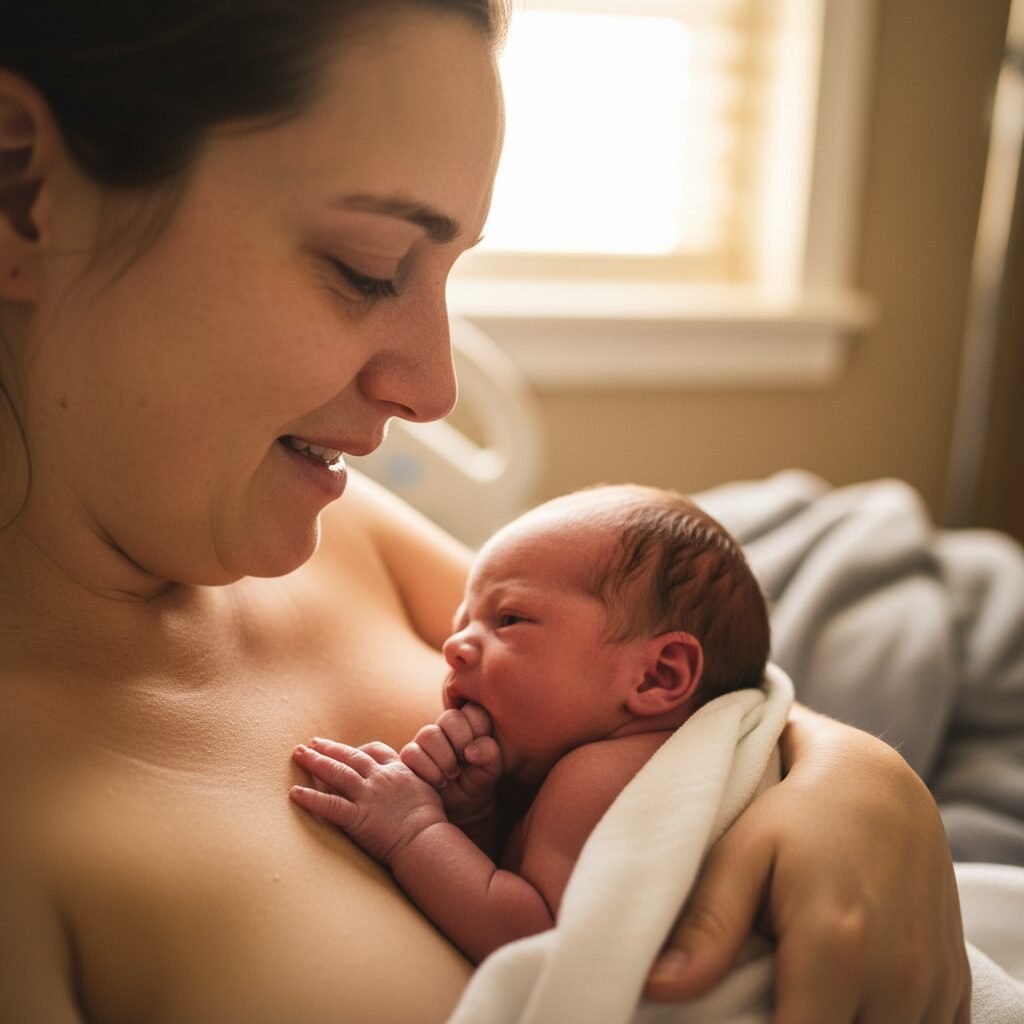
The moment my daughter was born and placed on my chest was, without exaggeration, transcendent. The intensity vanished, replaced by a rush of euphoria and a love so profound it took my breath away. That immediate, uninterrupted skin-to-skin time, with the natural cocktail of postpartum hormones flowing freely, was magical. But the reasons I’d do it again go beyond that single moment.
A New Understanding of Strength
I learned that my body was not a fragile thing to be managed, but a powerful, intelligent vessel. Walking through that fire and coming out the other side fundamentally rewired my sense of self. I discovered a reserve of strength I never knew I had, a resilience that has served me every single day in the challenges of motherhood. When I’m up all night with a sick baby, I remember the night I was in labor, and I know I can do this, too.
A Deeper Partnership
My husband wasn’t just in the room; he was in the labor with me. He held me, coached me, and saw me at my most raw and vulnerable. Going through that experience together forged our bond into something unbreakable. It was the ultimate test of teamwork, and we came out of it with a new level of trust and respect for one another. He saw my power, and I saw his unwavering devotion.
A Smoother Physical Recovery
For me, the physical recovery felt relatively smooth. Because I hadn’t had an epidural, I was able to get up and walk around shortly after birth. I felt more connected to my body and more aware of its healing process. This is not universal, but it was a significant and welcome benefit in my personal experience.
Trusting My Instincts
The entire process, from preparation to birth, was a crash course in listening to my body and trusting my intuition. That skill is the bedrock of parenting. Unmedicated birth taught me to tune out the noise and listen to the wisdom within—a lesson that is priceless.
Conclusion
My unmedicated birth story is not a trophy. It is a testament to preparation, support, and the incredible power that resides within every birthing person. It was the hardest work of my life, and it gave me the greatest gift—not just my daughter, but a new version of myself.
If you are considering this path, my advice is this: Educate yourself relentlessly. Build a support team you trust with your entire being. And most importantly, be kind to yourself. Create your intention, fill your toolkit, but hold your expectations loosely. Every birth is a miracle, whether it’s in a hospital bed, a birthing tub, or an operating room. The goal is not a “perfect” birth, but a birth where you feel safe, respected, and empowered. You have everything you need within you already. You just have to learn to trust it.