

Baby Escaping the Swaddle? The ‘Houdini’ Proof Wrapping Technique You Need
That moment of pure bliss: you’ve fed, burped, and changed your precious newborn. You’ve carefully wrapped them into a snug little burrito, and they’ve drifted off to sleep. You tiptoe out of the nursery, holding your breath, and sink into the couch for a well-deserved moment of peace. Then, minutes later, you hear a familiar rustle on the baby monitor, followed by a cry. You look at the screen to see two tiny arms flailing free. Your little Houdini has escaped again.
If this scenario sounds familiar, you are in the right place. The parental struggle with a swaddle escape artist is real and exhausting. Swaddling is a time-honored practice for a reason; it mimics the cozy, secure feeling of the womb, which can calm a fussy baby and, most importantly, suppress the Moro (or startle) reflex that often wakes them up. When done correctly, it’s a powerful tool for promoting longer, more restful sleep for both baby and parents.
This comprehensive guide, written from a place of professional experience and parental empathy, will walk you through everything you need to know. We will explore why babies break free, prepare you for swaddling success, and provide a detailed, step-by-step tutorial for a secure, escape-proof wrap. We will also cover the non-negotiable safety rules and how to know when it’s time to transition out of the swaddle. Let’s turn your little escape artist into a soundly sleeping baby.
The Great Escape: Why Your Baby Becomes a Swaddle Houdini

The Great Escape: Why Your Baby Becomes a Swaddle Houdini
Understanding the ‘why’ behind the great swaddle escape is the first step to solving it. It’s rarely a sign that your baby dislikes being swaddled; more often, it’s a combination of biology and technique. Here are the most common culprits:
The Powerful Startle Reflex
The Moro reflex is an involuntary response present at birth. A loud noise, a sudden movement, or even the sensation of falling can trigger it, causing your baby to fling their arms out to the sides and then pull them back in. This powerful, jerky movement is a primary reason babies break their arms free. A loose swaddle simply can’t contain it, leading to a cycle of startling, escaping, and waking.
Natural Movement and Self-Soothing
As babies grow, they begin to explore movement. They kick their legs, wiggle their torsos, and try to bring their hands to their mouths—a key self-soothing behavior. While this is a wonderful developmental milestone, it can work against a swaddle. Their persistent wiggling can loosen the fabric over time, creating an opening for an arm or shoulder to pop out.
Incorrect Swaddling Technique
This is the most common and most fixable reason for a baby’s escape. If the swaddle is too loose, especially around the torso and arms, it provides the wiggle room needed to break free. Many parents are understandably nervous about wrapping their baby too tightly, but a secure wrap is a safe wrap. The key is a snug fit around the upper body while leaving plenty of room for the legs and hips to move freely.
The Wrong ‘Tool’ for the Job
Not all blankets are created equal. A blanket that is too small won’t have enough fabric to complete a secure wrap. A blanket made from stiff, non-stretchy material won’t conform to your baby’s body, creating gaps. Conversely, an overly stretchy blanket might feel snug at first but can easily be stretched out by a determined baby. The ideal swaddle blanket is large (at least 40×40 inches), breathable (like muslin or cotton), and has just a slight amount of give.
Before You Wrap: The Essential Pre-Swaddle Checklist
Before You Wrap: The Essential Pre-Swaddle Checklist
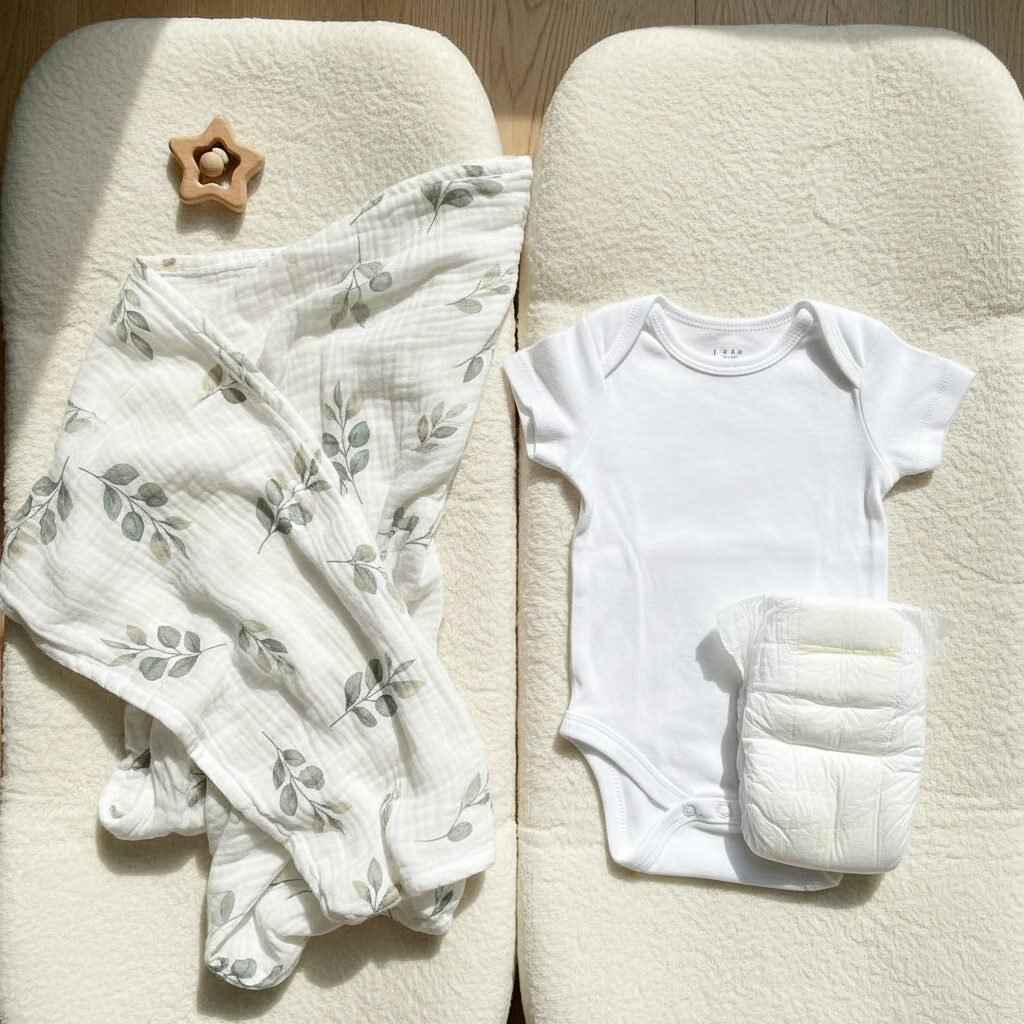
Setting the stage for a successful swaddle involves more than just the wrapping technique. A calm and prepared approach can make all the difference. Think of it as your pre-flight check for a journey to dreamland.
- Choose the Right Blanket: Opt for a large, square blanket (40×40 to 47×47 inches is ideal) made of a breathable fabric like cotton muslin, bamboo, or a lightweight cotton knit. This prevents overheating and provides enough material for a secure wrap.
- Ensure Baby is ‘Full and Empty’: A hungry or gassy baby will not settle, no matter how perfect the swaddle. Make sure your little one has had a full feeding and has been thoroughly burped before you begin. A clean, dry diaper is also a must.
- Create a Calm Environment: Dim the lights, turn on a white noise machine, and ensure the room is at a comfortable temperature (between 68-72°F or 20-22°C). A calm baby is much easier to swaddle than a fussy, overstimulated one.
- Dress for Success (Underneath): What your baby wears under the swaddle is crucial for temperature regulation. A swaddle counts as a layer of clothing. In a temperate room, a simple short-sleeve or long-sleeve onesie is usually sufficient. Avoid overdressing to reduce the risk of overheating.
- Work on a Flat, Safe Surface: Always swaddle your baby on a safe, flat surface like the floor on a playmat, a changing table with the safety strap secured, or the center of a bed.
The Houdini-Proof Wrap: A Step-by-Step Tutorial
The Houdini-Proof Wrap: A Step-by-Step Tutorial
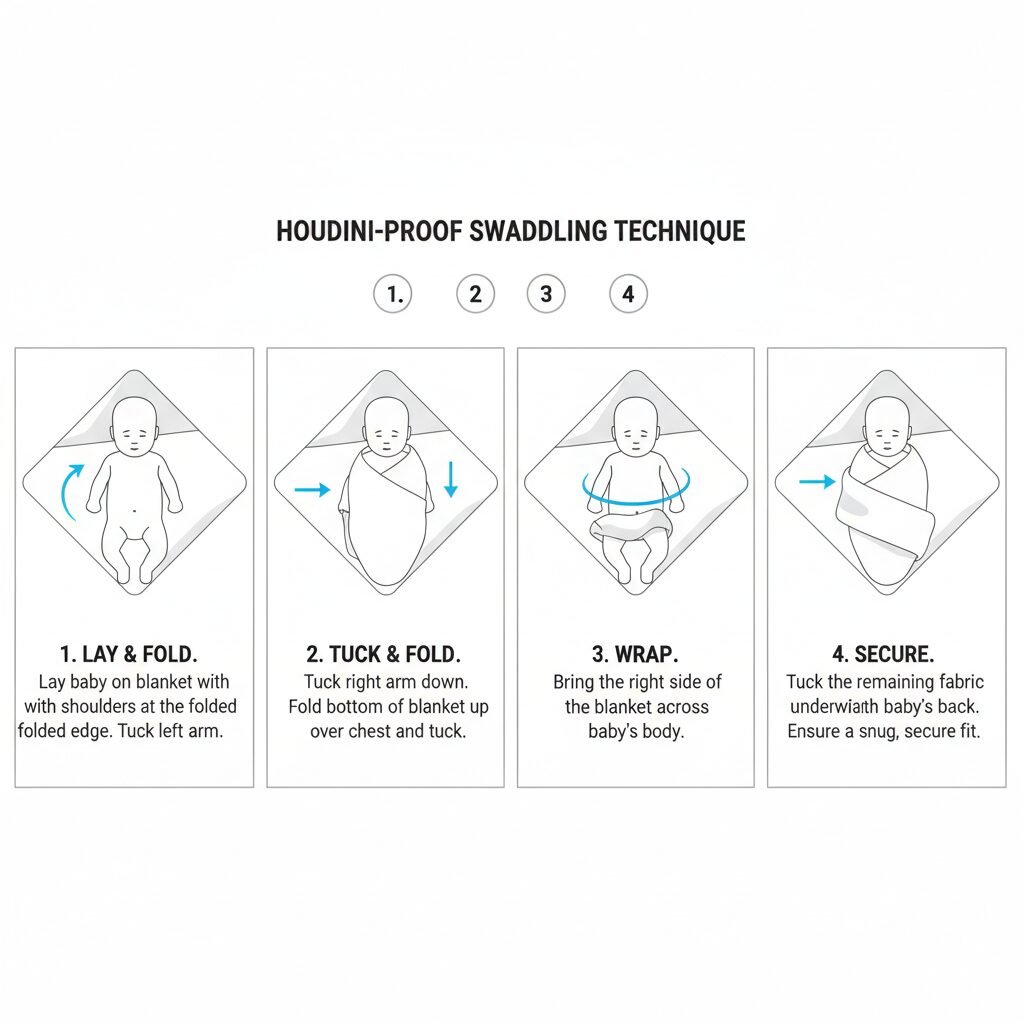
This technique focuses on creating a secure, arm-pinning wrap that even the wiggliest babies will find difficult to escape. Follow these steps carefully and practice a few times—you’ll be a pro in no time.
- The Diamond Formation: Lay your swaddle blanket on a flat surface in a diamond shape, with one corner pointing up towards you.
- Fold the Top Corner: Take the top corner and fold it down towards the center of the diamond. The top edge should now be a straight line. The size of this fold depends on your baby’s length; their shoulders should rest just above this folded edge.
- Position Your Baby: Gently place your baby on their back in the center of the blanket, with their neck and shoulders aligned with the top fold. Their body should be straight down the middle of the diamond.
- The First Arm and Tuck (The Anchor): Gently hold your baby’s left arm straight down alongside their body. Take the left corner of the blanket and pull it snugly across your baby’s chest and other arm. The key is to pull it tightly. Wrap it all the way around and tuck the corner securely under your baby’s back on the opposite side. This first tuck is the anchor for the entire swaddle.
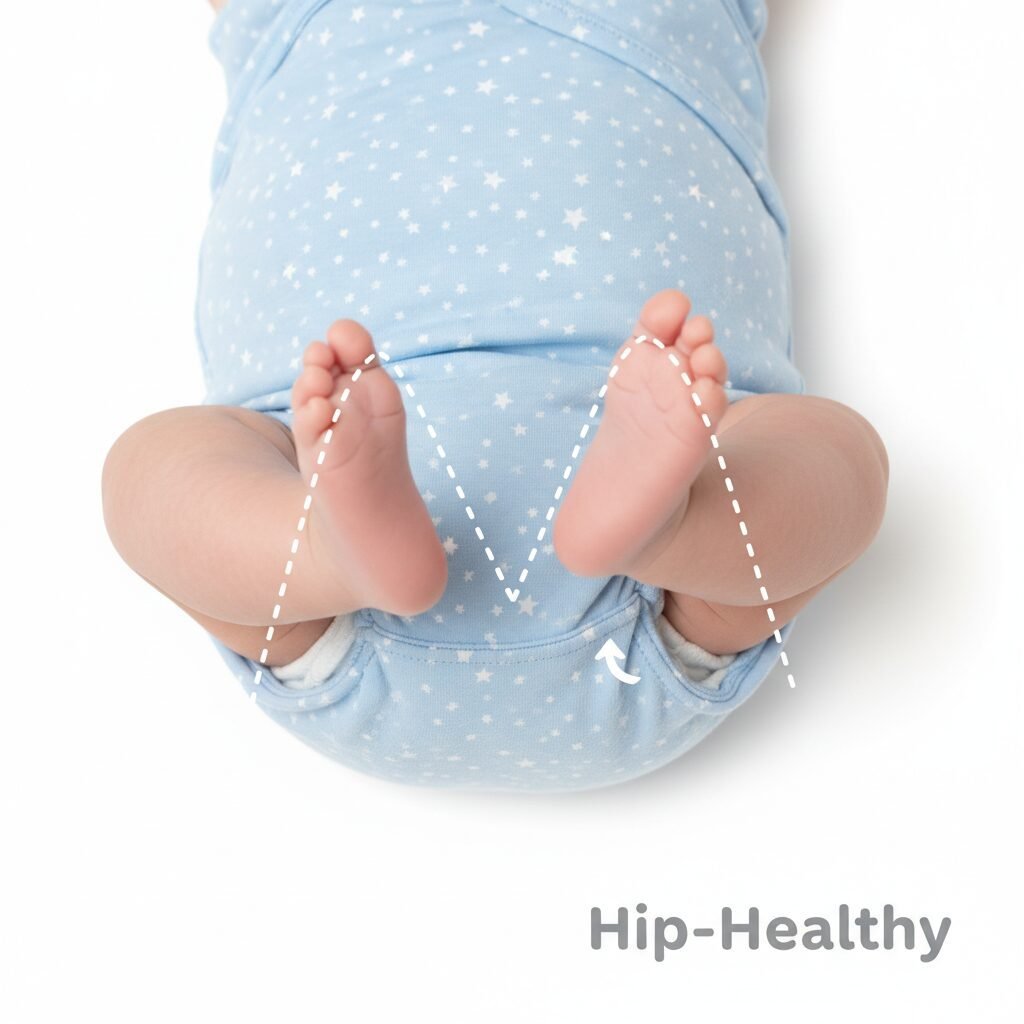
- Secure the Feet: Take the bottom corner of the blanket and pull it straight up over your baby’s feet. You can either tuck it into the top of the ‘V’ at their chest or, for extra security, fold it over and bring it up to their chest. Important: Ensure there is plenty of room for their legs to bend up and out into a natural ‘frog’ position. This is crucial for healthy hip development.
- The Final Lock-Down: Now, gently hold your baby’s right arm straight down. Take the final, right-hand corner of the blanket and pull it firmly across your baby’s chest. This is your ‘locking’ motion. Pull it all the way across and wrap it around the back, tucking any remaining fabric into the back of the swaddle. The final result should be very snug around the arms and chest, but loose around the hips.
A good rule of thumb for tightness: you should be able to fit two or three fingers between the swaddle and your baby’s chest, ensuring they can breathe comfortably.
Safety First: The Golden Rules of Safe Swaddling
Safety First: The Golden Rules of Safe Swaddling
A secure swaddle is a safe swaddle, but there are critical safety guidelines established by organizations like the American Academy of Pediatrics (AAP) that every parent must follow. Mastering the technique is only half the battle; adhering to these rules is non-negotiable for your baby’s well-being.
| The Dos of Safe Swaddling | The Don’ts of Safe Swaddling |
|---|---|
| Always place a swaddled baby on their back to sleep. This is the single most important rule for reducing the risk of SIDS (Sudden Infant Death Syndrome). | Never place a swaddled baby on their stomach or side to sleep. If they manage to roll onto their stomach while swaddled, they may not be able to lift their head to breathe. |
| Ensure the swaddle is loose around the hips. Baby’s legs should be able to bend up and out at the hips, like a frog. This is the ‘hip-healthy’ position and prevents developmental dysplasia of the hip. | Do not wrap the legs tightly or straight down. This can put undue pressure on the hip joints and lead to serious developmental issues. |
| Check your baby’s temperature. Feel the back of their neck or their chest to ensure they are not too hot. Signs of overheating include flushed cheeks, sweating, or rapid breathing. | Do not cover your baby’s head or face with the swaddle blanket. The blanket should come no higher than their shoulders. |
| Use only a thin, breathable blanket. A single layer of a lightweight material like muslin is ideal. | Do not use thick or heavy blankets, as this significantly increases the risk of overheating. |
The Final Act: Knowing When to Stop Swaddling and Transitioning Away

The Final Act: Knowing When to Stop Swaddling and Transitioning Away
As much as it can be a sleep-saving miracle, the swaddle is a temporary tool. Knowing when to retire it is just as important as knowing how to do it. The primary safety concern is the baby rolling over. A swaddled baby who rolls onto their stomach is at a significantly higher risk of suffocation.
Signs It’s Time to Transition:
- Showing Signs of Rolling: This is the most critical sign. If you see your baby attempting to roll from back to stomach or stomach to back during playtime, you must stop swaddling immediately. This can happen as early as 2 months, but more commonly around 3-4 months.
- Consistently Breaking Free: If, despite your best Houdini-proof technique, your baby is constantly fighting and breaking their arms free, it may be a sign they crave more freedom of movement and are ready to transition.
- Diminished Startle Reflex: As your baby’s nervous system matures, the Moro reflex will fade. You’ll notice they startle less often and less dramatically, meaning the primary reason for swaddling is no longer as necessary.
Making the Transition Smooth:
Stopping the swaddle cold turkey can be disruptive for some babies. A gradual approach is often best:
- One Arm Out: Start by swaddling your baby with one arm out for a few nights. This allows them to get used to having a bit of freedom while still feeling the security of the wrap on the rest of their body. Alternate which arm is free each night.
- Both Arms Out: Once they are comfortable with one arm out, you can try swaddling them with both arms free, essentially using the swaddle blanket as a snug wrap around their torso.
- Introduce a Wearable Blanket: The best and safest alternative to a swaddle is a sleep sack or wearable blanket. These provide a layer of warmth and a sense of security without restricting arm movement. They are safe for babies who can roll and can be used well into the toddler years.
The transition may take a few nights or even a week. Be patient, stay consistent, and offer extra comfort as your baby adjusts to their newfound freedom.
Conclusion
Mastering the art of the swaddle is a rite of passage for many new parents. It can feel like a frustrating puzzle, especially in the sleep-deprived haze of the newborn phase. But by understanding why your baby escapes, preparing properly, using a secure technique, and always prioritizing safety, you can transform the swaddle from a source of frustration into your greatest tool for better sleep.
Remember to be patient with yourself and your baby. Every baby is different, and what works for one may not work for another. The goal is not perfection, but a safe, secure, and comforting environment that helps your little one feel loved and get the rest they need to grow and thrive. You are learning, you are adapting, and you are doing an incredible job.
Medical Disclaimer: The information provided in this article is for educational and informational purposes only and is not intended as medical advice. It is not a substitute for professional medical advice, diagnosis, or treatment. Always seek the advice of your pediatrician or other qualified health provider with any questions you may have regarding a medical condition or the health and safety of your baby. Never disregard professional medical advice or delay in seeking it because of something you have read in this article.