
A Realistic Routine For Handling Newborn Twins Solo Without Crying
The moment you’ve been anticipating and possibly dreading arrives. Your partner leaves for work, a family member heads home, and suddenly, the quiet of the house is filled with the weight of responsibility. It’s just you and your two beautiful, tiny, and very demanding newborns. The fear can be palpable: How will I do this alone? How can I possibly meet both of their needs at the same time? Before panic sets in, take a deep breath. You are capable of more than you can imagine, and this guide is here to be your virtual doula, offering a realistic, grace-filled framework for handling newborn twins solo. This isn’t about achieving a flawless, Instagram-worthy schedule; it’s about creating a sustainable rhythm that prioritizes sanity over perfection and allows you to find moments of joy amidst the beautiful chaos.
“The goal is not to control every moment, but to create a predictable flow that gives both you and your babies a sense of security and peace.”
We will walk through preparing your space and your mindset, mastering the art of synchronized care, and, most importantly, protecting your own well-being. You can do this, and you don’t have to do it without support or a solid plan.
The Foundation: Mindset, Preparation, and Radical Acceptance
Before you ever have your first solo shift, the most critical work begins. Success in managing twins alone is 80% preparation and 20% in-the-moment execution. This foundational stage is about setting up your environment and, more importantly, your expectations.
Embrace Radical Acceptance
First, let’s be clear: there will be moments when both babies are crying, and you can only tend to one at a time. There will be spit-up on your last clean shirt. There will be days when the only thing you accomplish is keeping everyone fed and safe. This is not failure; this is the reality of twin parenthood. Radical acceptance means letting go of the ideal and embracing the real.
- Perfection is the Enemy: Aim for ‘good enough.’ Are the babies fed, changed, and loved? You are succeeding.
- Flexibility is Your Superpower: A routine is a guide, not a cage. Your babies’ needs will shift daily. Learn to read their cues and adapt.
- Give Yourself Grace: You are learning a new, incredibly demanding job with two tiny bosses. Be as kind to yourself as you would be to a dear friend in the same situation.
Set Up Your Home for Solo Success
Think like a battlefield commander. You need supplies strategically placed for easy access. Your goal is to minimize movement while holding a baby (or two). Create ‘stations’ throughout your main living area.
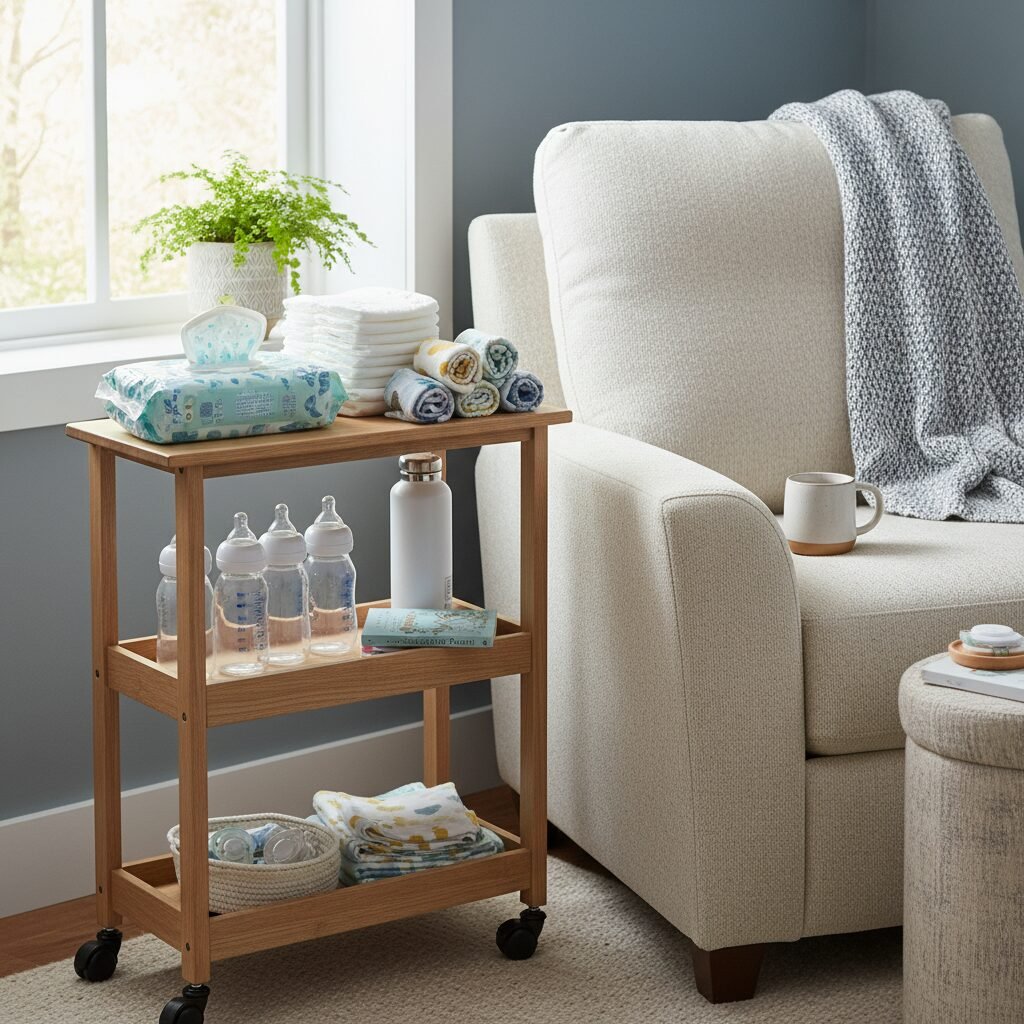
- The Command Center: This is likely your couch or a comfortable chair. Equip a large basket or rolling cart with everything you need for a 3-4 hour stretch: diapers, wipes, burp cloths, pre-made formula bottles or your breastfeeding pillow, a large water bottle and snacks for you, your phone and charger, and the TV remote.
- Safe ‘Parking Spots’: You need safe places to put one baby down while you tend to the other. These are non-negotiable. Invest in two bouncers, swings, or safe floor mats. Place them in key areas like the living room, your bedroom, and just outside the bathroom.
- The Changing Station: Keep it fully stocked at all times. The last thing you want is to realize you’re out of wipes with a messy diaper in hand. If you have a two-story home, have a changing station on each floor.
The Tandem Triage System: Creating a Flexible Block Schedule
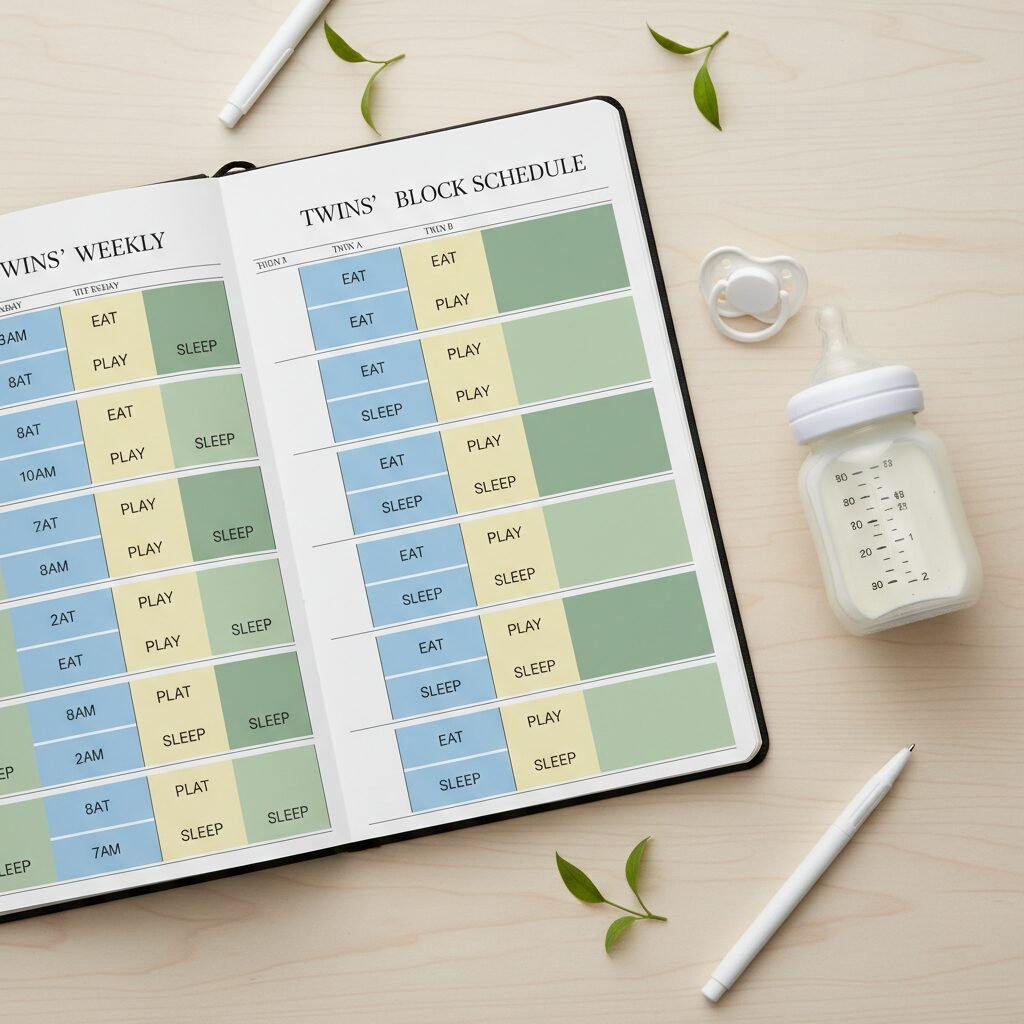
Forget a rigid, by-the-minute schedule. With twins, that’s a recipe for frustration. Instead, focus on a ‘block schedule’ or a predictable rhythm. The core of this rhythm is the well-known Eat, Play, Sleep cycle, adapted for two. The primary goal is to get both babies on a similar schedule. When one baby wakes to eat, you wake the other to eat as well. This is the single most important strategy for syncing their cycles and giving you predictable breaks.
The Eat-Play-Sleep Cycle for Two
This cycle creates a predictable pattern that repeats every 2.5 to 3.5 hours in the early weeks. ‘Play’ for a newborn might simply be a diaper change, some tummy time on your chest, or looking at a high-contrast card.
- Eat: Both babies are fed at the same time.
- Play: Both babies have their awake time together. This includes diaper changes, burping, and gentle interaction.
- Sleep: Both babies are put down for their nap at the same time.
This synchronization is your key to survival. If you feed them on demand separately, you will find yourself in a never-ending cycle of feeding one baby just as the other finishes, leaving you with zero downtime.
Sample Twin Block Schedule (First 6 Weeks)
This is a template, not a rulebook. The times are approximate. Focus on the flow of events rather than the clock.
| Time Block | Activity | Parent Focus & Notes |
|---|---|---|
| 7:00 AM – 8:00 AM | Wake & Eat | Wake both babies (if they aren’t already awake). Tandem feed. This is your first ‘reset’ of the day. |
| 8:00 AM – 8:45 AM | Play & Digest | Diaper changes, burping. Sit babies upright in bouncers to help with reflux. Talk to them. |
| 8:45 AM – 10:30 AM | Sleep | Swaddle both and put them down for a nap. This is your break. Use it to eat, shower, or rest. Do not do chores. |
| 10:30 AM – 11:30 AM | Wake & Eat | Repeat the feeding cycle. Wake the second baby if the first one wakes up. |
| 11:30 AM – 12:15 PM | Play & Digest | Gentle tummy time on the floor, diaper changes. |
| 12:15 PM – 2:00 PM | Sleep | Nap time for babies. Your break. Eat lunch. Sit down. |
| 2:00 PM – 3:00 PM | Wake & Eat | Repeat the feeding cycle. |
| 3:00 PM – 3:45 PM | Play & Digest | Maybe a change of scenery. Sit with them in a different room. |
| 3:45 PM – 5:00 PM | Sleep | This is often a shorter catnap. Use this time to prep for the evening ‘witching hour’. |
Mastering the Art of Synchronized Care

Knowing the schedule is one thing; executing it is another. How do you physically feed, change, and soothe two babies at once? This is where you learn your ‘twin choreography’.
Tandem Feeding Techniques
Feeding two at once saves an immense amount of time. It can feel like wrestling octopuses at first, but you will find your groove.
- For Bottle-Feeding: This is often the most manageable solo method. Place each baby in a supportive bouncer or use a specialized twin feeding pillow (like the Twin Z Pillow). This allows you to sit comfortably between them and hold a bottle for each. You can prop bottles, but it’s not recommended for safety reasons; active feeding is always best.
- For Breastfeeding: A good twin nursing pillow is essential. The ‘Double Football Hold’ is often the easiest to master alone. Position the pillow around your waist, and place one baby on each side, with their bodies tucked alongside yours and their heads supported by your hands. It takes practice to latch both, but it’s a game-changer once you get it.
The Efficient Diaper Change & Assembly Line
Treat tasks like an assembly line. When it’s time for a change, bring both babies to the changing station area. Place one in a safe ‘parking spot’ (bouncer) right next to the changing mat while you change the first baby. Talk to both of them throughout the process. Once the first is done, swap them. This prevents you from running back and forth across the room.
Soothing Two Souls at Once
This is often the most emotionally challenging part. When both are screaming, your nervous system will scream too. Your first job is to take a calming breath.
- Assess: Is one in more distress than the other? Is one just fussy while the other sounds like they’re in pain? Triage the most urgent need first.
- Use Your Tools: Swaddling is magic. A tight swaddle provides immense comfort. White noise machines can create a calming, womb-like environment.
- Movement is Key: Wear one baby in a secure carrier or sling while you rock or bounce the other in your arms or in a bouncer with your foot.
- The Power of Proximity: Sometimes, simply laying them side-by-side on a safe play mat (while you supervise) can be calming for them. They’ve been together for nine months and can find comfort in each other’s presence.
Preserving Your Sanity: The Parent ‘Without Crying’ Plan

The title of this article is about you not crying. While tears are a normal and healthy release, the goal is to prevent you from reaching a state of complete, hopeless overwhelm. Your emotional well-being is not a luxury; it is the foundation of your babies’ security.
The 5-Minute Reset
When you feel your frustration rising, your jaw clenching, and your breathing becoming shallow, you need a reset. It is 100% okay—and recommended—to put both babies down in a safe space (their cribs or bassinets, even if they are crying) and walk away for five minutes.
“Putting your babies in a safe place and stepping away to regulate your own emotions is not abandonment. It is responsible, loving parenting.”
In those five minutes, you can:
- Go to another room and do deep box breathing: Inhale for 4 counts, hold for 4, exhale for 4, hold for 4.
- Splash cold water on your face.
- Step outside for a breath of fresh air.
- Eat a quick, high-protein snack.
- Send a text to your partner or a friend saying, ‘This is hard.’
You will return to your babies as a calmer, more present parent, which is what they truly need.
Lower Your Standards for Everything Else
The house will not be clean. Laundry will pile up. Gourmet meals are a distant dream. During your solo shifts, your only priorities are: 1. Keep babies safe and fed. 2. Keep yourself safe and fed. That’s it. Everything else is a bonus. Accept offers of help, and when people ask what they can do, be specific: ‘Could you fold that basket of laundry?’ or ‘Could you bring over a meal we can just heat up?’
Connect with Other Twin Parents
You may feel isolated, but you are not alone. Find local or online twin parent groups. No one will understand the unique challenges and joys you’re experiencing like someone else who is in it or has been through it. This is your village.
Conclusion
Navigating the newborn stage with twins while flying solo is one of the most profound challenges a parent can face. But with preparation, a flexible routine, and an unwavering commitment to self-compassion, it is more than manageable—it can be a time of incredible bonding and empowerment. Remember the core principles: sync your babies’ schedules, create an efficient environment, and prioritize your own mental health above all else. Throw perfection out the window and embrace the messy, beautiful reality of your new life. You are the parent your twins need, and you have the strength to build a rhythm that works for all three of you. Be patient, be kind to yourself, and never forget that you are a superhero in a spit-up-stained shirt.