
The No-Panic Guide To Caring For Your Newborn’s Circumcision
Bringing your newborn home is a whirlwind of profound love, sleepless nights, and a steep learning curve. If your family has chosen circumcision, adding aftercare to your list of new responsibilities can feel daunting. It’s completely normal to feel a mix of anxiety and uncertainty. You want to do everything right to ensure your baby is comfortable and heals properly. Take a deep breath. You are in the right place.
This guide is designed to be your calm, authoritative resource. As a maternal health educator, I’ve supported countless new parents through this exact process. My goal is to cut through the noise and provide you with clear, fact-based, and empathetic instructions. We will walk through the healing process day by day, cover step-by-step care, discuss comfort measures, and, most importantly, clarify exactly when you should reach out to your pediatrician. You have the strength and capability to handle this, and with this guide, you’ll also have the confidence.
Understanding the Healing Process: What to Expect Day-by-Day
One of the biggest sources of anxiety for parents is not knowing what is normal. The circumcision site will change in appearance over the first week or two, and understanding these changes is key to your peace of mind. Let’s break down the typical healing timeline so you can feel confident in what you’re seeing.
The First 24-48 Hours
Immediately after the procedure, the tip of the penis will likely be red, swollen, and tender. You may see a small amount of blood on the diaper—a spot smaller than a quarter is generally considered normal. The area will be covered with gauze coated in petroleum jelly to prevent it from sticking to the diaper. Your baby might be fussier than usual and may urinate less frequently at first, but should have a wet diaper within 12 hours.
Days 2-7: The Healing Stage
This is when you’ll see the most changes. The initial redness and swelling will begin to subside. It is common to see a yellowish, soft scab or discharge form over the head of the penis. This is not pus or a sign of infection. It is called granulation tissue, a normal part of the healing process, similar to a scab that forms on a scraped knee. Do not try to wipe it off, as this can disrupt healing and cause bleeding. Continue to apply petroleum jelly liberally with each diaper change.
Days 7-14: Nearing Full Recovery
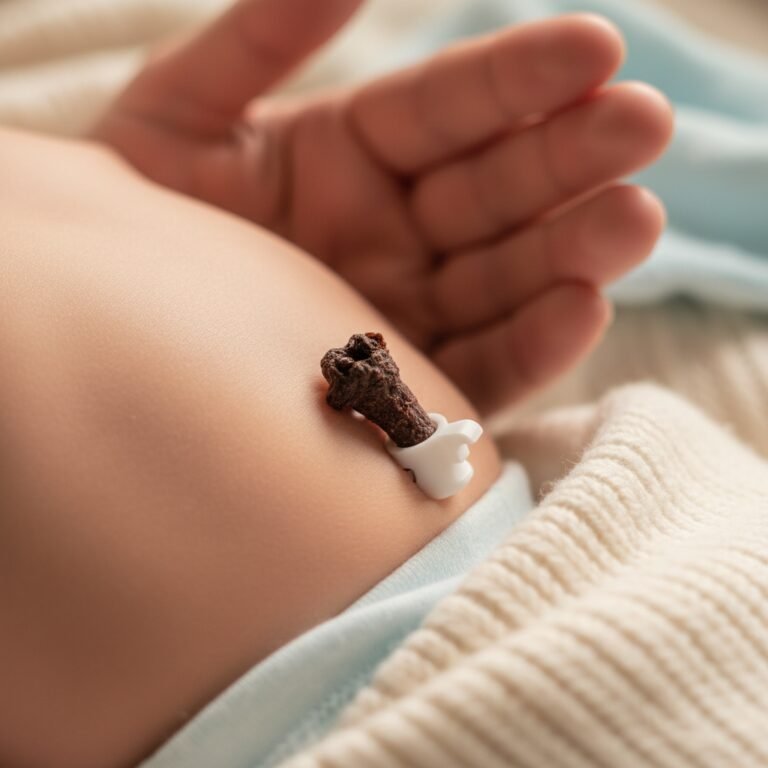
By this stage, the area should look much less raw and the yellowish granulation tissue will gradually disappear. The Plastibell ring, if used, will typically fall off on its own during this time. The skin will continue to heal, and the penis will start to look ‘normal’. It’s important to continue keeping the area clean and protected until it is fully healed, which can take up to two weeks.
| Healing Stage | What to Expect | Parenting Action |
|---|---|---|
| First 24-48 Hours | Redness, swelling, small blood spots. Area covered with petroleum jelly and gauze. | Keep the area clean and protected. Change diapers frequently. Comfort your baby. |
| Days 2-7 | Decreased swelling. Formation of a soft, yellowish scab (granulation tissue). | Gently clean with warm water. Apply fresh petroleum jelly at each diaper change. Do not pick at the scab. |
| Days 7-14 | Yellowish tissue disappears. Plastibell ring (if used) falls off. Site looks pink and healed. | Continue gentle cleaning. Ensure the diaper isn’t too tight. Monitor for any signs of complication. |
Your Step-by-Step Guide to Post-Circumcision Care
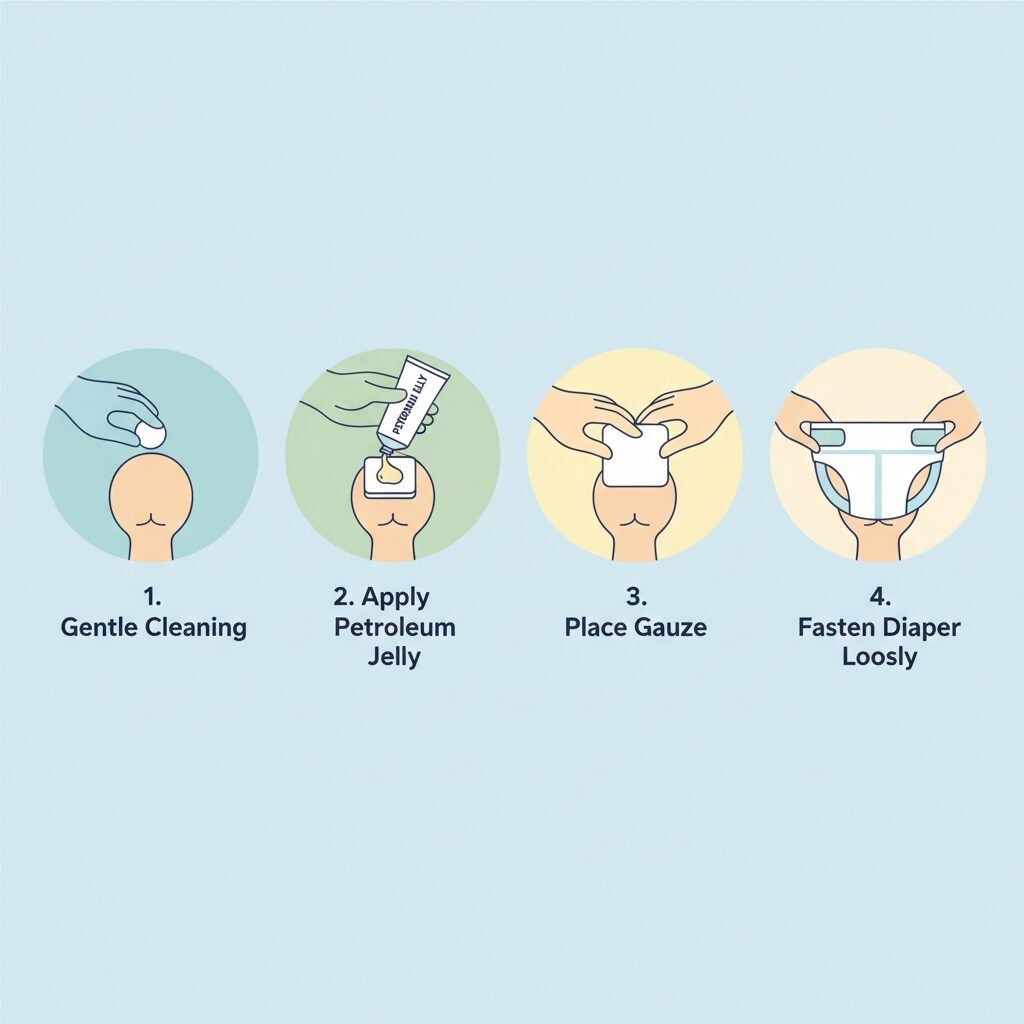
Having a consistent routine for circumcision care will make the process smoother for both you and your baby. Follow these steps at every diaper change for the first 7-10 days, or as directed by your doctor.
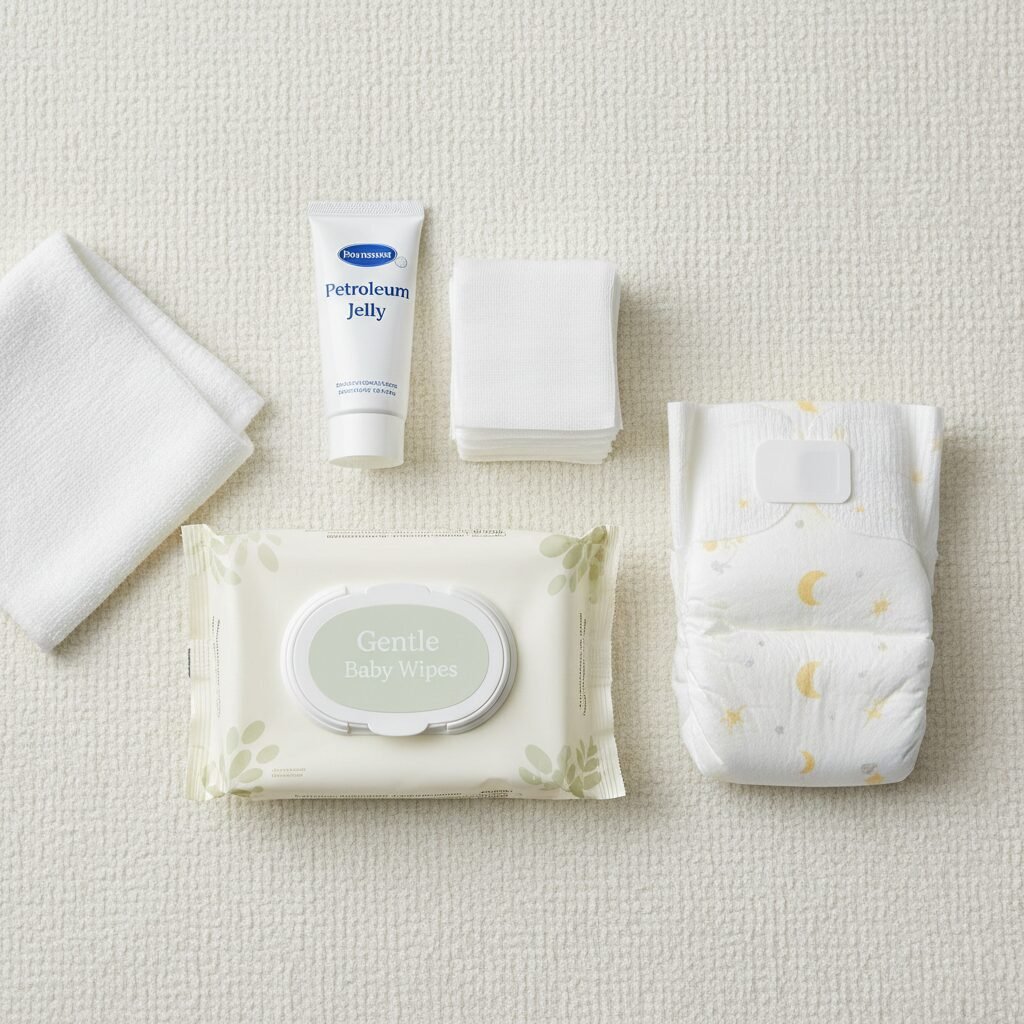
- Prepare Your Station: Before you begin, gather everything you need: a clean diaper, gentle wipes or a soft cloth with warm water, petroleum jelly, and fresh gauze squares (if recommended by your doctor for a Gomco or Mogen procedure).
- Wash Your Hands Thoroughly: This is the most important step to prevent infection. Wash your hands with soap and water for at least 20 seconds before and after each diaper change.
- Gently Remove the Old Diaper: The gauze or the penis itself may be slightly stuck to the diaper. If so, you can pour a little warm water on the area to help it release without pulling.
- Clean the Area with Care: Do not use commercial baby wipes directly on the healing incision, as the alcohol or fragrances can cause stinging. Instead, use a soft cloth or cotton ball with plain warm water to gently clean the stool and urine from the surrounding genital area. Dab gently; do not rub the penis itself. Pat the area dry with a clean, soft cloth.
- Apply a Protective Barrier: Squeeze a generous amount of petroleum jelly (like Vaseline) either directly onto the head of the penis or onto a fresh gauze pad. The goal is to create a thick, protective barrier that prevents the sensitive area from sticking to the diaper. Be liberal with the application—you can’t use too much.
- Fasten the New Diaper Loosely: Secure the new diaper, but make sure it is not too tight. You want to allow for air circulation and avoid putting pressure on the healing area. Point the penis down inside the diaper to help prevent urine from spraying upwards.
Consistency is your best friend. A calm and gentle approach at each diaper change will help your baby feel secure and promote faster, uncomplicated healing.
Comforting Your Baby: Tips for Managing Discomfort

It’s natural for your baby to experience some discomfort after the procedure. Your calm presence and gentle touch are powerful tools for soothing him. Here are several effective strategies to help manage his pain and keep him comfortable.
Soothing Techniques
- Skin-to-Skin Contact: The power of your touch is immense. Holding your baby against your bare chest helps regulate their heart rate, breathing, and temperature. This practice, often called ‘kangaroo care’, is incredibly calming for a fussy newborn.
- Swaddling: A snug swaddle can mimic the security of the womb and help calm a distressed baby. Ensure the swaddle is snug but not too tight, especially around the hips.
- Offer Feedings: Sucking is a natural pain reliever for infants. Offer the breast or bottle frequently, as feeding provides comfort, distraction, and hydration.
- Gentle Motion: Slow, rhythmic rocking in a rocking chair or walking around the room while holding your baby can be very soothing.
- Reduce Stimulation: Keep the lights low and the environment quiet. Overstimulation can add to a baby’s stress when they are already feeling uncomfortable.
A Note on Pain Medication
Your pediatrician may or may not recommend an infant pain reliever like acetaminophen (Tylenol). Never give your newborn any medication without explicit instructions from your doctor regarding dosage and frequency. For most babies, the discomfort is mild and subsides within a day or two, making non-pharmacological comfort measures highly effective.
Recognizing Red Flags: When to Call Your Pediatrician

While complications are rare, it is crucial to know the warning signs. Trust your parental instincts; if something feels wrong, a call to your pediatrician’s office is always the right choice. They would rather hear from you and provide reassurance than have a potential issue go unchecked.
Here is a clear guide to distinguish between normal healing and signs that warrant a medical consultation.
| Normal Healing Signs | Signs of Concern (Call the Doctor) |
|---|---|
| A few drops of blood on the diaper in the first 24 hours. | Persistent Bleeding: Any bleeding that involves more than a few drops or actively soaks an area of the diaper larger than a quarter. |
| Redness and mild swelling around the incision for the first few days. | Signs of Infection: Increased redness, swelling, or warmth that worsens after the third day; pus-like, foul-smelling drainage (not the normal yellow granulation tissue). |
| A yellowish, soft scab-like film (granulation tissue). | Fever: A rectal temperature of 100.4°F (38°C) or higher. |
| Baby is fussy for the first day or two. | Urination Problems: The baby does not urinate within 12 hours of the circumcision. |
| The Plastibell ring is in place and gradually loosens. | Plastibell Issues: The ring slips down the shaft of the penis or does not fall off within 14 days. |
Keep your pediatrician’s contact information handy. Don’t hesitate to use it. Your peace of mind is paramount, and your healthcare team is there to support you.
Special Considerations for Different Circumcision Methods
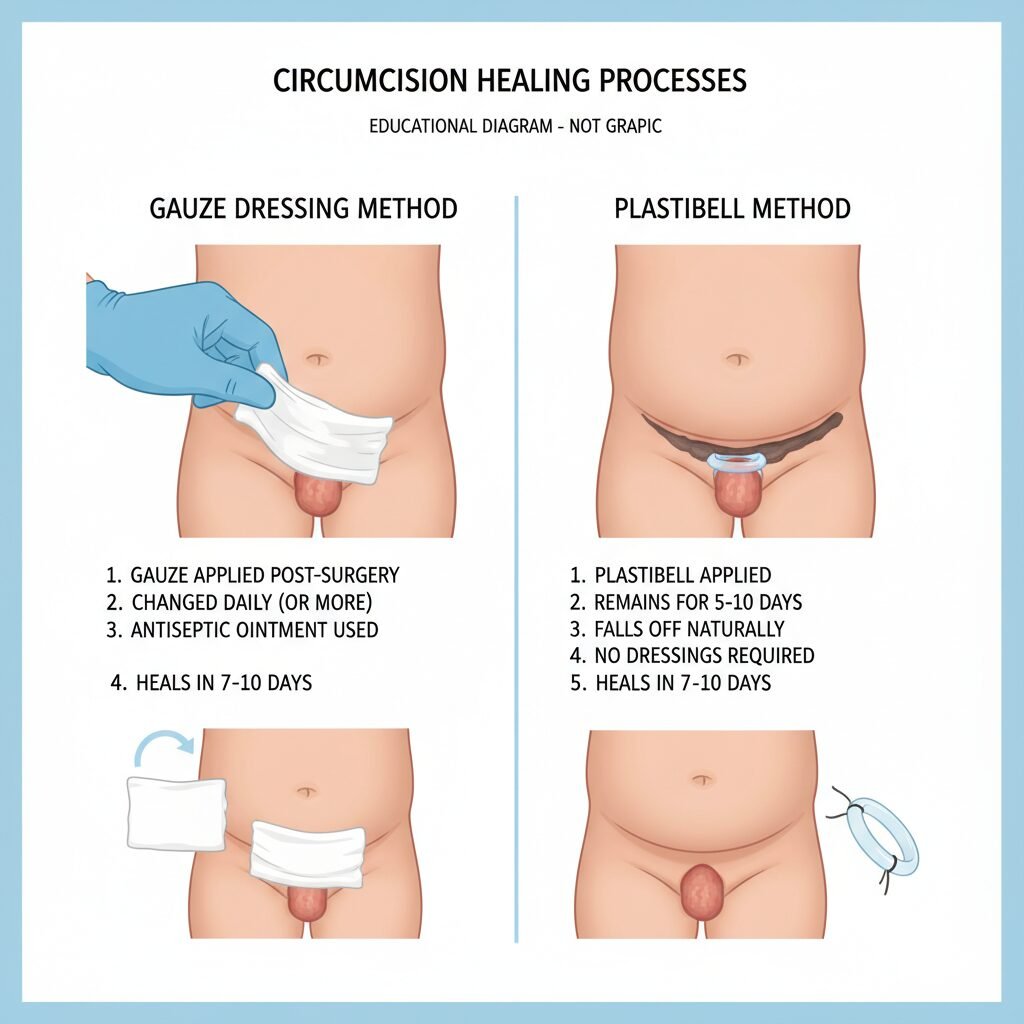
While the general principles of keeping the area clean and protected apply to all circumcisions, there are slight variations in care depending on the method used by your doctor. The two main categories are procedures using a clamp (Gomco or Mogen) and those using the Plastibell device.
Care Following a Gomco or Mogen Clamp Procedure
These are the most common methods. After the foreskin is surgically removed with a clamp, the site is a raw, open wound that needs protection. This is why the use of petroleum jelly and gauze is so critical.
- Key Action: Apply a thick layer of petroleum jelly to a gauze pad and place it over the penis at every diaper change for 7-10 days.
- Purpose: This prevents the raw surface from sticking to the diaper, which would be painful and could tear the healing tissue when the diaper is removed.
Care Following a Plastibell Procedure
With this method, a small plastic ring is placed under the foreskin and a suture is tied around it, cutting off circulation. The foreskin above the suture is then trimmed away. The ring itself acts as a protective barrier.
- Key Action: The Plastibell ring will fall off on its own, usually in 5 to 10 days. Do not pull on the ring.
- Purpose: No special dressing or petroleum jelly is typically needed because the ring protects the healing edge. You simply need to keep the area clean with warm water during diaper changes. You may be advised to apply an antibiotic ointment to the tip where the ring is. Always follow your specific doctor’s instructions.
If you are unsure which method was used, do not hesitate to call your pediatrician’s office for clarification. Knowing the method will ensure you are following the correct aftercare protocol.
Conclusion
Navigating the first few weeks with a newborn is a journey of learning and adaptation. Caring for a circumcision is just one small, temporary part of that journey. By understanding the healing process, following a simple care routine, and knowing what to watch for, you can move through this experience with confidence and calm.
Remember the key takeaways: keep it clean, keep it protected, and comfort your baby. You are their safe space, and your gentle care is the most important part of this healing process. Trust your instincts, lean on your support system, and never be afraid to reach out to your medical team for guidance. You are doing a great job.
You are strong, capable, and the perfect parent for your baby. You’ve got this.
Medical Disclaimer
The information provided in this article is for educational and informational purposes only and is not intended as medical advice. It is not a substitute for professional medical advice, diagnosis, or treatment. Always seek the advice of your physician or other qualified health provider with any questions you may have regarding a medical condition. Never disregard professional medical advice or delay in seeking it because of something you have read in this article.