

40 Weeks and Waiting? How to Stop Obsessing Over Every Single Twinge
Congratulations, you’ve made it to 40 weeks! This is an incredible achievement, the culmination of months of growth, change, and anticipation. You’ve likely had your hospital bag packed for weeks, the nursery is ready, and everyone you know has started sending texts that begin with, “Any news?” But when your due date arrives—and then passes—the excitement can quickly curdle into a potent cocktail of anxiety, frustration, and impatience. Every cramp, every twinge, every subtle shift in your body sends a jolt of adrenaline through you. Is this it? Is it finally happening?
This hyper-vigilance, while completely normal, is exhausting. Obsessing over every sensation can turn these final days or weeks into a period of intense mental and emotional strain for both you and your partner. You are not alone in feeling this way. This period of waiting is often one of the most psychologically challenging parts of pregnancy.
As a doula and maternal health educator, I’m here to guide you through this unique phase. This article is designed to be your supportive companion, offering fact-based reassurance, practical coping strategies, and a gentle reminder that your body and your baby are working together on their own perfect timeline. We’ll explore what’s really going on with your due date, how to differentiate between normal late-pregnancy feelings and true labor signs, and how to use this precious time to nurture yourself and your partnership before your little one arrives.
The Truth About Your Due Date: Why 40 Weeks is Just an Estimate
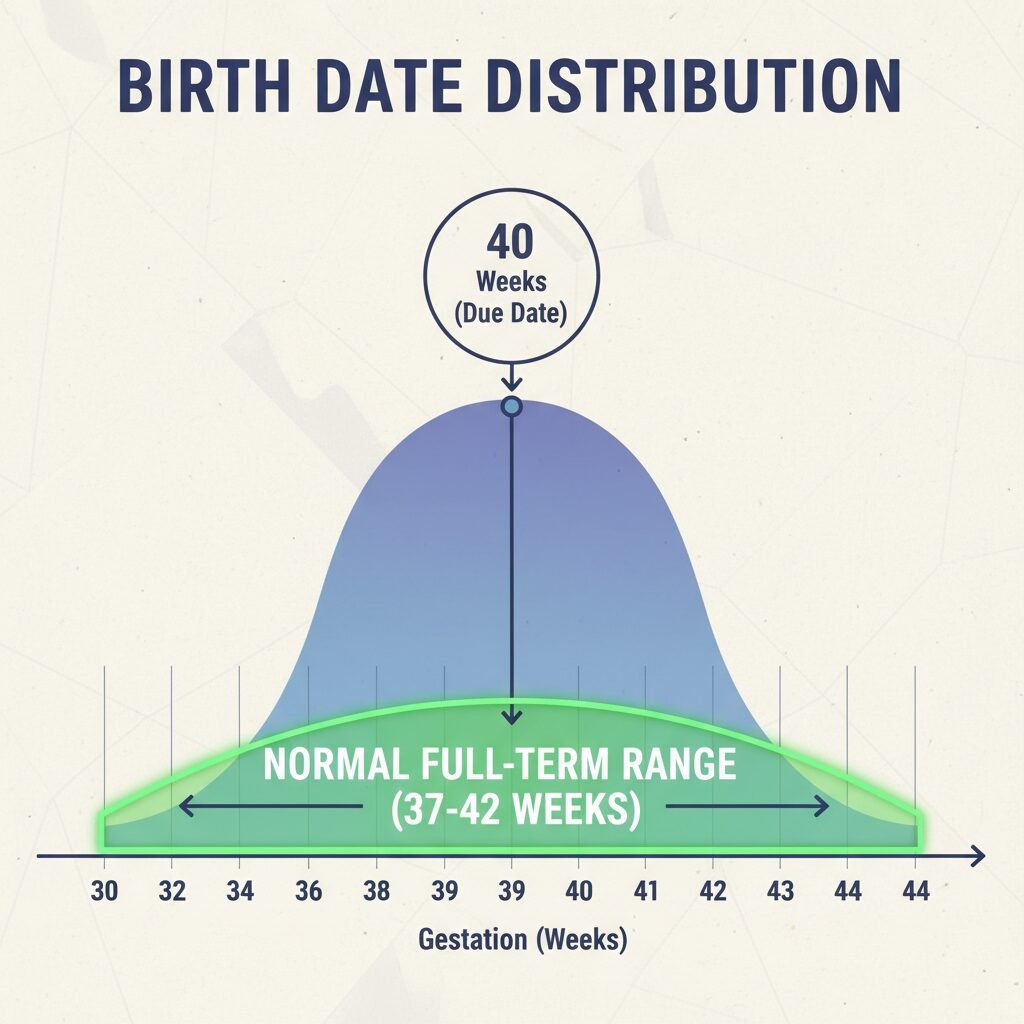
The first step in letting go of the obsession is to reframe your understanding of the “due date.” We tend to view it as a deadline, an expiration date by which the baby must arrive. In reality, your Estimated Due Date (EDD) is exactly that—an estimate.
What is a Due Date, Really?
Your due date is calculated as 40 weeks from the first day of your last menstrual period (LMP). However, this method assumes a perfect 28-day cycle with ovulation occurring precisely on day 14. Human bodies are rarely that predictable. Ovulation can vary, and conception can happen days after intercourse. Even with ultrasound dating, which is more accurate, the EDD is still just the midpoint of a normal delivery window.
Here are some facts to anchor you:
- Only 4-5% of babies are born on their actual due date. Thinking of it as a “due week” or even a “due month” is far more accurate and mentally healthy.
- A full-term pregnancy is considered anywhere from 37 to 42 weeks. This is a five-week window! Birthing your baby at 41 weeks and 3 days is just as normal and healthy as birthing at 39 weeks and 5 days.
- For first-time parents, it’s statistically more common to go past the 40-week mark. Your body is learning a brand new process, and sometimes it just needs a little extra time.
“Your baby hasn’t read the calendar, and your body is not a machine. Trust in the innate wisdom of your body and the unique timeline of your baby. This waiting is not a failure; it’s the final, quiet preparation.”
Letting go of the 40-week deadline can feel like a weight lifting off your shoulders. Your body isn’t ‘late’ or ‘broken’. It is doing precisely what it needs to do to prepare for a safe and healthy birth. This final stretch allows for crucial last-minute development for the baby, including brain growth and fat storage, and gives your cervix more time to soften and prepare for labor.
Braxton Hicks vs. Early Labor: Making Sense of the Sensations
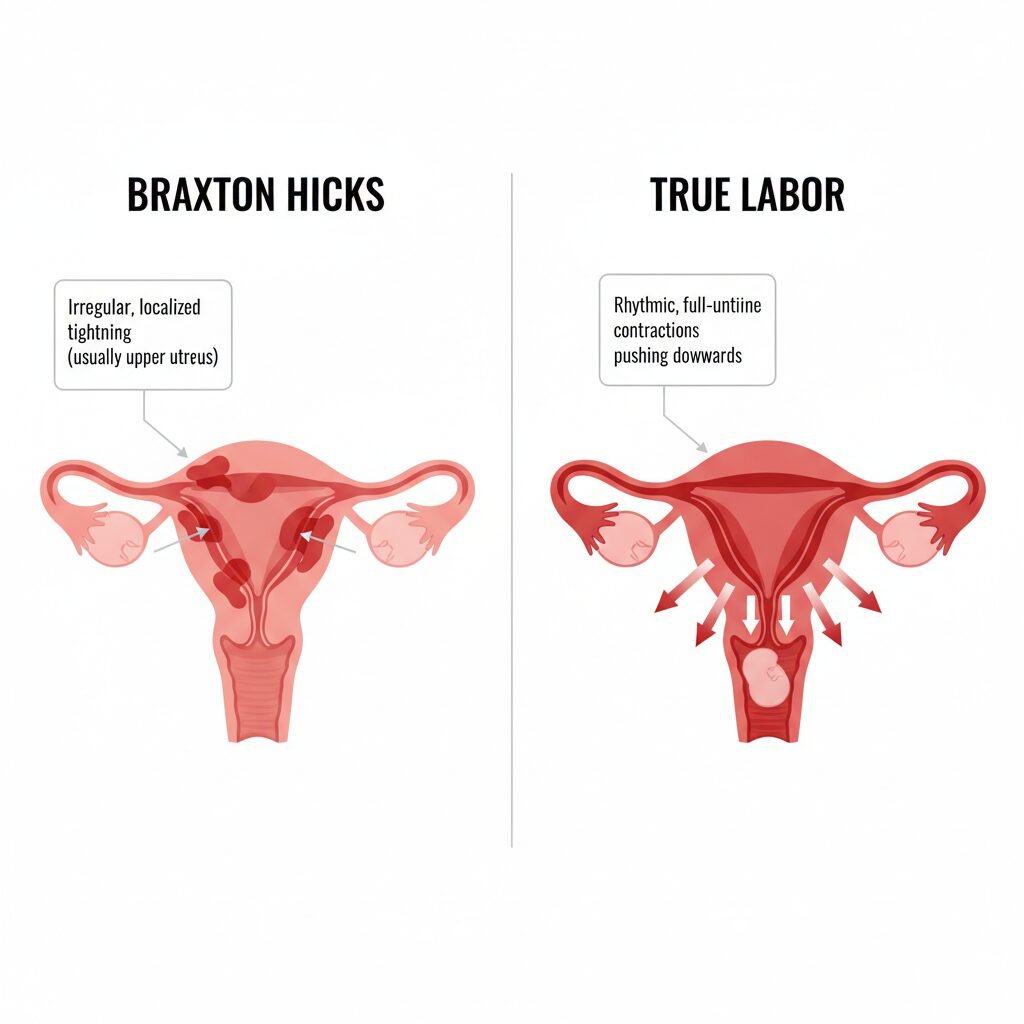
Now, let’s talk about those twinges. Your body is in full-on preparation mode, and you’re going to feel it. The key is learning to interpret these signals without jumping to conclusions every time. This is where knowledge becomes a powerful tool against anxiety.
Common Late-Pregnancy Sensations
In these final weeks, you might experience a variety of physical symptoms, none of which necessarily mean labor is imminent:
- Increased Pelvic Pressure: As the baby “drops” or engages in your pelvis, you’ll feel more pressure, a waddling gait, and possibly more frequent urination. This is a great sign of progress!
- Changes in Vaginal Discharge: You might notice an increase in discharge or lose your mucus plug. While this indicates cervical changes are happening, labor could still be hours, days, or even a week away.
- Random Aches and Pains: Lower backaches, groin pain, and sharp zings near your cervix (often called “lightning crotch”) are common as your ligaments and joints loosen.
- Bursts of Energy or Fatigue: It’s normal to swing between wanting to clean the entire house (nesting) and needing to nap all day. Listen to your body and rest when you can.
The most confusing sensation is often contractions. Are they the real deal or just another practice run? Here’s how to tell the difference.
| Feature | Braxton Hicks Contractions (‘Practice’ Labor) | True Labor Contractions |
|---|---|---|
| Frequency & Pattern | Irregular, do not get closer together. They come and go without a consistent pattern. | Come at regular intervals and get progressively closer over time (e.g., from 10 minutes apart to 5, then 3). |
| Duration | Usually last for 30-60 seconds, but can sometimes last up to two minutes. The duration is inconsistent. | Start shorter (30-45 seconds) and become progressively longer and stronger (60-90 seconds). |
| Strength | Usually feel like a mild to moderate tightening. They do not increase in intensity over time. | Start mild and steadily increase in intensity. You will find it harder to talk or walk through them as they progress. |
| Location of Sensation | Typically felt only in the front of the abdomen or in one specific area. | Often start in the lower back and wrap around to the front of the abdomen. The sensation is more widespread. |
| Effect of Activity | Often stop or ease up when you change position, walk, rest, or drink water. | Continue and intensify regardless of what you do. Changing position or walking may make them stronger. |
Tracking these sensations can be helpful, but try not to obsess. Use a contraction timer app if you think things are starting, but if they remain irregular, put the phone down and distract yourself. Your body will give you unmistakable signals when it’s truly time.
Mind Over Matter: Practical Techniques to Calm the Waiting Game

Managing the emotional and mental side of waiting is just as important as understanding the physical signs. Your mind needs a place to rest, away from the constant loop of “what if” and “when.” Here are some concrete strategies to help you stop obsessing and find calm.
Set Communication Boundaries
The constant stream of texts and calls can be a huge source of pressure. It’s okay to protect your peace. Consider sending a group message to well-meaning friends and family like: “We are so excited and grateful for your love! We’re in the final waiting period and are trying to stay relaxed. We promise to let you know when there’s news to share. Until then, please know we’re doing well and will reach out when we can!” This politely sets a boundary and relieves you of the duty to provide constant updates.
Limit Your Digital Rabbit Holes
Endlessly Googling “how to induce labor naturally” or scrolling through birth stories in online forums can fuel anxiety. Choose one or two trusted sources (like your provider’s website or evidence-based organizations) for information and limit your time on other platforms. Unfollow social media accounts that make you feel pressured or impatient.
Embrace Mindfulness and Relaxation Techniques
You don’t need to be a meditation expert to benefit from mindfulness. These practices train your brain to focus on the present moment instead of worrying about the future.
- Guided Meditations: Use apps like Calm, Headspace, or Expectful, which have specific meditations for late pregnancy, patience, and preparing for labor.
- Deep Breathing: When you feel a wave of anxiety, practice the 4-7-8 breath. Inhale through your nose for 4 seconds, hold your breath for 7 seconds, and exhale slowly through your mouth for 8 seconds. This simple act can calm your nervous system instantly.
- Journaling: Write it all out. Your fears, your frustrations, your hopes. Getting the thoughts out of your head and onto paper can provide immense relief and clarity.
Connect With Your Partner
Your partner is likely feeling their own mix of excitement and helplessness. Use this time to connect. Talk about things other than the baby’s arrival. Share your feelings, give each other a massage, or simply hold each other. Remind yourselves that you are a team, and this is the last bit of quiet time you’ll have as a duo for a while.
The ‘Bonus’ Days: Productive and Restful Ways to Spend the Final Stretch

Instead of viewing this as a period of passive waiting, try to reframe it as a ‘bonus’ period. This is a unique, unrepeatable sliver of time. How can you use it to your advantage? The goal is to fill your days with activities that are either restful, productive, or purely joyful, distracting you from the clock-watching.
Focus on Rest and Gentle Movement
Your body is about to run a marathon. The best thing you can do to prepare is to rest.
- Nap without guilt. This is your last chance to sleep whenever you want. Take it.
- Engage in gentle movement. If cleared by your provider, go for slow walks, do some gentle prenatal yoga or stretching, or simply bounce on a birth ball while watching TV. Movement can help with baby’s positioning and ease aches and pains.
- Take long baths. An Epsom salt bath can soothe sore muscles and calm your mind. Make it a ritual with candles or a good book.
Nourish and Prepare
Use your nesting instincts productively.
- Meal Prep: Your future, sleep-deprived self will thank you. Make and freeze soups, stews, lactation cookies, or anything that can be easily reheated.
- Stock Up: Do one last grocery run for pantry staples and postpartum supplies.
- Organize a Postpartum Care Station: Create a basket for your bathroom with pads, perineal spray, and other essentials, and another one where you plan to feed the baby with snacks, water, a phone charger, and burp cloths.
Indulge in Joy and Connection
This is not selfish; it’s essential self-care before a major life transition.
- Go on a ‘Babymoon’ Date: Go to the movies (choose an aisle seat!), have a leisurely dinner at your favorite restaurant, or get takeout and have a picnic on the living room floor.
- Binge-Watch That Show: Start that series you’ve been meaning to watch. Losing yourself in a good story is a perfect distraction.
- Schedule a Prenatal Massage: A professional massage can relieve physical discomfort and provide deep relaxation.
- Spend One-on-One Time: If you have other children, arrange for a babysitter and spend some special, focused time with them before their world changes.
Your Support System: The Partner’s Role and When to Seek Medical Advice

This waiting game is a team sport. For partners and support people, it can be difficult to know how to help. Your role is crucial: be the guardian of calm, the provider of comfort, and the voice of reason.
How Partners Can Provide Support
- Be the Communication Buffer: Take over the responsibility of updating family and friends. Field the incoming texts so the expectant parent doesn’t have to.
- Encourage Distraction and Rest: Suggest activities from the list above. Draw a bath, put on a movie, or simply sit and listen without trying to ‘fix’ the frustration.
- Provide Physical Comfort: Offer foot rubs, back massages, and lots of hugs. Physical touch can be incredibly reassuring.
- Validate Feelings: It’s not helpful to say, “Just relax.” Instead, try, “I know this is so hard. It’s completely understandable to feel frustrated. I’m right here with you.”
When to Call Your Doctor or Midwife
While most twinges are normal, it’s vital to know the signs that require professional medical advice. Don’t hesitate to call your provider’s office or the hospital’s labor and delivery unit if you experience any of the following. It is always better to call and be told it’s nothing than to wait at home and worry.
Call your provider immediately if you experience:
- Your Water Breaks: This can be a big gush or a slow, steady trickle of fluid. Note the time, color, and odor of the fluid.
- Regular, Strong Contractions: If you are a first-time parent, a common guideline is the 5-1-1 rule: contractions that are 5 minutes apart, last for 1 minute each, and have been occurring for at least 1 hour. Your provider will give you specific instructions.
- Decreased Fetal Movement: You should feel your baby move regularly. If you notice a significant decrease in movement, do a “kick count” as instructed by your provider. If you are still concerned, call right away.
- Vaginal Bleeding: Bright red bleeding (more than spotting, which can be normal after a cervical check) is a reason to call immediately.
- Signs of Preeclampsia: A severe headache that won’t go away, vision changes, sudden swelling in your hands or face, or upper abdominal pain.
Conclusion
The end of pregnancy is a profound lesson in surrender. You have done everything in your power to grow and nurture this baby, and now you must trust the final chapter to unfold on its own schedule. The impatience, the discomfort, and the anxiety you feel are not signs of weakness; they are signs of your deep love and anticipation for the child you are about to meet.
Remember that your due date is a suggestion, not a summons. Your body is wise, and these final days are purposeful. Use the strategies we’ve discussed to shift your focus from waiting to living, from obsessing to preparing, and from anxiety to acceptance. Be gentle with yourself and your partner. You are on the brink of one of life’s most incredible transformations.
You are strong, you are capable, and you will meet your baby very, very soon.
Disclaimer: The information provided in this article is for educational and informational purposes only and is not intended as medical advice. It is not a substitute for professional medical advice, diagnosis, or treatment. Always seek the advice of your physician or other qualified health provider with any questions you may have regarding a medical condition.