

Did It Work? 5 Telltale Signs Your Membrane Sweep Was Successful
The final days and weeks of pregnancy can feel like a lifetime. You’re feeling heavy, uncomfortable, and overwhelmingly ready to meet your baby. In this waiting period, your doctor or midwife might offer a common, low-intervention procedure to help nudge things along: the membrane sweep. Also known as stripping the membranes, it’s a natural method intended to stimulate labor without more intensive medical interventions.
But after the brief discomfort of the procedure is over, a single question echoes in your mind: Did it work? The uncertainty can be consuming. You might find yourself analyzing every twinge, cramp, and sensation, wondering if it’s a sign of impending labor or just another late-pregnancy symptom. This guide is here to provide clarity and support. As a doula and maternal health educator, I’ve supported countless parents through this exact moment. We will walk through the five telltale signs that your membrane sweep was successful, explore what’s happening in your body, manage expectations for the timeline, and, most importantly, identify when it’s time to call your provider. You are on the cusp of a beautiful journey, and this information is designed to empower you with knowledge and peace of mind.
What is a Membrane Sweep and How Does It Work?
Understanding the Procedure
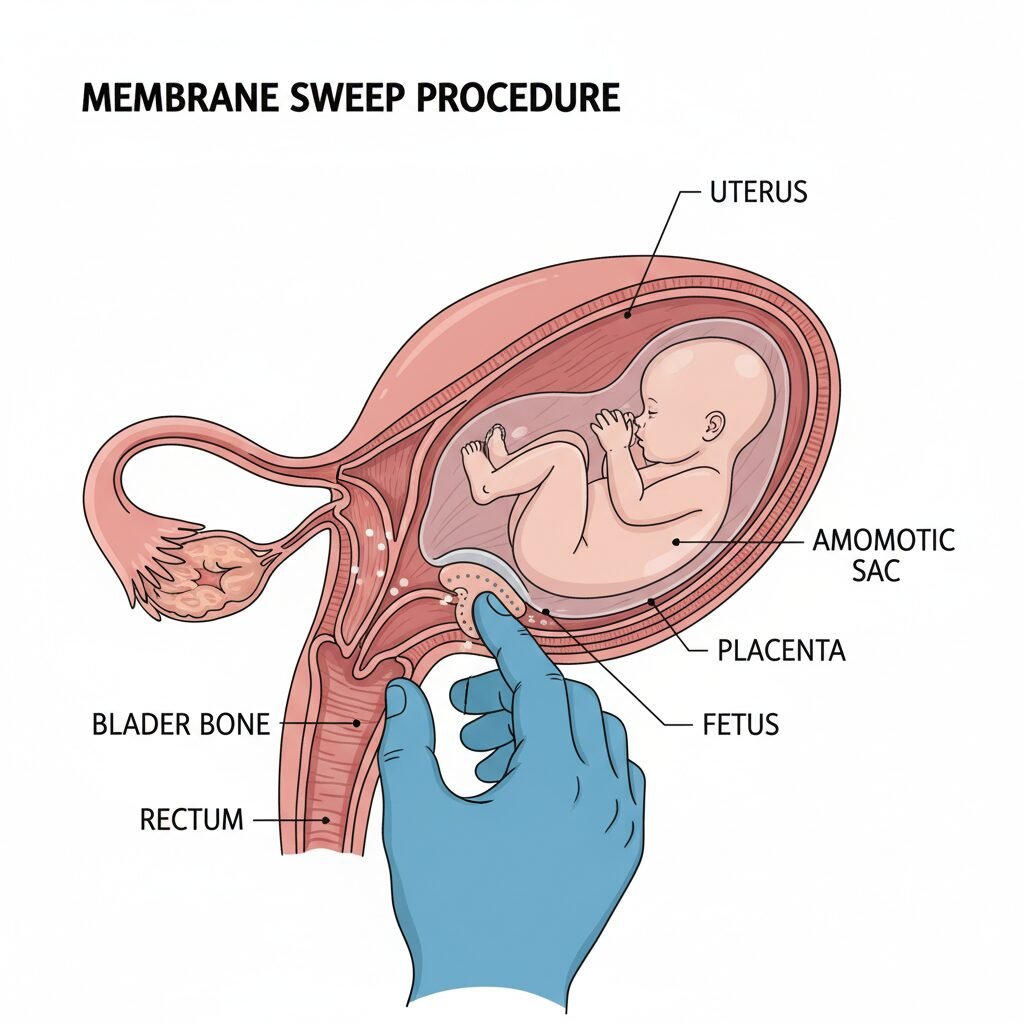
Before we can recognize the signs of success, it’s essential to understand what a membrane sweep actually is. It’s a straightforward procedure performed by your healthcare provider during a vaginal exam, typically at or after 38 weeks of pregnancy. To be a candidate, your cervix usually needs to be at least slightly dilated (open).
During the exam, your doctor or midwife will insert a gloved finger through your cervix and use a sweeping, circular motion to separate the amniotic sac (the ‘membranes’ that contain your baby and the amniotic fluid) from the lower part of your uterine wall. While it sounds intense, the procedure is usually quick, often lasting only a minute or two.
The Science Behind the Sweep
The effectiveness of a membrane sweep is rooted in your body’s natural hormonal processes. The goal is twofold:
- Prostaglandin Release: The physical action of separating the membranes stimulates the local release of prostaglandins. These hormone-like substances are crucial for childbirth as they help to soften, thin (efface), and open (dilate) the cervix, preparing it for labor.
- Mechanical Stimulation: The pressure and movement can also directly irritate the cervix and lower uterus, which may trigger cramping and contractions that can evolve into an established labor pattern.
A membrane sweep is essentially a way of sending a biological signal to your body that it’s time to get the process of labor started. It doesn’t force anything; it simply encourages the natural cascade of hormones that your body is already preparing to release.
It’s important to approach this procedure with realistic expectations. It can be uncomfortable, causing pressure and cramping during and immediately after. For some, it’s the final nudge their body needs to begin labor within 24-48 hours. For others, it may not trigger labor, or it may require a second sweep a week later. Its success often depends on how ‘ready’ your body is for labor in the first place.
The 5 Telltale Signs Your Membrane Sweep Was Successful
Decoding Your Body’s Signals
After your appointment, the waiting game begins. Your body will provide clues, and learning to interpret them can ease your anxiety. Here are the five most common signs that the membrane sweep has initiated the labor process.
1. Consistent Cramping and Contractions
This is often the first and most noticeable sign. While some mild, irregular cramping is normal after any cervical check, what you’re looking for is a change in pattern. Successful sweeps often lead to period-like cramps that don’t subside. Over several hours, these cramps may intensify and become more organized, evolving into true contractions.
- What to look for: Cramps that transition from a dull ache into distinct waves of tightening that grow stronger, last longer, and become closer together. Unlike Braxton Hicks contractions, which are typically irregular and ease with rest or hydration, these will persist and intensify regardless of what you do.
2. Losing Your Mucus Plug or Experiencing a ‘Bloody Show’
Your mucus plug is a collection of mucus that has sealed your cervix throughout pregnancy, protecting your baby from bacteria. As the cervix begins to soften, efface, and dilate due to the prostaglandins released by the sweep, this plug can become dislodged.
- What to look for: You may notice a thick, gelatinous discharge that can be clear, yellowish, or tinged with pink or brown blood. This is known as the ‘bloody show’ and it’s an excellent sign of cervical change. While losing the mucus plug doesn’t mean labor is imminent (it can happen days before), seeing it after a membrane sweep is a strong indicator that the procedure has successfully stimulated your cervix.
3. A Trickle or Gush of Fluid (Water Breaking)
In some cases, the stimulation from the sweep can be enough to cause the amniotic sac to rupture. This is known as the rupture of membranes, or your ‘water breaking’. It’s a definitive sign that labor is starting and that you need to contact your provider.
- What to look for: This isn’t always the dramatic gush you see in movies. It can be a slow, uncontrollable trickle of clear, odorless fluid that feels different from urine or vaginal discharge. If you suspect your water has broken, put on a pad and call your doctor or midwife. They will likely want you to come in for an assessment.
4. Noticeable Changes in Vaginal Discharge
Even if you don’t lose your mucus plug in one go, you might notice other changes in your discharge. The procedure can cause some spotting or light bleeding, which is perfectly normal. However, a successful sweep might also lead to a more watery or generally increased volume of discharge as your body prepares for labor.
- What to look for: Any discharge that is different from your normal pregnancy discharge. Pay attention to color, consistency, and amount. Spotting is normal, but anything resembling a period flow is not.
5. The Ultimate Sign: Active Labor Begins
Ultimately, the most definitive sign of success is the onset of active labor. This is when your contractions have established a regular, undeniable pattern. Most providers advise using the 5-1-1 Rule as a guideline for when to head to the hospital or birth center:
- Contractions are coming every 5 minutes.
- Each contraction lasts for at least 1 minute.
- This pattern has been consistent for at least 1 hour.
If you reach this point, your membrane sweep didn’t just ‘work’—it successfully initiated the final, beautiful journey to meeting your baby.
What to Expect Immediately After the Procedure

Managing the Aftermath: Normal Symptoms vs. Signs of Labor
It’s crucial to differentiate between the common, immediate side effects of a membrane sweep and the actual signs of early labor. Knowing what’s normal can prevent unnecessary worry. Immediately following the procedure and for the next 24 hours, it is very common to experience:
- Mild to Moderate Cramping: Your uterus has been stimulated, so cramping similar to menstrual cramps is expected. These may be irregular and should not necessarily be timed unless they start to form a clear pattern.
- Spotting: Your cervix is highly vascular, and the procedure can easily disrupt small blood vessels. Seeing a small amount of pink, red, or brown blood mixed with mucus is normal.
- General Discomfort: You might feel achy, tired, or just ‘off’. Your body is processing the hormonal and physical stimulation.
Self-Care Following Your Sweep
This is a time for rest and gentle activity, not for trying to force labor with intense exercise. Your body needs to respond in its own time. Consider these supportive measures:
- Rest and Hydrate: Lie down on your left side, drink plenty of water, and try to relax. Stress can inhibit the hormones needed for labor.
- Use a Warm Compress: A warm water bottle or heating pad on your lower back or abdomen can soothe cramping. A warm bath can also be very comforting.
- Distract Yourself: Watch a favorite movie, listen to a calming playlist, or talk with your partner. ‘Pot watching’ can make the time drag on and increase anxiety.
- Eat a Nourishing Meal: If labor is starting, you’ll need energy. Have a balanced meal with complex carbohydrates and protein.
Remember, experiencing these immediate side effects doesn’t mean the sweep has failed. It simply means your body is reacting to the stimulation. For many, these initial cramps and spotting are the precursors to the more organized contractions that signal true labor.
The Timeline for Patience: How Long Does It Take to Work?

Embracing the Wait
Perhaps the most challenging part of a membrane sweep is the waiting period that follows. While some individuals go into labor within hours, this is not the typical experience. The most common window for a membrane sweep to initiate labor is within 24 to 48 hours.
Research, including a significant review by Cochrane, has shown that membrane sweeping from 38 weeks onward does increase the likelihood of spontaneous labor and can reduce the need for more formal induction methods like Pitocin. However, it’s not a guarantee.
Factors That Influence Success
Several factors can influence whether a sweep is successful:
- Gestational Age: Sweeps performed closer to or after 40 weeks tend to be more effective than those done at 38 or 39 weeks.
- Cervical Ripeness: The softer and more dilated your cervix is to begin with (as measured by the Bishop score), the more likely the sweep is to work.
- Previous Births: Some studies suggest that sweeps may be slightly more effective for first-time parents, but this is not conclusive.
- Individual Body Response: Ultimately, every pregnancy is unique. Your body and your baby will begin labor when they are truly ready.
Patience is a virtue, especially at the end of pregnancy. Trust the process, trust your body, and trust your baby. A membrane sweep is an invitation for labor to begin, not an eviction notice.
What If It Doesn’t Work?
If 48 hours pass with no significant changes, it’s okay. This is a very common outcome. It does not mean anything is wrong with you or your pregnancy. It simply means your body and baby needed a little more time. Your provider will discuss the next steps with you at your following appointment, which might include:
- Waiting longer for labor to start on its own.
- Performing a second membrane sweep a week later.
- Scheduling a formal medical induction if you are past your due date or if there are medical reasons to proceed.
Try to reframe this waiting period. It is not a failure, but rather a few more precious days of quiet connection with your baby before the beautiful chaos of parenthood begins.
When to Call Your Doctor or Midwife: Red Flag Symptoms
Staying Safe: Knowing When to Seek Help
While a membrane sweep is a safe, low-risk procedure, it’s vital to be aware of the warning signs that require immediate medical attention. Your healthcare team is there to support you, so never hesitate to call if you are concerned. Use the following table as a guide to differentiate between what’s likely normal and what warrants a phone call.
| Symptom | What’s Likely Normal (Within 24-48 Hours) | When to Call Your Provider Immediately |
|---|---|---|
| Bleeding | Light spotting (pink, brown, or slightly red) mixed with mucus. Similar to the beginning or end of a menstrual period. | Bright red bleeding that soaks a pad in an hour or less, or contains clots larger than a quarter. |
| Contractions / Cramping | Irregular, period-like cramps that come and go. They may be uncomfortable but are manageable. | Contractions that are excruciatingly painful from the start and don’t allow for any rest between them, or if you feel something is wrong. |
| Vaginal Fluid | Increased mucus discharge, possibly streaked with a small amount of blood. | A suspected rupture of membranes (a continuous trickle or gush of fluid). Your provider needs to know, especially if the fluid is green or brown. |
| Fetal Movement | Your baby’s normal pattern of movement should continue. They may be slightly less active if labor is beginning, but movement should still be present. | A significant decrease or absence of fetal movement. Stop what you are doing, lie down, and do a kick count. Call immediately if you are concerned. |
| General Wellbeing | Feeling tired, achy, and crampy. | Developing a fever, chills, or foul-smelling vaginal discharge, which could be signs of an infection. |
Your intuition as a parent is already developing. If something feels wrong, trust that instinct and make the call. It is always better to be reassured than to ignore a potential issue.
Conclusion
Trusting Your Body’s Journey
The end of pregnancy is a profound test of patience and trust. A membrane sweep can be a helpful tool to encourage labor, but it’s just one part of a much larger, more intricate process. By recognizing the five telltale signs—developing contraction patterns, the bloody show, your water breaking, changes in discharge, and the onset of active labor—you can navigate this waiting period with more confidence and less anxiety.
Whether your sweep leads to labor within hours or you need a little more time, remember that your body is not failing. It is working in perfect harmony with your baby to choose the right moment for birth. Continue to rest, nourish yourself, and stay in close communication with your healthcare provider. You are strong, capable, and on the very edge of meeting your child. The journey is almost complete, and you are doing an amazing job.
Medical Disclaimer: The information provided in this article is for educational and informational purposes only and is not intended as medical advice. It is not a substitute for professional medical advice, diagnosis, or treatment. Always seek the advice of your physician, midwife, or other qualified health provider with any questions you may have regarding a medical condition. Never disregard professional medical advice or delay in seeking it because of something you have read in this article.