Fume-Free & Safe: The Only Way To Clean Your Oven While Pregnant
That powerful, instinctual urge to clean and organize everything in sight before your baby arrives? It’s called nesting, and it’s a completely normal, and often wonderful, part of the journey to parenthood. You find yourself wanting to create the most pristine, welcoming, and safe environment for your little one. But as you pull out the cleaning supplies, a wave of concern might wash over you. Are these products safe? What about the fumes from the oven cleaner?
Your concern is valid and shows what an incredible parent you already are. Many conventional cleaning products, especially heavy-duty oven cleaners, contain harsh chemicals that can release volatile organic compounds (VOCs) into the air. During pregnancy, your body is working overtime, and your sensitivity to smells and chemicals can be heightened. More importantly, we want to minimize any potential exposure to toxins for your developing baby. This is why we’re going to walk you through the only way you should be cleaning your oven while pregnant: a method that is completely fume-free, non-toxic, and incredibly effective. It’s time to embrace the nesting instinct with peace of mind.
Why Traditional Oven Cleaners Are a No-Go During Pregnancy
The Hidden Dangers in Conventional Cleaners
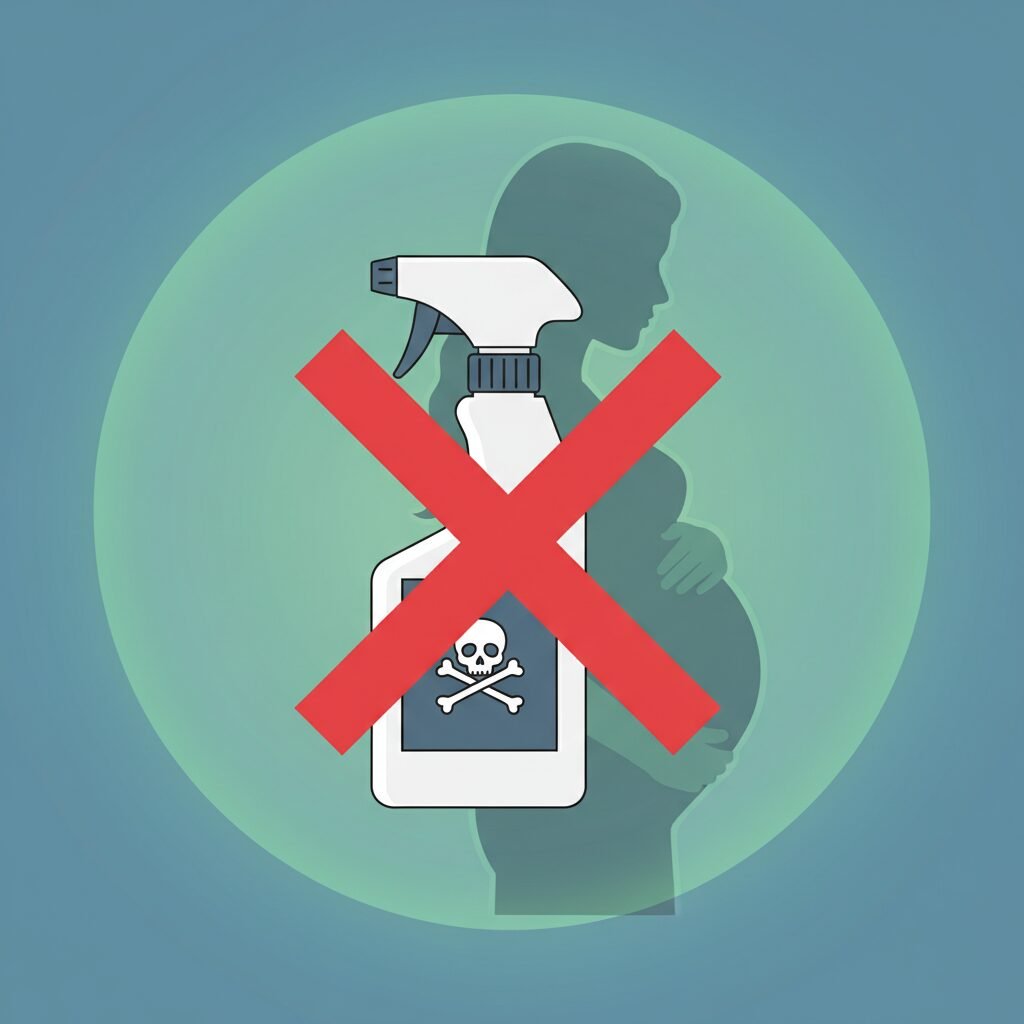
It’s easy to grab a can of oven cleaner promising a magically clean oven in minutes, but the convenience comes at a cost, especially when you’re pregnant. These products are some of the most caustic household cleaners on the market. Let’s break down why they should be avoided.
Understanding Volatile Organic Compounds (VOCs)
The primary danger lies in the powerful fumes these cleaners emit. These fumes contain VOCs, which are gases released from certain solids or liquids. The main culprits in oven cleaners often include ingredients like sodium hydroxide (lye), ethanolamine, and butane. When you spray these chemicals, they aerosolize and can be easily inhaled, entering your bloodstream. During pregnancy, anything that enters your bloodstream has the potential to cross the placental barrier.
“Creating a safe environment for a developing baby means being mindful of the air you breathe. The harsh chemicals in many commercial oven cleaners can irritate the respiratory system and pose unnecessary risks during a critical period of development.”
The Problem with the ‘Self-Clean’ Feature
You might think the self-cleaning feature on your oven is a safe, hands-off alternative. Unfortunately, this isn’t the case. The self-clean cycle works by heating the oven to extremely high temperatures (often over 900°F or 482°C) to burn off food residue. This process can release fumes, including carbon monoxide, from the baked-on food, as well as from the oven’s interior lining. These fumes can be harmful to everyone in the household, including pets, and are certainly something to avoid while pregnant. It’s best to skip this feature entirely until after your baby is born and your home can be well-ventilated without concern.
Gathering Your Pregnancy-Safe Cleaning Arsenal
Your Simple, Non-Toxic Toolkit
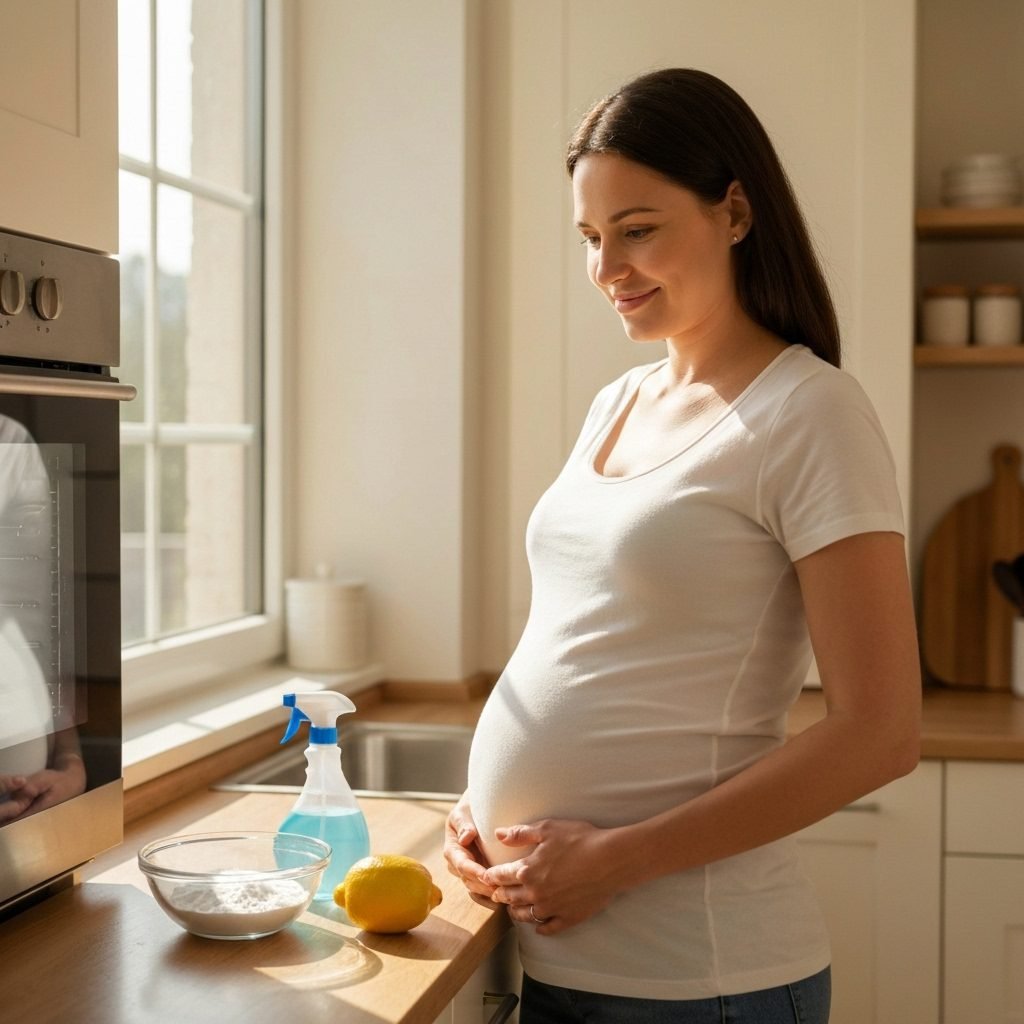
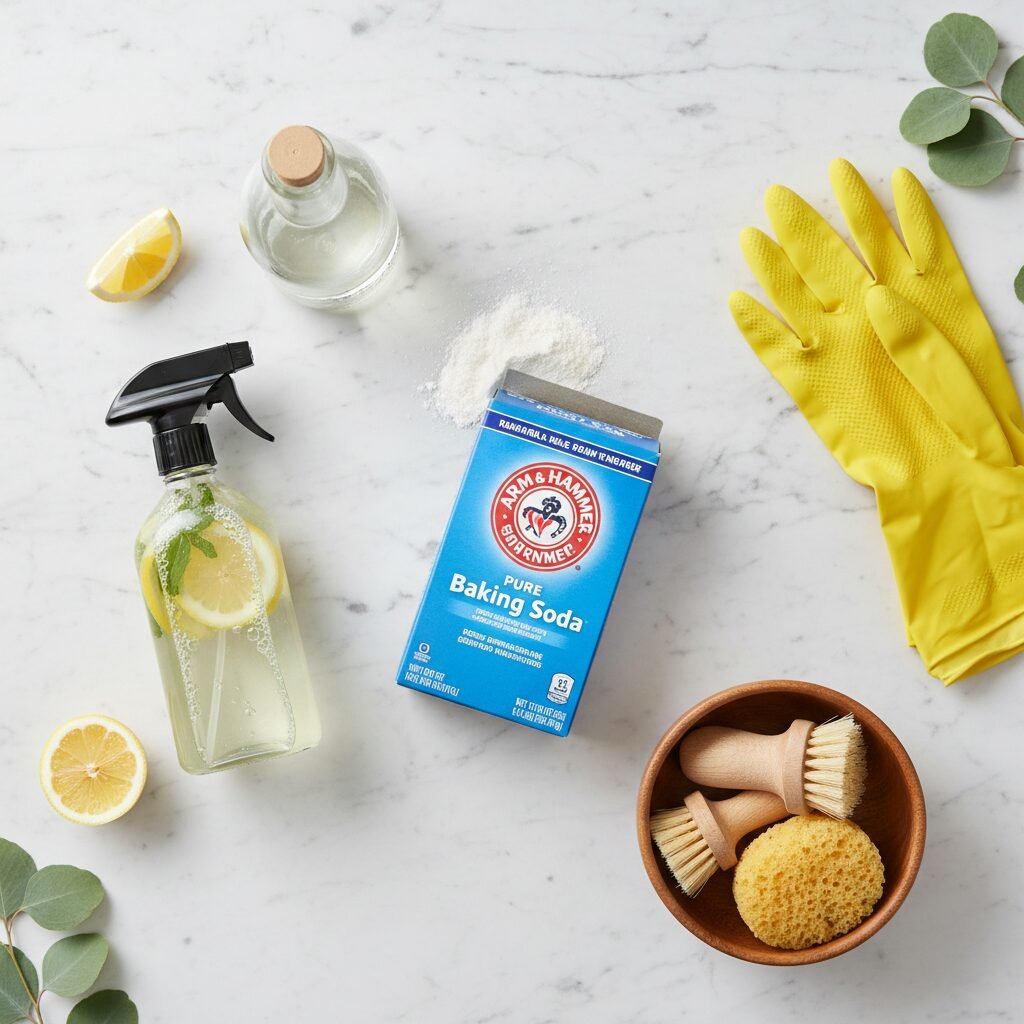
The beauty of this method is its simplicity. You likely have most, if not all, of these items in your pantry right now. There’s no need for special trips to the store or deciphering complicated chemical labels. Here’s everything you’ll need to get that oven sparkling safely.
- Baking Soda: The star of the show! Baking soda (sodium bicarbonate) is a fantastic, all-natural abrasive that is gentle yet effective at breaking down baked-on grease and grime. You’ll need about a half cup to a full cup, depending on the size of your oven.
- White Vinegar: This is your natural degreaser and rinsing agent. The mild acid in vinegar reacts with the baking soda, creating a gentle fizzing action that helps lift the remaining grime. You’ll want to put this in a spray bottle.
- Water: Simple, pure H2O to help create your cleaning paste.
- A Spray Bottle: For the vinegar, to ensure you get an even coating for the final ‘rinse’.
- A Small Bowl: For mixing your baking soda paste.
- Rubber Gloves: While the ingredients are non-toxic, oven grime is not! Protect your hands and nails with a good pair of gloves. This also helps prevent skin dryness from the baking soda.
- A Non-Abrasive Scraper or Old Spatula: A plastic paint scraper or an old silicone spatula is perfect for helping to lift any particularly stubborn, burnt-on spots without scratching your oven’s interior.
- Soft Cloths or Sponges: You’ll need these for wiping out the paste and giving the oven its final polish.
That’s it! With this simple toolkit, you’re fully equipped to tackle the job without a single harsh chemical or worrisome fume.
The Step-by-Step Guide to a Sparkling, Fume-Free Oven
Your Gentle and Effective Cleaning Process
Patience is key to this natural cleaning method. While it takes longer than a chemical spray, the peace of mind and fume-free results are more than worth it. Set aside some time in the evening to start, and you’ll wake up to an oven that’s ready for its final polish.
- Empty the Oven: First things first, remove everything from the oven. This includes the oven racks, any thermometers, pizza stones, or stray baking sheets. Set the racks aside for now; we’ll clean them separately.
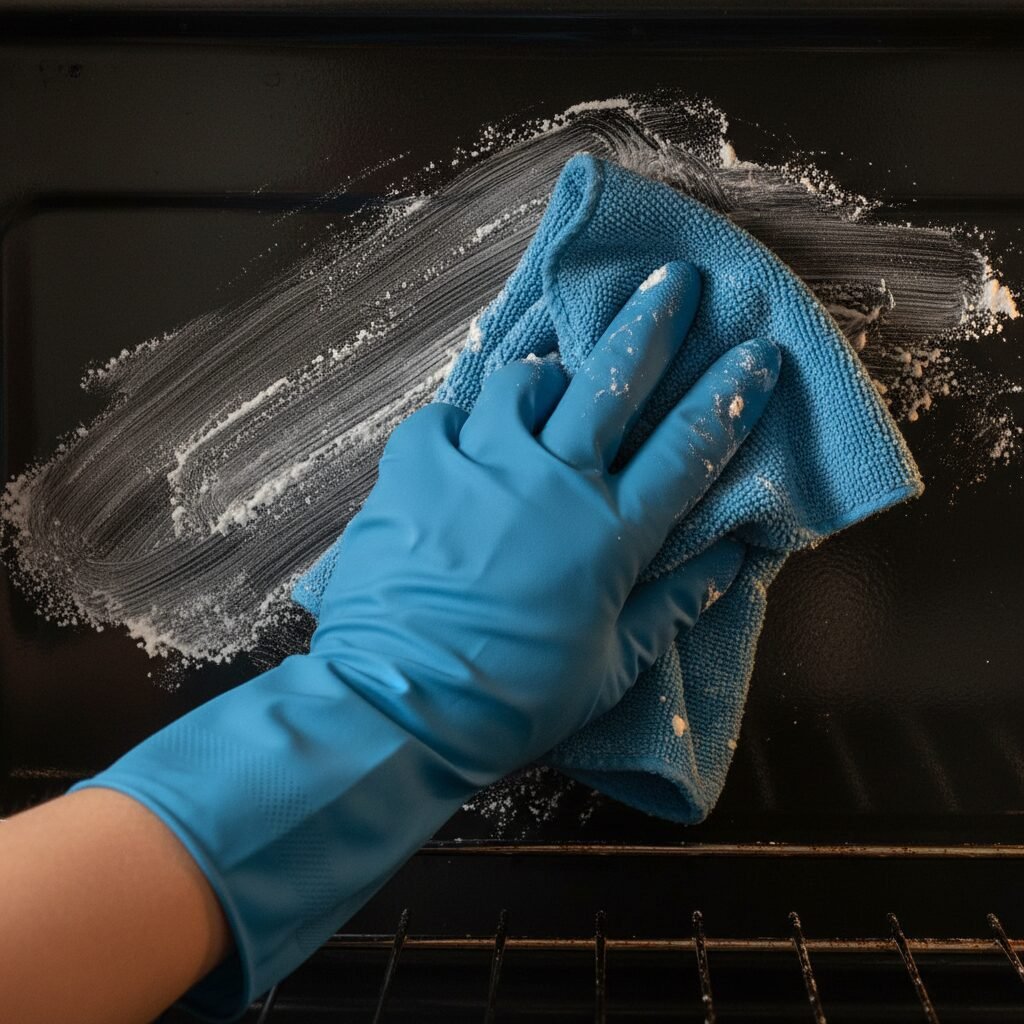
- Mix Your Baking Soda Paste: In your small bowl, mix about a half-cup of baking soda with 3-4 tablespoons of water. Stir until you have a thick, spreadable paste, similar to the consistency of frosting. Add more water or baking soda as needed to get it just right.
- Apply the Paste: Put on your gloves and get ready to get a little messy! Using your hands or a spatula, spread the baking soda paste all over the interior surfaces of your oven. Focus on the bottom, sides, and back, paying extra attention to any greasy or burnt-on areas. Try to avoid the heating elements as much as possible. The paste may turn a brownish color as you apply it—that’s a good sign it’s already starting to work on the grime!
- Let It Work Its Magic Overnight: This is the most important step. Close the oven door and let the baking soda paste sit for at least 12 hours, or overnight. This extended time allows the baking soda to break down and soften all the tough, baked-on food and grease without any scrubbing on your part.
- Clean the Oven Racks: While the oven is resting, you can tackle the racks. The easiest way is to place them in an empty bathtub on top of an old towel (to prevent scratches). Sprinkle them generously with baking soda, then spray with vinegar. Once the fizzing subsides, fill the tub with hot water until the racks are submerged and let them soak overnight. In the morning, a quick scrub with a non-abrasive brush should remove any remaining residue.
- Wipe Out the Oven: The next morning, take a damp cloth and begin wiping out the dried baking soda paste. A lot of the grime will come away with it. Use your plastic scraper to gently nudge any stubborn spots.
- The Vinegar Rinse: Pour your white vinegar into the spray bottle. Spray it everywhere inside the oven where you still see baking soda residue. The vinegar will react with the baking soda and start to foam and fizz. This final chemical reaction helps to lift the last bits of grime.
- Final Wipe-Down: Take a clean, damp cloth and wipe out the oven thoroughly. You may need to rinse your cloth a few times. Keep wiping until all the baking soda and vinegar residue is gone. The result will be a surprisingly shiny, clean, and—most importantly—fume-free oven.
For Dads and Partners: How You Can Be the Nesting Hero
Teamwork Makes the Dream Work
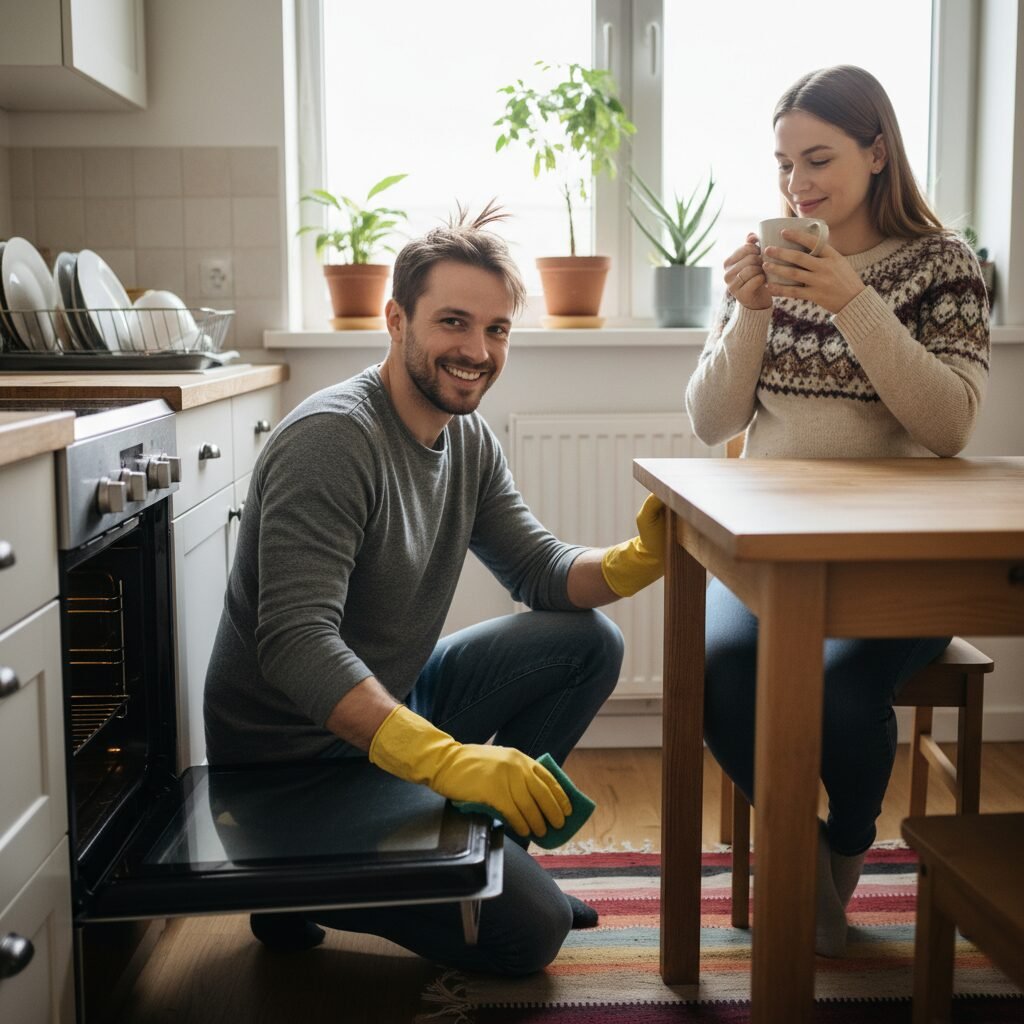
To all the partners and dads-to-be, this is a perfect opportunity to provide incredible support. The nesting phase can be physically and emotionally demanding for your pregnant partner. While she might have the urge to do everything herself, tasks that involve bending, kneeling for long periods, and scrubbing can become increasingly uncomfortable and strenuous as the pregnancy progresses.
Take the Lead on Physical Tasks
Volunteering to take over the oven-cleaning project is a fantastic way to show you care. You can handle the physical aspects of applying the paste, kneeling to wipe out the interior, and scrubbing the racks. This not only saves your partner from physical strain but also gives her peace of mind, knowing that the task is being handled safely and that you’re working together to create a healthy home for your baby.
“Pregnancy is a partnership. Sharing tasks, especially physical ones, builds a foundation of teamwork that will be essential when the baby arrives. Cleaning the oven might seem small, but it’s a powerful act of care and protection for your growing family.”
Make it a Team Effort
Even if you do the physical work, you can involve your partner in the process. She can be the ‘supervisor,’ mixing the paste or gathering the supplies. This allows her to satisfy the nesting urge to organize and prepare without the physical exertion. By working as a team, you’re not just cleaning an appliance; you’re actively preparing your home and your partnership for the new arrival. It’s a tangible way of saying, “We’re in this together.”
Conclusion
Embracing a Safe and Clean Home
Preparing your home for a new baby is a journey filled with love, anticipation, and a desire to create the safest space possible. By choosing this simple, fume-free method to clean your oven, you are making a powerful choice for the health and well-being of both yourself and your little one. You’ve proven that you don’t need harsh chemicals to achieve a sparkling clean result.
Remember to give yourself grace during this time. The nesting instinct is strong, but it’s also important to listen to your body and ask for help when you need it. Every step you take to create a non-toxic environment is a testament to the incredible parent you are becoming. You are building a nest, piece by piece, with care, intention, and a whole lot of love. Be proud of the thoughtful choices you’re making for your growing family.
Disclaimer: This article is for informational purposes only and does not constitute medical advice. Always consult with your healthcare provider regarding your health and safety during pregnancy.