
The Cat Litter Rule: How to Keep Baby Safe From Toxoplasmosis Without Rehoming Fluffy
The moment you see that positive pregnancy test, your world shifts. A wave of joy, excitement, and a healthy dose of anxiety washes over you as you begin to plan for your new arrival. Amidst the flood of advice from friends, family, and the internet, one piece of guidance often surfaces that can strike fear into the heart of any pet lover: “You have a cat? You have to get rid of it.”
This well-meaning but often misinformed warning stems from a concern about a parasitic infection called toxoplasmosis. For many expectant parents, the thought of rehoming a beloved furry family member is heartbreaking. We’re here to offer you both reassurance and concrete, evidence-based guidance. You can absolutely protect your growing baby without saying goodbye to your cat. This article will walk you through what toxoplasmosis actually is, the real risks involved (which are often much lower than you think), and the simple, practical steps you can take to ensure a safe and healthy pregnancy for everyone in your home—two-legged and four-legged alike.
What is Toxoplasmosis and Why is it a Concern During Pregnancy?

Understanding the Basics of Toxoplasma gondii
Before we dive into the safety measures, it’s important to understand what we’re dealing with. Toxoplasmosis is an infection caused by a single-celled parasite called Toxoplasma gondii. This parasite is found throughout the world and can infect most species of warm-blooded animals, including humans and, yes, cats. While an infection in a healthy adult is typically mild and may even go unnoticed—often feeling like a mild flu—it poses a more significant risk during pregnancy. If a pregnant person becomes infected for the first time, the parasite can cross the placenta and potentially cause serious health problems for the developing fetus, a condition known as congenital toxoplasmosis. This is why it’s a topic of such importance for expectant parents.
How Do People Get Infected?
Here is where the common narrative often gets simplified. While cats play a role in the parasite’s life cycle, they are far from the only source of infection. In fact, the most common ways people contract toxoplasmosis are:
- Eating Undercooked Meat: Consuming raw or undercooked meat (especially pork, lamb, and venison) that contains the parasite in tissue cyst form is a primary source of infection in many countries.
- Contaminated Food or Water: Ingesting food or water contaminated with the parasite. This can happen from using knives or cutting boards that touched raw meat and weren’t washed properly.
- Gardening or Contact with Soil: The parasite’s eggs (oocysts) can be present in soil or sandboxes contaminated by an infected cat’s feces. Gardening without gloves and then touching your mouth can lead to infection.
- Cat Feces: This is the one everyone worries about. A cat gets infected by eating infected prey (like a mouse or bird) or raw meat. It then sheds the parasite’s oocysts in its feces for a period of one to three weeks. You can become infected by accidentally ingesting these oocysts after handling a contaminated litter box and not washing your hands thoroughly.
It’s crucial to understand that you can’t get toxoplasmosis from petting your cat. The infection is transmitted by ingesting the microscopic oocysts, not through your cat’s fur, saliva, or a scratch.
The Real Risk: How Likely Are You to Get It From Your Cat?

Putting the Risk into Perspective
Now for the good news: the chain of events required for you to get toxoplasmosis from your indoor cat is long and has many points where it can be easily broken. Let’s look at the facts:
- Your cat must be infected. An indoor cat that eats commercial cat food and doesn’t hunt mice or birds is extremely unlikely to ever become infected with Toxoplasma gondii. The risk is primarily with cats that go outdoors and hunt or are fed a raw meat diet.
- Your cat only sheds oocysts for a short time. Even if a cat does become infected, it only sheds the parasite in its feces for a few weeks in its entire life. After that, it develops immunity and is no longer a source of transmission.
- The oocysts are not immediately infectious. This is perhaps the most important fact for cat owners. After being passed in the feces, the oocysts need 1 to 5 days to ‘sporulate’ and become infectious.
This means that as long as you scoop the litter box daily, you will be removing the feces long before the parasite has a chance to become a threat to you. When you combine this with the low probability of an indoor cat even having the parasite in the first place, the risk becomes very, very small.
Have You Already Been Exposed?
Another factor to consider is prior immunity. According to the CDC, over 40 million people in the United States may be infected with the Toxoplasma parasite. Once you’ve been infected, you typically have immunity for life. If you were infected more than 6 months before becoming pregnant, there is generally no risk of passing it to your baby. Your doctor can perform a simple blood test to see if you have antibodies, which would indicate a past infection and existing immunity. If you’ve been a longtime cat owner or avid gardener, there’s a reasonable chance you may already be immune.
The ‘Cat Litter Rule’ and Other Practical Safety Measures
Your Action Plan for a Safe Pregnancy
Knowledge is power, and now that you understand the real risks, you can implement a simple and effective safety plan. The goal is to create barriers between you and any potential source of the parasite.
The Golden Rule of the Litter Box
The number one, most effective way to eliminate the risk from cat litter is to avoid cleaning it altogether during your pregnancy.
- Delegate the Duty: If you have a partner, spouse, roommate, or even a willing older child, now is the time to delegate. Make them the official ‘Designated Scooper’ for the next nine months.
What If You MUST Clean the Litter Box?
We understand that not everyone has someone who can take over this chore. If you are the only one who can clean the litter box, you can still do it safely by following these steps without exception:
- Scoop Every Single Day. As we learned, the oocysts are not infectious for at least 24 hours. Daily scooping is your most powerful tool.
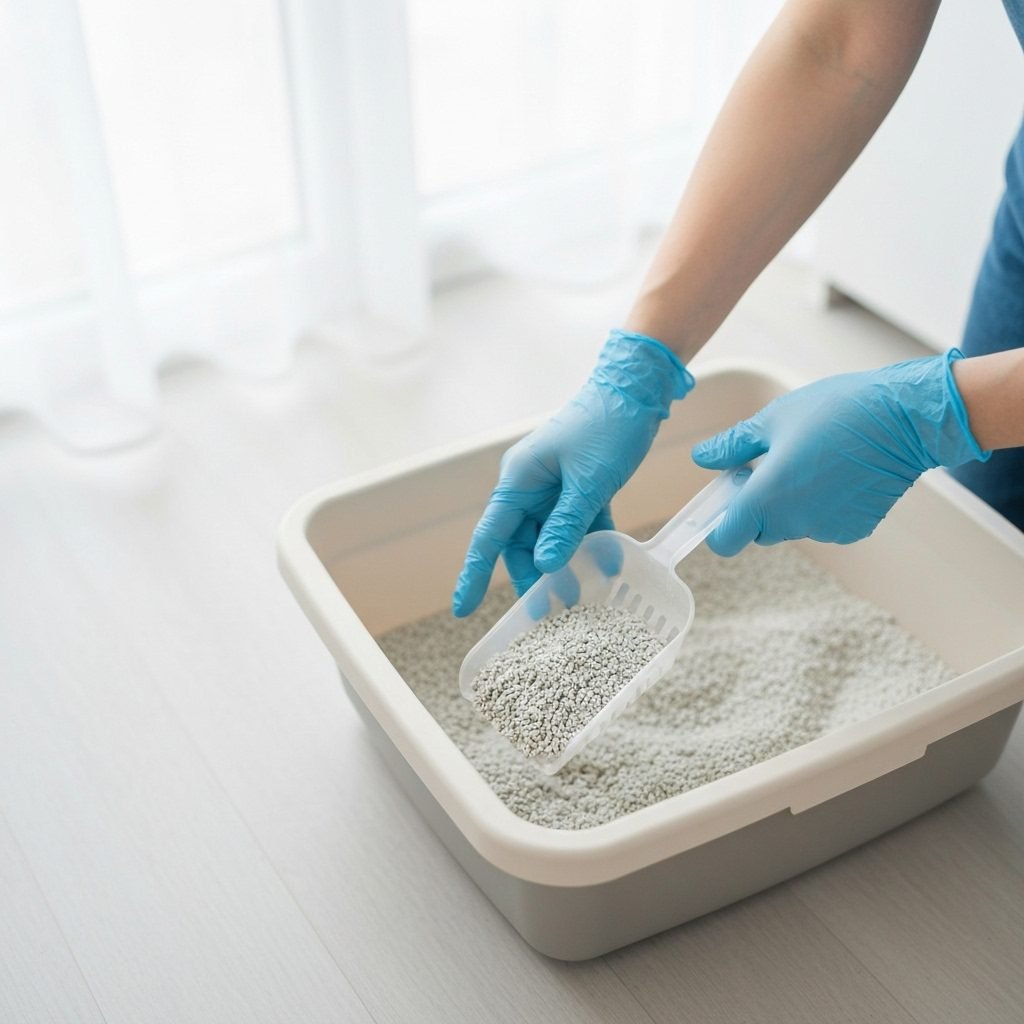
- Wear Disposable Gloves. Always wear gloves when handling the litter box and scoop. When you’re done, dispose of them immediately.
- Consider a Mask. While ingestion is the route of infection, wearing a simple face mask can help prevent you from accidentally touching your nose or mouth.
- Wash Hands Thoroughly. After you’ve disposed of the waste and the gloves, wash your hands with soap and warm water for at least 20 seconds. This is non-negotiable.
- Avoid a Full Litter Change. If possible, have someone else do the complete emptying and scrubbing of the box. If you must do it, do it outside or in a well-ventilated area and wash your hands meticulously afterward.
Beyond the Litter Box: Comprehensive Protection
Remember, the litter box isn’t the only risk factor. To fully protect yourself and your baby, incorporate these habits into your daily life:
- Cook Meats Thoroughly: Use a meat thermometer to ensure all meats are cooked to a safe internal temperature (145°F for whole cuts, 160°F for ground meats, 165°F for poultry).
- Wash Your Hands: Wash hands with soap and water after handling raw meat, soil, or unwashed vegetables.
- Clean Kitchen Surfaces: Keep cutting boards, utensils, and counters that have touched raw meat clean.
- Wash Produce: Thoroughly wash or peel all fruits and vegetables before eating them.
- Wear Gloves for Gardening: If you love to garden, don’t stop! Just wear gloves and wash your hands well when you’re finished.
- Keep Your Cat Indoors: This will prevent them from hunting and becoming infected in the first place.
A Special Note for Dads and Partners: How You Can Be the Hero

Stepping Up for Your Family’s Health
To all the new dads, partners, and support people out there: this is your moment to shine. Pregnancy can be physically and emotionally demanding for your partner, and they are already carrying a significant mental load. Taking one major worry off their plate is an incredible act of love and support. Volunteering to take over litter box duty is not just a chore; it’s a direct contribution to the health and safety of your baby and the peace of mind of your partner.
Being a supportive partner means actively looking for ways to reduce stress and share responsibility. Taking on the litter box is a simple, tangible way to say, ‘I’m in this with you, and I’ve got your back.’
By handling this one task, you eliminate a daily source of anxiety for the expectant parent. It’s a small change in routine for you that makes a huge difference for them. We’ve created a simple protocol you can follow to ensure you’re doing it safely and effectively.
| Task | Frequency | Key Safety Tip |
|---|---|---|
| Scoop Feces | Daily | Removes waste before parasite can become infectious. |
| Wear Gloves | Every Time | Prevents any contact with your hands. |
| Bag Waste Securely | Daily | Contains waste and prevents spills. |
| Wash Hands | Every Time | The final, most important step for hygiene. |
| Full Litter Change | Weekly (or as needed) | Best done in a well-ventilated area or outside. |
Embrace the role of family protector. It’s one of the first of many ways you will show up for your child, and it starts right now.
When to Talk to Your Doctor: Symptoms and Testing

Staying Informed and Proactive
While the risk is low and the prevention methods are highly effective, it’s always best to be informed and communicate openly with your healthcare provider. If you have any concerns about toxoplasmosis, you should not hesitate to bring them up at your next prenatal appointment.
Symptoms of Toxoplasmosis
In most healthy adults, a new toxoplasmosis infection causes either no symptoms at all or mild, flu-like symptoms that can be easily mistaken for another illness. These can include:
- Swollen lymph nodes, especially in the neck
- Muscle aches and pains
- Headache
- Fever
- A general feeling of being unwell (malaise)
Because these symptoms are so general, it’s impossible to diagnose based on them alone. That’s why communication with your doctor is key.
When to Call Your Doctor or Midwife
You should have a conversation with your provider about toxoplasmosis if:
- You are trying to conceive or have just found out you are pregnant and you own a cat, especially an outdoor cat.
- You develop flu-like symptoms during your pregnancy that you can’t explain.
- You believe you may have been exposed, for example, by accidentally eating undercooked meat or forgetting to wear gloves while gardening.
- You simply want peace of mind. Your provider can discuss your individual risk factors and order a blood test to check for immunity if you both feel it’s necessary.
Your OB-GYN or midwife is your best resource. They can provide personalized advice based on your health history and lifestyle, and they can order tests that will give you definitive answers and peace of mind. Don’t rely on Dr. Google; rely on your trusted medical professional.
Conclusion
Navigating the journey to parenthood means learning to sift through a mountain of information, separating fact from fear. The belief that you must rehome your cat during pregnancy is one of the most persistent and heartbreaking myths out there. The truth is, with a clear understanding of toxoplasmosis and a few simple, consistent precautions, you can keep your entire family safe and together.
Your furry friend is a source of comfort and love, and they can and should remain a cherished part of your growing family. By delegating litter duty, practicing good hygiene in the kitchen and garden, and maintaining open communication with your healthcare provider, you are taking all the necessary steps to protect your baby. You can confidently enjoy your cat’s purrs and cuddles throughout your pregnancy, knowing you’re making informed, safe choices for everyone you love.
Medical Disclaimer: The information provided in this article is for educational and informational purposes only and is not intended as medical advice. It is not a substitute for professional medical advice, diagnosis, or treatment. Always seek the advice of your physician or other qualified health provider with any questions you may have regarding a medical condition. Never disregard professional medical advice or delay in seeking it because of something you have read in this article.