

The Secret Weapon for a Calm Labor: Essential Oil Blends That Actually Help
The journey through labor and childbirth is a profound, transformative experience, often filled with a spectrum of emotions from anticipation to exhilaration. For many expectant parents, the desire for a calm, empowering birth experience is paramount. In this quest for comfort and control, many turn to natural support systems, and among them, essential oils have emerged as a powerful ally. As a certified Doula and Maternal Health Educator, I’ve witnessed firsthand the incredible impact that carefully chosen and safely applied essential oil blends can have on creating a more serene birthing environment.
This article is crafted for couples trying to conceive, new dads, and new parents who are exploring every avenue to prepare for a positive birth. We will delve into the world of essential oils, demystifying their use during labor, and providing you with the knowledge to harness their therapeutic properties safely and effectively. Consider this your comprehensive guide to understanding how these fragrant gifts from nature can become your ‘secret weapon’ for a calmer, more comfortable labor.
Embracing Nature’s Support: The Science Behind Essential Oils for Labor

Essential oils, often referred to as the ‘lifeblood’ of plants, are concentrated hydrophobic liquids containing volatile aromatic compounds. They are extracted from various parts of plants—flowers, leaves, bark, roots, and peels—and possess unique therapeutic properties. When we talk about using essential oils for labor, we’re primarily leveraging two key pathways: inhalation (aromatherapy) and topical application.
How Aromatherapy Works During Labor
- Olfactory System Connection: When you inhale an essential oil, its molecules travel directly to the olfactory bulbs in your nose, which are part of your limbic system. The limbic system is the brain’s emotional center, responsible for regulating mood, memory, and stress responses. This direct connection allows essential oils to quickly influence emotions, reduce anxiety, and promote relaxation.
- Neurotransmitter Release: Certain essential oils can stimulate the release of neurotransmitters like serotonin and dopamine, which are crucial for mood regulation and pain perception. For instance, lavender is known for its calming effects, while peppermint can help alleviate nausea.
Topical Application and Its Benefits
- Transdermal Absorption: When applied topically (always diluted with a carrier oil), essential oils are absorbed through the skin into the bloodstream. From there, they can exert localized effects or systemic benefits.
- Massage Support: During labor, topical application often involves massage. A gentle massage with an essential oil blend can not only deliver the oil’s therapeutic properties but also provide physical comfort, reduce muscle tension, and enhance the birthing person’s sense of support and connection.
Understanding these mechanisms helps us appreciate why essential oils are more than just pleasant scents; they are potent natural tools that, when used correctly, can profoundly impact the labor experience, offering a sense of peace, strength, and reduced discomfort.
Your Aromatic Toolkit: Key Essential Oils for a Calm Labor

Choosing the right essential oils is crucial for maximizing their benefits during labor. Each oil possesses a unique profile of properties that can address different needs, from anxiety reduction to muscle relaxation. Here’s a look at some of the most effective and commonly recommended essential oils for childbirth:
| Essential Oil | Primary Benefits for Labor | How It Helps |
|---|---|---|
| Lavender (Lavandula angustifolia) | Calming, Relaxing, Anxiety Reduction | Promotes deep relaxation, soothes nervous tension, and can help with sleep between contractions. Often used to reduce fear and promote a sense of peace. |
| Frankincense (Boswellia carterii) | Grounding, Meditative, Pain Relief | Helps to deepen breathing, reduce anxiety, and create a sense of spiritual calm. Can be applied topically to the lower back for perceived pain relief. |
| Clary Sage (Salvia sclarea) | Uterine Tonic, Contraction Support, Pain Relief | Known to be uterotonic, helping to strengthen and regulate contractions. Also offers analgesic properties and mood elevation. *Use only when labor is established.* |
| Peppermint (Mentha piperita) | Nausea Relief, Energy Boost, Headache Relief | Inhaling peppermint can quickly alleviate nausea and vomiting. Its invigorating scent can also provide a burst of energy and help with tension headaches. |
| Lemon (Citrus limon) | Uplifting, Energizing, Nausea Relief | A bright, refreshing scent that can combat fatigue, uplift mood, and reduce feelings of nausea. Great for boosting mental clarity. |
| Geranium (Pelargonium graveolens) | Balancing, Calming, Hormonal Support | Helps to balance emotions, reduce anxiety, and can be supportive for exhaustion. Its floral scent is comforting and grounding. |
| Orange (Sweet) (Citrus sinensis) | Uplifting, Calming, Mood Enhancing | Similar to lemon, sweet orange is wonderfully uplifting and can reduce anxiety and promote a sense of happiness and calm. |
Important Considerations:
- Purity is Key: Always use high-quality, therapeutic-grade essential oils from reputable sources. Purity ensures efficacy and safety.
- Individual Preference: What works for one person may not work for another. Trust your instincts and the birthing person’s preferences. Scents that are usually loved might feel overwhelming during labor.
- Consult a Professional: If you have any underlying health conditions or concerns, always consult with your healthcare provider or a qualified aromatherapist before using essential oils during pregnancy or labor.
Crafting Your Personalized Labor Blends: Recipes for Serenity and Strength

Creating your own essential oil blends allows for a truly personalized approach to labor support. These recipes are designed to address common needs during childbirth, from relaxation to energy boosts. Remember to always dilute essential oils with a carrier oil like fractionated coconut oil, almond oil, or jojoba oil before topical application. A general guideline is 2-3 drops of essential oil per teaspoon (5ml) of carrier oil for adults.
1. The ‘Calm & Grounded’ Blend (Anxiety & Relaxation)
This blend is perfect for early labor or moments when anxiety begins to creep in, promoting a sense of peace and deep relaxation.
- 3 drops Lavender essential oil
- 2 drops Frankincense essential oil
- 1 drop Geranium essential oil
- 10 ml carrier oil (for topical application) OR for diffusion, use only the essential oils in your diffuser.
Use: Diffuse in the birthing room, apply to pulse points, temples, or the back of the neck. Inhale directly from the bottle or a cotton ball.
2. The ‘Contraction Support’ Blend (Uterine Tone & Pain Perception)
Designed to support rhythmic contractions and help manage discomfort. Only use this blend when labor is established.
- 3 drops Clary Sage essential oil
- 2 drops Lavender essential oil
- 1 drop Frankincense essential oil
- 10 ml carrier oil
Use: Gently massage onto the lower back, abdomen (avoiding the uterus if preferred by the birthing person), or acupressure points during contractions.
3. The ‘Energize & Uplift’ Blend (Fatigue & Nausea)
When energy wanes or nausea becomes an issue, this blend can provide a refreshing boost.
- 3 drops Lemon essential oil
- 2 drops Peppermint essential oil
- 1 drop Sweet Orange essential oil
- 10 ml carrier oil (for topical use) OR for diffusion, use only the essential oils.
Use: Diffuse, inhale directly from a cotton ball, or apply a small amount to the wrists or temples. Avoid applying peppermint directly to the face of the birthing person as it can be too strong.
4. The ‘Breath & Focus’ Blend (Deep Breathing & Concentration)
Helps to center the mind and encourage deep, intentional breathing during intense moments.
- 3 drops Frankincense essential oil
- 2 drops Lemon essential oil
- 1 drop Peppermint essential oil
- 10 ml carrier oil (for topical use) OR for diffusion, use only the essential oils.
Use: Diffuse, or apply a small amount to the chest or under the nose (diluted). Encourage slow, deep breaths.
Creating Your Rollerball Blends:
- Choose a clean, empty 10ml rollerball bottle.
- Add the specified number of essential oil drops for your chosen blend.
- Top off the bottle with your preferred carrier oil, leaving a little space at the top.
- Secure the rollerball top and cap, then gently roll the bottle between your palms to mix.
- Label your rollerball clearly with the blend name and date.
Mastering Application: How to Safely Use Essential Oils During Labor
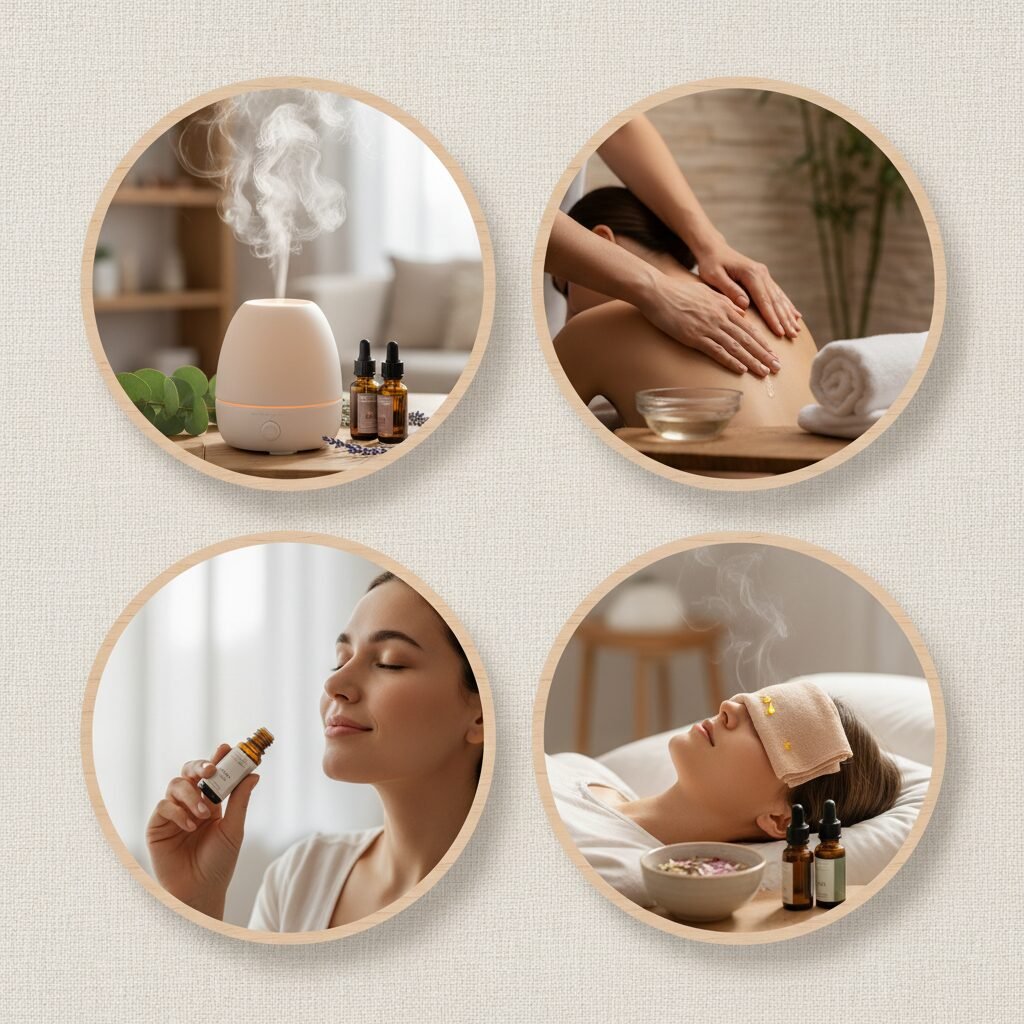
The effectiveness of essential oils during labor often depends on proper and timely application. Knowing the different methods can help you adapt to the birthing person’s needs as labor progresses.
1. Diffusion: Creating an Aromatic Atmosphere
- Method: Use an ultrasonic diffuser to disperse essential oils into the air. This is ideal for creating a consistent, calming ambiance in the birthing space.
- How to Use: Add 5-10 drops of your chosen blend to the diffuser with water (follow diffuser instructions). Start diffusing in early labor or when you arrive at your birthing location.
- Tip: Keep the diffuser near the birthing person but ensure they can move away from the scent if it becomes too intense. Have different oils ready to switch out as preferences change.
2. Topical Application: Targeted Comfort and Massage
- Method: Dilute essential oils with a carrier oil and apply them directly to the skin for localized relief and systemic absorption.
- How to Use:
- Pulse Points: Apply diluted oil to wrists, temples, or behind the ears for general calming.
- Lower Back/Sacrum: For back labor or general discomfort, massage Frankincense or Clary Sage blends onto the lower back.
- Shoulders/Neck: Use Lavender or Geranium blends for tension relief in the upper body.
- Feet: A foot massage with a calming blend can be incredibly soothing and grounding.
- Tip: Always do a patch test on a small area of skin first to check for sensitivity. Reapply every 30-60 minutes as needed.
3. Direct Inhalation: Quick Relief and Focus
- Method: Inhaling essential oils directly can provide immediate emotional and physical support.
- How to Use:
- From the Bottle: Simply open the bottle and take a few deep breaths directly from it.
- On a Cotton Ball/Tissue: Place 1-2 drops on a cotton ball or tissue and hold it near the nose.
- Aromatherapy Inhaler: These small, portable devices allow for discreet and personal inhalation. Add drops to the cotton wick inside.
- Tip: This method is excellent for quick relief from nausea (peppermint/lemon) or for refocusing during intense contractions.
4. Warm/Cool Compresses: Soothing and Invigorating
- Method: Add essential oils to water for a compress.
- How to Use:
- Warm Compress: Add 2-3 drops of Lavender or Frankincense to a bowl of warm water. Soak a washcloth, wring it out, and apply to the forehead, back of the neck, or lower back for muscle relaxation.
- Cool Compress: Add 1-2 drops of Peppermint or Lemon to a bowl of cool water. Soak a washcloth, wring it out, and apply to the forehead or neck for cooling relief and to combat nausea.
- Tip: Ensure the water is not too hot for warm compresses. Change compresses frequently to maintain desired temperature.
Remember, the birthing person’s comfort and preferences are paramount. Encourage them to communicate what feels good and what doesn’t. Flexibility and responsiveness are key.
Beyond the Scent: Important Safety Precautions and Partner Involvement

While essential oils offer incredible benefits, their potency demands careful and informed use, especially during pregnancy and labor. Prioritizing safety is paramount for both the birthing person and the baby.
Crucial Safety Precautions:
- Dilution is Non-Negotiable: Never apply undiluted essential oils directly to the skin. Always mix with a carrier oil. A safe dilution for labor is typically 1-2% (e.g., 6-12 drops per ounce of carrier oil).
- Quality Matters: Use only 100% pure, therapeutic-grade essential oils from trusted brands. Adulterated or synthetic oils can be ineffective or even harmful.
- Patch Test: Before widespread topical application, perform a patch test on a small area of skin (e.g., inner forearm) to check for any allergic reactions or sensitivities.
- Avoid Internal Use: Essential oils should generally not be ingested during pregnancy or labor unless under the direct guidance of a highly qualified healthcare professional or certified aromatherapist.
- Avoid Certain Oils: Some essential oils are contraindicated during pregnancy and labor due to their stimulating or emmenagogue (promoting menstrual flow) properties. Examples include Pennyroyal, Tansy, Wormwood, Rue, and Mugwort. Always research thoroughly or consult an expert.
- Clary Sage Caution: While beneficial for stimulating contractions, Clary Sage should only be used when labor is established and medically cleared. Avoid it in early pregnancy.
- Ventilation: When diffusing, ensure the birthing area is well-ventilated. If scents become overwhelming, stop diffusion immediately.
- Listen to the Birthing Person: Sensitivities to smells can increase dramatically during labor. What was once a favorite scent might become intolerable. Always check in with the birthing person and remove oils if they cause discomfort.
The Partner’s Pivotal Role:
For new dads and birth partners, essential oils offer a tangible way to provide comfort and support, making you an active participant in the birthing process.
- Understanding Preferences: Before labor, discuss and identify the birthing person’s preferred scents and desired blends. Create a ‘labor kit’ together.
- Application Master: Learn how to safely dilute and apply the oils. Practice massage techniques. Your touch, combined with the therapeutic scent, can be incredibly powerful.
- Scent Guardian: Be mindful of the birthing person’s reactions to scents. You are their advocate; if a scent is bothersome, be ready to remove it or switch to another.
- Emotional Support: Beyond the physical application, your calm presence and reassuring words, amplified by a soothing aroma, create a powerful supportive environment. You can diffuse oils, offer a scented compress, or gently massage their back or feet.
- Communication: Maintain open communication with the birthing person and the healthcare team about the use of essential oils.
By understanding these safety guidelines and embracing the partner’s role, essential oils can truly enhance the labor experience, turning a potentially overwhelming event into a more manageable and even beautiful journey.
Conclusion
As we conclude this exploration into the ‘secret weapon’ of essential oils for a calm labor, it’s clear that these natural compounds offer a profound opportunity to enhance the birthing experience. From reducing anxiety and managing discomfort to supporting rhythmic contractions and uplifting spirits, the right essential oil blends, used safely and intentionally, can be invaluable allies on this incredible journey.
Remember, the goal is to create an environment that feels supportive, empowering, and as comfortable as possible. Essential oils are not a replacement for medical care but a powerful complementary tool in your birth toolkit. We encourage you, as expectant parents, to educate yourselves, discuss your plans with your healthcare provider, and embrace the wisdom that nature offers.
“Birth is not only about making babies. Birth is about making mothers – strong, competent, capable mothers who trust themselves and know their inner strength.” – Barbara Katz Rothman
May your labor be filled with peace, strength, and the comforting embrace of nature’s finest scents. You are capable, you are supported, and you are ready.
Medical Disclaimer: The information provided in this article is for educational purposes only and is not intended as medical advice. Always consult with your healthcare provider, midwife, or a qualified aromatherapist before using essential oils, especially during pregnancy and labor. Essential oils are potent and should be used with caution and proper dilution. This article does not endorse the internal use of essential oils. Individual results may vary.