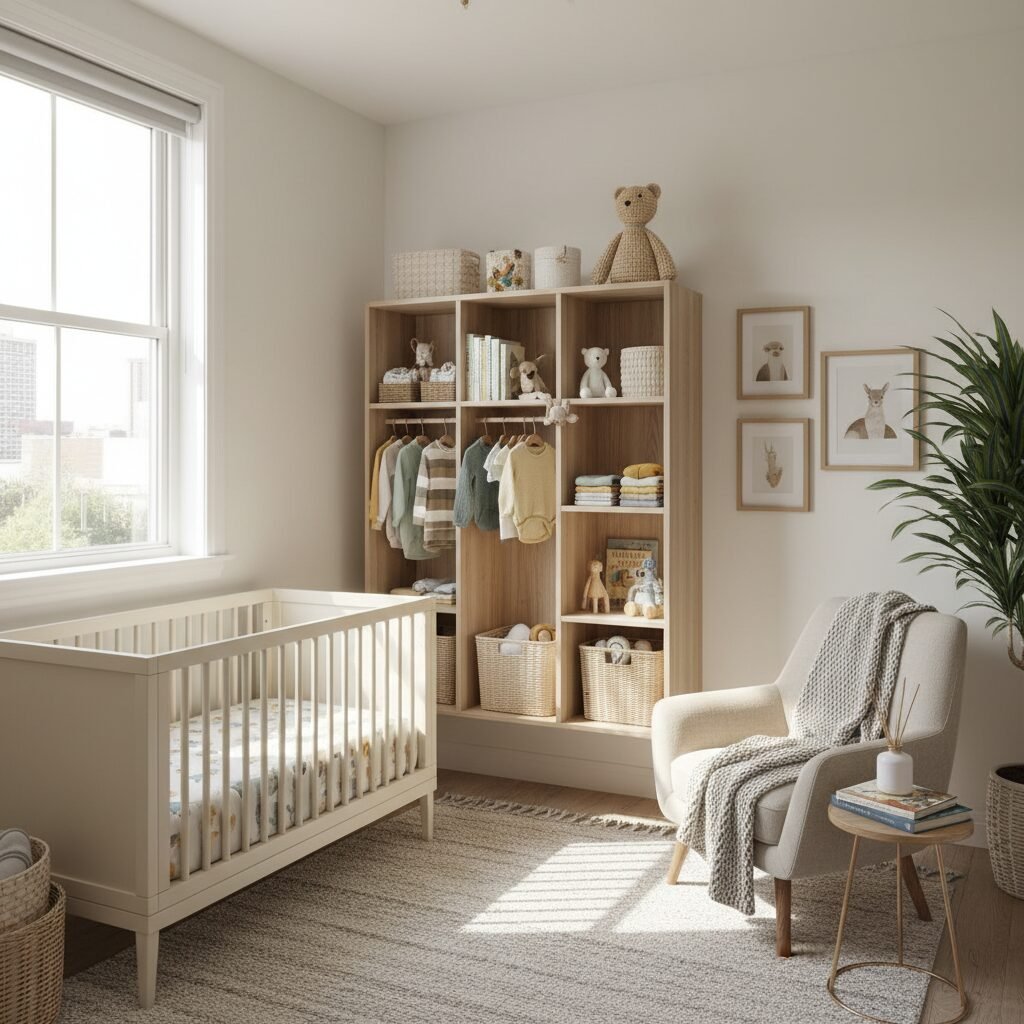
The Only Baby Registry Checklist You Need For Small Apartments
Welcoming a baby is a monumental, joyous occasion. But when you look at traditional baby registry checklists, that joy can quickly be overshadowed by a wave of anxiety, especially if you call a small apartment home. Where will it all go? Do you really need a dedicated room filled with bulky, single-use gadgets? As a doula and maternal health educator, I’m here to reassure you: not only is it possible to prepare for a baby in a compact space, it can be a beautiful exercise in mindful consumerism.
Living in a smaller home forces you to prioritize what truly matters: safety, comfort, and items that serve multiple purposes. This isn’t about deprivation; it’s about being intentional. This checklist is designed to empower you to build a registry that is practical, minimalist, and perfectly suited to your life, allowing you more physical and mental space to focus on your growing family.
The Small-Space Mindset: Prioritizing Needs Over Wants
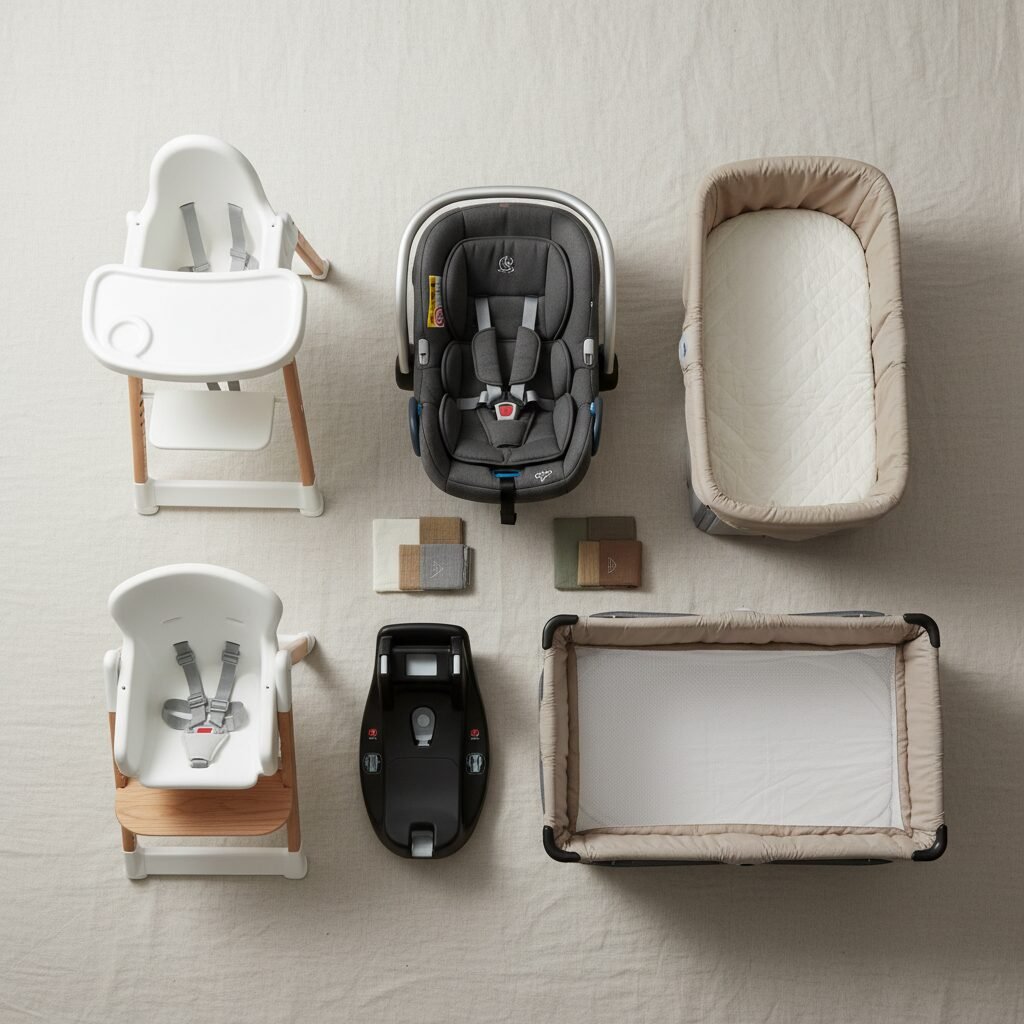
Before we even list a single item, let’s reframe our thinking. The goal is not to acquire everything a baby could use, but everything a baby truly needs. For apartment dwellers, every square foot is precious. Adopt these three core principles as you build your registry:
- Multi-Functionality is Key: Seek out products that serve two or more purposes. A dresser that doubles as a changing station, a high chair that converts to a toddler seat, or a car seat that snaps into your stroller are your best friends.
- Portability & Storability Reign Supreme: If you don’t use it daily, can it be folded, collapsed, or easily stored? Think foldable bathtubs, collapsible bouncers, and items that can be tucked away in a closet or under a bed.
- Consider the Lifespan: Choose items that grow with your child. A mini-crib that converts to a toddler bed or an adjustable baby carrier offers far more long-term value than something your baby will outgrow in three months.
Remember, your baby’s primary needs are simple: to be fed, to be kept clean and warm, and to be loved. The rest is just equipment. Your space, no matter its size, is more than enough to provide all the love they need.
The Nursery Nook: Sleeping, Changing, and Storage Solutions
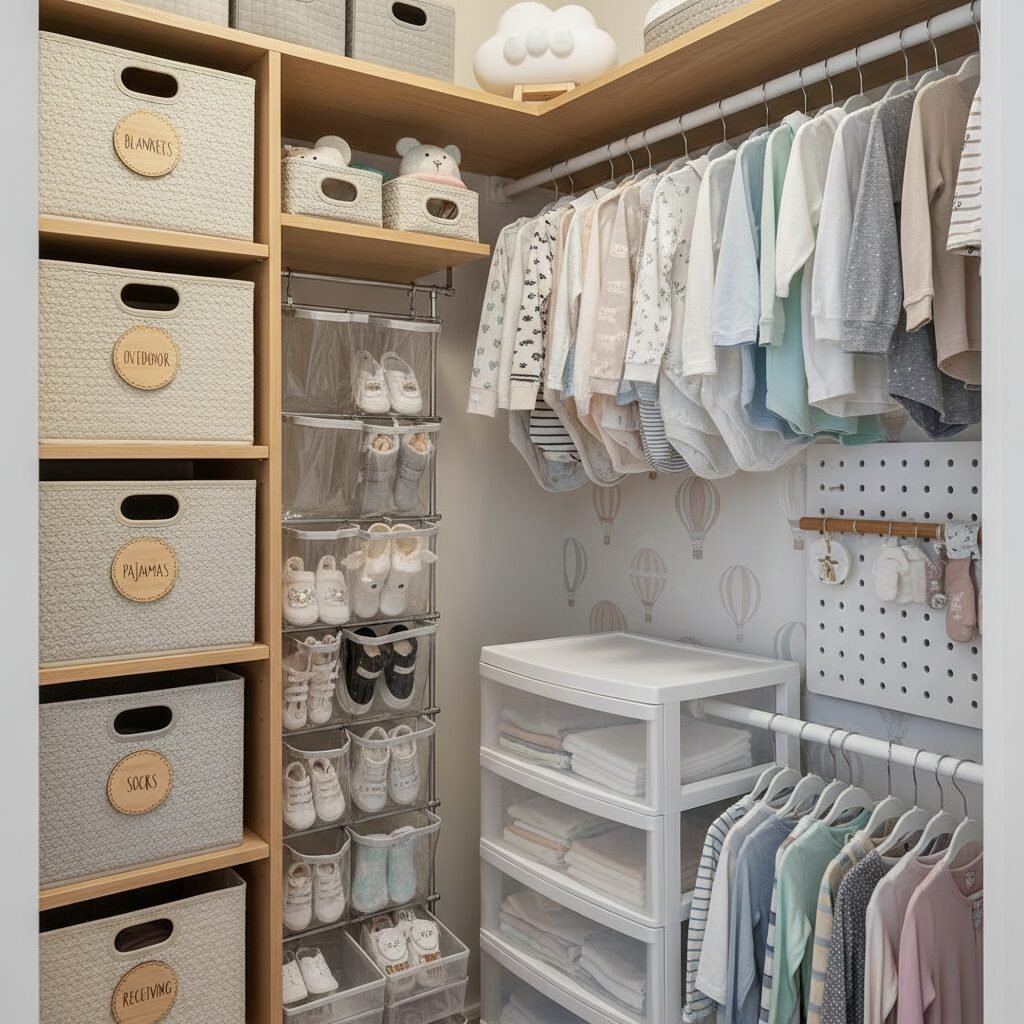
You don’t need a separate room to create a safe and serene space for your baby. A well-planned corner of your bedroom or living room can be just as effective. Here’s how to create a functional ‘nursery nook’.
Sleeping Arrangements
The baby’s sleep space is the anchor of your nook. Your primary concerns should be safety (a firm, flat surface with no loose bedding) and footprint. Here are the top contenders for small spaces:
| Option | Typical Footprint | Longevity | Best For |
|---|---|---|---|
| Bassinet | Small (approx. 20″x35″) | 3-5 months | Keeping baby in your room for the first few months; maximum portability. |
| Mini-Crib | Medium (approx. 25″x40″) | 18-24 months (some convert) | A longer-term solution than a bassinet without the bulk of a full-size crib. |
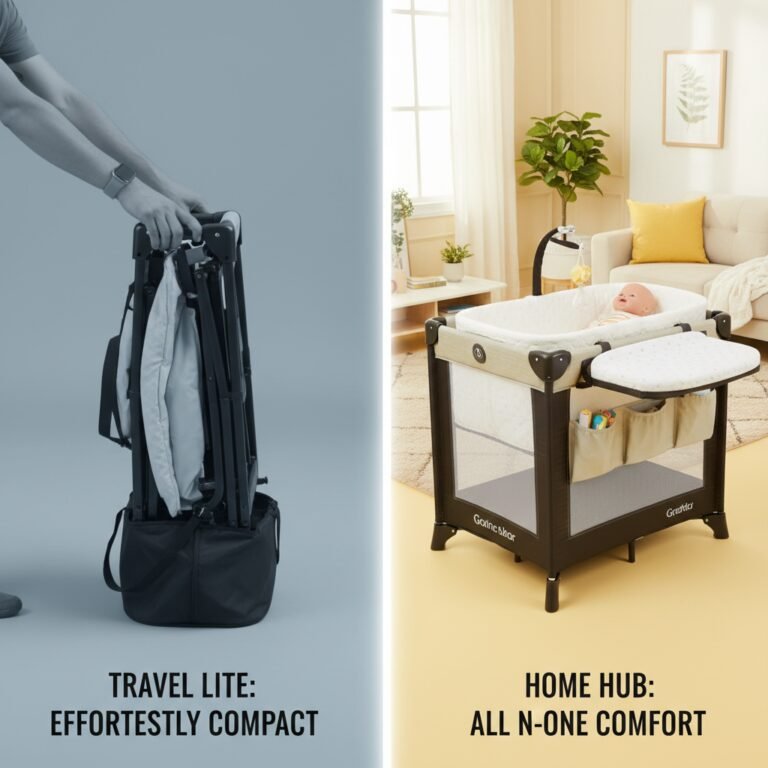
| Pack-n-Play | Medium (approx. 28″x40″) | Up to 3 years (as play yard) | The ultimate multi-functional item: sleep, play, and travel in one. |
Changing Station
A standalone changing table is often the first large item to cut from a small-space list. Instead, opt for a more streamlined solution:
- Dresser-Top Station: The most popular solution. Secure a waterproof changing pad with non-slip grips to the top of a sturdy, low dresser. Use drawer organizers for diapers, wipes, and creams.
- Portable Changing Pad: A simple, foldable, waterproof pad that you can lay on your bed or the floor. This can be stored in a drawer when not in use.
Smart Storage
In a small apartment, you must think vertically.
- Vertical Shelving: Install narrow, wall-mounted shelves above the dresser to store books, monitors, and decorative items.
- Over-the-Door Organizers: Use a pocket organizer on the back of a closet or bedroom door for shoes, swaddles, and health supplies.
- Under-Crib Bins: Low-profile rolling bins that slide under the crib are perfect for storing extra bedding, sleep sacks, or bulk diaper purchases.
Feeding & Diapering: Compact Solutions for Daily Routines
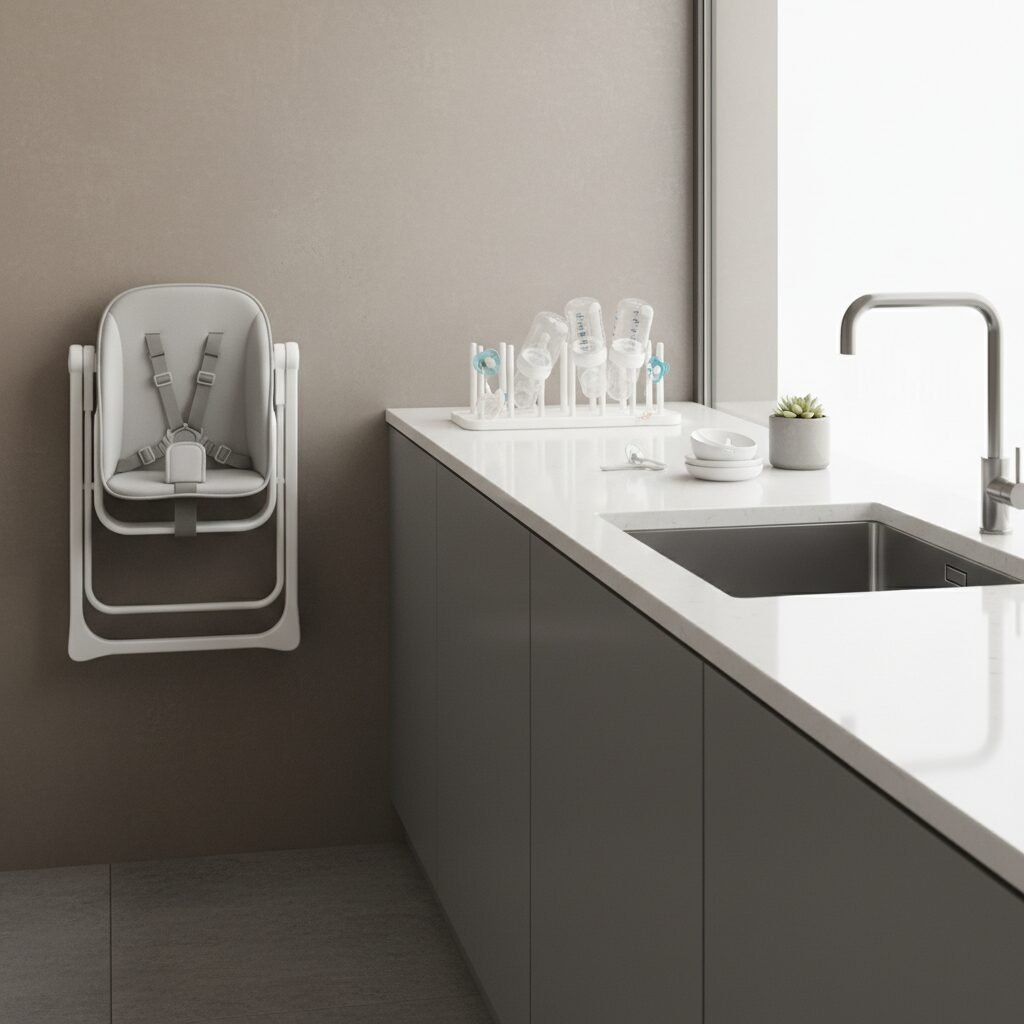
The daily routines of feeding and diapering generate the most gear. But with smart choices, you can keep your kitchen and living areas from being overrun.
Feeding Essentials
Whether you are breastfeeding or formula-feeding, you can keep your setup minimal.
- Nursing Nook: Instead of a bulky glider, make a corner of your existing sofa a comfortable nursing station. All you need is a good nursing pillow (like the My Brest Friend or Boppy), a small side table for a water bottle and snacks, and perhaps a footstool.
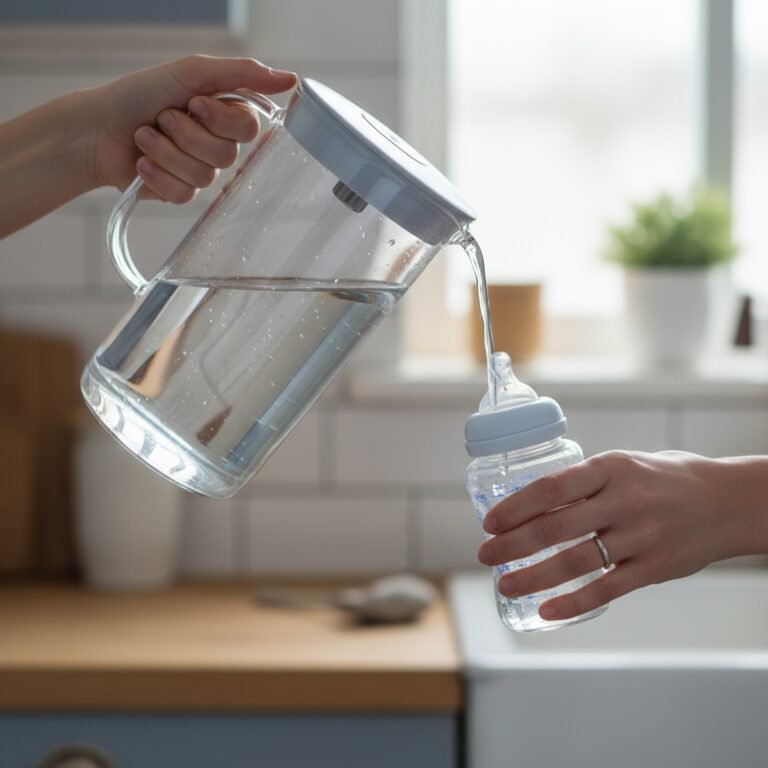
- Bottle Feeding Gear: You don’t need a countertop-hogging sanitizer. A large pot for boiling works perfectly well. For warming, a simple mug of hot water is just as effective as an electric warmer. Look for bottle drying racks that are collapsible or have a slim profile.
- The High Chair: This is a notoriously bulky item. Consider these space-saving alternatives:
- Clip-on High Chair: Attaches directly to most sturdy tables, taking up zero floor space.
- Foldable High Chair: A full-featured chair that can be collapsed and stored in a pantry or closet between meals.
Diapering Duty
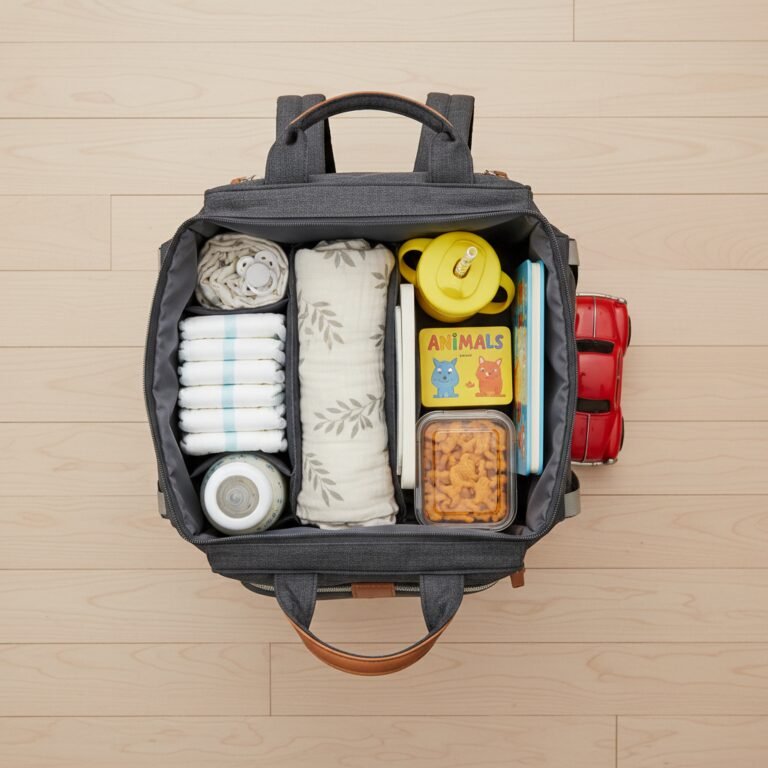
A portable diaper caddy is your command center. Stock it with diapers, wipes, cream, and a portable changing pad, and you can handle a diaper change in any room. When it comes to diaper disposal, a large, dedicated pail can be an odor-trap in a small apartment. Many families find it more effective to use small, scented disposable bags (or a reusable wet bag for cloth diapers) and take the trash out daily.
Bath, Health, and Travel: Portable and Storable Essentials

These categories are full of potential clutter. Focus on items that are compact, portable, and essential for safety and ease of movement.
Bath Time
A full-sized plastic baby tub is a storage nightmare. Opt for one of these instead:
- Foldable Baby Bathtub: These clever tubs collapse nearly flat, allowing you to slide them beside a vanity or hang them from a hook.
- Sink Insert: For newborns, a cushioned insert (like the Puj Tub) fits in your bathroom or kitchen sink, cradling the baby securely. It can be hung flat to dry.
Health & Safety
Your baby’s health kit doesn’t need its own cabinet. A single, well-organized box or pouch should contain everything you need:
- A quality digital thermometer
- Nasal aspirator (the NoseFrida is a parent favorite)
- Infant nail clippers or file
- Saline drops
- Infant Tylenol (consult your pediatrician on dosage and use)
- A simple first-aid kit with bandages and antiseptic wipes
Getting Around: Gear for On-the-Go
Navigating city sidewalks, public transport, and tight apartment hallways requires strategic gear choices.
| Gear Type | Best For | Space Consideration |
|---|---|---|
| Baby Carrier/Sling | Hands-free errands, public transit, calming a fussy baby. | Takes up virtually no space. An absolute essential for apartment living. |
| Lightweight/Travel Stroller | Long walks, carrying groceries, day trips. | Look for a one-handed, compact fold. Many can be stored in a front hall closet. |
| Infant Car Seat | Essential for anyone who owns a car or uses ride-shares. | Choose a lightweight model. Many are part of a ‘travel system’ that clicks directly into a compatible stroller. |
For many apartment dwellers, a high-quality baby carrier and a lightweight stroller are the perfect combination, offering flexibility for any situation without sacrificing your entire entryway.
The Ultimate Small-Space Registry Checklist
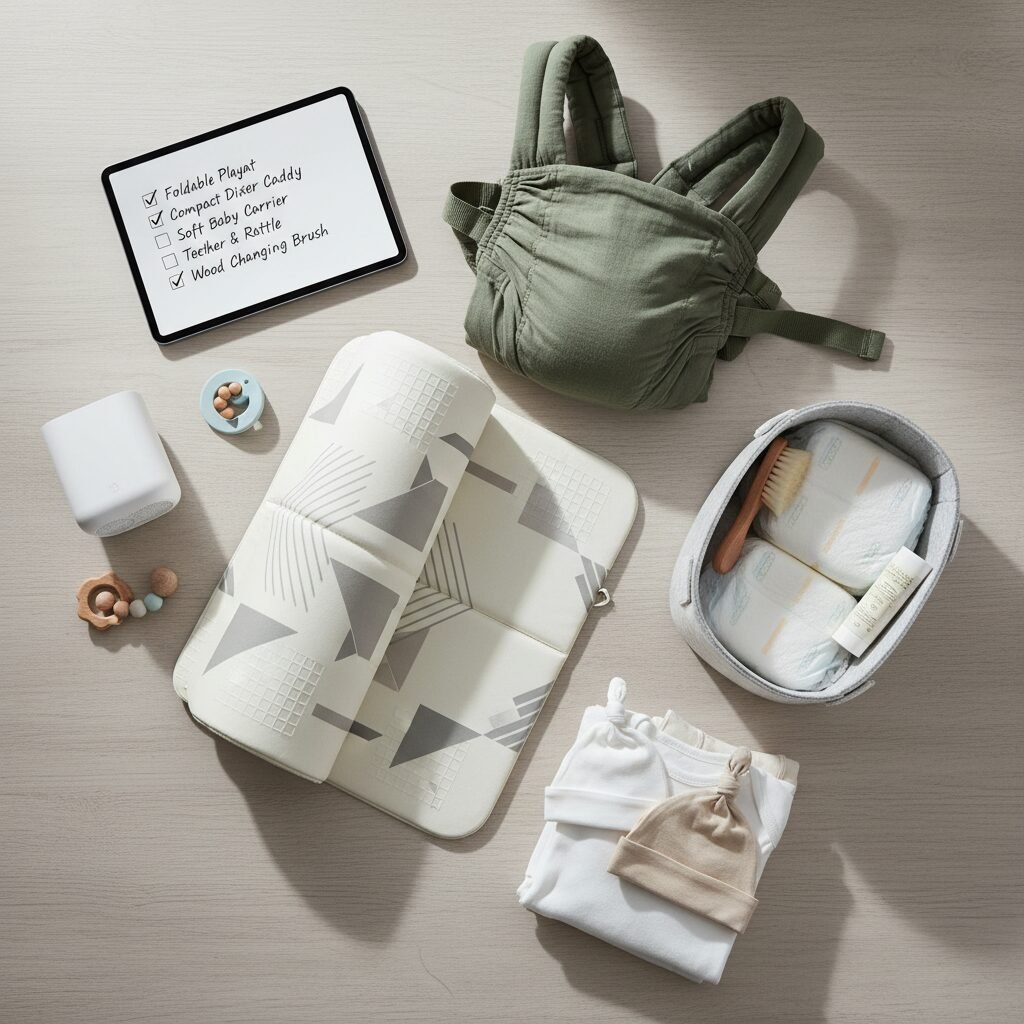
Here is a consolidated checklist. Screen-shot this or add these specific types of items to your registry, always keeping our core principles—multi-functional, storable, and long-lasting—in mind.
Nursery & Sleep
- Sleep Space: Mini-Crib or Bassinet or Pack-n-Play with bassinet insert
- Mattress: Firm, waterproof, and fits your chosen sleep space perfectly
- Bedding: 3-4 fitted sheets and 3-4 waterproof mattress protectors
- Swaddles/Sleep Sacks: 4-6 wearable blankets or swaddles
- Sound Machine: A must-have for drowning out apartment noise
- Blackout Curtains: Essential for naptime success
Diapering
- Diapers & Wipes: A small supply to start (don’t overbuy one size)
- Diaper Cream: One tube of your preferred brand
- Changing Pad: Waterproof pad to place on a dresser or bed
- Diaper Caddy: To keep supplies organized and portable
Feeding
- Nursing/Feeding Pillow
- Bottles: 4-6 if bottle-feeding or pumping
- Bottle Brush & Drying Rack (slim or foldable model)
- High Chair: Clip-on or foldable model
- Bibs & Burp Cloths: 8-10 of each
- Breast Pump: If applicable (often covered by insurance)
Bath & Health
- Baby Bathtub: Foldable or sink-insert model
- Hooded Towels: 2-3
- Washcloths: 5-6
- Baby Soap/Shampoo
- Health & Grooming Kit: (Thermometer, nail file, nasal aspirator)
Travel & Play
- Infant Car Seat
- Stroller: Lightweight, easy-to-fold model
- Baby Carrier or Wrap
- Play Mat/Activity Gym: A foldable model is ideal
- A few simple toys: Soft books, rattles, stacking rings
- Diaper Bag/Backpack
What to Skip: Items You Genuinely Don’t Need in an Apartment

Part of a successful small-space registry is knowing what not to add. Politely decline these items if offered, or leave them off your list entirely. You can always buy something later if you discover a true need for it.
- Dedicated Changing Table: A dresser with a pad on top works better and provides storage.
- Wipe Warmer: An unnecessary luxury that takes up outlet and surface space. Your hands work just fine to warm a wipe.
- Large Swings and Bouncers: These have a huge footprint and a short usage window. Opt for a simple, foldable bouncer seat if you need a safe place to put baby down.
- Bottle Sterilizer: Boiling on the stovetop is free and requires no extra storage.
- Shopping Cart Cover: A blanket from your diaper bag works just as well.
- Diaper Pail: Can create more odor problems than it solves in a small, enclosed space. Daily trash removal is better.
- An Overabundance of Clothes: Babies grow incredibly fast. Start with a core wardrobe in newborn and 0-3 month sizes. People will gift you more.
Conclusion
Preparing for a baby in a small apartment is not about compromise; it’s about clarity. By focusing on smart, multi-functional, and essential items, you create a home environment that is calm, organized, and ready to welcome your new addition. You are giving your child the greatest gift of all: parents who are less stressed about clutter and more present to enjoy every precious moment. Trust your instincts, embrace minimalism, and remember that the size of your home has no bearing on the size of your love. You have everything you need to be a wonderful parent in the space you have.