

The First Postpartum Poop: How to Make It Less Terrifying
Of all the things new parents are told to prepare for—the sleepless nights, the endless diapers, the overwhelming love—there’s one topic that’s often whispered about, if mentioned at all: the first postpartum poop. For many, the thought of this first bowel movement after birth can be more frightening than labor itself. If you’re feeling a mix of dread and anxiety, please know this: you are not alone. This is an incredibly common fear, rooted in very real physical and emotional changes.
Your body has just performed a miracle, and it’s now in a state of profound healing. Factors like perineal tearing or an episiotomy, hemorrhoids, weakened pelvic floor muscles, and the side effects of medication all conspire to make this simple bodily function feel like an insurmountable challenge. The fear of pain, of tearing stitches, or of things just not ‘working’ right is valid.
As a doula and maternal health educator, my goal is to demystify this experience and replace fear with knowledge and confidence. This guide is your supportive companion, offering gentle, fact-based strategies to prepare your body, create a comfortable environment, and navigate this milestone with as much ease as possible. We’ll cover everything from nutrition and hydration to a step-by-step bathroom toolkit, ensuring you and your partner feel equipped and empowered.
Understanding the ‘Why’: The Physical and Psychological Hurdles
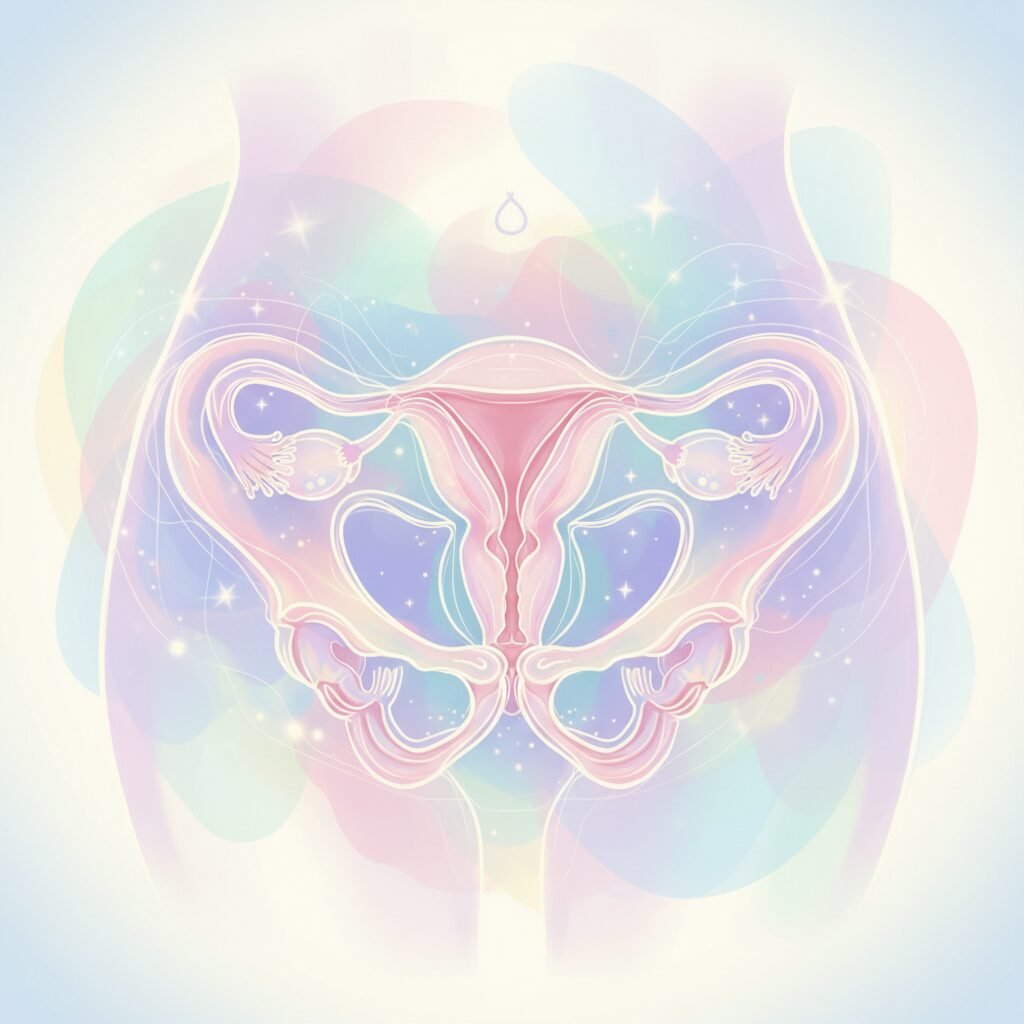
Understanding the ‘Why’: The Physical and Psychological Hurdles
To effectively manage the first postpartum poop, it helps to first understand exactly why it feels so daunting. The challenge is a combination of physiological changes from pregnancy and birth, combined with a heavy dose of psychological anxiety. Acknowledging these factors is the first step toward addressing them with compassion.
The Physical Realities of Postpartum Recovery
Your body undergoes immense stress during childbirth. Several physical factors directly impact your digestive and pelvic systems:
- Perineal Trauma: Whether you experienced a natural tear or had a surgical cut (episiotomy), the area between your vagina and anus is tender, swollen, and healing. The fear of ripping stitches or causing more pain is the number one concern for most new mothers.
- Hemorrhoids: The intense pressure of pushing during labor often leads to swollen and painful hemorrhoids. This can make the idea of a bowel movement excruciating.
- Weakened Muscles: Your abdominal and pelvic floor muscles have been stretched to their limit. These are the very muscles that help you have a bowel movement, and their temporary weakness can make it difficult to coordinate the process effectively.
- Hormonal Shifts: High levels of the hormone progesterone during pregnancy slow down your entire digestive tract. These levels don’t drop instantly after birth, meaning constipation can be an ongoing issue.
- Dehydration and Medication: Labor is a marathon, and it’s easy to become dehydrated. If you’re breastfeeding, your body’s demand for water increases even more. Additionally, common postpartum medications, such as iron supplements to treat anemia or opioid pain relievers (especially after a C-section), are notorious for causing constipation.
The Psychological Weight of the First Poop
The mental and emotional component is just as significant as the physical one. Don’t underestimate the power of your mind in this process.
- Fear of Pain: This is the most straightforward and powerful psychological barrier. Your brain is trying to protect you from what it anticipates will be a painful experience, causing you to subconsciously clench and hold back.
- Post-Birth Trauma: If you had a difficult or traumatic birth experience, you might feel a disconnect from or a lack of trust in your body. This can manifest as anxiety around normal bodily functions.
- Loss of Control: After feeling like your body was taken over by pregnancy and labor, you may crave a sense of control. The inability to predict or manage this first bowel movement can feel like yet another loss of autonomy.
Remember, your body is not broken—it is healing. Approaching this process with patience and gentleness is a profound act of self-care.
Setting Yourself Up for Success: Preparation Is Key
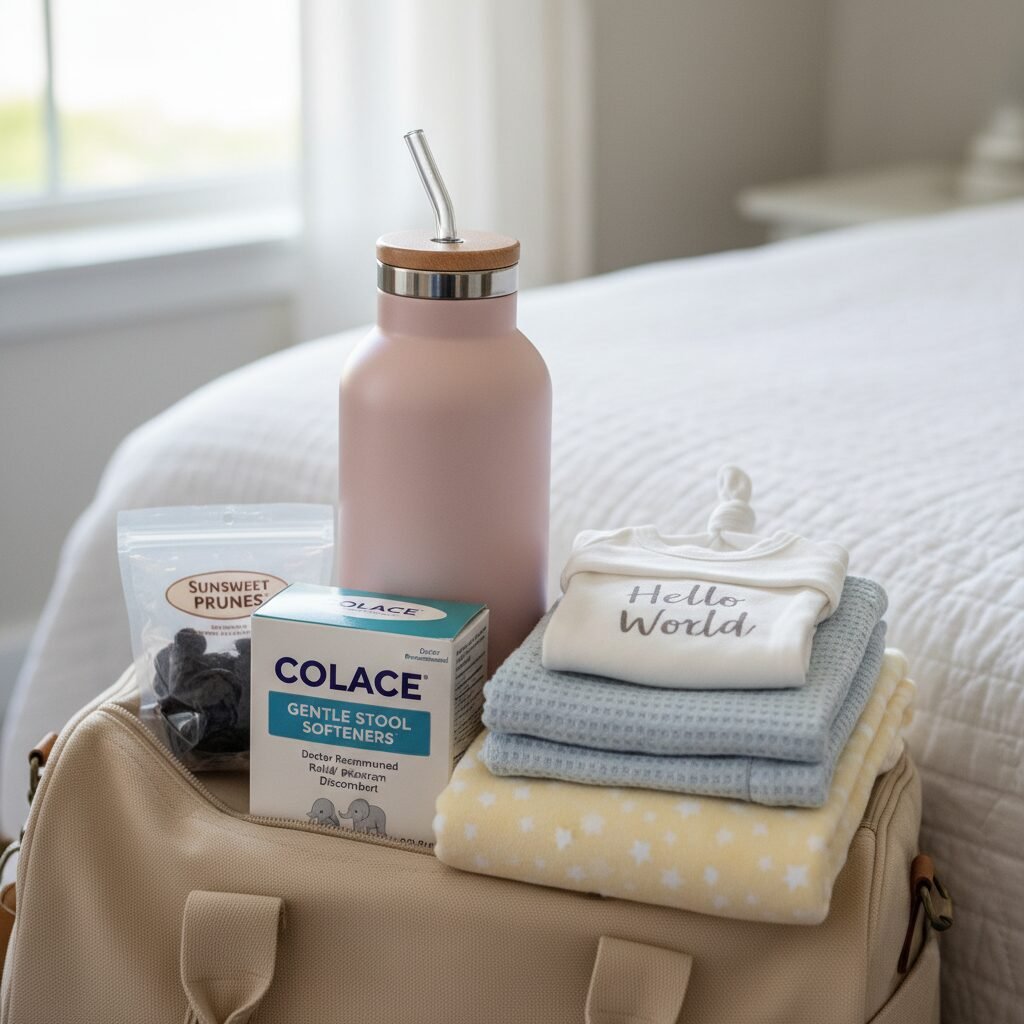
Setting Yourself Up for Success: Preparation Is Key
The best way to ease anxiety is with proactive preparation. You can start taking gentle steps in the hospital, and even before, to make your first postpartum bowel movement a smoother process. It’s all about creating the right internal and external conditions for success.
Immediate Actions in the Hospital or Birthing Center
Your recovery begins the moment your baby is born. Don’t wait until you feel the urge to go; start preparing right away.
- Advocate for a Stool Softener: This is non-negotiable. As soon as you are settled in your recovery room, ask your nurse for a gentle stool softener (like docusate sodium). It doesn’t force a bowel movement but works by drawing more water into your stool, making it softer and easier to pass. This is a standard and highly recommended practice.
- Hydrate, Hydrate, Hydrate: Make that large hospital water jug your best friend. Sip on it constantly. Water is essential for recovery, milk production, and softening your stool. Ask your partner to be in charge of keeping it full.
- Gentle Movement: Once you are cleared by your medical team, start with slow, gentle walking. A short walk to the bathroom or a lap around the maternity ward helps stimulate your bowels and get things moving.
- Choose Your Foods Wisely: Hospital food gets a bad rap, but there are usually good options available. Opt for oatmeal, fruit, soups, and whole-wheat toast. Avoid overly processed, cheesy, or binding foods for your first few meals.
Packing Your Go-Bag for Gut Health
You can also pack a few key items in your hospital bag to support your digestive system from the start:
- High-Fiber Snacks: Don’t rely solely on the hospital vending machine. Pack things like prunes, dried apricots, granola bars with high fiber content, or whole-grain crackers.
- A Giant Water Bottle: Bring your own large, reusable water bottle with a straw. A straw makes it much easier to drink while lying down or holding a baby.
- Peppermint Tea Bags: Peppermint tea can be wonderfully soothing for the digestive system and can help alleviate gas, which often accompanies postpartum constipation. Check with your provider, but it’s generally considered safe.
Your Bathroom Toolkit: Creating a Calm and Supportive Environment
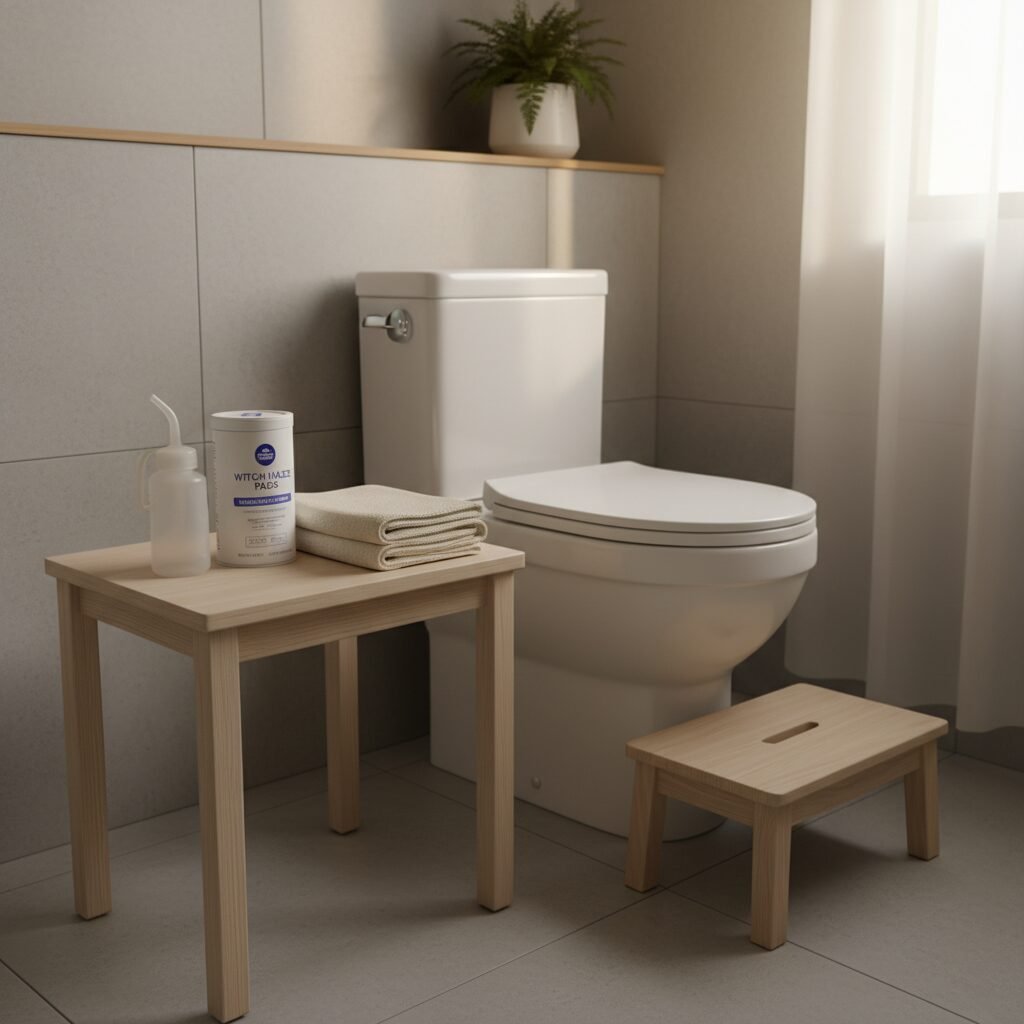
Your Bathroom Toolkit: Creating a Calm and Supportive Environment
When you feel the first urge to have a bowel movement (typically 2-4 days postpartum), being prepared can make all the difference. Think of this as creating a sanctuary for a sensitive task. Don’t rush. Give yourself time and assemble your toolkit.
- Create Privacy and Calm: Ask your partner or a support person to watch the baby so you can have at least 15-20 minutes of uninterrupted time. Close the door, dim the lights, and take a few deep, calming breaths. Rushing is your enemy.
- Assume the Position: Do not sit on the toilet with your feet flat on the floor. Prop your feet up on a small stool, a stack of books, or a purpose-built toilet stool (like a Squatty Potty). This raises your knees above your hips, which straightens the colon and mimics a natural squatting position, making it much easier to pass stool without straining.
- Utilize Your Peri Bottle: Fill your perineal irrigation bottle (the one the hospital gives you) with warm water. Gently spraying the area as you go can be soothing and can help relax the muscles.
- Provide Counter-Pressure: This is a game-changing technique. Take a clean menstrual pad or a stack of witch hazel cooling pads and gently press it against your perineum (the area with the stitches). This physical support can drastically reduce the sensation that you might tear or that ‘everything will fall out’. It provides stability and confidence.
- Breathe, Don’t Push: When you feel the urge, resist the temptation to strain. Instead, practice deep, diaphragmatic breathing. Inhale deeply, letting your belly expand. As you exhale, make a ‘moo’ or ‘grr’ sound from deep in your belly. This technique, often taught for labor, engages your transverse abdominis muscles and naturally bears down without the harshness of straining. Let your breath do the work.
- Gentle Aftercare: You did it! Now, be gentle. Do not wipe with dry toilet paper. Instead, use your peri bottle to cleanse the area thoroughly with warm water. Gently pat dry with a soft towel or high-quality, soft toilet paper. Apply any prescribed numbing sprays, creams, or fresh witch hazel pads to soothe the area.
Fueling Your Recovery: The Best Foods and Drinks for Postpartum Digestion
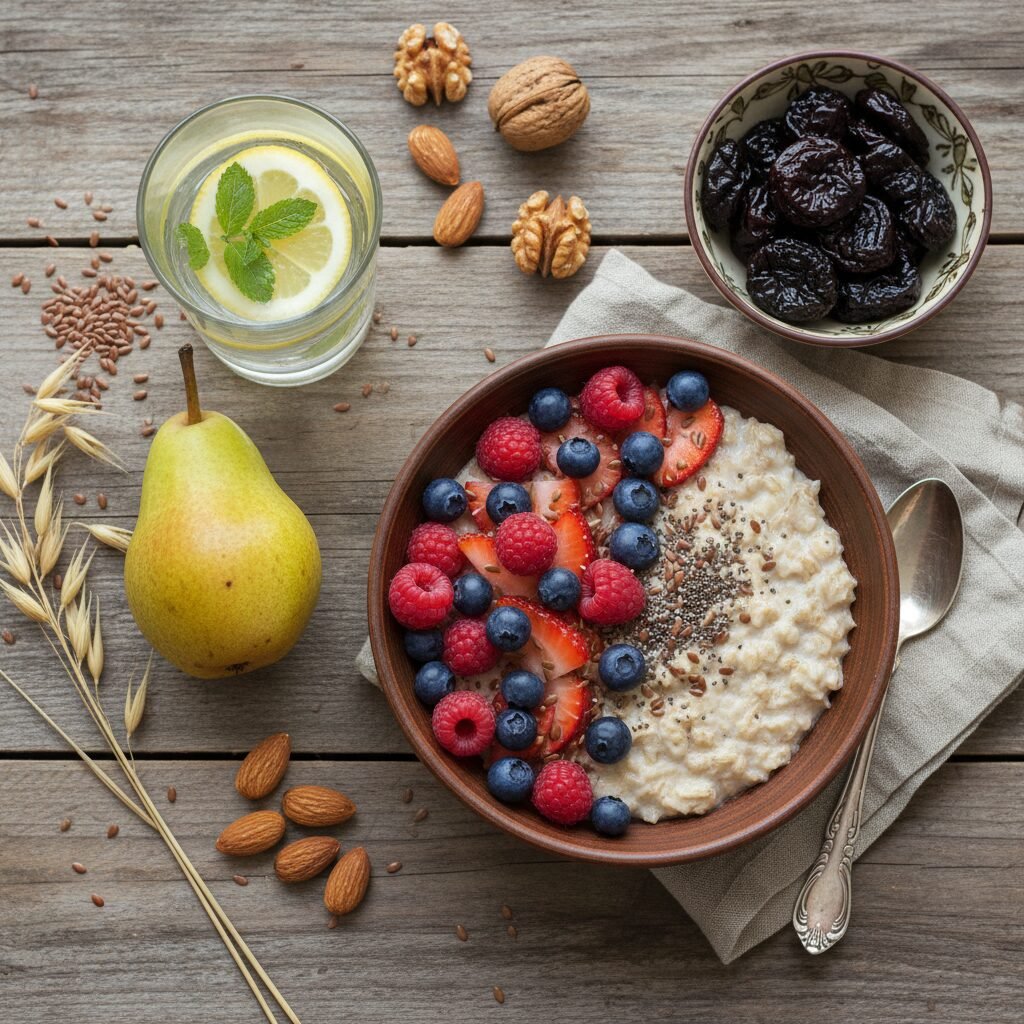
Fueling Your Recovery: The Best Foods and Drinks for Postpartum Digestion
What you eat and drink in the days and weeks following birth plays a monumental role in your digestive health and overall recovery. Focus on nourishing your body with fiber-rich, hydrating foods that will naturally soften your stool and promote regularity.
The Pillars of a Postpartum-Friendly Diet
Your goal is to consume a combination of soluble fiber (which dissolves in water to form a gel-like substance) and insoluble fiber (which adds bulk to stool). And you must have adequate water to make it all work.
- Hydration is Non-Negotiable: Aim to drink at least 80-100 ounces (about 2.5-3 liters) of water per day, especially if you are breastfeeding. Keep a water bottle with you at all times. Warm liquids, like herbal tea (peppermint, chamomile) or warm water with lemon, can be especially effective at stimulating the bowels.
- Embrace ‘P’ Fruits: Pears, prunes, peaches, and plums are your best friends. Prunes and prune juice are particularly effective as they contain sorbitol, a natural laxative.
- Fill Up on Fiber: Incorporate a wide variety of high-fiber foods into every meal. Start your day with oatmeal topped with berries and flax seeds. For lunch, have a hearty lentil soup or a salad with chickpeas. For dinner, include sides like sweet potatoes, broccoli, or brown rice.
- Healthy Fats: Don’t forget healthy fats from sources like avocado, olive oil, nuts, and seeds. Fats help lubricate the intestines, easing the passage of stool.
Here is a quick guide to some of the best foods to focus on:
| Food Group | Excellent Choices | Why It Helps |
|---|---|---|
| Fruits | Prunes, pears, berries, apples (with skin), kiwi | Rich in sorbitol and a mix of soluble and insoluble fiber. |
| Vegetables | Leafy greens (spinach, kale), broccoli, carrots, sweet potatoes | Adds essential bulk and nutrients to soften stool. |
| Whole Grains | Oatmeal, brown rice, quinoa, whole-wheat bread | Provides insoluble fiber to promote consistent regularity. |
| Legumes | Lentils, black beans, chickpeas, kidney beans | Extremely high in fiber and a great source of plant-based protein for healing. |
| Liquids | Water, decaf herbal tea, clear broths, prune juice | Essential for allowing fiber to do its job and preventing dehydration. |
A Partner’s Guide: How to Provide Comfort and Practical Help

A Partner’s Guide: How to Provide Comfort and Practical Help
For partners and support people, it can be difficult to watch someone you love deal with this discomfort. You play an essential role in creating a supportive environment that allows the new mother to heal. Your practical and emotional support is invaluable.
Practical Ways to Be a Postpartum Superhero
- Be the Hydration Manager: Her hands are full with the baby. Take charge of her fluid intake. Make sure her water bottle is always full and within reach. Bring her warm tea in the morning and a cup of broth in the afternoon. Don’t ask if she needs a drink; just bring it to her.
- Become the Kitchen Captain: Take over meal and snack preparation. Focus on making the fiber-rich foods mentioned above. Cut up fruit, make a pot of oatmeal, prepare a veggie-filled soup. By removing the mental load of meal planning, you are giving her a tremendous gift.
- Advocate and Communicate: In the hospital, be the one to ask the nurse for the stool softener. At home, gently remind her to take it. Create a judgment-free zone where she can talk about her fears or frustrations without feeling embarrassed.
- Guard the Door: When she needs to use the bathroom, your job is to be the gatekeeper. Take the baby, handle any visitors, and ensure she has absolute privacy and as much time as she needs. Don’t knock on the door or ask if she’s okay unless she calls for you.
Offering Emotional Reassurance
Your words matter. Remind her often: ‘Your body is so strong. It’s okay to take your time. I’m right here for you.’
Validate her feelings. Acknowledge that this is hard and scary. Reassure her that this is a temporary phase in her recovery journey. Your calm, confident presence can help ease her anxiety, which in turn helps her body relax. Your support in this vulnerable moment is a powerful way to deepen your connection as you begin your journey as new parents.
Knowing When to Seek Help: Red Flags and Medical Advice
Knowing When to Seek Help: Red Flags and Medical Advice
While difficulty with the first postpartum bowel movement is normal, there are certain symptoms that warrant a call to your doctor or midwife. Your healthcare provider is there to support you through every aspect of your recovery, and it is always better to be cautious and seek advice if you are concerned.
Listen to Your Body: When to Make the Call
Please contact your healthcare provider if you experience any of the following:
- No Bowel Movement After 4-5 Days: If you’ve been hydrating, eating fiber, and using a stool softener and still haven’t had a bowel movement by day four or five postpartum, it’s time to check in. They may recommend a gentle laxative or other intervention.
- Severe or Worsening Pain: While some discomfort is expected, you should not be in agony. Severe pain in your rectum or abdomen could be a sign of a complication.
- Signs of Infection: If you notice a fever, foul-smelling discharge, or increasing redness and pain around your stitches (either perineal or C-section), call your provider immediately.
- Heavy or Bright Red Bleeding: An increase in bleeding from your rectum or vagina that accompanies a bowel movement should be discussed with your doctor.
- Incontinence: If you are unable to control your bowel movements (fecal incontinence), it’s crucial to seek medical evaluation. This can be a sign of pelvic floor injury that requires specialized care.
Trust your instincts. You know your body better than anyone. There is no shame in asking for help. Your medical team has heard it all and is ready to provide the care and reassurance you need to heal properly and comfortably.
Conclusion
Navigating the first postpartum bowel movement is a true rite of passage in the fourth trimester. It represents a significant physical and emotional hurdle, but it is one you can absolutely overcome with preparation, patience, and self-compassion. By fueling your body with nourishing foods and plenty of water, creating a supportive bathroom toolkit, and leaning on your partner for help, you can transform this source of anxiety into a manageable step in your healing journey.
Remember the key takeaways: hydrate relentlessly, make fiber your friend, put your feet up, use counter-pressure, and breathe. Most importantly, be incredibly gentle with yourself. You have accomplished something extraordinary, and your body deserves time and grace as it recovers. You are strong, capable, and you will get through this. Welcome to parenthood—you’ve got this.
Medical Disclaimer: The information in this article is for educational and informational purposes only and is not intended as a substitute for professional medical advice, diagnosis, or treatment. Always seek the advice of your physician or other qualified health provider with any questions you may have regarding a medical condition.