Bassinet vs. Crib: The Truth About What Your Newborn Actually Needs
Welcome to parenthood, a journey filled with incredible joy and an equally incredible number of decisions. As you prepare to welcome your little one, one of the most significant choices you’ll make revolves around where they will sleep. The market is flooded with options, but the primary debate for most new parents boils down to two contenders: the bassinet versus the crib. You’ve likely heard conflicting advice from well-meaning family, friends, and online forums, leaving you wondering: What does my baby actually need?
As a doula and maternal health educator, I’ve supported hundreds of families through this exact dilemma. My goal is to cut through the noise and provide you with clear, evidence-based information rooted in safety and practicality. This isn’t just about furniture; it’s about establishing a safe sleep environment that fosters your baby’s development and your peace of mind. In this comprehensive guide, we will explore the fundamental principles of safe sleep, conduct a detailed analysis of both bassinets and cribs, and provide you with the tools to make an informed decision that feels right for your unique family, home, and lifestyle.
The Foundation: Understanding the Non-Negotiables of Safe Newborn Sleep

The ABCs of Safe Sleep
Before we compare a single feature, we must establish the gold standard for infant sleep safety. The American Academy of Pediatrics (AAP) has developed clear, life-saving guidelines to reduce the risk of Sudden Infant Death Syndrome (SIDS) and other sleep-related infant deaths. These recommendations are the foundation upon which every other decision should be built.
The simplest way to remember the core principles is with the ABCs of Safe Sleep:
- A – Alone: Your baby should always sleep alone in their own designated sleep space. This means no co-sleeping with parents, siblings, or pets. While cuddling is essential for bonding, it should be reserved for when you are awake and alert.
- B – Back: Always place your baby on their back to sleep for every sleep, including naps. Once a baby can consistently roll from back to stomach and back again on their own, you do not need to reposition them.
- C – Crib (or Bassinet): The baby’s sleep surface should be a crib, bassinet, or portable play yard that meets the current safety standards of the Consumer Product Safety Commission (CPSC). The surface must be firm and flat, with only a fitted sheet.
Beyond the ABCs: Creating a Safe Sleep Environment
In addition to the core principles, the AAP recommends the following to create the safest possible sleep environment:
- Room-Sharing: The AAP advises that infants sleep in the parents’ room, close to the parents’ bed, but on a separate surface designed for infants. Room-sharing is recommended for at least the first six months, and ideally for the first year, as it can decrease the risk of SIDS by as much as 50%.
- Bare is Best: The sleep space should be entirely free of soft objects. This includes pillows, blankets, quilts, crib bumpers, stuffed animals, and wedges. These items pose a significant suffocation and entrapment risk. Wearable blankets or sleep sacks are a safe alternative to loose blankets for warmth.
- Firm Surface: A firm, flat mattress is crucial. To test if a surface is too soft, press your hand down and then lift it; if your hand leaves a deep indentation, it is too soft for an infant.
- Avoid Overheating: Dress your baby in light clothing for sleep and keep the room at a comfortable temperature for a lightly clothed adult. Overheating is a known risk factor for SIDS.
Understanding and committing to these safety guidelines is the single most important step you can take. Whether you choose a bassinet or a crib, it must allow you to follow these rules without compromise.
The Bassinet: A Deep Dive into Proximity and Portability
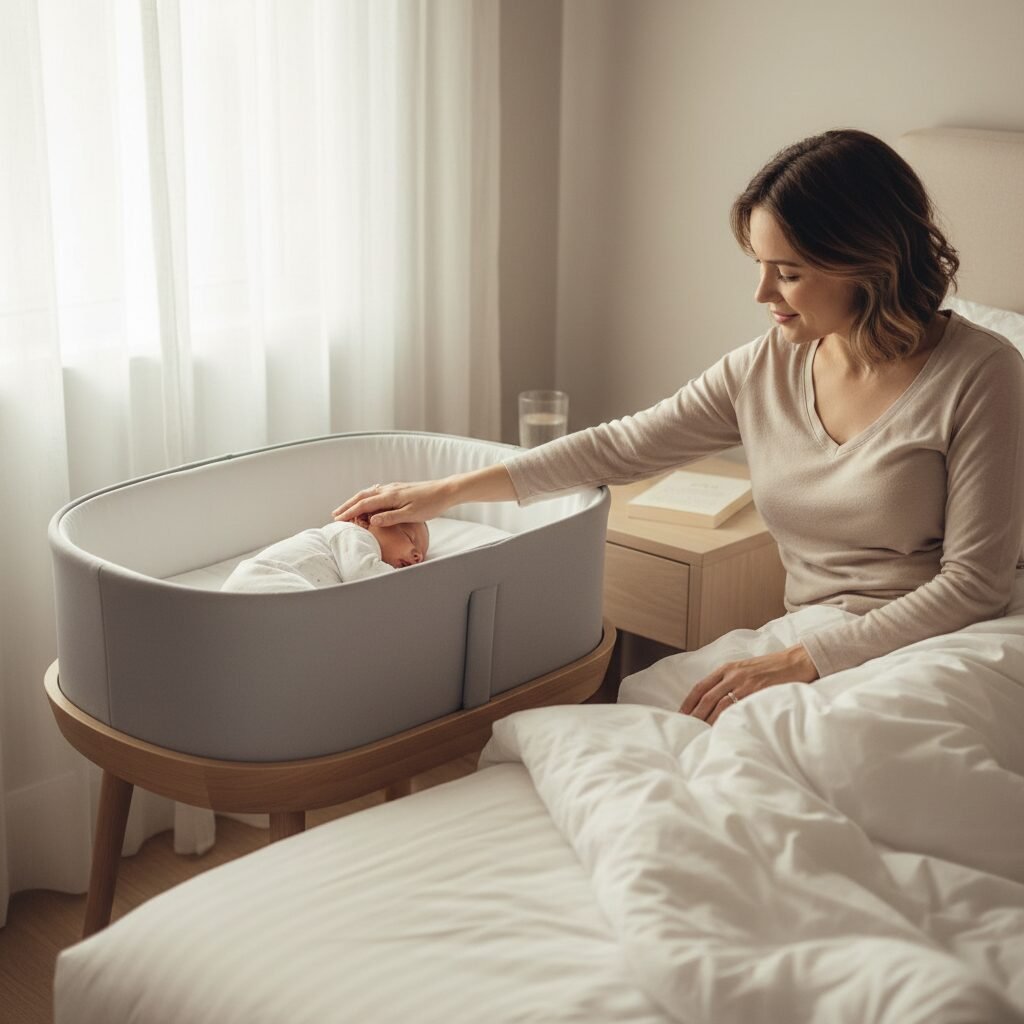
A bassinet is a small, basket-like bed designed specifically for newborns and young infants. Its compact size and portability are its defining features, making it a popular choice for the first few months of a baby’s life.
Pros of Choosing a Bassinet:
- Promotes Room-Sharing: Its small footprint makes it easy to place right next to your bed, facilitating the AAP’s room-sharing recommendation without requiring a major furniture shuffle.
- Convenience for Postpartum Recovery: For mothers recovering from childbirth, especially a C-section, a bedside bassinet minimizes the need to get fully out of bed. You can often scoop your baby up for feedings or offer a comforting touch with minimal movement, which is a significant benefit during those early, physically demanding weeks.
- Portability: Most bassinets are lightweight and easy to move from room to room. This means your baby can have a safe, familiar sleep space for naps in the living room during the day and in your bedroom at night.
- Cozy and Enclosed Feel: Some experts believe the smaller, more enclosed space of a bassinet can feel more secure and womb-like to a newborn, potentially helping them settle more easily than in a large, open crib.
Cons and Limitations of a Bassinet:
- Short-Term Lifespan: This is the most significant drawback. Bassinets are outgrown quickly, typically within 3 to 6 months. They have strict weight and developmental limits. Once your baby can push up on their hands and knees, roll over, or reaches the manufacturer’s weight limit (usually 15-20 pounds), the bassinet is no longer safe.
- Cost-Effectiveness: Because of its short lifespan, a bassinet is an additional expense. While some models are affordable, high-tech ‘smart’ bassinets can cost as much as a high-quality crib, making it a substantial investment for just a few months of use.
- The Inevitable Transition: Your baby will eventually need to move to a crib. For some babies, this transition from their cozy, familiar bassinet to a large, new crib can be disruptive to their sleep patterns.
Safety Note: Always ensure any bassinet you consider meets CPSC safety standards. Look for a sturdy base that prevents tipping, smooth surfaces with no hardware poking out, and breathable mesh sides.
The Crib: The Long-Term Investment in Sleep
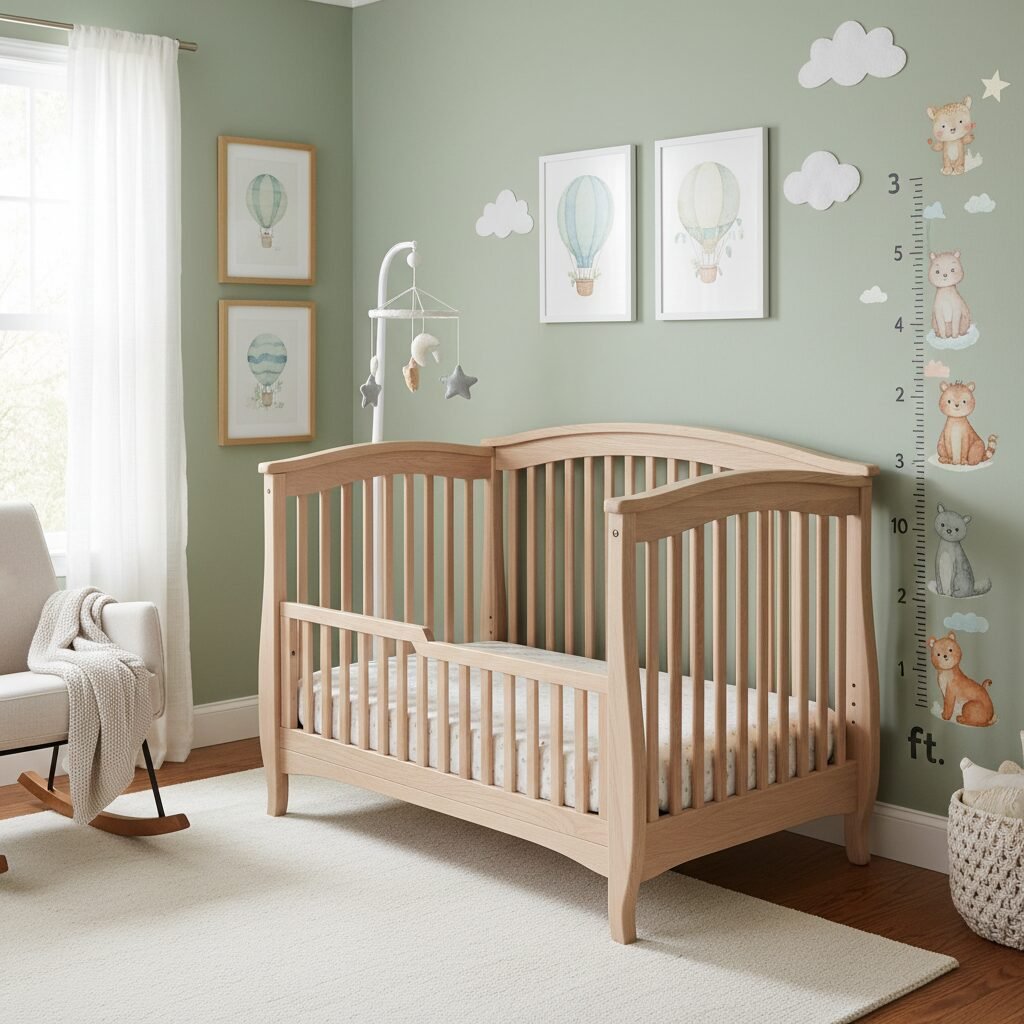
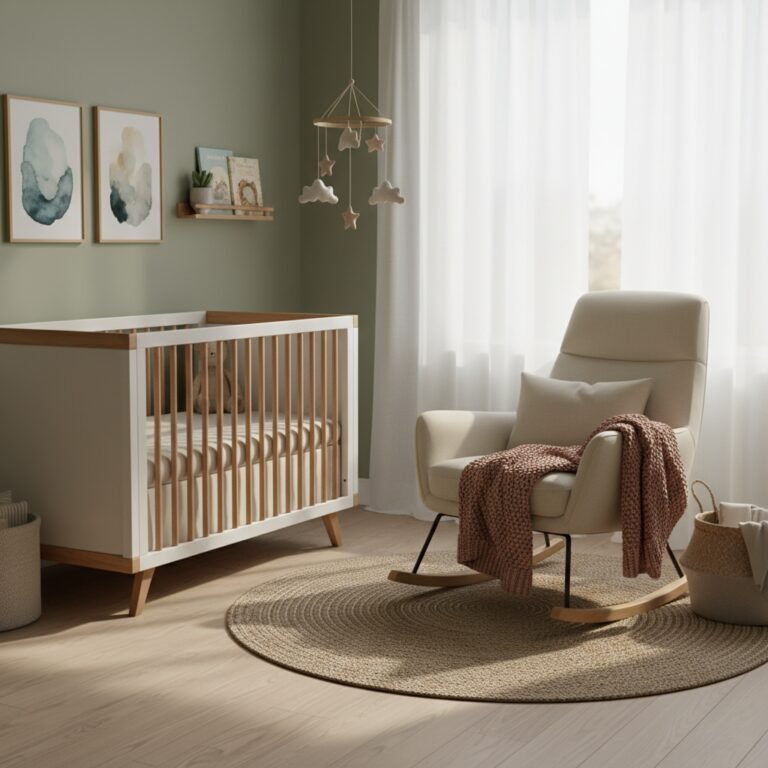
A crib is a larger, more permanent bed for a baby, featuring a sturdy frame with high slatted sides. It is designed to be a safe sleep space from the newborn stage all the way through toddlerhood.
Pros of Choosing a Crib:
- Long-Term Use and Value: A crib is a one-time purchase that can last for years. It is the most cost-effective solution in the long run, as it will be your child’s primary bed until they are ready for a toddler or twin bed.
- Versatility and Convertibility: Many modern cribs are designed to grow with your child. These ‘convertible’ cribs can transform from a standard crib to a toddler bed, a daybed, and sometimes even a full-size headboard, maximizing your investment.
- Unmatched Sturdiness and Safety: Cribs are subject to rigorous federal safety standards. Their solid, heavy construction makes them incredibly stable, eliminating the tipping risks associated with more portable options. The fixed, high sides provide a secure environment as your baby grows and becomes more mobile.
- Establishes a Permanent Sleep Space: Using a crib from day one helps establish the baby’s room as their designated sleep environment. This can help create strong sleep associations and routines from the very beginning.
Cons and Limitations of a Crib:
- Large Footprint: A standard crib takes up a significant amount of space. This can be a major challenge for parents living in smaller homes or apartments, making it difficult to follow room-sharing guidelines without feeling cramped.
- Less Convenient for Newborn Care: Bending over the high rails of a crib to pick up a newborn multiple times a night can be physically taxing, especially for a parent in the midst of postpartum recovery.
- Lack of Portability: Once a crib is assembled, it’s not going anywhere. It cannot be easily moved between rooms for daytime naps, requiring a separate safe sleep solution if you want the baby to nap outside of their nursery.
- Can Feel ‘Too Big’ for a Newborn: Some parents worry that the vast, open space of a crib can feel less secure for a tiny newborn accustomed to the confines of the womb. While this is more of a perception issue (babies are safe in a crib from day one), it is a common concern.
Head-to-Head Comparison: A Feature-by-Feature Breakdown
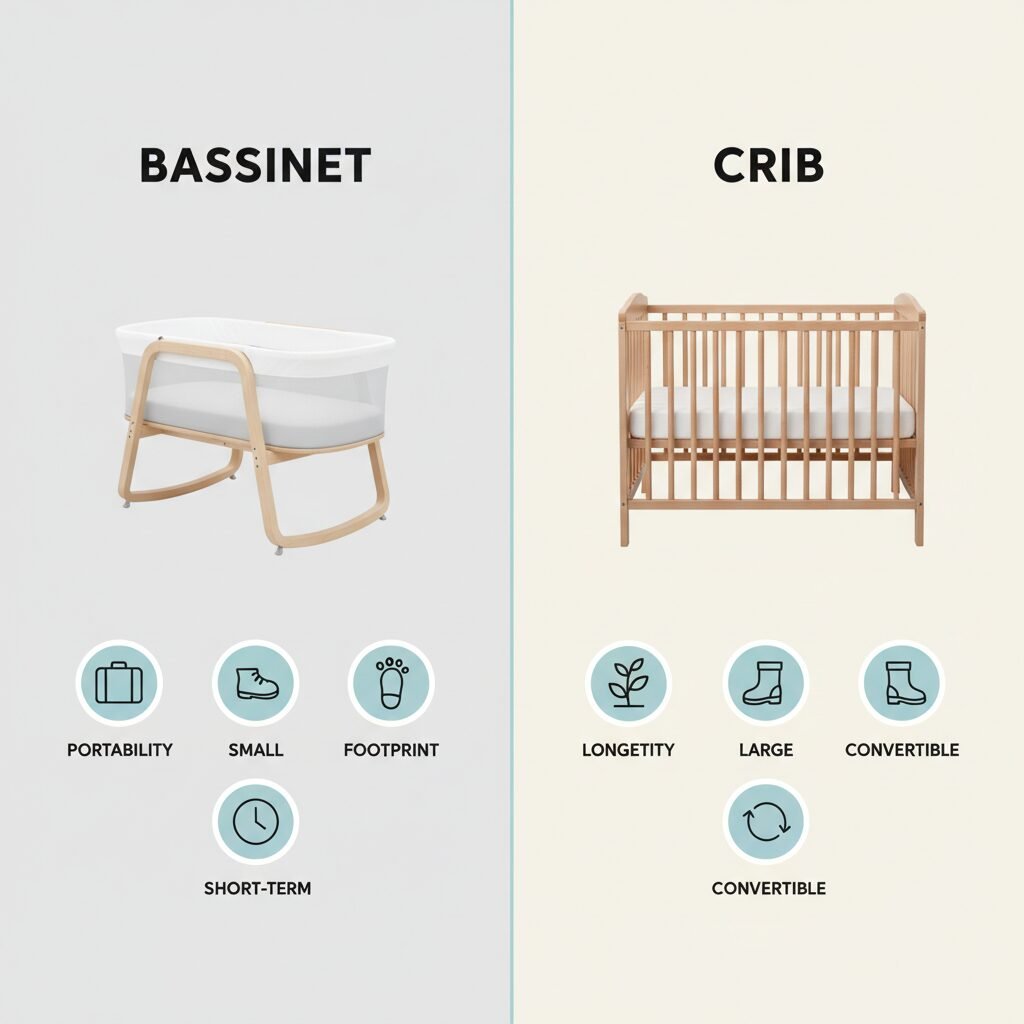
To help you visualize the key differences and make a pragmatic choice, here is a direct comparison of the most important factors for new parents.
| Feature | Bassinet | Crib |
|---|---|---|
| Typical Lifespan | 3-6 months (or until baby rolls over/reaches weight limit) | 3+ years (often converts to a toddler bed) |
| Average Cost | $70 – $300+ (Smart bassinets can be $1000+) | $200 – $800+ (Varies widely based on brand and features) |
| Size / Footprint | Small, compact. Ideal for small spaces and bedside placement. | Large, permanent. Requires dedicated space in a nursery or bedroom. |
| Portability | High. Most models are lightweight and easy to move between rooms. | Low. Heavy, stationary furniture once assembled. |
| Postpartum Convenience | Excellent. Bedside models allow for easy access to baby with minimal movement. | Challenging. Requires bending over high rails, which can be difficult after childbirth. |
| Safety Standards | Must meet CPSC standards for bassinets/cradles. Check for sturdy base and breathable sides. | Must meet stringent CPSC standards for full-size cribs, including slat spacing and mattress support. |
| Best For… | Parents prioritizing bedside convenience, those in small spaces, or those recovering from a C-section. | Parents looking for a long-term, cost-effective solution who have dedicated nursery space. |
The Hybrid Approach and Alternative Solutions
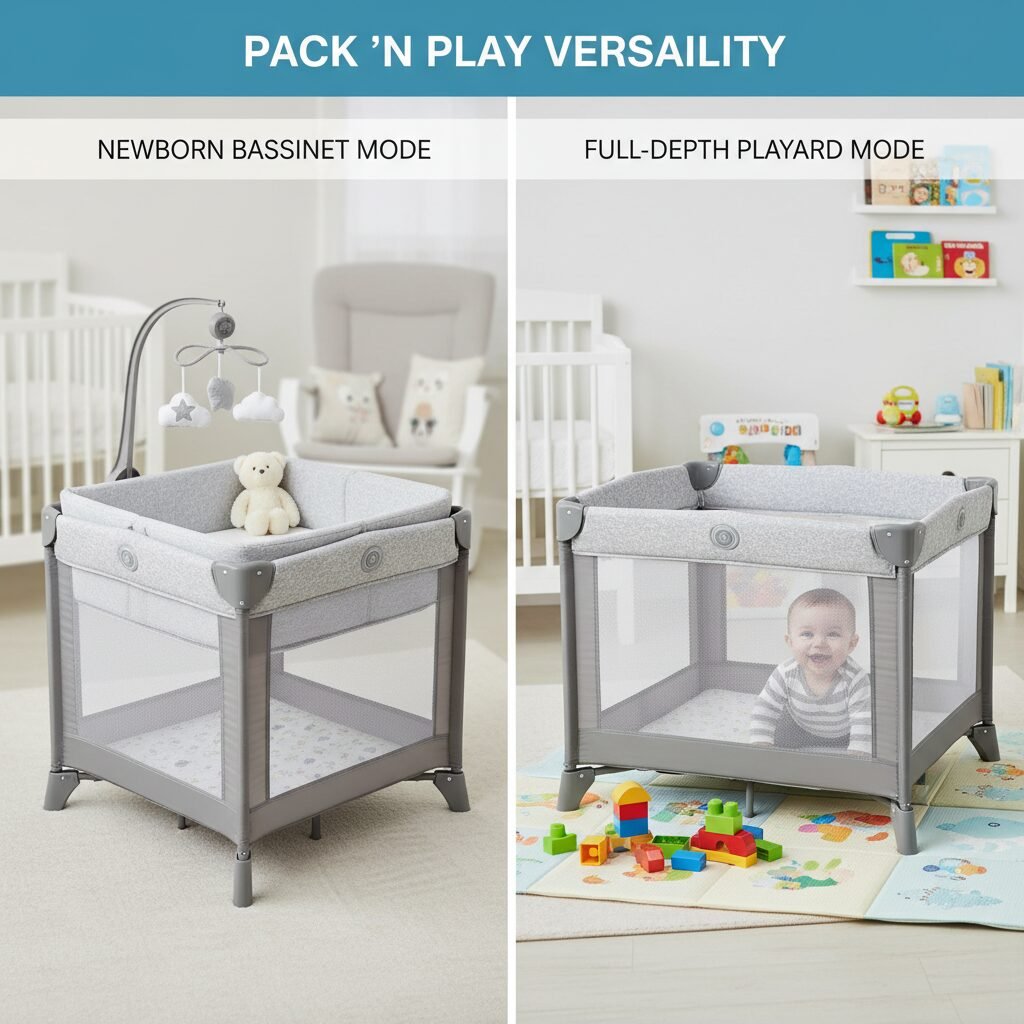
The choice doesn’t have to be strictly one or the other. Many families find success with a hybrid approach or by considering alternative products that blend the features of both.
Using Both: The Two-Stage Sleep Strategy
Perhaps the most common approach is to use a bassinet for the first 4-6 months and then transition to a crib. This strategy allows you to enjoy the convenience and proximity of a bassinet during the demanding newborn phase while having the long-term, safe sleep space of the crib ready when the time is right. While this involves purchasing two items, many parents find the benefits are well worth the cost. You can often find high-quality bassinets second-hand (always check for recalls and product integrity) to mitigate the expense.
The Pack ‘n Play (Playard) Solution
A portable playard with a bassinet insert is an excellent, versatile alternative. Here’s why it’s a popular choice:
- Multi-Functional: It serves as a safe sleep space for the newborn stage (using the raised bassinet attachment), a full-depth sleep space for older babies and toddlers, and a contained, safe play space.
- Travel-Friendly: It’s designed to be folded and transported, making it perfect for travel or visits to grandparents.
- Cost-Effective: You get a bassinet, crib alternative, and playpen all in one product, often for less than the cost of a standalone crib.
When using a playard for sleep, the same rules apply: use only the firm mattress and fitted sheet provided by the manufacturer. Do not add any extra mattresses or soft bedding, as this can create gaps and lead to a suffocation risk.
Making the Final Decision: What’s Right for Your Family?

The ‘truth’ about what your newborn needs is that they need a safe place to sleep. Both a bassinet and a crib can provide that, so the best choice comes down to your individual circumstances. Ask yourself these questions:
What does our living space allow?
If you live in a small apartment, a crib in your bedroom might not be feasible. A bassinet or a mini-crib could be a more practical solution for room-sharing. If you have a dedicated nursery, you can easily opt for a crib from day one.
What is our budget?
If you’re on a tight budget, skipping the bassinet and investing directly in a convertible crib is the most financially sound decision. If you have more flexibility, the convenience of a bassinet for the first few months might be a worthwhile luxury.
What is my anticipated postpartum recovery?
If you know you are having a scheduled C-section, or if you have other health concerns that might make mobility difficult, a bedside bassinet can be an invaluable tool for your comfort and recovery.
What is our lifestyle?
Do you travel frequently or spend weekends with family? A portable playard might offer the most flexibility. If you’re homebodies, a stationary crib is perfectly suitable.
There is no one-size-fits-all answer. Give yourself permission to choose the option that reduces stress and best serves your family’s needs, as long as it aligns with all AAP safe sleep guidelines.
Conclusion
Navigating the world of baby gear can feel like a high-stakes exam, but the bassinet versus crib decision doesn’t need to be a source of anxiety. The most important takeaway is this: a safe sleep space is non-negotiable, but the type of sleep space is flexible. By prioritizing the principles of Alone, Back, and in a Crib/Bassinet, you are already giving your baby the greatest gift of protection. A bassinet offers unparalleled convenience and closeness in the tender newborn months, while a crib provides a safe, long-term foundation for years of healthy sleep. Ultimately, the ‘right’ choice is the one that meets CPSC safety standards and fits seamlessly into your home, your budget, and your life. Trust your research, trust your instincts, and know that you are making a wonderful decision for your growing family.