
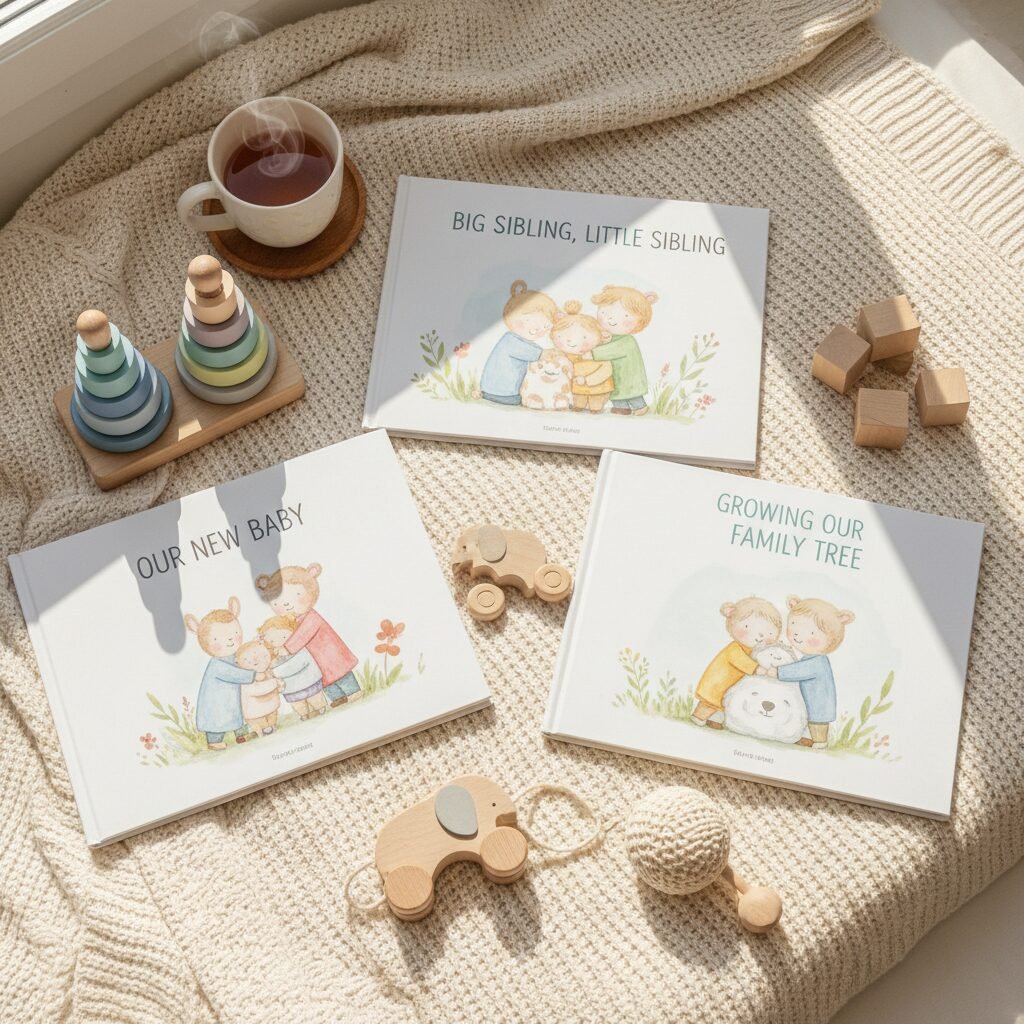
The Sweetest Books To Prepare Your Toddler For A New Sibling
As you navigate the incredible journey of expanding your family, one of the most common concerns we hear from parents is, “How will my toddler handle this?” It’s a valid and loving question. Your firstborn has been the center of your universe, and the arrival of a new baby is a monumental change in their young life. While you can’t predict their exact reaction, you can lovingly and proactively prepare them. One of the most powerful, gentle, and effective tools in your parenting toolkit is the simple act of reading together.
Stories provide a language for emotions that toddlers can’t yet articulate. They create a safe space to explore concepts of sharing, waiting, and the new kind of love that comes with a sibling. This guide, curated with a deep understanding of child development and family dynamics, moves beyond a simple list. We will explore why these books work, offer detailed reviews of our top selections, and provide practical strategies for integrating their messages into your daily life. We’ve selected these books based on their ability to foster empathy, their age-appropriate language, their positive and realistic messaging, and their power to spark essential family conversations.
The Psychology of Storytelling: Why Books Work for Toddlers

Before we dive into specific titles, it’s important to understand the profound impact storytelling has on a toddler’s developing mind. For a child between the ages of two and four, abstract concepts like “a new baby is coming” are difficult to grasp. They live in a world of tangible, immediate experiences. Books act as a bridge, translating the abstract into a concrete narrative they can see, hear, and emotionally connect with.
Building a Vocabulary for Feelings
A new sibling can stir a complex cocktail of emotions: excitement, jealousy, confusion, pride, and even resentment. Toddlers lack the emotional vocabulary to express these feelings, which often results in behavioral changes—regression, tantrums, or clinginess. The characters in these books experience similar emotions, giving your child a mirror for their own feelings. When a character feels left out but is then reassured, it teaches your toddler that their feelings are valid and that love is not a finite resource.
Creating Predictability and Routine
Toddlers thrive on predictability. A new baby represents the ultimate disruption to their routine. By introducing books about a new sibling months in advance and making them a regular part of your reading time, you are slowly and gently normalizing the upcoming change. The story becomes a predictable event that foreshadows the real-life one, giving your child a sense of control and understanding in a situation where they have little of either.
Reading these books together is more than just preparation; it’s a dedicated moment of connection, reassuring your firstborn of their secure and cherished place in the family, both now and in the future.
Our Top 5 Recommended Books for Future Big Siblings
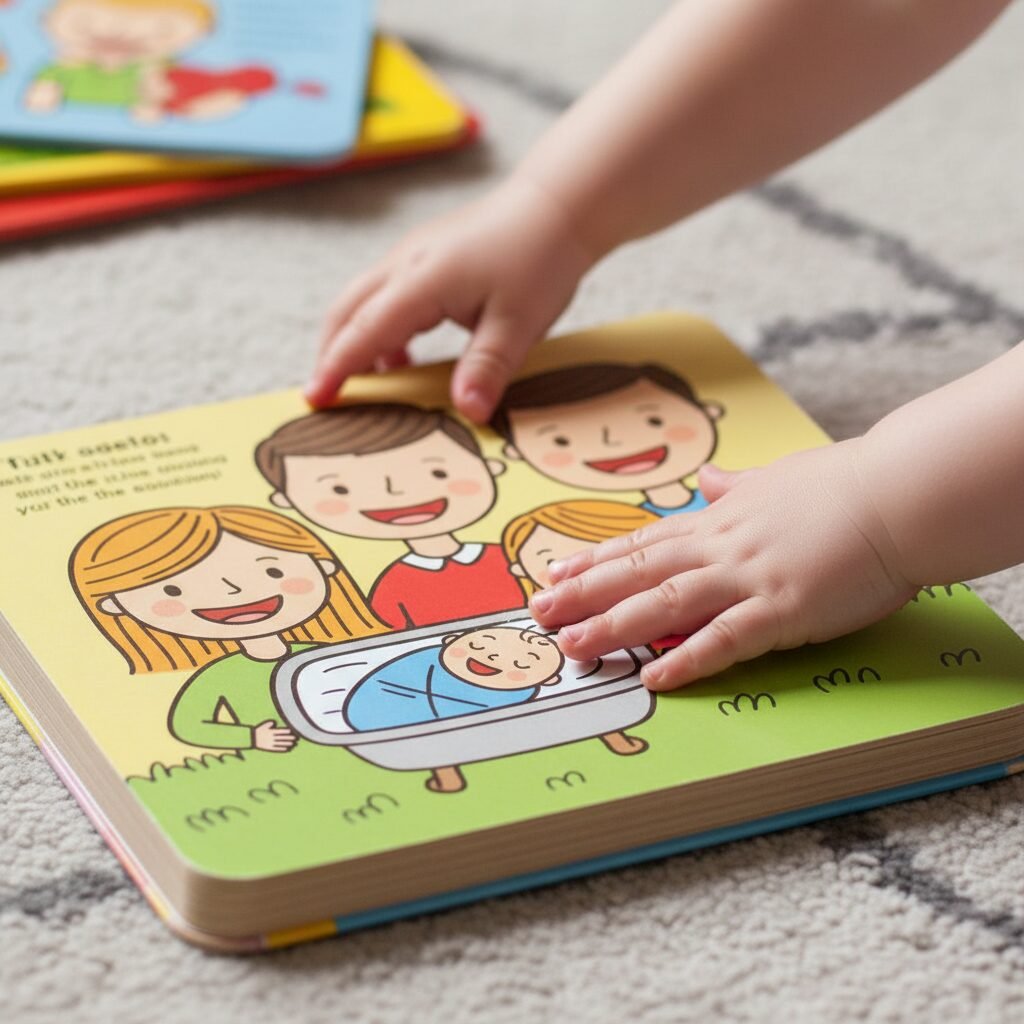
Each child and family is unique, so the “perfect” book will vary. We have selected a range of titles that address different aspects of the new sibling experience, from the practical changes to the emotional journey. Here are our detailed reviews.
1. I’m a Big Sister / I’m a Big Brother by Joanna Cole
This classic book is beloved for its straightforward and positive approach. It walks the child through the experience, from mommy’s growing belly to what a newborn can (and can’t) do. It focuses heavily on the special, helpful role of the older sibling.
- Pros: Clearly explains what to expect in simple, direct language. Empowers the toddler by highlighting their new ‘big kid’ status and abilities. Available in both ‘Sister’ and ‘Brother’ versions for personalization.
- Cons: Some may find it slightly dated in its illustrations. It focuses more on the practical aspects than on validating potentially negative feelings like jealousy.
- Best For: Toddlers aged 2-3 who benefit from clear, concrete explanations and a positive framing of their new role.
2. The New Baby by Mercer Mayer
From the iconic Little Critter series, this book perfectly captures the perspective of an older sibling. Little Critter tries to ‘help’ with the new baby, but his toddler attempts aren’t always successful. It’s a humorous and relatable take on the adjustment period.
- Pros: Addresses the toddler’s desire to be involved, even when they’re clumsy. The humor provides a lighthearted way to discuss the frustrations of having a baby around. The illustrations are engaging and full of detail.
- Cons: The focus is more on the ‘after’ and less on the pregnancy period.
- Best For: Toddlers aged 3-4 who can appreciate the humor and will relate to the well-intentioned but sometimes misguided efforts of Little Critter.
3. Waiting for Baby by Rachel Fuller
This book is unique in its focus on the pregnancy and preparation period. It features beautiful, realistic illustrations and simple text that follows a family as they get ready for the baby’s arrival, involving the older sibling in tasks like setting up the crib and packing a hospital bag.
- Pros: Excellent for introducing the concept during pregnancy. The lift-the-flaps and interactive elements keep young toddlers engaged. It helps the child feel like a part of the process from the very beginning.
- Cons: Less focused on the emotional complexities after the baby arrives.
- Best For: Younger toddlers (18 months to 2.5 years) as a perfect first introduction to the idea of a new baby.
4. What Sisters Do Best / What Brothers Do Best by Laura Numeroff
Written by the author of If You Give a Mouse a Cookie, this book isn’t explicitly about a new baby, but rather about the wonderful things siblings can do together. It shows brothers/sisters playing, sharing, and supporting each other.
- Pros: Frames the sibling relationship in a purely positive and aspirational light. Simple, repetitive text is great for early readers. It helps plant the seed of a future friendship and bond.
- Cons: Doesn’t address any of the challenges or the transition period, which is a critical piece for many families.
- Best For: Use in conjunction with other books. It’s a wonderful, optimistic story to read once the baby has arrived and the siblings are beginning to interact.
5. My New Baby by Rachel Fuller
A companion to Waiting for Baby, this book uses the same gentle, realistic style to explore life after the baby comes home. It covers feeding, sleeping, crying, and the ways a big sibling can gently interact with the newborn. It acknowledges that babies cry and take up a lot of mom’s time, but does so in a reassuring way.
- Pros: Extremely realistic and practical. The board book format is durable for little hands. It provides a gentle script for parents to use when explaining newborn behavior.
- Cons: Like its predecessor, it is very gentle and may not be enough for a toddler experiencing intense jealousy.
- Best For: Families who appreciated Waiting for Baby and want a consistent follow-up for the post-arrival period, especially for toddlers under 3.
At-a-Glance Comparison: Finding the Perfect Book for Your Family
To help you decide, here is a summary of our top picks and their key features. Consider your child’s age, temperament, and what aspects of the transition you most want to emphasize.
| Book Title | Key Theme | Ideal Age Range | Special Features |
|---|---|---|---|
| I’m a Big Sister / Brother | Empowerment & Practical Roles | 2 – 3 years | Gender-specific versions, positive framing. |
| The New Baby (Little Critter) | Humor & Relatability | 3 – 4 years | Focuses on the toddler’s perspective, humorous. |
| Waiting for Baby | Pregnancy & Preparation | 18 months – 2.5 years | Interactive lift-the-flaps, focuses on pre-arrival. |
| What Sisters/Brothers Do Best | Positive Sibling Bonds | 2 – 4 years | Aspirational, focuses on future friendship. |
| My New Baby | Post-Arrival Realities | 18 months – 3 years | Gentle, realistic portrayal of life with a newborn. |
Making the Stories Stick: How to Integrate These Books into Daily Life

Simply owning the books isn’t enough; the magic happens in how you use them. Reading should be an interactive, connecting experience that helps your toddler internalize the messages. Here are some effective strategies:
- Start Early, Read Often. Begin introducing these books into your reading rotation about three to four months before your due date. Repetition is key for toddlers. Frequent readings make the idea of a new baby familiar and less intimidating.
- Be a Storytelling Partner. Don’t just read the words on the page. Pause and ask questions. Use a soft voice to say, “Look, the big sister is helping get a diaper. You’re going to be such a great helper, too!” Point out the expressions on the characters’ faces: “He looks a little sad that Mommy is busy. It’s okay to feel sad sometimes.”
- Connect the Story to Your Reality. Make tangible links between the book and your life. When you’re setting up the bassinet, you can say, “This is just like in our book, Waiting for Baby! We’re getting the baby’s bed ready.” This makes the story a living, breathing part of their experience.
- Use the Book to Role-Play. Use a doll or stuffed animal to act out scenes from the book. Let your toddler be the “big sibling” to the doll, practicing how to be gentle, how to sing a song to the “baby,” or how to bring a diaper to mommy or daddy.
- Validate All Feelings That Arise. If your child expresses disinterest or a negative feeling about the book (“I don’t want a new baby!”), resist the urge to dismiss it. Instead, validate it. “I hear you. It feels scary to think about things changing. Let’s read about how the big brother felt scared, too, but then he learned how much fun it could be.” These books are a safe tool to open that exact dialogue.
When Reality Hits: Using Books to Navigate Post-Arrival Challenges

Even with the best preparation, the reality of a new baby can be challenging for a toddler. You may see behaviors like potty-training regression, increased tantrums, or a demand for more attention. This is normal. Your toddler is processing a massive life change. During this time, the books you’ve read can become powerful anchors.
When the baby is crying and you’re feeling touched-out, or when your toddler is having a meltdown, finding a quiet moment to revisit a familiar story can be a reset for everyone. It’s a calming ritual that reinforces the key messages you’ve been building for months. You can refer back to the characters: “Remember how Little Critter wanted to help? Maybe you could bring me that burp cloth. That would be so helpful right now.”
Re-reading these stories reassures your toddler of two critical things: that their world is still safe and predictable, and that their role as a big sibling is special and important. It’s a way to reconnect and reinforce your bond when the demands of a newborn are pulling you in a million directions.
Your toddler isn’t giving you a hard time; they are having a hard time. These stories are a bridge to help them cross into their new role with love and security.
Continue to make one-on-one reading time a protected, sacred part of your day. It will fill their cup and remind them that even with a new baby in the house, they are, and always will be, deeply loved and seen.
Conclusion
Preparing your toddler for the arrival of a new sibling is an act of profound love and foresight. By choosing the right books and weaving them into the fabric of your family life, you are doing more than just reading stories. You are building a foundation of empathy, security, and understanding. You are giving your child the tools to navigate a complex emotional transition and setting the stage for a beautiful, lifelong sibling bond.
Remember to be patient with your child, and just as importantly, with yourself. This is a journey for the entire family. Trust that the love and connection you foster during these quiet moments, with a book open on your lap, will be the anchor that holds you all steady through the wonderful, chaotic, and ultimately joyous adventure of becoming a bigger family.