Stop The Barking: How To Desensitize Your Dog To Baby Crying Sounds Before Birth
The journey to parenthood is filled with a unique blend of excitement and meticulous planning. You’re choosing names, designing a nursery, and reading every book you can find on newborn care. Amidst this whirlwind of preparation, a common and significant concern for many expecting parents is how their four-legged family member will adjust to the new arrival. Specifically, the question looms: How will my dog react to a crying baby?
This is not a trivial worry. A dog’s barking, triggered by the high-pitched and unfamiliar sound of an infant’s cry, can escalate stress levels in an already sleep-deprived household. It can interrupt a baby’s precious sleep, fray parents’ nerves, and create a cycle of anxiety for both pet and family. But there is a solution that is both effective and compassionate.
The key is proactive preparation through a process called desensitization and counter-conditioning. This behavioral method involves gradually exposing your dog to a stimulus (in this case, baby crying sounds) at a low intensity, and pairing it with something positive. Over time, this process changes your dog’s emotional response from one of anxiety or alarm to one of calm neutrality or even positive anticipation. This guide will provide you with a clear, step-by-step protocol to create a harmonious introduction and a peaceful home for your entire growing family.
Understanding Your Dog’s Reaction: Why Crying Triggers Barking
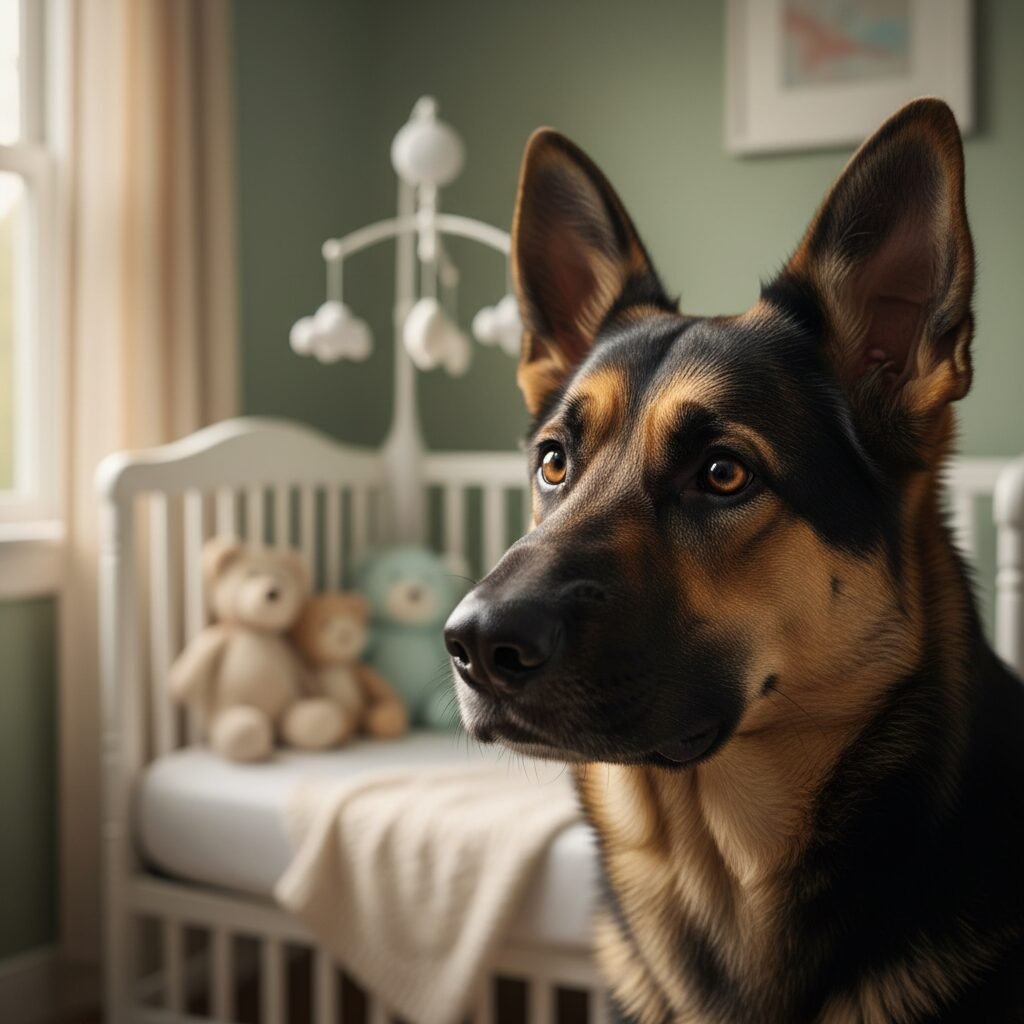
Before we can modify a behavior, we must first understand its root cause from our dog’s perspective. A baby’s cry is a unique auditory event, and your dog has no prior context for it. Their barking is not an act of malice or jealousy; it is a primal form of communication driven by instinct and emotion.
The Science of Sound
An infant’s cry typically falls within a frequency range of 250-600 Hz, with piercing peaks that can be jarring. To a dog’s sensitive hearing, this sound is not just loud—it’s alien. It can mimic the distress calls of other animals, which can trigger a variety of instinctual responses:
- Alert Barking: This is the most common reaction. The cry is a strange, new sound in the dog’s territory. Their barking serves as an alarm, effectively saying, “Hey! Something unusual and potentially concerning is happening here!”
- Anxiety or Fear: The sheer volume and piercing nature of the cry can be frightening. A fearful dog may bark to try and make the scary thing go away or as a release for their nervous energy.
- Curiosity: Some dogs are simply trying to understand the source of the noise. Their barks might be more intermittent and accompanied by head tilts and attempts to locate the sound’s origin.
- “Pack” Concern: Many dogs are deeply bonded to their owners. When they hear a baby cry, they also perceive the stress and concern of their human family members. They may bark as a response to the overall emotional shift in the household, feeling a need to “help” or participate in the perceived crisis.
Anxiety vs. Alertness
It’s crucial to distinguish between a dog who is on alert and one who is truly anxious. An alert dog might have a stiff posture, forward ears, and a sharp, commanding bark. Once they identify the source and see that you are calm, they may settle. An anxious dog, however, will display other stress signals. These can include pacing, panting when it’s not hot, lip licking, yawning out of context, or a tucked tail. Recognizing these signs is vital for the desensitization process, as pushing an anxious dog too far can be counterproductive. By understanding that your dog is reacting, not misbehaving, you can approach this training with the empathy and patience necessary for success.
The Foundation: Essential Obedience and Creating a Safe Space

Before you even press play on the first crying sound, you must lay a solid foundation. Successful desensitization relies on clear communication and a predictable environment for your dog. This means reinforcing basic obedience and, critically, establishing a designated safe space.
Reinforcing Core Commands
Certain commands are invaluable for managing your dog’s behavior around a new baby. If your dog doesn’t have these mastered, now is the time to practice them daily in short, positive sessions.
- “Place” or “Go to Your Bed”: This is arguably the most important command. It teaches your dog to go to a specific spot (their bed, a mat, or an open crate) and stay there until released. This gives you a way to manage your dog’s location when you need to focus on the baby, such as during feeding or diaper changes.
- “Settle”: This command teaches your dog to lie down and relax. It’s different from a “down-stay” as the focus is on a calm emotional state, not just a physical position. Reward your dog for calm, quiet behavior.
- “Quiet”: While it won’t stop barking entirely overnight, a solid “quiet” command can help interrupt a barking fit, giving you a moment to redirect your dog’s attention.
Creating a Canine Sanctuary
Every member of the family deserves a place to retreat, and your dog is no exception. A designated safe space is a location that belongs only to the dog. The baby’s things do not go there, and the baby (once mobile) is not allowed there. This gives your dog a predictable sanctuary where they can go to escape the overwhelming new smells, sounds, and activities that come with a newborn.
This space could be:
- A comfortable crate with a cozy bed inside.
- A dog bed in the corner of a quiet room.
- A specific mat or rug.
Make this space a haven of positivity. Feed your dog their meals there, give them special long-lasting chews (like a stuffed KONG) only in this space, and never use it for punishment. When your dog learns they have a secure place to retreat to, they are less likely to feel trapped or anxious when the baby is crying.
“Creating a predictable, safe environment is the first step in helping a dog cope with major life changes. Their safe space is not a time-out; it’s their personal retreat, and respecting that is fundamental to their well-being.” – Dr. Amelia Thorne, Veterinary Behaviorist
The Desensitization Protocol: A Step-by-Step Guide

With your foundation in place, you can begin the core training protocol. The goal is to change your dog’s association with crying from ‘alarming and strange’ to ‘boring and rewarding.’ This requires patience and consistency. Sessions should be short (5-10 minutes) to prevent your dog from becoming overwhelmed.
You will need:
- A device to play audio (phone or speaker).
- High-quality recordings of various baby crying sounds (search on YouTube or Spotify for “baby crying sounds for dog training”).
- High-value treats: small, delicious treats your dog loves and doesn’t get all the time, like tiny pieces of cheese, chicken, or special training treats.
Follow these steps methodically:
- Establish a Baseline: Find a comfortable spot with your dog. Have your treats ready.
- Volume Level 1: Start Inaudibly. Begin playing the crying sound at a volume so low that your dog barely notices it, or doesn’t react at all. The moment the sound starts, begin feeding your dog a steady stream of high-value treats. The moment the sound stops, the treats stop. Repeat this several times. The goal is: Crying sound predicts amazing treats.
- Slightly Increase Volume: In the next session (or later in the same one, if your dog is completely relaxed), increase the volume by a tiny increment. Repeat the process: sound starts, treats start; sound stops, treats stop.
- Watch for a Reaction: If at any point your dog shows signs of stress (ears back, whining, looking anxiously for the source), you have gone too far, too fast. This is called crossing the ‘threshold.’ Immediately lower the volume back to a level where they were comfortable and successful. This is not a failure; it’s crucial information.
- Gradually Increase Duration: Once your dog is comfortable with a moderate volume for short bursts, begin to play the sound for longer periods (15 seconds, then 30, then a minute). Continue to reward for calm behavior throughout. You can switch from a steady stream of treats to intermittent rewards for continued calmness.
- Vary the Sounds: Babies don’t just make one crying sound. Use different recordings—fussy cries, hungry cries, loud shrieks—always starting back at a low volume for each new sound before building it up.
- Generalize the Experience: Practice this protocol in different rooms of the house. The dog should learn that the baby crying sound is ‘safe’ and ‘normal’ no matter where they are.
Advanced Training and Real-World Scenarios

Once your dog is comfortable with the audio recordings, it’s time to add more layers to the training to simulate real-life situations. This phase, known as ‘proofing,’ helps your dog generalize their calm response to the presence of an actual baby.
Introducing Other Baby Stimuli
Your dog’s world is about to be filled with new sights and smells. It’s wise to introduce these before the baby arrives, creating positive associations from the start.
- The Baby Doll Prop: Get a lifelike baby doll. Practice carrying it, swaddling it, and sitting with it in the nursing chair while the crying sounds play softly in the background. Reward your dog for investigating calmly or for staying relaxed on their ‘place’ bed.
- Baby Gear Integration: Set up the swing, bassinet, and stroller ahead of time. Let your dog sniff them. Sprinkle treats near them for your dog to find. Turn on the swing’s motor or music. The goal is to make these items a normal, non-threatening part of the furniture.
- Practice New Routines: Walk around the house holding the baby doll. Push the empty stroller around the living room and then take it for a walk outside. Reward your dog for walking calmly on a loose leash beside the stroller.
Sample Training Schedule
Consistency is more important than session length. A little bit of training every day is far more effective than one long session on the weekend. Here is a sample schedule you can adapt:
| Day of the Week | Morning (5-10 mins) | Evening (5-10 mins) |
|---|---|---|
| Monday | Volume Desensitization: Play fussy cry sound at Level 3 volume. Reward for calm. | Place Command: Practice a 2-minute ‘place’ stay while you organize baby clothes. |
| Tuesday | Volume Desensitization: Increase fussy cry sound to Level 4. Reward for calm. | Scent Work: Let dog sniff a blanket with baby lotion on it. Reward for calm sniffing. |
| Wednesday | New Sound Intro: Play loud shriek cry at Level 1 volume. Reward heavily. | Baby Gear: Practice walking with the empty stroller around the house. Reward for loose leash. |
| Thursday | Volume Desensitization: Increase shriek cry to Level 2. Reward for calm. | Place Command: Practice a 5-minute ‘place’ stay while holding the baby doll. |
| Friday | Combo Training: Play fussy cry at Level 4 while you rock the baby doll. Reward for calm. | Settle Command: Reward dog for relaxing on their bed while you sit in the nursery glider. |
| Weekend | Practice one or two skills during your normal routine, such as a walk with the stroller or a ‘place’ command while you assemble baby gear. Keep it positive and low-pressure. | |
Reading the Signs: When to Slow Down and When to Seek Help

As your dog’s advocate, your most important job is to be a keen observer of their body language. Dogs communicate their discomfort long before they resort to barking or growling. Recognizing the subtle signs of stress is crucial to ensuring this process remains positive and effective.
Subtle Signs of Canine Stress
During your training sessions, watch for these signals. If you see them, it’s a sign to lower the intensity or end the session on a positive note with an easy win.
- Whale Eye: When you can see the whites of your dog’s eyes in a crescent shape.
- Lip Licking or Nose Licking: Quick flicks of the tongue when no food is present.
- Yawning: A big yawn when the dog is not tired is a classic sign of anxiety.
- Tense Body and Furrowed Brow: A rigid posture, closed mouth, and wrinkled forehead.
- Panting: Shallow, rapid breathing when it is not hot and the dog has not been exercising.
- Tucked Tail: The tail is held low or tucked completely between the legs.
Seeing these signs doesn’t mean you’ve failed. It means your dog is communicating that they’re overwhelmed. Simply go back to the last step where they were comfortable and work from there more slowly. Every dog learns at a different pace.
When to Call a Professional
While this guide is comprehensive, some dogs may need more specialized help. It is a sign of responsible pet ownership to know when to seek professional guidance. You should consider consulting a professional if:
- Your dog has a known history of severe anxiety, fear, or aggression.
- Despite your best efforts, your dog’s reaction to the sounds is not improving or is getting worse.
- Your dog shows any signs of aggression (growling, snarling, snapping) towards the baby doll or during training sessions.
- You feel overwhelmed and are unsure how to proceed safely.
Look for a Certified Professional Dog Trainer (CPDT-KA), a Pat Miller Certified Trainer (PMCT), or a board-certified Veterinary Behaviorist (DACVB) for complex cases. These professionals use positive, science-based methods and can create a customized plan for your specific dog and family situation.
Conclusion
Preparing your dog for the arrival of a new baby is one of the most loving and responsible actions you can take as both a pet owner and a parent-to-be. By investing the time now to desensitize your dog to the sound of a baby’s cry, you are not just preventing nuisance barking; you are thoughtfully shaping a future of peaceful coexistence. You are laying the groundwork for a beautiful relationship between your child and their loyal canine companion.
Remember the core principles: be patient, stay positive, and listen to what your dog’s body language is telling you. Progress, not perfection, is the goal. Every short, successful training session is a step toward a calmer, happier home.
You are embarking on an incredible new chapter. By proactively managing this one piece of the puzzle, you are freeing up your future self to focus more on the snuggles, the milestones, and the pure joy of your new baby, secure in the knowledge that your entire family, including your furry first baby, is ready for the adventure.