

Wait 60 Seconds! Why Delayed Cord Clamping Is The Best Gift You Can Give Your Newborn
The moments after your baby is born are a whirlwind of powerful emotions, first cries, and busy activity. In this beautiful chaos, there’s a quiet, profound pause that you have the power to request—a pause that can offer your baby a lifetime of benefits. It lasts just 60 to 180 seconds, but its impact is immense. This practice is called Delayed Cord Clamping (DCC), and it’s one of the most significant, yet simple, gifts you can give your child as they take their first breaths.
For years, the standard practice was to clamp and cut the umbilical cord almost immediately. But as we learn more about the delicate transition from womb to world, medical wisdom has evolved. Leading health organizations worldwide, including the American College of Obstetricians and Gynecologists (ACOG) and the World Health Organization (WHO), now recommend delaying cord clamping for nearly all healthy newborns.
We understand that preparing for childbirth can feel overwhelming, with countless decisions to make. This guide is here to walk you through the science of DCC with empathy and clarity. We’ll explore what happens during that ‘golden minute,’ uncover the incredible health benefits for your baby, address common concerns, and empower you with the knowledge to advocate for this gentle start for your little one. This is a conversation for both parents, because having a partner who understands and can speak up for your wishes is invaluable.
What Exactly is Delayed Cord Clamping? The Science of the ‘Golden Minute’
What Exactly is Delayed Cord Clamping? The Science of the ‘Golden Minute’
To truly understand the power of delayed cord clamping, it helps to think about what the umbilical cord and placenta are doing in the final moments of pregnancy and the first minutes of life. Far from being just a ‘supply line’ that’s finished its job at birth, the placenta and cord are still actively supporting your baby.
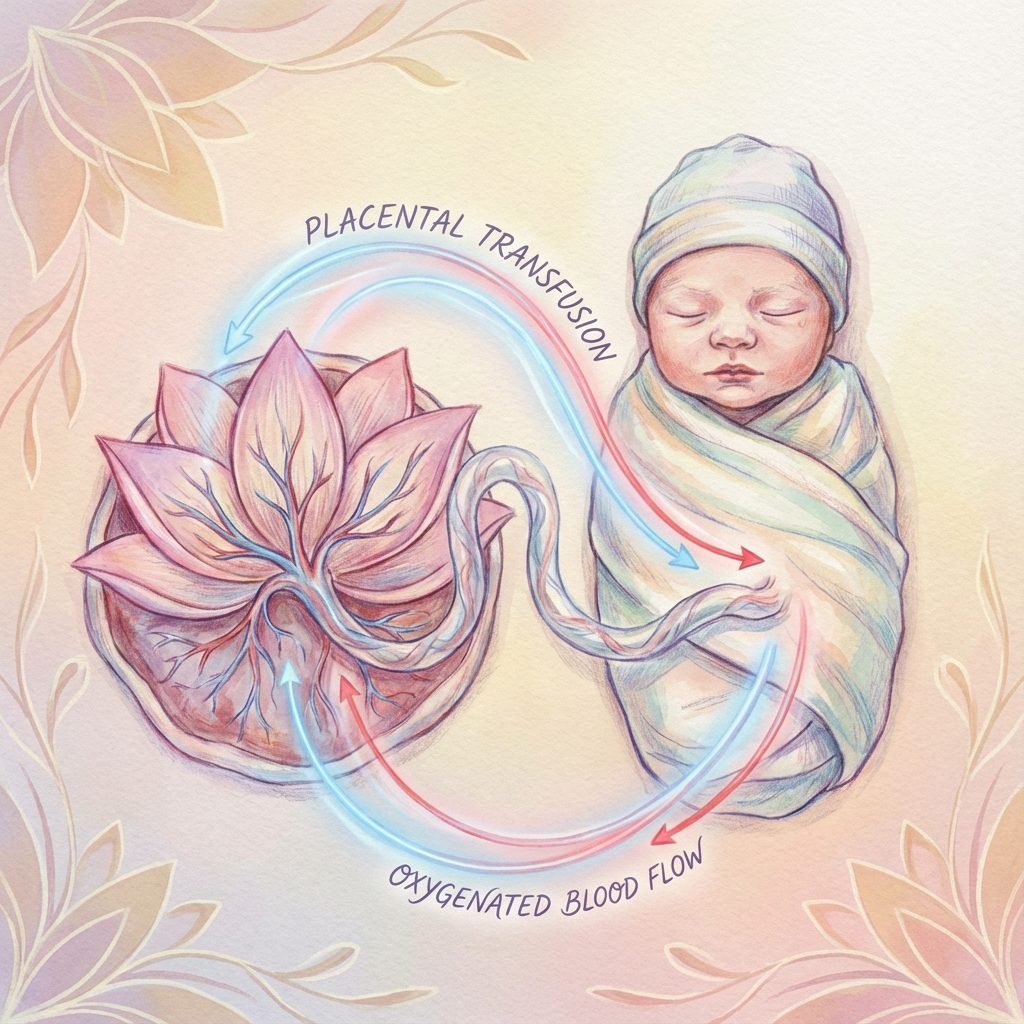
At the moment of birth, up to one-third of your baby’s total blood volume is still in the placenta. When the cord is left unclamped, this oxygen-rich, nutrient-dense blood continues to flow to your baby in a process called placental transfusion. Think of it as the baby’s first and most perfect blood transfusion, designed by nature.
The Old Way vs. The New Evidence
For decades, Immediate Cord Clamping (ICC), often done within 15-30 seconds of birth, was the norm. This practice was rooted in historical concerns, including a belief that it reduced the risk of postpartum hemorrhage (PPH) for the mother and severe jaundice for the baby. However, extensive modern research has not only debunked these fears for most healthy births but has also illuminated the significant disadvantages of depriving a newborn of that final, vital transfer of blood.
During the first 60-90 seconds after birth, your baby can receive an additional 80 to 100 milliliters of blood. This may not sound like much, but for a newborn, it represents a 30% increase in blood volume. This ‘extra’ blood is packed with:
- Iron: A massive boost to the baby’s iron stores, crucial for brain development and preventing anemia.
- Red Blood Cells: Essential for carrying oxygen throughout the body as the baby learns to breathe independently.
- Stem Cells: The body’s master cells, which are vital for organ development, immune system function, and repairing any cellular damage.
Waiting to clamp the cord isn’t about doing nothing; it’s about allowing a natural, physiological process to complete itself for the well-being of your child.
By simply waiting until the cord turns white and stops pulsating, you ensure your baby receives the full inheritance of blood, iron, and stem cells that nature intended for them. It’s a gentle, unhurried transition that honors the baby’s connection to the placenta until they are stable and breathing on their own.
The Remarkable, Science-Backed Benefits for Your Newborn

The Remarkable, Science-Backed Benefits for Your Newborn
The decision to delay cord clamping isn’t based on trends; it’s rooted in solid scientific evidence that demonstrates clear, tangible health advantages for your baby, both in the short term and for years to come.
Higher Iron Stores and Prevention of Anemia
This is perhaps the most celebrated benefit of DCC. The extra blood from the placenta provides a powerful infusion of iron. A baby’s brain develops rapidly in the first year, and iron is a critical building block for healthy neurodevelopment.
- Studies show that infants who experience DCC have higher hemoglobin levels at birth and significantly better iron stores at 4 to 6 months of age.
- This natural iron boost helps protect against iron-deficiency anemia, a condition linked to cognitive and motor delays. It’s a simple way to invest in your child’s long-term brain health.
A Smoother Transition to the Outside World
The increased blood volume helps stabilize your baby’s cardiovascular system. It supports healthy circulation, blood pressure, and organ perfusion as they adapt to life outside the womb. This can lead to a more stable body temperature and better overall outcomes in the immediate postpartum period.
A Rich Supply of Stem Cells
The final pulse of cord blood is rich in diverse and powerful stem cells. These cells are the foundation of the immune, nervous, and circulatory systems. While the full long-term benefits are still being studied, we know these cells play a crucial role in organ repair and development, offering a potential protective effect that is lost with immediate clamping.
Critical Advantages for Preterm Infants
For babies born prematurely, the benefits of DCC are even more pronounced and can be lifesaving. The American Academy of Pediatrics (AAP) notes that for preterm infants, DCC is associated with:
- Lower risk of intraventricular hemorrhage (bleeding in the brain).
- Reduced risk of necrotizing enterocolitis (a severe and dangerous intestinal disease).
- Fewer blood transfusions needed during their NICU stay.
For these vulnerable babies, that extra minute can mean a world of difference in their fight for a healthy start.
By giving your baby the gift of their own cord blood, you are providing a foundation of health that supports them from their very first moments and well into their future.
Addressing Common Myths and Concerns: Is Delayed Cord Clamping Always Safe?

Addressing Common Myths and Concerns: Is Delayed Cord Clamping Always Safe?
It’s completely normal to have questions and concerns about any medical procedure, especially one that affects your newborn. As your doula and educator, I want to address the common worries surrounding DCC with factual, reassuring information. The overwhelming consensus is that for the vast majority of births, DCC is safe and beneficial.
Let’s break down the most common questions:
Does DCC Increase the Risk of Jaundice?
This is the most frequent concern. Jaundice, a yellowing of the skin, is caused by a buildup of bilirubin, which is a byproduct of red blood cell breakdown. Because DCC provides more red blood cells, there is a slightly higher chance that a baby will develop jaundice that requires phototherapy (treatment with special lights).
However, it’s important to put this in perspective. The jaundice is typically mild and highly treatable. Most healthcare providers and major health organizations agree that the profound benefits of DCC—especially the protection against iron deficiency—far outweigh this small, manageable risk. Your pediatric team will be monitoring your baby for jaundice regardless of when the cord was clamped.
Does DCC Increase the Mother’s Risk of Postpartum Hemorrhage (PPH)?
This was a long-held belief that has been disproven by modern research. Large-scale studies have shown no significant increase in the risk of severe postpartum hemorrhage for mothers when DCC is practiced with active management of the third stage of labor (which is standard care in most hospitals). Your health and safety remain the top priority, and DCC does not compromise that.
Are There Times When Immediate Clamping is Necessary?
Yes. The safety of you and your baby always comes first. There are specific, rare medical situations where immediate cord clamping is the right choice. These include:
- True Maternal Emergency: Such as a severe postpartum hemorrhage where the mother requires immediate, life-saving attention.
- Placental Issues: Conditions like placental abruption, where the placenta detaches from the uterine wall before birth.
- Baby Needs Immediate Resuscitation: If a baby is born with no heart rate or is not breathing and needs to be moved to a resuscitation station immediately. Even in many of these cases, some providers are equipped to begin resuscitation with the cord still intact.
It’s important to discuss these exceptions with your provider. A good birth plan is not rigid; it’s a list of preferences that allows for flexibility in the face of medical necessity.
| Myth | Fact |
|---|---|
| DCC causes dangerous postpartum hemorrhage for the mother. | Modern research shows no significant increase in PPH risk with active management of labor. It is considered safe for the mother. |
| DCC leads to severe, harmful jaundice in the baby. | There is a small increase in the risk of treatable jaundice requiring phototherapy. This risk is considered minor compared to the major benefits of preventing iron deficiency. |
| DCC is a new, untested trend. | DCC was the historical norm. Immediate clamping is the more recent intervention. Major global health bodies like WHO and ACOG now recommend DCC based on extensive evidence. |
| If my baby needs help breathing, the cord must be cut immediately. | Not always. Many providers can perform initial stimulation and resuscitation while the baby is skin-to-skin with the cord intact, providing them with oxygenated blood from the placenta. |
How to Advocate for Delayed Cord Clamping: Your Birth Plan and Your Voice

How to Advocate for Delayed Cord Clamping: Your Birth Plan and Your Voice
Knowing the benefits of DCC is the first step; ensuring it happens is the next. Advocacy is a key part of your journey to parenthood, and it starts long before you’re in the delivery room. Here’s how you can confidently and effectively make your preference for DCC known.
1. Start the Conversation Early
Bring up delayed cord clamping during your prenatal appointments. Don’t wait until the third trimester. Ask your doctor or midwife about their standard practice. You can ask questions like:
- “What is your standard protocol for cord clamping?”
- “Are you comfortable with delaying cord clamping for at least 60 seconds, or until the cord stops pulsating?”
- “In what specific situations would you recommend immediate cord clamping?”
Having this conversation early ensures you and your provider are on the same page and builds a foundation of trust.
2. Put It in Writing: The Birth Plan
Your birth plan is a communication tool for the entire labor and delivery team. It’s a concise summary of your preferences. When it comes to DCC, be clear and specific. Vague statements can be misinterpreted in a busy environment.
Sample wording for your birth plan:
“We request Delayed Cord Clamping. Please wait at least 60-90 seconds after birth (or until the cord stops pulsating) before clamping and cutting the cord. We understand that this may not be possible in a true medical emergency involving the health of the mother or baby.”
3. Empower Your Partner: The Advocate in the Room
This is especially for the dads and birth partners. In the intensity of labor and the moments after birth, the birthing parent may not be in a position to advocate. Your role as the support person is absolutely crucial.
- Understand the ‘Why’: Make sure you’ve read up on DCC and understand the benefits as well as your partner does. When you know why you’re asking for it, you can advocate with more confidence.
- Be the Voice: When the baby is born, you can provide a gentle, verbal reminder: “Remember, we’ve requested to delay clamping the cord.” A calm, respectful reminder is almost always well-received.
- Run Interference: Your job is to create a peaceful bubble for the new family. You can handle questions from staff or family, allowing the birthing parent to focus on bonding with the baby skin-to-skin while the cord is still attached.
4. Visualize the Moment
Understand what this pause will look and feel like. After your baby is born, they will be placed on your chest for immediate skin-to-skin contact. The cord will still be attached. The medical team will step back for a moment, allowing your family to have its first moments together while the placental transfusion completes its work. It is not an awkward wait; it is a sacred, peaceful, and intentional pause that honors your baby’s transition.
Conclusion
That single minute after your baby is born is one of the most powerful of your life. By choosing to wait, you are not just delaying a routine procedure; you are actively giving your child a profound health advantage. You are providing them with more iron for their developing brain, a greater volume of blood for a stable transition, and a rich supply of stem cells for a strong start. It is a decision rooted in science and delivered with love.
Navigating the world of pregnancy and childbirth means becoming your child’s first and most important advocate. Asking for delayed cord clamping is a perfect example of how informed, intentional choices can have a lasting, positive impact. Talk with your partner, speak with your provider, and add it to your birth plan with confidence.
This powerful pause is a testament to the fact that sometimes, the greatest gifts we can give are not in the things we do, but in the moments we allow to unfold naturally.
Disclaimer: The information provided in this article is intended for educational purposes only and is not a substitute for professional medical advice, diagnosis, or treatment. Always seek the advice of your physician or other qualified health provider with any questions you may have regarding a medical condition.