

Back Labor Survival Guide: Natural Relief Methods That Actually Work
Hearing the words “back labor” can send a shiver of anxiety down the spine of any expectant parent. It’s a term often associated with stories of long, intense, and uniquely challenging births. If you’re here, you might be feeling a mix of curiosity and apprehension, wondering what it is and, more importantly, how you’ll ever get through it. Please, take a deep, calming breath. You’ve come to the right place.
As a doula, I’ve supported countless families through every type of labor imaginable, and I can tell you this with absolute certainty: you are stronger than you think, and you have so many tools at your disposal to manage this experience. Back labor is intense, yes, but it is not insurmountable. It’s a variation of the normal process of birth, and with the right knowledge, support, and techniques, you can navigate it with power and grace.
This guide is designed to be your trusted companion. We’ll demystify what back labor really is, explore why it happens, and then dive deep into practical, natural, and effective methods for relief. For partners and support people, this is your guide, too. You are a vital part of this journey, and the hands-on techniques we’ll cover can make an extraordinary difference. Let’s walk this path together, transforming fear into empowerment.
What Exactly is Back Labor and Why Does It Happen?
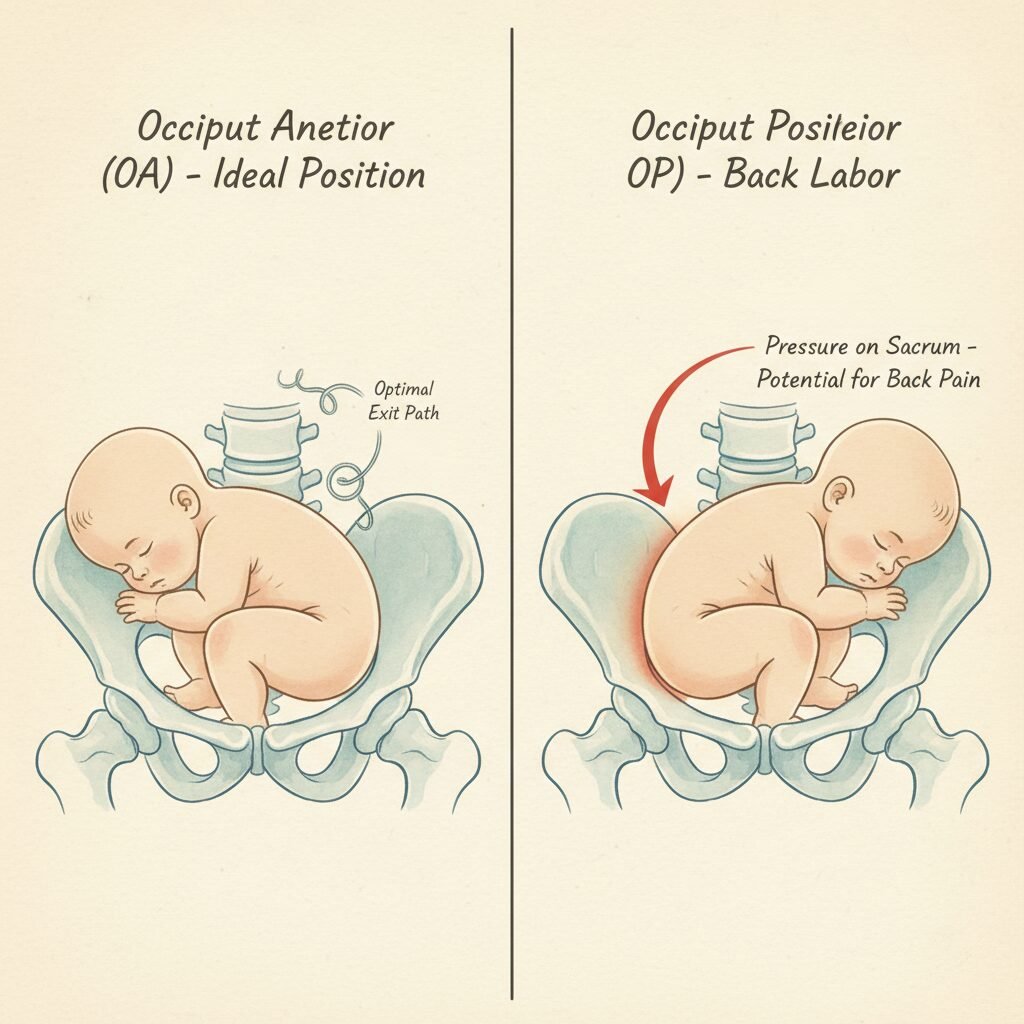
Understanding the Anatomy of Back Labor
Before we can tackle the solutions, it’s essential to understand the cause. Back labor isn’t a different type of labor; it’s a difference in how labor is felt. The intense, persistent pain in the lower back, often peaking during contractions but sometimes continuing between them, is most commonly caused by the baby’s position in the pelvis.
In the majority of births, the baby is in an “anterior” position, meaning their head is down, and the back of their skull is facing your belly. This is often called the Occiput Anterior (OA) position. In this position, the smallest part of the baby’s head presses against the cervix, which is ideal for labor progress.
However, sometimes the baby is in a “posterior” position, often called “sunny-side up” or Occiput Posterior (OP). This means the hard, bony back of their skull is pressing directly against your sacrum (the bony structure at the base of your spine). Every contraction, instead of just pushing the baby down, also grinds the baby’s skull against your spine. This immense pressure is what creates that signature, relentless ache of back labor.
Is It My Fault? Debunking the Myths
Let’s be perfectly clear: A posterior baby is not your fault. There are many theories about why some babies prefer this position—the shape of the mother’s pelvis, the position of the placenta, or even modern lifestyles that involve more sitting and reclining. But it is not something you did wrong. It is simply a variation of normal. Many babies start labor in a posterior position and rotate to an anterior one before they are born. Our goal is to manage the sensations and encourage that rotation.
Remember this: Your body is not broken. Your baby is not stuck. You are both working together on this incredible journey. The sensations are intense, but they are productive.
Your First Line of Defense: Positional Changes and Movement
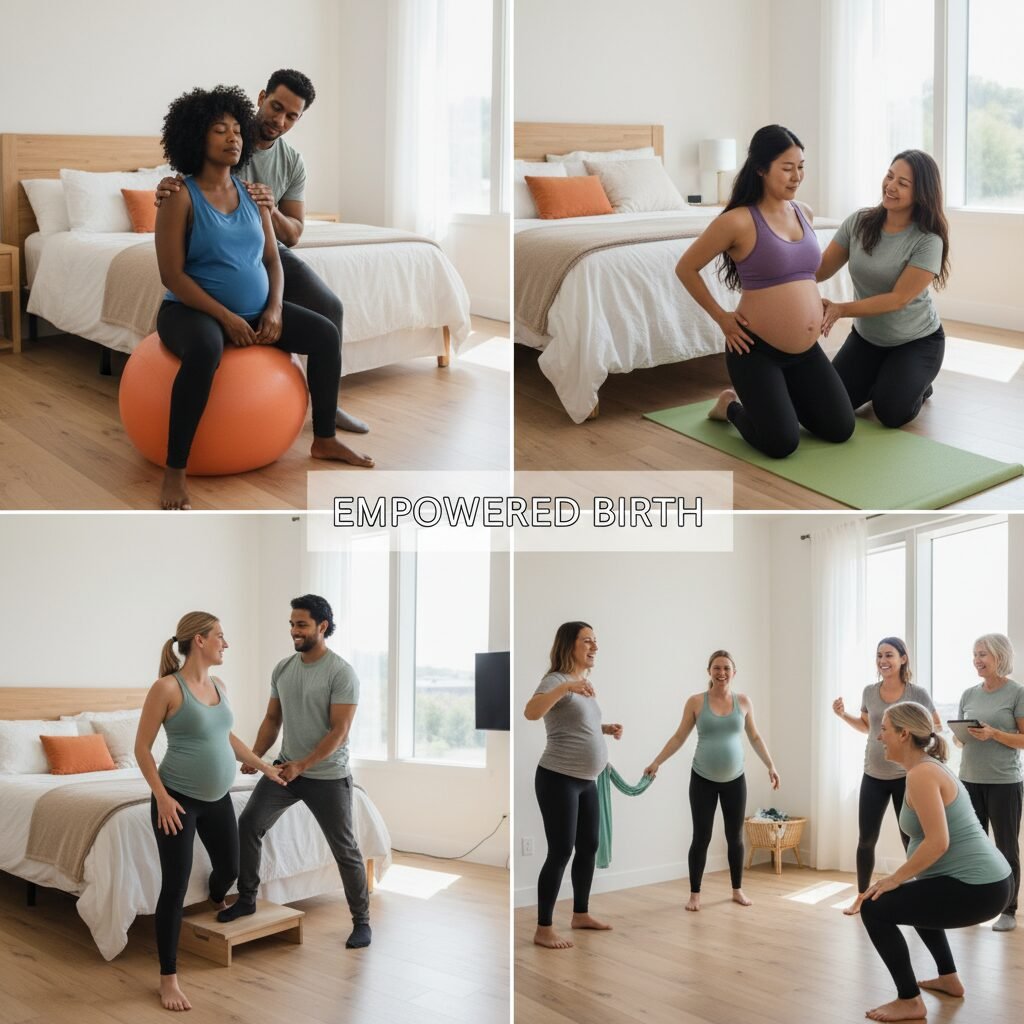
Movement is your superpower in labor, especially back labor. Changing positions can help alleviate the intense pressure on your sacrum and, crucially, use gravity to encourage your baby to rotate into a more optimal position. The key is to create more space in your pelvis. Think: forward-leaning and asymmetrical.
Key Positions to Try:
- Hands and Knees (All Fours): This is the gold standard for back labor relief. It takes all the pressure off your spine and lets your belly hang, using gravity to help the baby shift away from your sacrum. You can do this on a bed, a mat, or the floor.
- Pelvic Tilts & Cat-Cow: While on your hands and knees, gently rock your pelvis back and forth. Inhale as you drop your belly (cow pose) and exhale as you round your spine (cat pose). This movement can help wiggle the baby into a better position and feels incredibly soothing on a sore back.
- Leaning Forward: Whether you’re standing, kneeling, or sitting on a birth ball, lean forward and rest your upper body on a stable surface. This could be the back of the hospital bed, a stack of pillows, or your partner’s shoulders. This opens the back of your pelvis, giving your baby more room to maneuver.
- Side-Lying with a Peanut Ball: If you need to rest, avoid lying on your back. Lie on your side (preferably your left side to optimize blood flow) and place a peanut ball or several firm pillows between your knees and ankles. This keeps your pelvis open and aligned, even while resting.
- The Lunge: Place one foot up on a stool or chair and gently lean into the lunge during a contraction. This creates an asymmetrical opening in your pelvis, which can be just the ticket to help a baby turn. Be sure to switch sides.
Listen to your body. There is no “wrong” position. If something feels good, stay there. If it doesn’t, move. Encourage your partner to remind you to change positions at least every 30-45 minutes.
The Power of Touch: Hands-On Techniques for Partners and Doulas

For the support person, this is where you become the hero. Your hands can provide relief that is both physically effective and emotionally grounding. Don’t be afraid to use firm, confident pressure—most people experiencing back labor want more pressure, not less. Always check in, though: “Is this the right spot? More pressure? Less?”
The Most Effective Techniques:
- Constant Counter-Pressure: This is the number one tool in your kit. Locate the sacrum (the flat, triangular bone at the very base of her spine, just above her tailbone). Using the heel of your hand, your knuckles, or even two tennis balls in a sock, apply firm, steady pressure to this exact spot. You’ll need to lean into it. This technique literally “pushes back” against the pressure from the baby’s head, providing immense relief. You will likely need to apply this pressure through the entire contraction.
- The Double Hip Squeeze: This move is legendary for a reason. Have the birthing person on her hands and knees or leaning forward. Stand behind her and place the heels of your hands on her gluteal muscles, on the fleshy part of her upper buttocks, with your fingers pointing towards her hips. During a contraction, press your hands firmly together, as if you are squeezing her hips. This helps to open the pelvic outlet. It’s a physically demanding move, so be prepared to put your body weight into it and take breaks when needed.
- Effleurage and Massage: Between contractions, gentle massage can help release tension. Use lotion or oil and perform long, sweeping strokes up her back or gentle circles around her hips. This provides comfort and a caring connection.
To the partners: Your hands are an extension of your love and support. Your steady presence and confident touch are telling her, “I am here with you. We are in this together.” You are not a bystander; you are an essential part of this process.
Water, Heat, and Cold: Harnessing the Elements for Relief

Never underestimate the therapeutic power of water and temperature. They are simple, non-invasive, and incredibly effective tools for managing the intensity of back labor.
Hydrotherapy: The Magic of Water
Warm water is often called the “aquadural” for its pain-relieving properties. The buoyancy of the water lifts the weight of the baby off the spine, providing immediate relief and making it easier to move and change positions.
- The Shower: Standing in a warm shower and letting the water jet spray directly onto your lower back can be heavenly. If you have a detachable shower head, your partner can direct the stream exactly where you need it most. You can lean against the wall or sit on a shower stool.
- The Tub: Immersing yourself in a deep, warm tub can decrease pain, reduce anxiety, and help you relax between contractions. This relaxation is key, as it can help labor progress more smoothly. Make sure the water is warm, not hot (around 98-100°F or 37°C), and stay hydrated.
Temperature Therapy: Heat and Cold
Applying targeted temperature can help override the pain signals being sent to your brain.
- Heat Packs: A warm compress, microwaveable rice sock, or hot water bottle placed directly on the sacrum can soothe aching muscles and provide deep, comforting relief. You can use this in any position.
- Cold Packs: While most people prefer heat for back labor, some find a cold pack more effective. The cold can help numb the area and reduce feelings of inflammation. It can be a welcome distraction and a shocking sensation that breaks the cycle of pain. Try alternating between hot and cold to see what feels best for you.
Mind-Body Connection: Breathing, Relaxation, and Your Environment

Coping with back labor isn’t just a physical challenge; it’s a mental and emotional marathon. Your mind is your most powerful tool. When you feel overwhelmed, come back to these anchors.
Breathing and Sound
Your breath is your constant companion. When a contraction begins, start with a long, cleansing exhale to release tension. Then, breathe in slowly through your nose and out slowly through your mouth. Focusing solely on the rhythm of your breath can keep you centered and prevent panic from setting in.
Don’t be afraid to use your voice. Making low, deep, vocal sounds like “oooooh” or “aaaaah” during contractions can be a powerful form of pain relief. High-pitched screaming tends to create tension in the body, while low moans help to relax the jaw and, by extension, the pelvic floor. This is your birth; make the sounds you need to make.
Creating a Sanctuary
Your environment profoundly impacts your ability to cope. You want to create a space that feels safe, calm, and private. This helps your body produce oxytocin (the hormone of labor) and reduces adrenaline (which can stall labor and increase pain perception).
- Dim the lights. Bright, fluorescent lights are jarring and clinical.
- Play calming music or a playlist of songs that make you feel strong.
- Use aromatherapy. A diffuser with lavender (for calm) or peppermint (for nausea and energy) can be helpful.
- Limit interruptions. Ask for quiet voices and for people to knock before entering the room.
Affirmations for Strength
Repeat positive affirmations to yourself or have your partner say them to you. They can rewire your brain to move from fear to confidence.
“Each contraction brings my baby closer to me.”
“I trust my body. I trust my baby. I trust this process.”
“I can do anything for one minute.”
“I am surrounded by love and support.”
Conclusion
Navigating back labor is a testament to your incredible strength and endurance. It may be one of the most challenging things you ever do, but it is absolutely something you can do. Remember the core principles: lean forward, use movement, invite firm pressure, find solace in water, and anchor yourself with your breath. Communicate your needs to your support team—they are there to help you, and they want to know how.
To the partners, your role is immeasurable. Your calm presence, your confident touch, and your unwavering belief in her power will be the bedrock of her experience. You are not just helping; you are co-regulating, sharing the load, and making this journey a true partnership.
Above all, be kind to yourself. There is no award for a “perfect” birth. There is only your birth. Trust the process, trust your body, and know that on the other side of this intensity is the moment you will finally meet your baby. You have everything you need within you to do this.
Disclaimer: The information provided in this article is for educational purposes only and is not a substitute for professional medical advice, diagnosis, or treatment. Always seek the advice of your physician, midwife, or other qualified health provider with any questions you may have regarding a medical condition or your pregnancy.


