
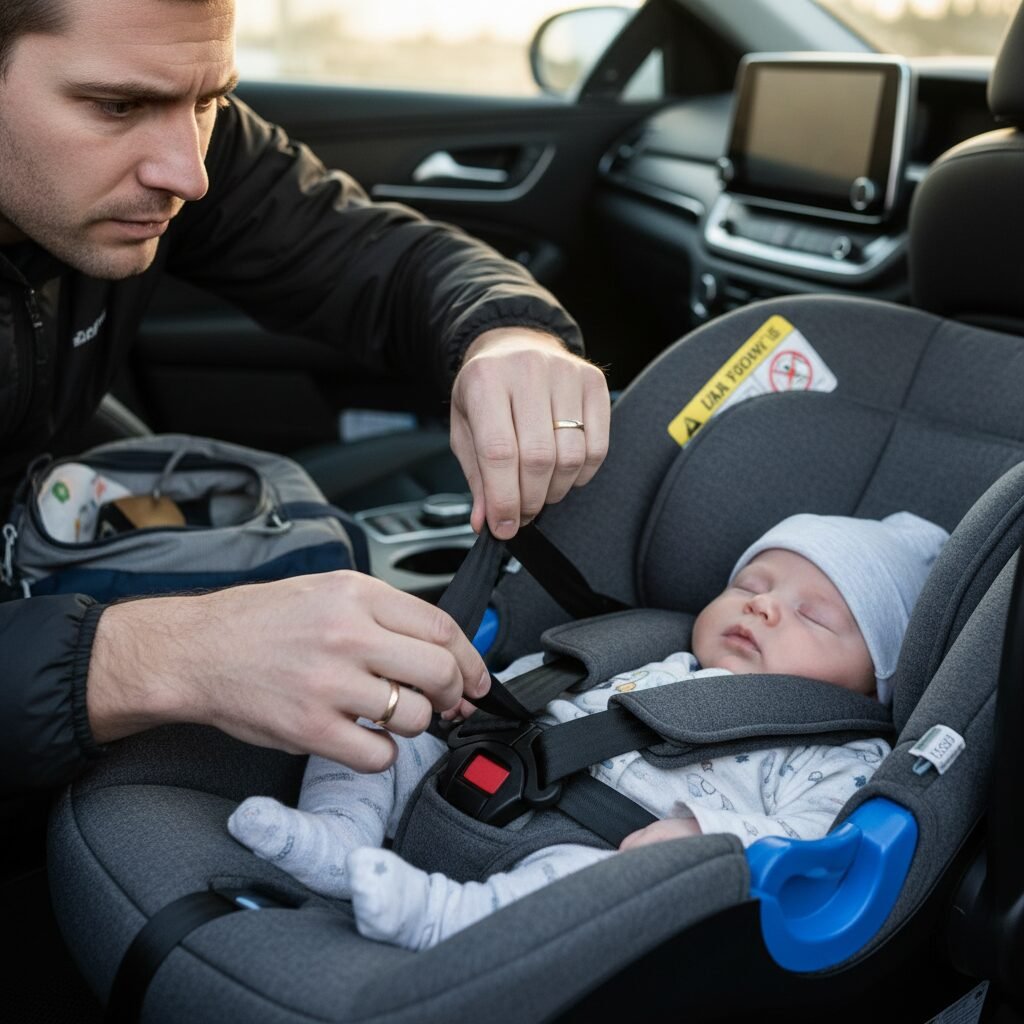
Is Your Car Seat Safe? 5 Deadly Mistakes 90% of Parents Make
Bringing a new life into the world comes with an immense wave of love, joy, and an equally immense sense of responsibility. As a new parent, you are tasked with making countless decisions to protect your precious cargo, and none is more critical than ensuring their safety in a vehicle. Yet, staggering statistics from organizations like Safe Kids Worldwide show that up to 95% of car seats are installed or used incorrectly. This isn’t a reflection of poor parenting; it’s a testament to how complex and counterintuitive car seat safety can be.
This article is not meant to inspire fear, but to empower you with knowledge. As a doula and maternal health educator, I have seen the anxiety that car seats can cause. My goal is to transform that anxiety into confidence. We will walk through the five most common—and most dangerous—mistakes parents make, providing clear, actionable steps to correct them. By understanding these critical errors, you can ensure your child is as safe as possible on every journey, from the first ride home from the hospital to years of family adventures.
Mistake #1: Incorrect Harness Height and Tightness
The Slack in the Straps: A Hidden Danger
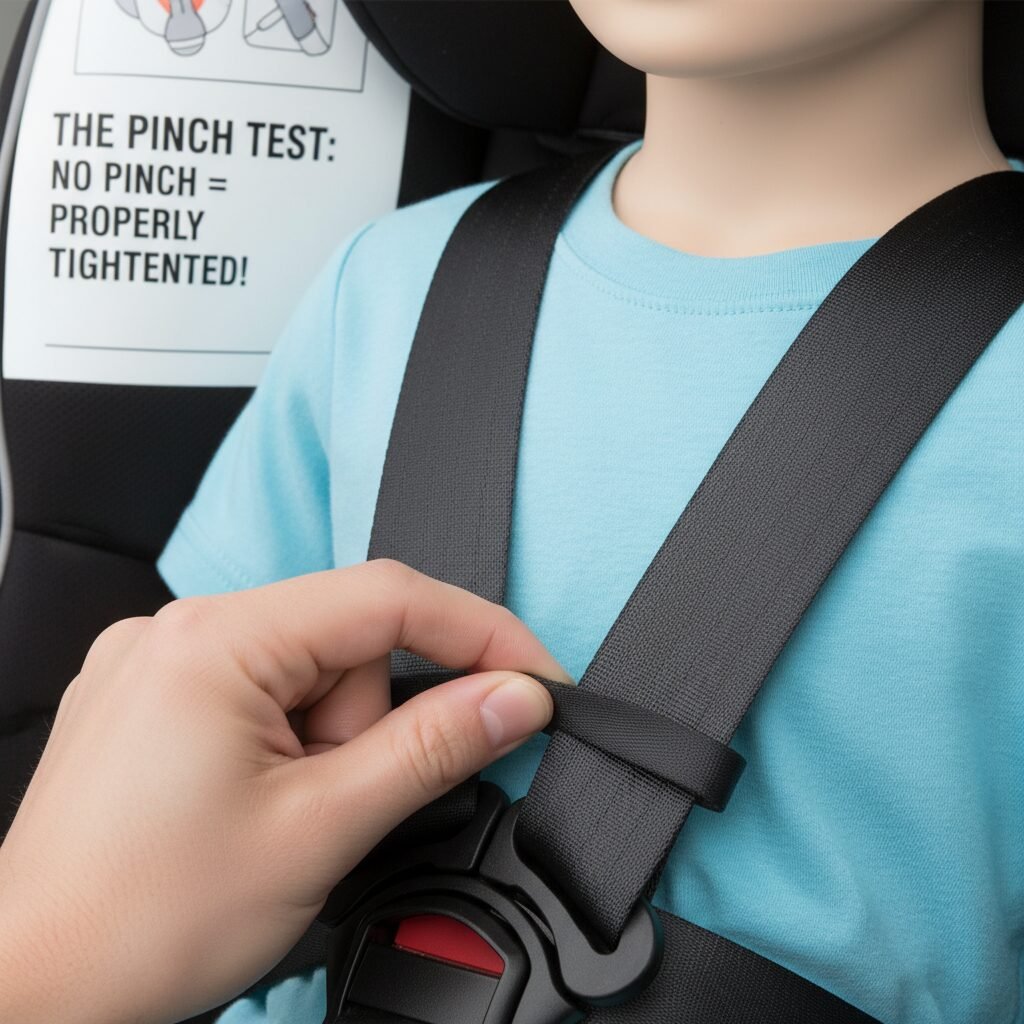
One of the most frequent errors is a harness that is too loose. In a collision, even a small amount of slack can be catastrophic, potentially leading to the child being ejected from the seat. The harness is what holds your child securely within the protective shell of the car seat. To ensure it’s properly tightened, we use a simple, foolproof method called the ‘Pinch Test.’
How to Perform the Pinch Test:
- First, buckle your child into the car seat and position the chest clip at armpit level (more on this next).
- Pull the harness adjuster strap to tighten the straps over your child. They should feel snug.
- Now, using your thumb and forefinger, try to pinch a horizontal fold of webbing at your child’s collarbone.
- If you can pinch any excess webbing, the harness is too loose. You need to pull the adjuster strap again until you can no longer pinch any webbing. Your fingers should slide right off.
This simple test removes all guesswork. A properly tightened harness lies flat without any twists and is snug against the child’s body.
Harness Height: Rear-Facing vs. Forward-Facing
The correct height of the shoulder straps is just as important as the tightness, and the rule changes depending on which way the seat is facing.
- For Rear-Facing Seats: The shoulder straps must come from a slot that is at or just below your child’s shoulders. In a frontal crash (the most common type), this positioning helps prevent the child’s body from sliding upwards in the seat, keeping their spine and neck protected.
- For Forward-Facing Seats: The shoulder straps must come from a slot that is at or just above your child’s shoulders. This helps restrain the torso effectively, preventing the body from lurching too far forward during a crash.
Always check your car seat’s manual to confirm the specific harness routing and height requirements. Adjusting the harness height is a step that needs to be revisited every few months as your child grows.
Mistake #2: Improper Chest Clip Position
The Wandering Clip: Why Armpit Level is Non-Negotiable
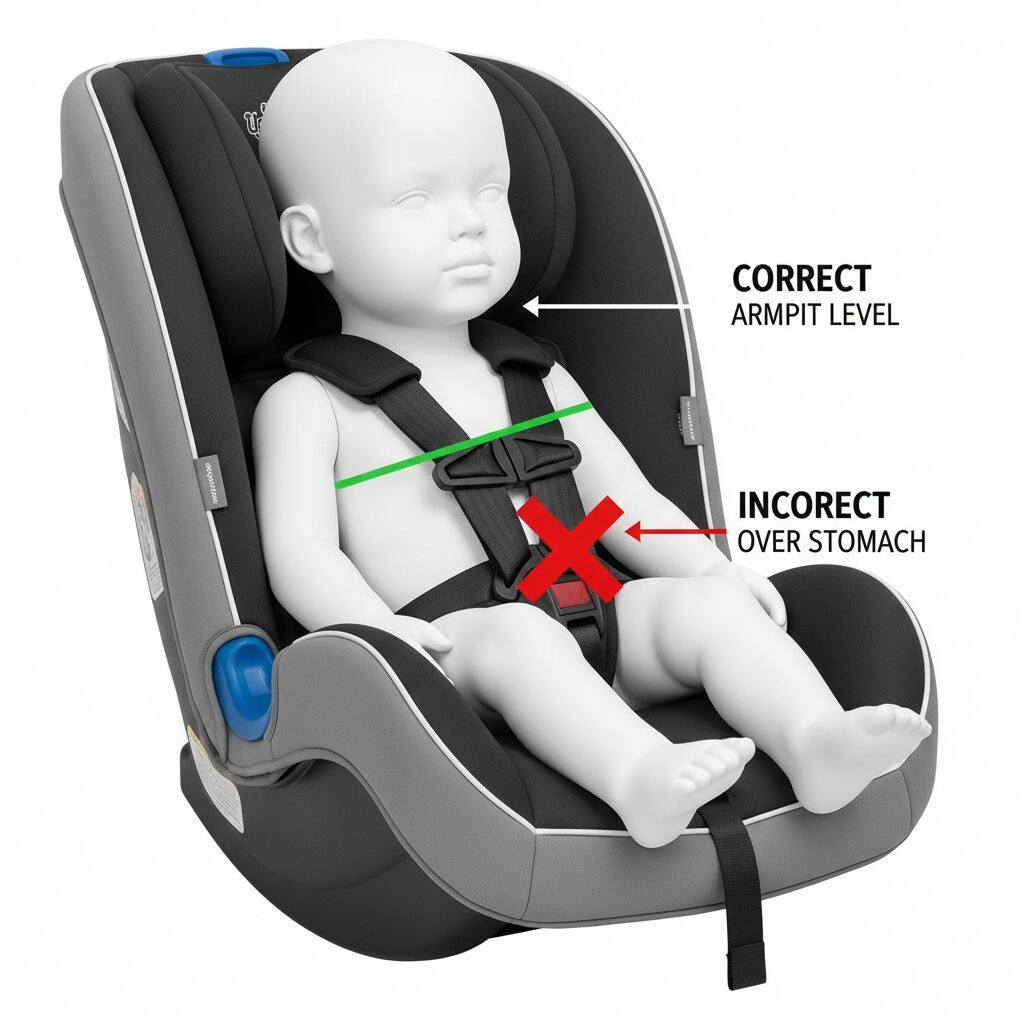
The small plastic clip that connects the two harness straps is called the chest clip. Its official name is a ‘pre-crash positioner,’ and its sole job is to keep the shoulder straps correctly positioned over the child’s shoulders before a crash happens. A common mistake is placing it too low on the abdomen or too high near the neck.
The rule is simple and absolute: The top of the chest clip should be aligned with your child’s armpits.
The Dangers of an Incorrectly Placed Clip:
- Too Low (On the Belly): If the clip is down on the soft abdomen, the shoulder straps can easily slip off the child’s shoulders during a crash. This can lead to the child’s upper body being thrown forward violently or even total ejection from the seat. Furthermore, the hard plastic of the clip can cause severe internal organ damage in a collision.
- Too High (On the Neck): A clip that is too high can be a choking hazard in daily use and can cause serious throat or neck injuries in a crash.
Think of the chest clip as the final, critical step that locks the safety system into place. After you’ve buckled the harness and tightened it using the pinch test, always slide the chest clip up to armpit level. It’s a two-second adjustment that makes a world of difference.
Mistake #3: A Loose Car Seat Installation
The Foundation of Safety: Securing the Seat to the Vehicle
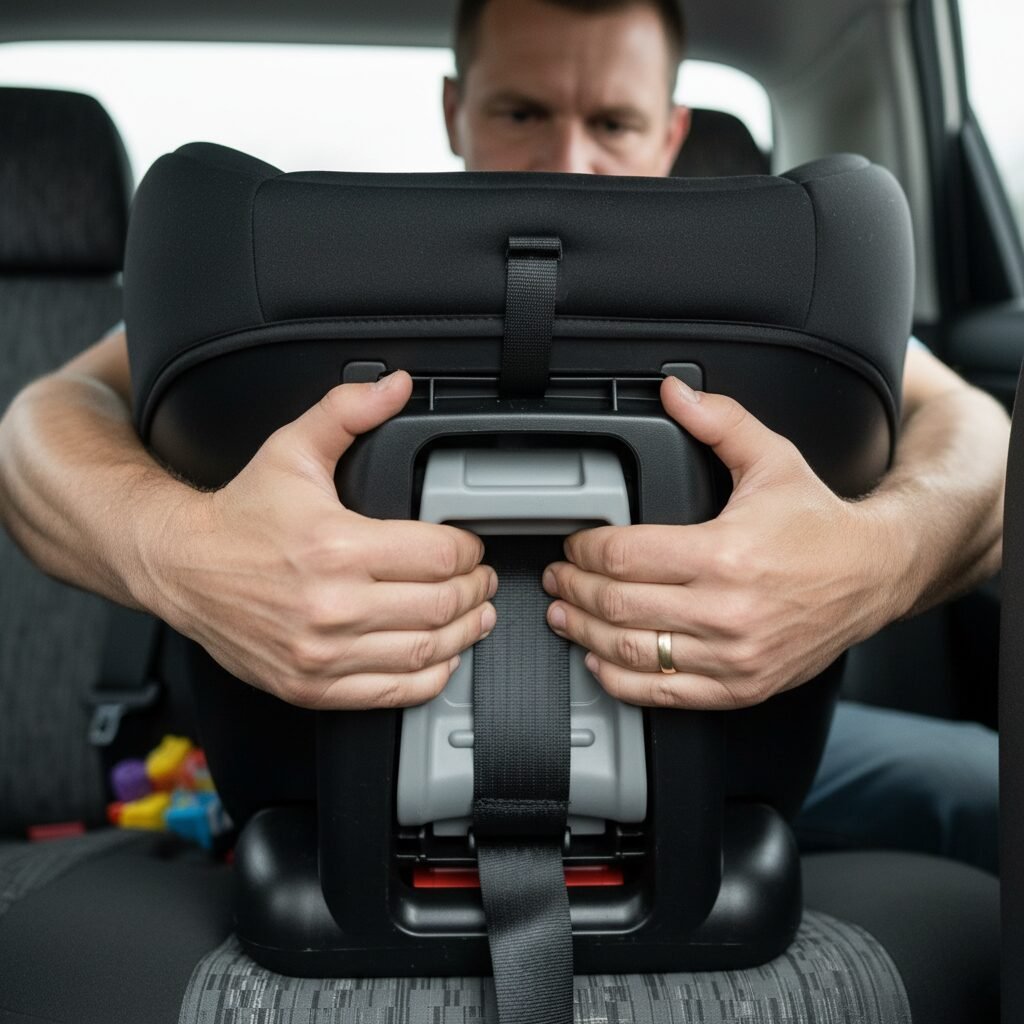
Even with a perfectly harnessed child, the car seat can only do its job if it is securely attached to the vehicle. A seat that is too loose can experience excessive movement during a crash, increasing the forces exerted on the child and potentially striking other parts of the vehicle’s interior. The goal is to make the car seat feel like it’s one with the car.
The 1-Inch Rule:
The standard test for a secure installation is the ‘1-Inch Rule.’ Here’s how you do it:
- Grip the car seat at the belt path (where the seat belt or LATCH strap runs through the car seat). Do not test for tightness at the top of the seat, as all seats will have some movement there.
- Using your non-dominant hand, try to move the car seat side-to-side and front-to-back.
- The car seat should not move more than 1 inch in any direction at the belt path.
If it moves more than an inch, the installation is too loose and needs to be redone.
Achieving a Tight Installation:
Getting a rock-solid installation can be physically demanding. Here are some tips:
- Use Your Weight: Place your knee in the car seat and put your full body weight into it while you are pulling the seat belt or LATCH strap tight. This compresses the vehicle cushion and helps remove slack.
- Check Your Angles: For rear-facing seats, ensure the recline angle is correct according to the indicator on the side of the seat. An incorrect angle can affect both safety and your baby’s ability to breathe properly.
- Read Both Manuals: Your car seat manual and your vehicle’s owner manual are your two most important resources. They will tell you exactly where the LATCH anchors are located and the proper way to route a seat belt for installation.
- Lock the Seat Belt: If using the vehicle seat belt, you MUST ensure it is locked. Most modern vehicles allow you to do this by pulling the seat belt all the way out slowly until it makes a clicking sound, then feeding it back in so it stays locked tight. Check your vehicle manual for the specific procedure.
Mistake #4: Using Bulky Outerwear or Aftermarket Products
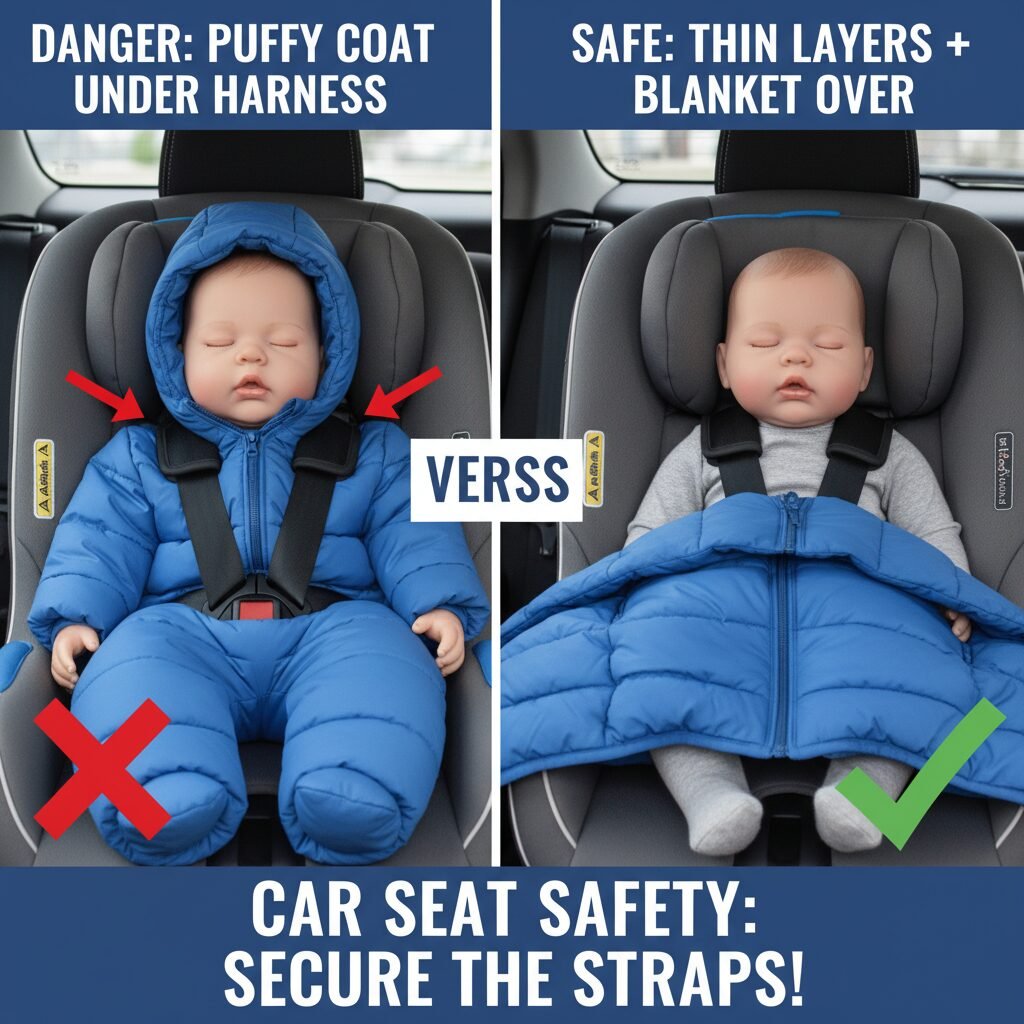
The Puffy Coat Problem and Unregulated Add-Ons
As seasons change, parents rightly worry about keeping their children warm. However, bulky winter coats, snowsuits, and thick sweaters pose a significant, hidden danger in a car seat. These items create a large air gap between the child and the harness straps.
The Danger of Compression:
In a crash, the forces are immense. The fluffy padding in a winter coat will instantly compress, leaving the harness dangerously loose against the child’s body. This creates a situation identical to having a loose harness, with the same risks of ejection and injury. A harness that passed the ‘Pinch Test’ over a puffy coat can have several inches of slack once that coat compresses.
The Safe Way to Stay Warm:
- Dress in Thin Layers: Dress your child in thin, warm layers like fleece jackets, long-sleeved onesies, and pants.
- Harness First, Warmth Second: Place your child in the car seat without their bulky coat. Secure and tighten the harness correctly using the Pinch Test.
- Add Warmth on Top: Once your child is securely harnessed, you can place their coat on them backward over their arms or lay a thick blanket over them, tucking it in securely after they are buckled. There are also car seat-safe ponchos and covers designed for this purpose.
A Warning on Aftermarket Products:
The market is flooded with products—cushy strap covers, head inserts, bunting bags—that are not sold with the car seat. These are known as ‘aftermarket products.’ Unless the product is made or explicitly approved by your car seat manufacturer, do not use it. Car seats undergo rigorous crash testing in a specific configuration. Adding products that were not part of that testing can interfere with the seat’s performance in a crash in unpredictable ways.
Mistake #5: Turning the Child Forward-Facing Too Soon
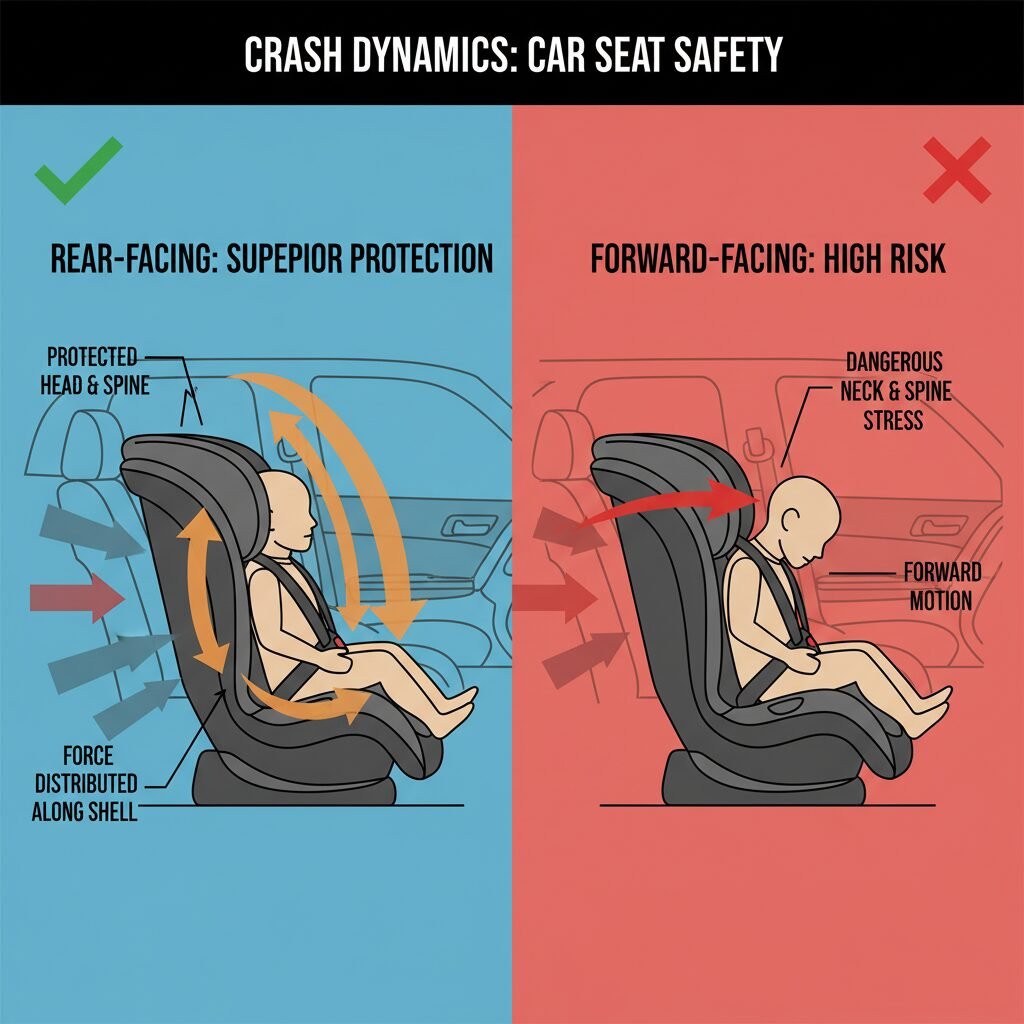
The Rush to Graduate: Why Rear-Facing is Safest
In our culture, turning a car seat forward is often seen as a milestone. Unfortunately, it’s a milestone that is frequently reached far too early, putting young children at risk of severe head, neck, and spinal cord injuries. The science on this is unequivocal: rear-facing is the safest way for a young child to ride.
The Physics of Protection:
A young child’s body is fundamentally different from an adult’s. Their head is disproportionately large and heavy, and the vertebrae in their spine are still developing and connected by soft cartilage. In a frontal collision (the most common and severe type of crash), a forward-facing child’s body is held back by the harness, but their heavy head is thrown forward with incredible force. This can cause the spinal cord to stretch, an injury known as internal decapitation, which is often fatal or results in permanent paralysis.
When a child is rear-facing, the entire back of the car seat cradles their head, neck, and spine, absorbing the crash forces and moving their body as one cohesive unit. This reduces the force on the neck by up to 500%.
Follow the Limits, Not the Law or Legs:
The American Academy of Pediatrics (AAP) and the National Highway Traffic Safety Administration (NHTSA) recommend that children remain rear-facing for as long as possible, until they reach the maximum height or weight limit of their convertible car seat. This often means children can and should ride rear-facing until age 3, 4, or even 5.
Don’t be concerned about their legs. Children are far more flexible than adults. A leg injury is far more treatable than a spinal cord injury. There is no data to support an increase in leg injuries for rear-facing children.
Ignore the minimum age/weight laws in your state, as they are often far behind best practice recommendations. The safest choice is to max out the rear-facing limits of your specific car seat.
Conclusion
You Are Your Child’s Best Safety Advocate
Navigating the world of car seats can feel like a high-stakes exam, but it doesn’t have to be. By avoiding these five common mistakes, you have dramatically increased your child’s safety. Let’s recap the key takeaways:
- Harness Check: Use the Pinch Test at the collarbone and ensure straps are at/below shoulders for rear-facing and at/above for forward-facing.
- Clip Position: Always place the chest clip at armpit level.
- Installation: The seat should not move more than 1 inch at the belt path.
- No Bulk: Avoid puffy coats under the harness and only use accessories approved by your car seat manufacturer.
- Stay Rear-Facing: Keep your child rear-facing until they reach the maximum height or weight limit of their seat.
Remember, knowledge is the first step, but practice makes perfect. Read your manuals, check your installation regularly, and never hesitate to seek professional help. A certified Child Passenger Safety Technician (CPST) can provide a hands-on check and give you complete peace of mind. You can find one in your area through organizations like Safe Kids Worldwide.
You’ve already taken a monumental step by seeking out this information. Trust your instincts, follow these guidelines, and be confident that you are doing an incredible job of protecting the most important person in your world.
Medical Disclaimer
The information in this article is for educational and informational purposes only and does not constitute professional safety or medical advice. It is not a substitute for reading your specific car seat manual and your vehicle’s owner’s manual. For personalized assistance and to ensure your car seat is used correctly, please consult a nationally certified Child Passenger Safety Technician (CPST).