
The ‘Wonky Winding’ Trick That Burps Hard-To-Burp Babies Instantly
The scene is all too familiar for new parents: it’s 3 AM, the house is quiet, but your little one is anything but. They’re squirming, crying, and clearly uncomfortable after a feed. You’ve patted their back, bounced them gently, tried every burping position you saw online, but that stubborn gas bubble just won’t come out. It’s a moment that can test the patience of even the most serene parent, leaving you feeling exhausted and helpless.
If this sounds like your nightly reality, please know you are not alone, and you are doing an incredible job. A baby’s digestive system is a work in progress, making them prone to swallowing air during feedings, which leads to trapped gas. While traditional burping is essential, sometimes it’s not enough. That’s where a gentle, almost magical technique known as the ‘Wonky Winding’ comes in. This simple trick has been a game-changer for countless families, offering a quick and effective way to help your baby release trapped air and find comfort. In this guide, we’ll walk you through exactly why it works and how to do it safely and effectively.
Why Traditional Burping Methods Sometimes Fall Short

For generations, the go-to burping methods have been the classic over-the-shoulder pat, the seated forward lean, or the tummy-down lap position. These methods rely on pressure and percussion (patting) to encourage a burp. And for many babies, they work perfectly well. However, for others, especially those who are particularly gassy or have sensitive tummies, these techniques can be less effective and sometimes even agitating.
Common Challenges with Standard Techniques:
- Immature Sphincters: A newborn’s lower esophageal sphincter, the muscle that keeps stomach contents down, is still developing. Aggressive patting can sometimes lead to more spit-up rather than just a burp.
- Deeply Trapped Air: Sometimes, an air bubble isn’t conveniently located at the top of the stomach. It might be trapped lower down, and simple upright positions may not be enough to dislodge it.
- Baby’s Tension: An uncomfortable, fussy baby will often tense their abdominal muscles. This tightness can make it even harder for a gas bubble to escape, no matter how much you pat their back.
- Wrong Angle: The straight, up-and-down nature of traditional burping doesn’t always create the clearest path for the air bubble to travel up and out of the esophagus.
Understanding these limitations is the first step toward finding a better solution. The goal isn’t to pat harder; it’s to work smarter by using gravity and gentle movement to help your baby’s body do what it needs to do naturally.
The Gentle Science Behind ‘Wonky Winding’
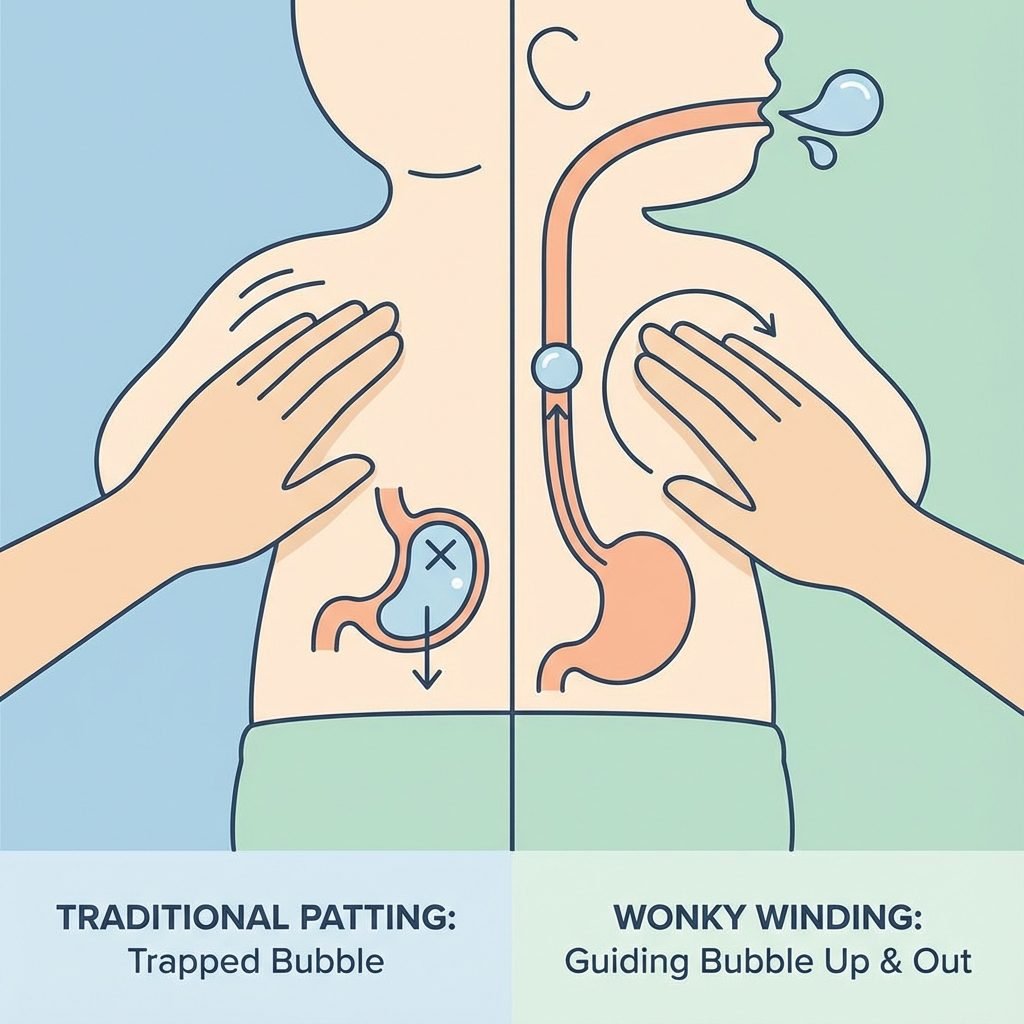
The ‘Wonky Winding’ technique isn’t magic—it’s based on a simple understanding of your baby’s anatomy. Instead of relying on force, it uses a gentle, circular motion to coax the air bubble out. Think of a bottle of soda: if you shake it, it fizzes violently. But if you gently swirl it, the bubbles rise smoothly to the top. This is the principle behind winding.
Here’s how it works:
- Stomach Relaxation: The slow, rhythmic, circular movement helps to relax the baby’s abdominal wall and stomach muscles. When the baby isn’t tense, the gas can move more freely.
- Mobilizing the Air Bubble: As you gently rotate your baby’s torso, you are essentially ‘swirling’ the contents of their stomach (milk and air). This motion helps to dislodge the air bubble from wherever it’s trapped and encourages it to float to the top of the stomach, right below the esophagus.
- Creating a Clear Pathway: By keeping your baby’s spine straight while their base rotates, you are creating an open and clear pathway for the air to travel up the esophagus and out as a burp. The ‘wonky’ or slightly off-center nature of the circle is key, as it provides a subtle shift in gravity that can be just what a stubborn bubble needs to get moving.
“The beauty of this technique is its gentleness. We’re not forcing the burp out; we’re creating the perfect internal conditions for the baby to release it on their own. It respects their tiny, developing system.” – Maternal Health Educator
Your Step-by-Step Guide to the ‘Wonky Winding’ Technique
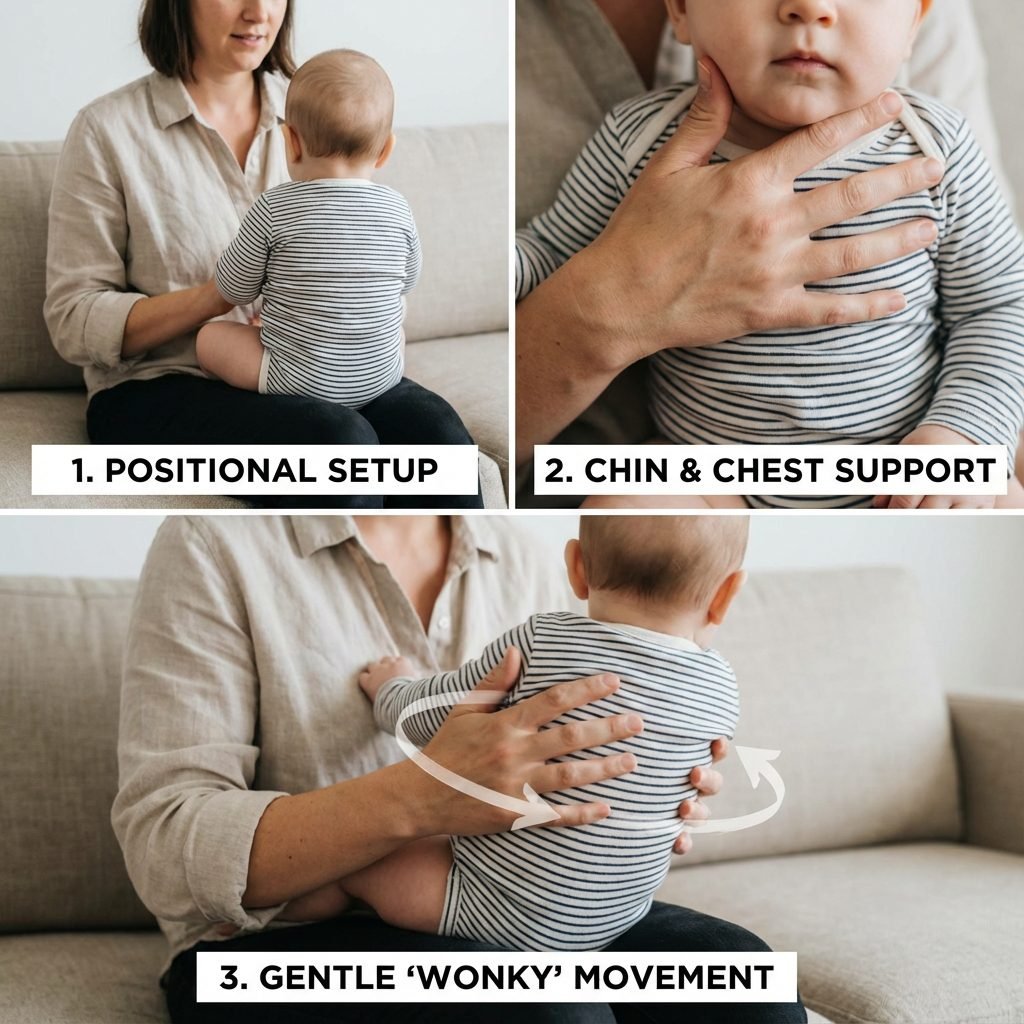
Ready to try it? Find a comfortable place to sit where your feet are flat on the floor. Remember to be patient and gentle. This is a calm, soothing motion, not a ride at the fair!
- Establish a Safe Position: Sit your baby on your lap, facing away from you. Ensure they are sitting upright with a straight back.
- Secure Their Head and Neck: This is the most critical step for safety. Form a ‘U’ shape with your thumb and index finger and place it gently under your baby’s chin to support their head. Your palm should rest on their chest. Important: Make sure you are supporting their jawbone and not putting any pressure on their soft throat. Your other arm should be around their waist for stability.
- Begin the Gentle Swirl: Leaning your baby slightly forward, begin to move their entire torso in a slow, smooth, circular motion from their hips. Imagine you are drawing a large circle with their belly button. Keep their bottom firmly on your lap; the movement should come from their upper body.
- Find the ‘Wonky’ Rhythm: The circle shouldn’t be perfectly symmetrical. Make it a bit ‘wonky’—a little wider on one side, a bit more forward on the other. This variation is what helps dislodge stubborn gas. Go one direction for about 30 seconds.
- Switch Directions: If a burp hasn’t emerged, gently reverse the direction of your swirl for another 30 seconds. Often, the change in motion is all it takes.
- Listen for the Release: The resulting burp might be a huge, satisfying one or a series of small, quiet pops. Sometimes you’ll feel it more than you’ll hear it. Once they’ve burped, you can stop. If not, take a short break and try again or switch to a gentle back pat while they are still in the seated position.
Always have a burp cloth handy! This method can sometimes bring up a little spit-up along with the gas, which is perfectly normal.
Troubleshooting and Pro-Tips for Success

What if the wonky winding doesn’t produce a burp right away? Don’t worry. Every baby is different. Here are some common questions and tips to help you master the technique.
Frequently Asked Questions
- How long should I do it for?
A minute or two is usually plenty of time. If you don’t get a burp, it’s okay. The baby may not have needed to burp at that moment. The gentle motion is still beneficial for digestion. - What if my baby seems to hate it?
If your baby stiffens up or cries more, stop. The key is relaxation. Ensure your hold is secure but gentle, and the motion is slow and rhythmic. You can try again later when they are calmer. - Can I do this with a tiny newborn?
Absolutely! This technique is gentle enough for newborns, as long as you are properly and securely supporting their head and neck at all times. Their head control is non-existent, so your hand’s support is doing all the work.
Pro-Tips from a Doula:
- Warmth Helps: Ensure the room is warm and your baby is comfortable. A warm hand on their tummy can also help soothe and relax their muscles before you begin.
- Timing is Everything: Try winding your baby mid-feed, especially if they are a fast drinker or you’re bottle-feeding. This prevents a large amount of air from building up.
- Combine with Other Comforts: Hum or sing softly while you’re doing the winding. Your calm energy will transfer to your baby, helping them relax even more.
- Trust Your Gut: You are the expert on your baby. If a technique doesn’t feel right or doesn’t seem to be working for your little one, it’s okay to move on and try something else.
When to Be Concerned: Normal Gassiness vs. Other Issues

It’s crucial to remember that gassiness is a normal part of being a baby. Their digestive systems are brand new and inefficient. However, sometimes persistent crying and discomfort can be a sign of something more than a trapped burp. It’s important to know the difference between normal baby fussiness and symptoms that warrant a call to your pediatrician.
This table can help you distinguish between common issues. It is not a substitute for professional medical advice.
| Symptom | Normal Gassiness | Possible Reflux (GERD) | Possible Colic |
|---|---|---|---|
| Crying Pattern | Fussy after feeds, calms after burping or passing gas. | Crying/arching back during or after feeds, frequent spitting up or vomiting. | Intense crying for 3+ hours a day, 3+ days a week, for 3+ weeks. Often in the evening. |
| Feeding Behavior | Feeds well, may pull off bottle/breast periodically to fuss. | May refuse to feed, seems in pain while swallowing, poor weight gain. | Feeds well generally, but is inconsolable during crying episodes. |
| Body Language | Pulls legs to chest, squirms. | Arches back, stiffens body, may have a chronic cough or hoarse cry. | Clenched fists, tense abdomen, flushed face during crying fits. |
| Relief | Finds relief after burping, passing gas, or a bowel movement. | May be temporarily soothed by being upright. Medication may be needed. | Very difficult to soothe. Crying may stop as suddenly as it began. |
When to Call Your Doctor
Trust your parental instincts. If you feel something is wrong, it is always best to check in with your healthcare provider. Contact your pediatrician if your baby experiences any of the following:
- Fever (100.4°F or higher in a newborn)
- Not gaining weight
- Projectile vomiting
- Signs of dehydration (fewer wet diapers, sunken soft spot)
- Blood in their stool
- Lethargy or extreme irritability that you cannot soothe
Disclaimer: This article is for informational purposes only and does not constitute medical advice. Always consult with a qualified healthcare professional for any health concerns or before making any decisions related to your health or your baby’s health.
Conclusion
Navigating the world of newborn care is a journey of learning, love, and a whole lot of trial and error. The frustration of dealing with a gassy, uncomfortable baby can be incredibly challenging, but you have the strength and intuition to find what works. The ‘Wonky Winding’ technique is a powerful yet gentle tool to add to your parenting toolkit. It’s a way to work with your baby’s body, offering them relief when they need it most.
Remember to be patient with your baby, and just as importantly, with yourself. Every burp you coax out, every moment you spend soothing them, is a testament to your incredible love and dedication. You are building a foundation of trust and comfort, one gentle swirl at a time. You’ve got this.