
7 Feng Shui Nursery Mistakes That Ruin Baby’s Sleep
Dear new and expecting parents, let’s talk about something that occupies your thoughts from the moment you see that positive test: sleep. Your sleep, and most importantly, your baby’s sleep. In the quiet hours of the night, as you rock, shush, and pace, it’s easy to feel like you’d try anything to help your little one settle into a deep, restorative slumber. While there are many sleep training methods and gadgets, today I want to introduce a gentle, holistic approach rooted in thousands of years of wisdom: Feng Shui.
Feng Shui is the ancient Chinese art of arranging spaces to allow for the optimal flow of life force energy, or ‘Qi’ (pronounced ‘chee’). The goal is to create balance and harmony in your environment, which in turn supports your health, happiness, and well-being. For a baby, who is incredibly sensitive to their surroundings, a nursery with balanced Qi can feel like a safe, secure, and profoundly calming embrace—the perfect setting for sleep.
But often, without realizing it, we make design choices that disrupt this gentle energy. We create environments that are overstimulating, unsettling, or energetically unbalanced. This isn’t about judgment; it’s about awareness. This guide is here to support you, to empower you with knowledge, and to walk you through seven of the most common Feng Shui nursery mistakes that might be inadvertently sabotaging sleep. Together, we’ll explore simple, practical adjustments you can make to transform your baby’s room into a true sanctuary of peace.
Mistake #1: Placing the Crib in a Vulnerable Position

The Problem: The ‘Line of Fire’ Placement
One of the most fundamental principles in Feng Shui is the ‘command position.’ This refers to the placement of important furniture (like a bed or desk) in a way that provides a clear view of the room’s entrance without being directly in line with it. When a baby’s crib is placed directly opposite the door, it’s considered to be in the ‘line of fire.’ The rush of energy (Qi) flowing in and out of the doorway can be startling and unsettling for a resting infant. Similarly, placing a crib directly under a window can create a sense of instability, as energy can feel like it’s ‘leaking’ out, and the baby may be more susceptible to drafts and outside disturbances.
The Supportive Solution: Find the Command Position
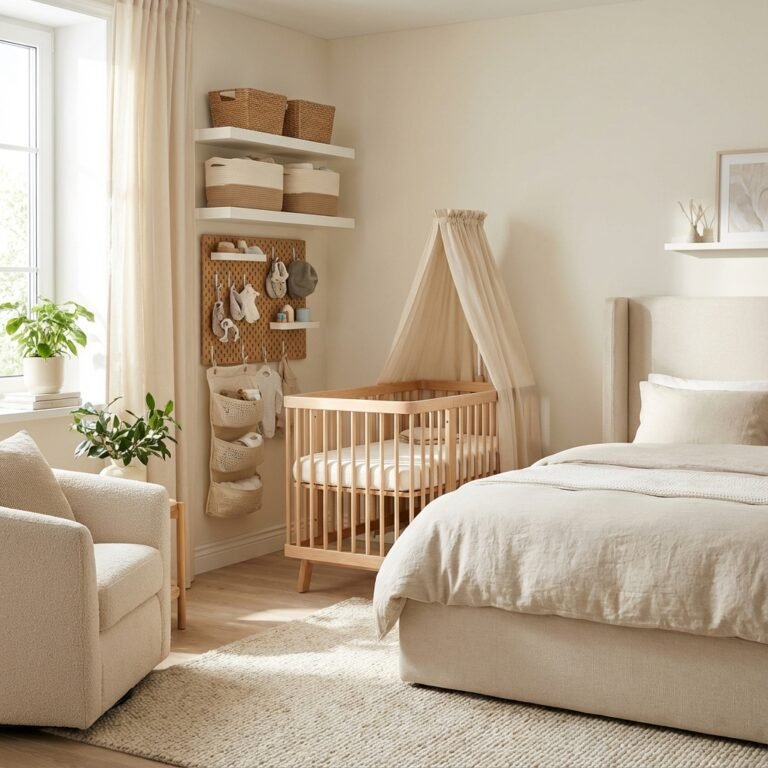
The ideal placement for your baby’s crib is against a solid wall, preferably one that is diagonal to the nursery door. From this position, your baby can symbolically ‘see’ who is entering the room without being in the direct path of the door’s energy flow. This fosters a deep sense of security and safety. Ensure the crib has a solid headboard (or the solid end of the crib is against the wall) to provide a feeling of stable support. If your room layout makes this difficult, don’t worry. You can soften the energy from the door by placing a piece of furniture, like a small bookshelf or a dresser, between the door and the crib to act as a buffer.
Think of it as giving your baby a secure ‘home base’ within their room, a protected spot where they can fully relax and surrender to sleep.
Mistake #2: Overwhelming the Senses with Clutter and Aggressive Colors

The Problem: Stagnant Energy and Overstimulation
As new parents, it’s astonishing how quickly a tiny human can accumulate a mountain of ‘stuff.’ Toys, clothes, diapers, books—it can be overwhelming. In Feng Shui, clutter is more than just a mess; it represents stagnant, stuck energy that can create feelings of stress and chaos. This is the opposite of the calm, flowing Qi needed for rest. Similarly, while bright, bold colors are often marketed for baby products, intense shades like fire-engine red, bright yellow, or electric blue are highly ‘Yang’—active and stimulating. They can make it difficult for a baby’s developing nervous system to wind down.
The Supportive Solution: Cultivate Calm with Organization and Soothing Hues
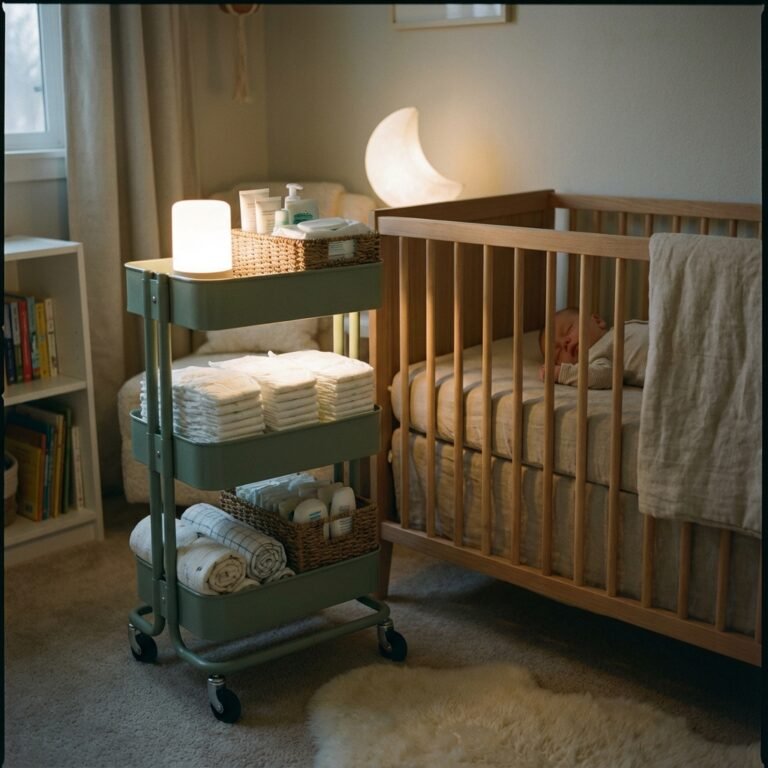
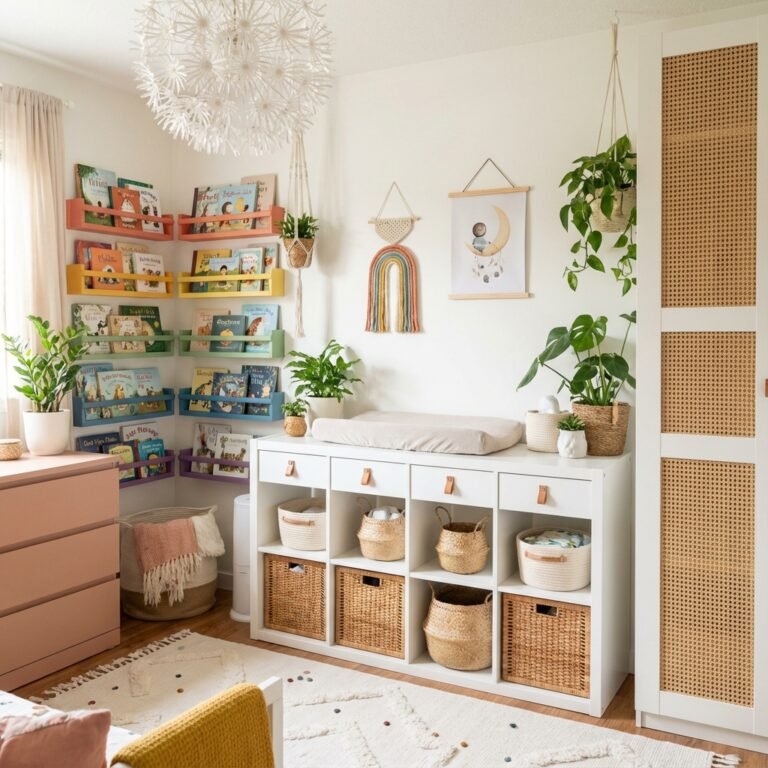
Your first step is to embrace mindful organization. Use clever storage solutions like woven baskets, cloth bins, and dressers to conceal clutter. A ‘less is more’ approach is powerful; rotate toys instead of having them all out at once. This not only calms the room’s energy but also helps your baby focus and not get overwhelmed during playtime.
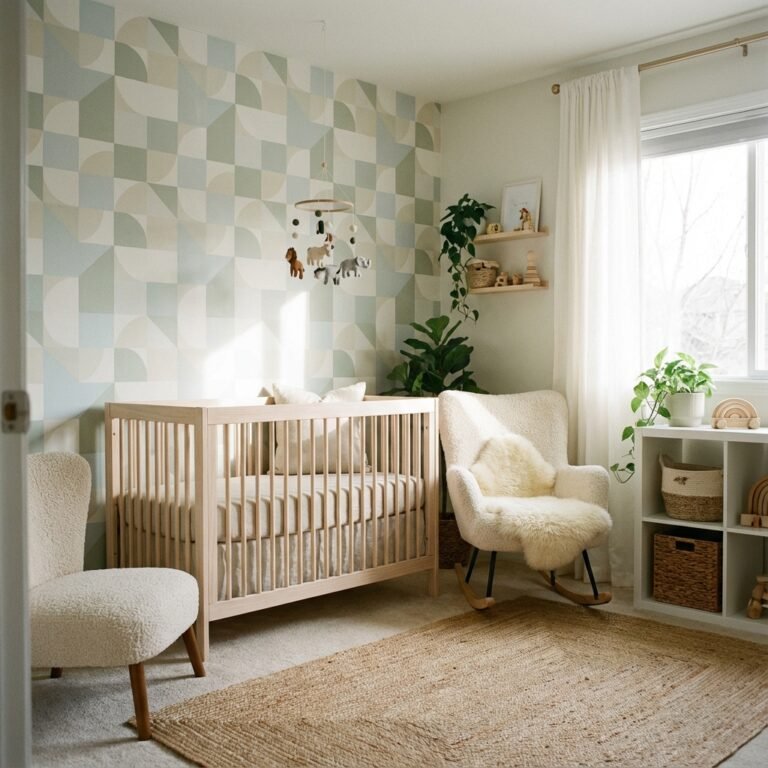
For the color palette, lean into ‘Yin’ energy, which is soft, passive, and restful. Choose a foundation of soothing, muted colors. Think of soft pastels, earthy neutrals, and colors that mimic skin tones, which are inherently comforting to babies. Shades like soft sage, dusty blue, warm beige, pale peach, or creamy white create a tranquil backdrop for sleep. You can always add small pops of color with a blanket or a piece of art, but the overall feeling should be one of serenity.
Mistake #3: Using Mirrors Incorrectly

The Problem: Disruptive Reflections and Active Energy
Mirrors are a powerful tool in Feng Shui, often used to expand a space or redirect energy. However, in a bedroom, and especially a nursery, they must be used with extreme caution. A mirror placed directly facing the crib can be very disruptive to sleep. It doubles the amount of activity and light in the room, bouncing energy around when the environment should be still. For a baby who wakes in the dim light of night, catching a sudden glimpse of their own movement in a mirror can be confusing and frightening, potentially leading to a full-blown wakeup.
The Supportive Solution: Mindful Mirror Placement or Removal
The simplest and most effective rule is to avoid placing any mirrors where the baby can see them from their crib. If you have a mirrored closet door, for example, that reflects the crib, consider covering it at night with a beautiful curtain or a decorative screen. If you love the decorative element of a mirror, place it in a way that it reflects something beautiful and calming, like a lovely piece of art or the light from a window, ensuring it is not in the baby’s line of sight from their sleeping space. Often, the best solution for a nursery is to simply omit mirrors altogether, keeping the energy as calm and contained as possible to promote deep, uninterrupted sleep.
Mistake #4: Ignoring ‘Poison Arrows’ and Overhead Beams

The Problem: Cutting Energy and Oppressive Weight
In Feng Shui, sharp angles and corners—from furniture, open shelving, or structural elements—are said to create ‘sha qi,’ or ‘cutting energy.’ These are often called ‘poison arrows’ because they direct a harsh, focused stream of energy towards whatever they are pointing at. If the corner of a dresser or changing table is aimed at the crib, it can create a subconscious feeling of unease. Similarly, exposed ceiling beams directly over a crib can feel oppressive, creating a sense of heaviness and pressure that can interfere with restful sleep.
The Supportive Solution: Soften and Conceal
Take a moment to sit where your baby’s head would be in the crib and look around. Do you see any sharp corners pointing directly at you? If so, seek to soften them. You can rearrange the furniture, choose pieces with rounded edges, or place a tall plant or a soft drape in front of the sharp corner to diffuse the energy. For overhead beams, the traditional Feng Shui ‘cure’ is to hang two bamboo flutes from the beam, angled up to lift the energy. A more modern and aesthetically pleasing solution for a nursery is to hang a lightweight fabric canopy over the crib. This creates a beautiful, cozy focal point while providing a protective barrier that diffuses the heavy energy from the beam, creating a soft, womb-like sanctuary for your baby.
Mistake #5: Neglecting Airflow and Light Quality

The Problem: Stagnant Qi and Harsh Lighting
Fresh, flowing Qi is essential for vitality and health. A stuffy room with stagnant air is the epitome of poor Feng Shui. It can lead to lethargy and discomfort, for both you and your baby. On the other end of the spectrum is light. While we all want a dark room for sleep, the quality of light when the baby is awake is just as important. Harsh, direct overhead lighting is jarring and can be overstimulating, while a complete lack of natural light during the day can disrupt the development of a healthy circadian rhythm.
The Supportive Solution: Embrace Fresh Air and Layered Lighting
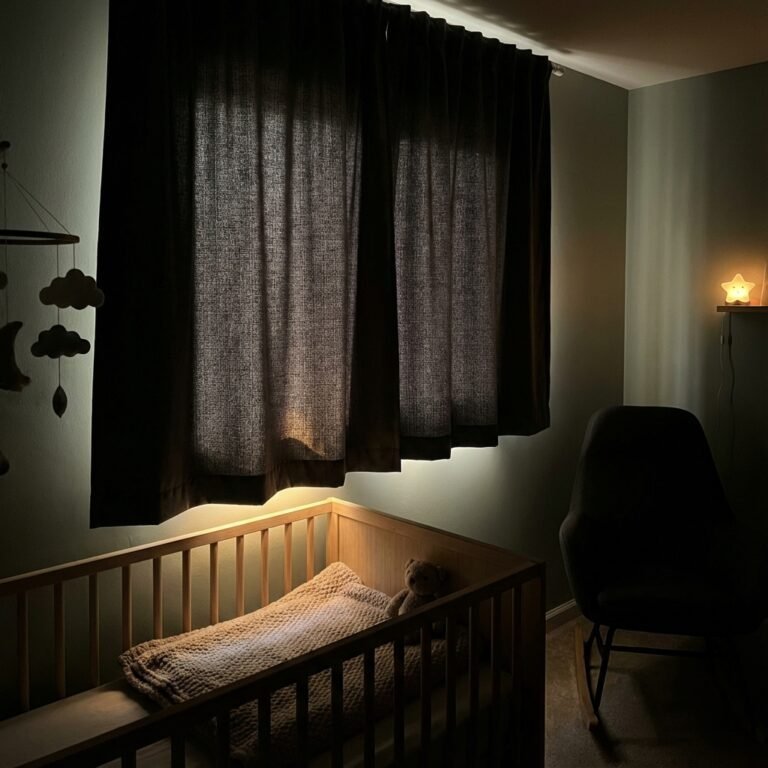
Make it a daily ritual to open the nursery window for at least 15 minutes to allow fresh air and new energy to circulate. An air purifier is also a fantastic addition to keep the air clean and the Qi moving. For lighting, think in layers. Ditch the single, harsh overhead fixture in favor of multiple, softer light sources. A dimmer switch is your best friend, allowing you to adjust the brightness for different activities—brighter for playtime, soft and low for the wind-down routine before sleep. Use a small, warm-toned lamp for middle-of-the-night feedings and changes. During the day, allow plenty of natural, indirect sunlight into the room. Blackout curtains are essential for naps and nighttime, but celebrating the daylight during awake periods helps set your baby’s internal clock and creates a cheerful, vibrant space.
Mistake #6: Choosing Overly Active or Frightening Artwork

The Problem: Unsettling Imagery
The images you hang on the walls have a profound impact on the subconscious and the overall energy of a room. What might seem like a fun, dynamic piece of art to an adult could be unsettling or overly stimulating to a child. Artwork depicting chaotic scenes, aggressive or predatory animals (even in cartoon form), or overly abstract and jarring patterns can introduce an energy of anxiety into a space that should be defined by peace and security. Remember, your baby will spend hours gazing at these images from their crib.
The Supportive Solution: Select Calming and Supportive Art
Choose artwork for the nursery with intention. Opt for images that evoke feelings of peace, love, and wonder. Serene landscapes, gentle and sleeping animals (like bunnies, fawns, or lambs), images of a peaceful sky with soft clouds or a gentle moon, and, of course, loving photos of family are all wonderful choices. The colors should align with your soothing palette, and the overall feeling should be one of gentleness. The goal is to surround your baby with visual cues that reinforce the message that this room is a safe, loving, and peaceful place to be.
Every element in the nursery should whisper the same thing to your baby: ‘You are safe, you are loved, you can rest here.’
Mistake #7: Creating an Imbalance of Yin and Yang

The Problem: Too Much of a Good Thing
At the heart of Feng Shui is the concept of Yin and Yang—the balance of opposing but complementary forces. Yin represents the feminine, passive, quiet, dark, and soft elements. Yang represents the masculine, active, loud, bright, and hard elements. A nursery should be predominantly Yin to promote rest and tranquility. However, a room that is too Yin can feel stagnant and lifeless. Conversely, a room with too much Yang energy (hard floors with no rugs, lots of metal and plastic, bright lights) will feel cold and overstimulating, making it impossible to relax.
The Supportive Solution: A Harmonious Blend of Textures and Elements
Strive for a beautiful balance. Start with a strong Yin foundation: soft colors, blackout curtains for darkness, and plush textures. Then, intentionally layer in gentle Yang elements to bring life and balance to the space. For example:
- Balance a soft, plush rug (Yin) on top of a solid wood floor (Yang).
- Complement soft bedding and curtains (Yin) with the solid, sturdy structure of a wooden crib (Yang).
- In a room of soft, muted colors (Yin), add a gentle mobile with slow, graceful movement (a touch of Yang) to provide subtle stimulation when your baby is awake.
- Balance the quiet of the room (Yin) with the soft sound of a white noise machine (Yang).
By thoughtfully blending these energies, you create a space that is not only peaceful for sleep but also gently engaging and supportive for wakeful periods. It becomes a complete, harmonious environment that nurtures your baby’s entire being.
Conclusion
Creating a nursery for your baby is a profound act of love and hope. As you navigate the countless decisions, remember that perfection is not the goal—a supportive, loving environment is. The principles of Feng Shui are not rigid rules meant to add stress; they are gentle guidelines to help you create a space that feels as good as it looks. By being mindful of crib placement, clearing clutter, choosing soothing decor, and balancing the energy in the room, you are crafting a sanctuary that supports the most important developmental work your baby is doing: growing and sleeping.
Most importantly, trust your parental intuition. You know your baby best. Use these tips as a framework, but feel empowered to adapt them to your unique space and style. Be gentle with yourself during this journey. You are building a nest for your little one, and the most powerful energy you can bring to that space is your own unconditional love. That is the best Feng Shui of all.