

10 Strict Hospital Visitation Rules Every New Mom Should Enforce
Welcome, new parents. Take a deep, slow breath. You are on the verge of, or have just embarked upon, one of life’s most profound journeys. The love you feel is immense, the exhaustion is real, and the desire to protect your tiny new human is a fierce, primal instinct. Amidst this beautiful whirlwind, the world outside your hospital room door keeps spinning. Phones will buzz with congratulatory messages, and well-meaning family and friends will be eager to rush in and meet the new arrival.
While their excitement comes from a place of love, it’s crucial to remember this: your postpartum recovery and your baby’s first days are not a spectator sport. This is a sacred, tender, and physically demanding time for healing and bonding. You are not an event host, and your hospital room is not a party venue. It is a recovery suite and a family sanctuary.
Setting firm boundaries around visitors is not rude; it is a radical act of self-care and responsible parenting. It’s about prioritizing the physical and emotional well-being of both mom and baby over social obligations. This guide is your permission slip and your playbook. Here are 10 strict, non-negotiable hospital visitation rules to help you create a peaceful, healthy, and supportive environment for your new family.
The Foundation: Preemptive Communication and a United Front

The most effective way to manage hospital visitors is to set expectations before the baby arrives and the chaos begins. A plan made with a clear head is far easier to enforce than rules made up on the fly while you’re exhausted, hormonal, and overwhelmed. This is a team effort, and presenting a united front is your greatest asset.
Rule 1: Communicate Your Visitation Policy in Advance
Weeks before your due date, have a conversation with your partner about what you both want your hospital experience to look like. Who do you absolutely want there? How do you feel about extended family, friends, or coworkers visiting? Once you agree, communicate this policy clearly and kindly to key family members and friends. You can send a group text, an email, or make a gentle social media announcement.
Sample Script: “We are so excited for everyone to meet Baby [Last Name] soon! As we prepare for delivery, we’ve decided to keep our hospital time very private for recovery and bonding. We will not be having any visitors at the hospital besides our parents. We’ll let you all know when we are home and settled and ready for short, scheduled visits. We appreciate your love and understanding as we navigate these first few days as a new family!”
Rule 2: Designate a Gatekeeper
The new mother should not be the person fielding texts, calls, and requests for visits. Her only job is to rest, recover, and care for the baby. This is where the partner or a designated support person becomes the official gatekeeper. This person’s role is to be the firm but polite guardian of your sanctuary. They will run interference, communicate the rules, and gently turn away any unexpected visitors. This protects the recovering mom from feeling guilty or stressed about enforcing the boundaries herself.
Remember, ‘No’ is a complete sentence. You do not owe anyone an elaborate explanation for prioritizing your family’s health and well-being.
Health and Safety First: Non-Negotiable Health Protocols
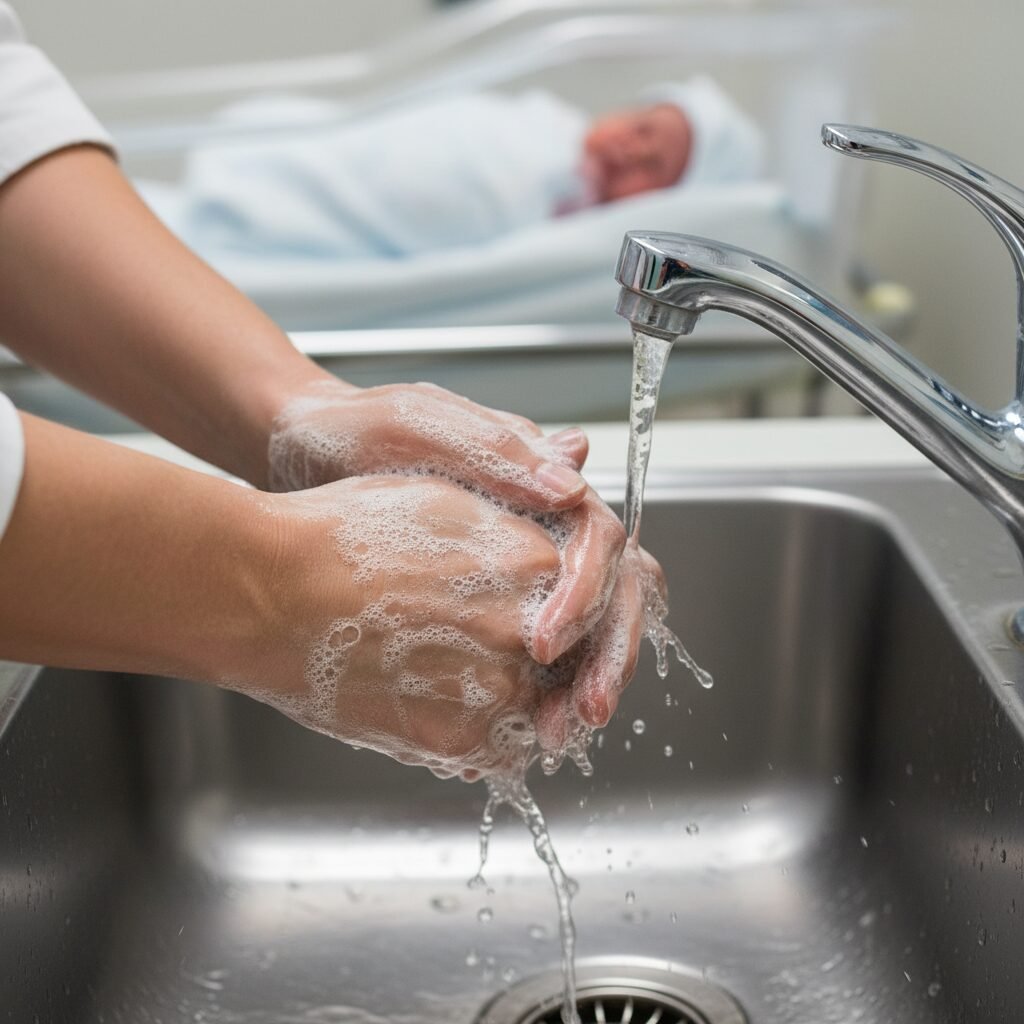
A newborn’s immune system is incredibly fragile. What is a minor cold for an adult can be life-threatening for a baby. Your primary responsibility is to protect your child from illness. These rules are not suggestions; they are critical health and safety measures.
Rule 3: Absolutely No Kissing the Baby
This is often the hardest rule for grandparents and loved ones to follow, but it is the most important. The germs that cause illnesses like Respiratory Syncytial Virus (RSV), herpes simplex virus (which causes cold sores), and even the common cold are spread through saliva and close contact. A simple kiss can transmit these viruses to a vulnerable newborn. Be firm. Politely say, “We are so happy you’re here, but we have a strict ‘no kissing the baby’ rule to keep them safe. You can admire their cute cheeks from a distance!”
Rule 4: Wash Your Hands Upon Entry
Every single person who enters your hospital room must wash their hands thoroughly with soap and water for at least 20 seconds or use hand sanitizer immediately upon entering. There are no exceptions. Hospitals are filled with germs, and this simple act is one of the most effective ways to prevent the spread of infection. Place a bottle of hand sanitizer in a prominent location near the door as a visual reminder.
Rule 5: If You Are Sick, Stay Home
This rule is absolute. It doesn’t matter if it’s “just allergies,” a sniffle, a cough, a sore throat, or a recent stomach bug. Any sign of illness means the visit is canceled or postponed. Make it clear to your loved ones: “Our baby’s health is our top priority. If you feel even slightly unwell, have been around someone who is sick, or have not had your flu/Tdap shots, please wait until you are 100% healthy to visit.” A video call is a wonderful alternative for sick relatives to meet the baby without posing a risk.
Protecting Your Peace: Managing Time and Energy
Labor and delivery, whether it lasts hours or days, is a marathon. The postpartum period is not a time for entertaining. It is a time for deep rest, physical healing, and hormonal adjustment. Your energy is a finite and precious resource that must be guarded fiercely.
Rule 6: Keep All Visits Short and Sweet
A hospital visit should be no longer than 20-30 minutes. New parents are exhausted, and the new mom may be dealing with pain, learning to breastfeed, and needing to use the restroom frequently. Long visits are draining. When you communicate your rules, be clear about the time limit. It’s helpful to have the gatekeeper say something like, “We’d love for you to stop by for a quick 20-minute visit to meet the baby between 2:00 and 4:00 PM.”
Rule 7: All Visits Must Be Scheduled in Advance
Spontaneity is the enemy of a recovering new mother. All visits must be scheduled ahead of time through the designated gatekeeper. This allows you to control the flow of people, ensure you have time to rest between visitors, and align visits with times you might feel most up to it (which can be unpredictable). A schedule prevents a constant, overwhelming parade of people.
Rule 8: Absolutely No Surprise Visitors or “Pop-Bys”
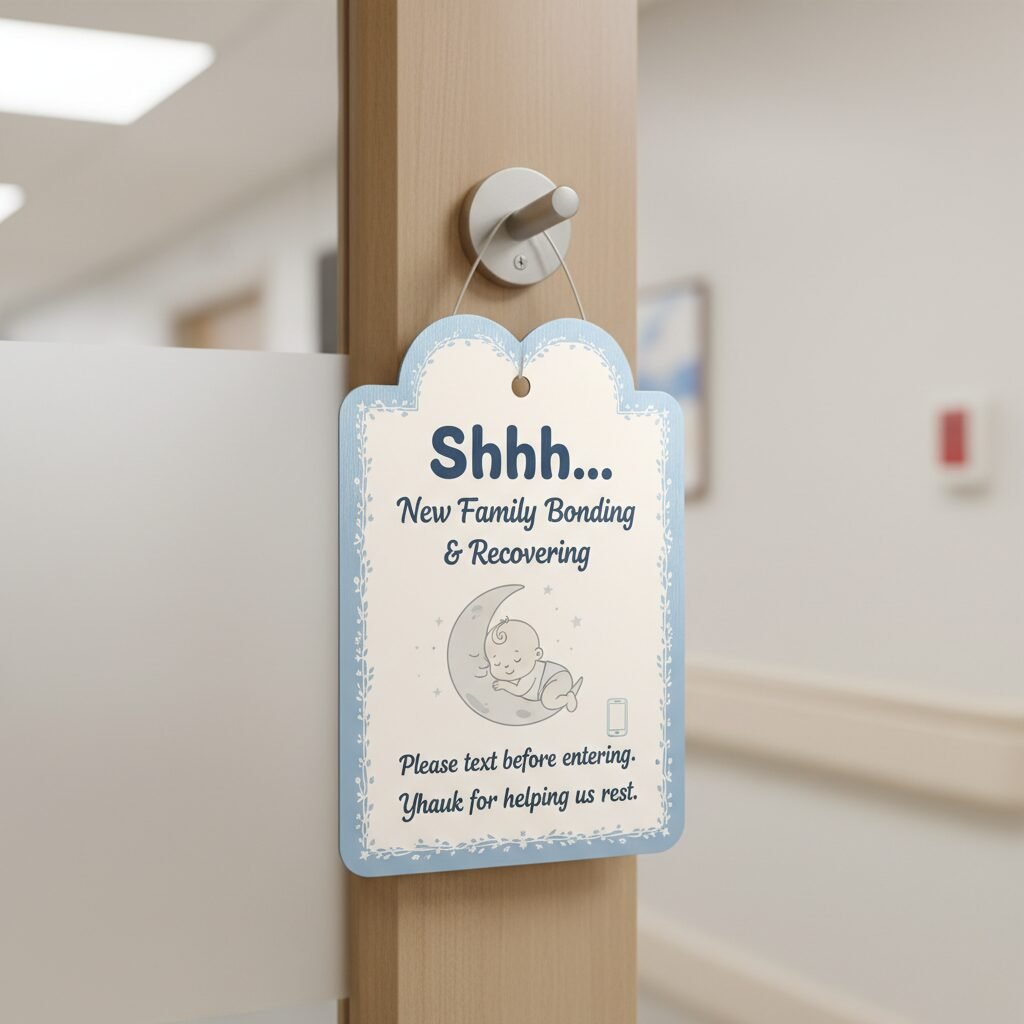
Under no circumstances should anyone just “pop by” the hospital because they were “in the area.” This is a significant boundary violation. The gatekeeper should be instructed to politely but firmly turn away anyone who shows up unannounced. Your hospital room is a private medical space, not a public waiting room. A sign on the door can be helpful here.
| Boundary Level | Who It’s For | Suggested Time Limit | Communication Strategy |
|---|---|---|---|
| Level 1: Inner Circle | Grandparents, chosen siblings | 30-45 minutes | Personal call from partner to schedule a specific time slot. |
| Level 2: Close Friends & Family | Aunts, uncles, best friends | 20 minutes | Group text managed by the gatekeeper offering limited time windows. |
| Level 3: All Others | Coworkers, extended relatives, acquaintances | 0 minutes (No hospital visit) | A broadcast message or social media post: “We can’t wait for you to meet the baby once we’re home and settled!” |
Fostering Support, Not Stress: Redefining the Visitor’s Role

The purpose of a postpartum visit should be to support the new parents, not to fulfill the visitor’s desire to hold a baby. Reframe the dynamic from one of entertainment to one of service. A truly helpful visitor leaves you feeling more rested and cared for than when they arrived.
Rule 9: Be a Helper, Not a Guest
A visitor should not expect to be waited on. In fact, they should arrive with an offer of help. The best visitors are the ones who come bearing food, coffee, or a willingness to do something useful. Even in a hospital, a visitor can refill your water bottle, grab you a snack, or just sit quietly while you nap. Set this expectation. When someone asks to visit, the gatekeeper can say, “That would be lovely. What [Mom’s Name] would really love is a hot coffee and for someone to hold the baby for 15 minutes so she can take a shower.”
Rule 10: Respect Feeding and Bonding Moments
Feeding a newborn—whether by breast or bottle—is a learning process that requires calm, privacy, and concentration. Skin-to-skin contact is also a critical part of bonding and regulating the baby’s temperature and heart rate. These are not moments for an audience. If the baby needs to eat or if the parents want to do skin-to-skin, that is the visitor’s cue to offer privacy by stepping out of the room. A gracious visitor will say, “It looks like it’s feeding time. I’ll step out into the hallway. Let me know if you need anything!” You should not have to feel awkward or ask them to leave during these intimate moments.
Conclusion
Enforcing these rules may feel uncomfortable at first, especially if you are a people-pleaser. You might worry about hurting someone’s feelings. But let this be your mantra: Your comfort, your recovery, and your baby’s safety are more important than a visitor’s convenience or expectations. This is your time. You are the parent. You make the rules.
Surrounding yourself with a peaceful, controlled, and supportive environment in those first few days sets the tone for your entire postpartum journey. It allows you to heal, to bond with your baby, and to begin your life as a new family on your own terms. Trust your instincts. You’ve got this.
Disclaimer: This article is for informational purposes only and does not constitute medical advice. The information contained herein is not a substitute for and should never be relied upon for professional medical advice. Always talk to your doctor or a qualified healthcare provider about any questions you may have regarding a medical condition.